If you're cross-shopping a used 2012 Audi A6 3.0T Supercharged against a new electric vehicle, the decision often comes down to one question: what does it actually cost to fuel and maintain each one in 2026? The A6's 3.0-liter supercharged V6 (310 hp, 325 lb-ft) remains a benchmark midsize luxury sedan, but its 22 MPG combined EPA rating means frequent stops at premium pumps. A modern EV flips that equation entirely — provided you understand charging infrastructure, install costs, and real-world electricity pricing.
This guide breaks down the home and public charging ecosystem for EV shoppers comparing electrified vehicles to legacy luxury sedans like the 2012 A6, with exact numbers on install costs, charging speeds, connector types, and per-mile fueling economics.
Level 1 vs Level 2 vs DC Fast Charging: Speeds in kW and Miles Per Hour
EV charging operates on three tiers. The distinction between kW (power, the rate of energy transfer) and kWh (energy, the battery's total capacity) is critical: a 10 kW charger delivering power for one hour adds 10 kWh to the battery. Think of kW as the width of a hose and kWh as the bucket you're filling.
| Level | Voltage | Power (kW) | Miles of Range Added per Hour | Typical Use Case |
|---|---|---|---|---|
| Level 1 (120V) | 120V AC | 1.2–1.9 kW | 3–5 mi/hr | Overnight trickle; PHEVs |
| Level 2 (240V) | 240V AC | 3.3–19.2 kW | 12–75 mi/hr | Home daily charging; workplace |
| DC Fast Charge | 200–800V DC | 50–350 kW | 150–1,000+ mi/hr (peak) | Road trips; 10–80% top-ups |
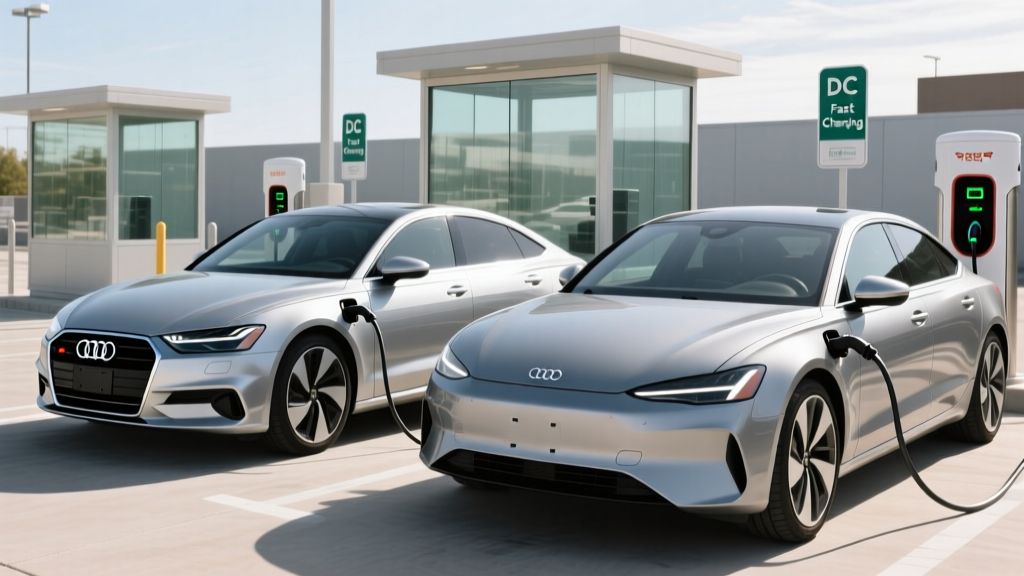
For a 75 kWh battery (common in midsize EVs like the Tesla Model Y or Hyundai Ioniq 5), a Level 2 charger at 11.5 kW (48A on a 60A circuit) refills the pack from empty in roughly 7 hours — ideal for overnight use. A 150 kW DC fast charger can take that same battery from 10% to 80% in approximately 25–30 minutes, though charge speed tapers significantly above 80% State of Charge (SoC) to protect battery chemistry.
That taper is the single most misunderstood aspect of public charging. A charger advertised at "250 kW peak" rarely sustains that rate for more than a few minutes. The charge curve typically peaks between 10–40% SoC and drops sharply past 60%. Real-world 10–80% times at a 250 kW station for an 82 kWh pack average 22–28 minutes, not the theoretical 17 minutes peak math would suggest.
Home Charger Installation: Electrical Requirements, Permits, and Real Costs
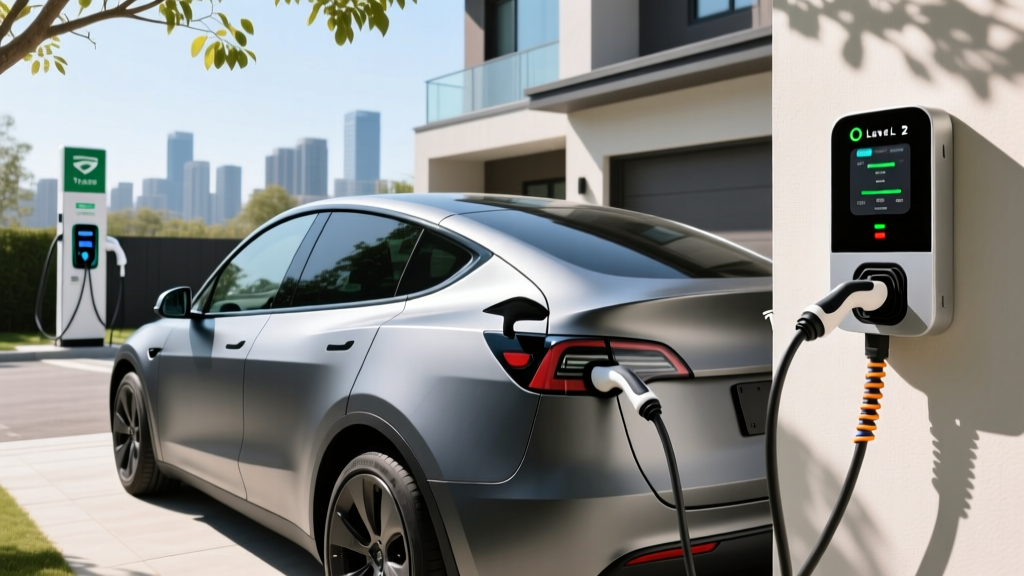
Installing a Level 2 home charger is the single biggest infrastructure decision an EV owner makes. Most homes with a 200-amp electrical panel can accommodate a dedicated 60A circuit (supporting a 48A continuous charger) without a panel upgrade — but older homes with 100A service often require an upgrade costing $1,500–$3,000.
Here is a realistic cost breakdown for a standard Level 2 home installation in 2026:
| Component | Low Estimate | High Estimate | Notes |
|---|---|---|---|
| Level 2 Charger (Equipment) | $300 | $700 | 40A–48A smart chargers; hardwired or NEMA 14-50 plug |
| Electrician Labor | $500 | $1,500 | Depends on run length from panel to garage/driveway |
| Electrical Permit | $50 | $300 | Required in most jurisdictions; inspection included |
| Panel Upgrade (if needed) | $1,500 | $3,500 | 100A → 200A service upgrade for older homes |
| Total (no panel upgrade) | $850 | $2,500 | Typical for homes built after 1990 |
| Total (with panel upgrade) | $2,350 | $6,000 | Common for pre-1980s homes |
The federal Residential Clean Energy Credit does not cover EV charger equipment for most taxpayers in 2026 (the §30C Alternative Fuel Vehicle Refueling Property Credit expired for residential use after 2025 for most filers, though some eligibility remains in designated low-income or non-urban census tracts — consult a tax professional). Several states and utilities still offer rebates of $250–$1,000 for charger equipment and installation; check your local utility's EV program page.
Key Electrical Requirements
- Circuit rating: A 48A charger requires a 60A dedicated circuit (NEC code mandates 125% overhead for continuous loads).
- Wire gauge: 6 AWG copper for runs up to 50 feet; 4 AWG for longer runs to prevent voltage drop.
- GFCI protection: NEC 2020 and later require GFCI breakers for garage and outdoor receptacles; hardwired chargers may bypass this requirement depending on local code.
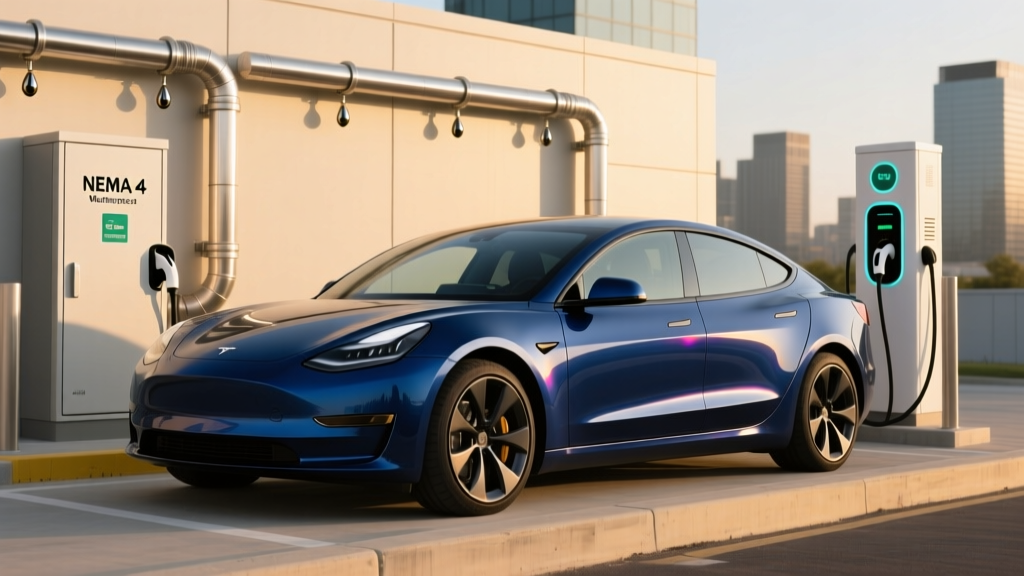
- Outdoor rating: If mounting outside, ensure the charger carries a NEMA 4 or IP55 rating for weather resistance.
- Permit and inspection: Skipping the permit risks insurance claim denials and home-sale disclosure issues. Budget $50–$300 and 1–3 weeks for inspection.
Connector Compatibility: NACS, CCS1, and CHAdeMO in 2026
The connector landscape has consolidated dramatically. By 2026, the North American Charging Standard (NACS), developed by Tesla and adopted by Ford, GM, Hyundai, Rivian, Volvo, BMW, and most major automakers, is the dominant connector for new EVs. The CCS1 (Combined Charging System) connector remains on vehicles sold between 2019–2024 from legacy brands, and CHAdeMO is effectively legacy-only (Nissan Leaf being the last major holdout).
| Connector | Brands Using It (New Vehicles) | Public Charger Availability | Adapter Needed? |
|---|---|---|---|
| NACS (Tesla) | Tesla, Ford, GM, Hyundai, Kia, Rivian, Volvo, BMW, Mercedes, Honda | Tesla Supercharger network (25,000+ stalls); growing third-party NACS | CCS-to-NACS adapters available (~$200) for older CCS vehicles |
| CCS1 | Legacy models (2019–2024 VW ID.4, older Bolt, early Mach-E) | Electrify America, EVgo, ChargePoint DC stations | NACS-to-CCS adapters for Supercharger access (~$250) |
| CHAdeMO | Nissan Leaf (discontinued); no new US vehicles | Declining; some Electrify America and independent stations | No practical adapter to NACS/CCS for DC fast charging |
If you own a CCS-equipped EV from the 2020–2024 era, a NACS adapter from Tesla or a third-party supplier like Lectron enables Supercharger access — a significant reliability upgrade, as Tesla's network consistently outperforms third-party DC networks in uptime metrics. For home Level 2 charging, the connector distinction matters less: most Level 2 chargers ship with a J1772 plug (compatible with all non-Tesla EVs), and Tesla includes a J1772 adapter in every vehicle.
Charging Cost Per Mile: EV Electricity vs 2012 Audi A6 Supercharged Premium Fuel
The 2012 Audi A6 3.0T Supercharged requires premium 91-octane fuel and returns an EPA-rated 22 MPG combined (19 city / 28 highway). At a national premium gas average of approximately $4.15/gallon in early 2026, that translates to roughly $0.189 per mile.
Here's how EV charging costs compare across scenarios, using an efficient midsize EV averaging 3.0 miles/kWh (roughly 112 MPGe, comparable to a Hyundai Ioniq 6 or Tesla Model 3 RWD):
| Scenario | Rate | Cost per Mile (EV at 3.0 mi/kWh) | Cost per Mile (2012 A6 at 22 MPG) |
|---|---|---|---|
| Home charging (off-peak utility rate) | $0.12/kWh | $0.040 | $0.189 |
| Home charging (national avg residential) | $0.17/kWh | $0.057 | $0.189 |
| Public Level 2 (ChargePoint, EVgo) | $0.30/kWh | $0.100 | $0.189 |
| DC Fast Charging (Electrify America, EVgo) | $0.48/kWh | $0.160 | $0.189 |
| Tesla Supercharger (avg 2026) | $0.35/kWh | $0.117 | $0.189 |
Even at the most expensive DC fast-charging rates, the EV costs less per mile than the supercharged A6 sipping premium. At home off-peak rates, the EV costs roughly 79% less per mile. Over 15,000 miles annually, that's a fuel savings of $2,235 (home off-peak) to $1,050 (exclusive DC fast charging) per year.
For the full cost picture, factor in EV maintenance savings (no oil changes, no supercharger belt service, no transmission fluid, significantly reduced brake wear from regenerative braking) against typically higher EV insurance premiums (15–25% above comparable ICE vehicles, per III industry data).
Recommended Home Level 2 Chargers: Power, Features, and Pricing
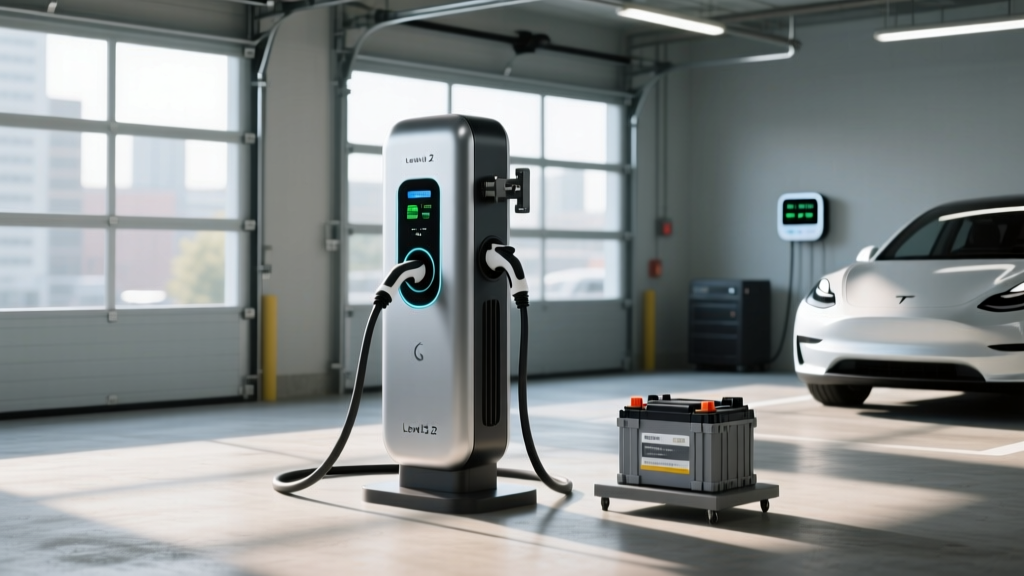
Not all Level 2 chargers are equal. Key differentiators include amperage (which determines charge speed), cable length (25 feet is ideal for most garages), smart features (scheduling, energy tracking, solar integration), and connector type. Here are three proven options for 2026:
Emporia Level 2 EV Charger
- Power: 48A (11.5 kW on 240V, requires 60A circuit)
- Connector: J1772 (NACS adapter included for Tesla)
- Cable length: 24 feet
- Smart features: Wi-Fi scheduling, energy monitoring, solar integration, load management
- Price: ~$399
- Best for: Budget-conscious buyers wanting full smart features and energy tracking
ChargePoint Home Flex
- Power: Up to 50A (12 kW, configurable from 16A–50A to match circuit)
- Connector: J1772 (NACS plug option available)
- Cable length: 23 feet
- Smart features: Alexa integration, scheduling, charge tracking, flexible amperage
- Price: ~$699
- Best for: Homes with variable circuit capacity; reliable app ecosystem
Tesla Wall Connector
- Power: 48A (11.5 kW on 240V, requires 60A circuit)
- Connector: NACS native (J1772 adapter included for non-Tesla EVs)
- Cable length: 24 feet
- Smart features: Wi-Fi updates, power sharing between two units, load management
- Price: ~$450
- Best for: Tesla owners or NACS-equipped 2025+ vehicles; best value per kW
All three units are hardwired (recommended for reliability and code compliance in many jurisdictions) and carry a 3-year warranty. For outdoor installations, each carries a NEMA 4 weather-resistance rating.
Charging Time Examples for Common EV Battery Sizes
Charge time depends on battery capacity (kWh), charger power (kW), and the vehicle's onboard charger limit for Level 2 or its DC charge acceptance rate for fast charging. Here are realistic estimates for popular battery sizes:
| Battery Size | Example Vehicles | Level 1 (1.4 kW) 10–100% | Level 2 (11.5 kW) 10–100% | DC Fast (150 kW) 10–80% |
|---|---|---|---|---|
| 60 kWh | Chevy Equinox EV, base Model 3 | ~39 hours | ~4.7 hours | ~22 minutes |
| 75 kWh | Tesla Model Y LR, Ioniq 5 | ~49 hours | ~5.9 hours | ~26 minutes |
| 82 kWh | Ford F-150 Lightning (std) | ~54 hours | ~6.4 hours | ~28 minutes |
| 100 kWh | Tesla Model S, Rivian R1S | ~66 hours | ~7.8 hours | ~32 minutes |
| 131 kWh | F-150 Lightning (ext range) | ~86 hours | ~10.2 hours | ~40 minutes |
DC fast charging times assume optimal battery preconditioning (the vehicle warming the battery to ideal charge temperature, typically initiated when the navigation system routes to a charger). Without preconditioning — common when arriving at a charger with a cold battery in winter — 10–80% times can increase by 30–50%.
Real-World Range and the Supercharged A6 Comparison
The 2012 Audi A6 3.0T's EPA highway rating of 28 MPG on premium yields a real-world highway range of approximately 364 miles from its 13.2-gallon tank. That's a genuine advantage over most EVs for cross-country driving — but only if you're driving 400+ miles between fuel stops regularly.
For daily commuting (the use case covering 90%+ of driving), the EV advantage is decisive. A Tesla Model 3 RWD with an EPA range of 341 miles costs $0.04/mile to fuel at home vs the A6's $0.19/mile. Over a 30-mile daily round trip, the A6 burns $5.67/day in premium fuel; the Model 3 consumes $1.20 in electricity — a $4.47 daily savings, or roughly $1,100 annually for a 5-day commute.
Frequently Asked Questions
How much does it cost to install a home EV charger?
A typical Level 2 home charger installation costs $850–$2,500 including equipment ($300–$700), electrician labor ($500–$1,500), and a permit ($50–$300). Homes with older 100-amp electrical panels may need a $1,500–$3,500 panel upgrade, bringing the total to $2,350–$6,000. Always get a licensed electrician's load calculation before purchasing equipment.
How fast will each charging level add range?
Level 1 (120V) adds 3–5 miles of range per hour — adequate only for plug-in hybrids or very low daily mileage. Level 2 (240V at 48A/11.5 kW) adds 30–45 miles per hour for a typical EV, fully replenishing overnight. DC fast charging at 150 kW adds 150–250 miles in a 25-minute session (10–80%), making road trips practical.
Which connector/charger is compatible with my EV?
For 2025–2026 model-year EVs from Tesla, Ford, GM, Hyundai, Kia, Rivian, BMW, Volvo, and Mercedes, the NACS connector is standard. Older EVs (2019–2024) from VW, older Ford, and GM use CCS1 — adapters ($200–$250) enable Supercharger access. The Nissan Leaf uses CHAdeMO, which has declining public infrastructure support. Check your vehicle's charge port or owner's manual for confirmation.
How much does charging cost per mile vs gas?
Home EV charging at national average residential rates ($0.17/kWh) costs roughly $0.057/mile for an efficient EV (3.0 mi/kWh). The 2012 Audi A6 3.0T Supercharged at 22 MPG combined on premium ($4.15/gallon) costs $0.189/mile — approximately 3.3× more expensive. Even public DC fast charging at $0.48/kWh ($0.16/mile) undercuts the A6's fuel cost.
What electrical upgrades might I need?
Homes with 200-amp service typically support a 60A dedicated EV circuit without upgrades. Homes with 100-amp service (common in pre-1990 construction) often require a panel upgrade to 200A, costing $1,500–$3,500. A licensed electrician performs a load calculation (NEC Article 220) to determine available capacity. Some utilities offer load-managing smart panels (like SPAN) that enable EV charging without a full panel upgrade by dynamically shedding non-essential loads.
Sources: EPA fuel economy data via fueleconomy.gov; IRS residential energy credits via irs.gov; insurance industry data via iii.org.