Trading the HEMI for Electrons: What Changes When You Go Electric
If you're coming from a 2009 Dodge Charger SRT8 — with its 425-hp 6.1L HEMI V8, 14 mpg combined thirst, and that unmistakable exhaust note — the shift to an electric vehicle is a fundamental change in how you "refuel." Instead of hunting for premium gas stations and watching dollars tick past $60 per fill-up, you'll be plugging in at home, managing kilowatt-hours (kWh), and learning a new vocabulary: kW, NACS, CCS1, charge curves, and preconditioning.
This guide covers everything a former SRT8 owner needs to know about charging an EV in 2026 — from the electrical panel in your garage to the DC fast charger on the interstate. We'll translate the refueling mindset you already have into EV terms, with exact numbers and real costs.
The Three Charging Levels Explained: Speeds, Costs, and Use Cases
Think of charging levels the way you'd think about fuel delivery: a trickle, a steady stream, or a firehose. Each level delivers electricity at a different rate, measured in kW (kilowatts) — that's the power flowing into your battery at any given moment. Your battery's total capacity is measured in kWh (kilowatt-hours) — that's the energy it can hold, like gallons in a fuel tank.
| Charging Level | Voltage / Amperage | Power Output | Miles of Range Added per Hour | Typical Use Case |
|---|---|---|---|---|
| Level 1 (Standard Outlet) | 120V / 12A | 1.4 kW | 3–5 miles/hr | Overnight top-up, PHEVs, emergencies |
| Level 2 (Home / Workplace) | 240V / 32–48A | 7.7–11.5 kW | 25–44 miles/hr | Daily home charging, destination charging |
| DC Fast Charging (Level 3) | 400–800V DC | 50–350 kW | 150–1,200+ miles/hr (peak) | Road trips, highway corridors |
Real-world context: A Level 2 charger at 11.5 kW will fully replenish a Tesla Model 3 Long Range (82 kWh usable battery, ~340 miles EPA range) overnight in roughly 8 hours. That same car on a 250 kW DC fast charger can go from 10% to 80% in about 25–30 minutes — enough time for a rest stop and a coffee.
Important caveat on DC fast charging: Peak kW ratings are just that — peaks. Charging follows a curve. Your EV will pull maximum power between roughly 10–50% State of Charge (SoC), then taper significantly above 80% to protect battery health. A charger rated at 350 kW may only sustain that rate for a few minutes before dropping to 150 kW or lower. Always look at 10–80% charge times, not peak kW, when comparing real-world speed.
Home Charger Installation: What Your Electrical Panel Can (and Can't) Handle
This is where many new EV owners — especially those in older homes — hit a wall. Installing a Level 2 home charger isn't just about buying a wall unit; it's about ensuring your home's electrical system can support a continuous high-draw appliance running for hours.
Electrical Requirements for a Level 2 Charger
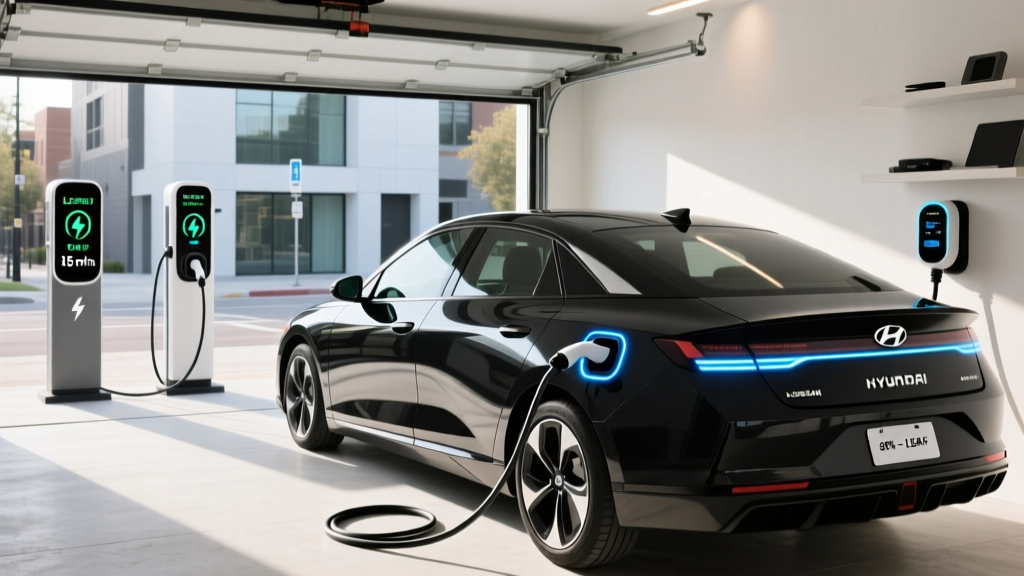
A typical Level 2 charger requires a dedicated 240V circuit, similar to what powers an electric dryer or oven. The most common configurations:
- 40-amp circuit → supports up to 32A continuous draw (7.7 kW) — adequate for most EVs
- 50-amp circuit → supports up to 40A continuous draw (9.6 kW) — common for larger batteries
- 60-amp circuit → supports up to 48A continuous draw (11.5 kW) — maximum for most residential chargers
National Electrical Code (NEC) requires that continuous loads (anything running 3+ hours, which includes EV charging) only use 80% of a circuit's rated capacity. So a 50A breaker supports 40A of continuous charging — not 50A.
Panel Upgrade: The Hidden Cost in Older Homes
If your home has a 100-amp main service panel (common in homes built before the 1990s), adding a 40–60A dedicated circuit may push your total calculated load beyond the panel's capacity. A licensed electrician will perform a load calculation per NEC Article 220 to determine if you need a panel upgrade to 200A service.
Panel upgrades are a significant cost variable — and one that many online guides gloss over. If your home was built in the same era as that 2009 SRT8 Charger, there's a real chance you'll need one.
Installation Cost Breakdown
| Component | Low-End Estimate | High-End Estimate | Notes |
|---|---|---|---|
| Level 2 Charger Equipment | $300 | $700 | Smart Wi-Fi chargers; basic models from $200 |
| Electrician Labor (standard install) | $400 | $1,200 | Depends on run length from panel to garage |
| Permit & Inspection | $50 | $250 | Varies by municipality; required for code compliance |
| Panel Upgrade (if needed) | $1,500 | $4,000+ | 200A service upgrade; not needed in newer homes |
| Total (no panel upgrade) | $750 | $2,150 | Most homeowners fall in this range |
| Total (with panel upgrade) | $2,250 | $6,150+ | Older homes with 100A service |
Pro tip: The IRS §30D tax credit covers new EV purchases, but a separate credit — the Alternative Fuel Vehicle Refueling Property Credit (IRC §30C) — can cover up to 30% of home charger equipment and installation costs (capped at $1,000). Check current IRS guidelines and consult a tax professional, as eligibility depends on your census tract and income. State and utility rebates may stack on top.
Connector Compatibility: NACS, CCS1, CHAdeMO — Which Plug Fits Your EV?
Unlike the universal gasoline nozzle, EV connectors have fragmented into competing standards. As of 2026, the landscape has consolidated significantly — but it still matters which plug your EV uses, especially for public DC fast charging.
| Connector Standard | Brands Using It (2026) | DC Fast Charge Availability | Adapter Needed? |
|---|---|---|---|
| NACS (North American Charging Standard / Tesla) | Tesla, Ford, GM, Rivian, Volvo, Polestar, Hyundai, Kia (new models) | Excellent — full Supercharger network access | CCS-to-NACS adapter for some public CCS stations |
| CCS1 (Combined Charging System) | VW, BMW, Mercedes, Stellantis, Honda, Toyota (bZ), older Ford/GM models | Good — Electrify America, EVgo, ChargePoint | NACS-to-CCS adapter needed for Tesla Superchargers |
| CHAdeMO | Nissan Leaf (legacy), Mitsubishi Outlander PHEV (older) | Declining — fewer stations adding CHAdeMO | No practical adapter to NACS/CCS for DC fast |
What this means for buyers in 2026: The industry has decisively moved toward NACS. If you're buying a new EV, prioritize NACS compatibility for the widest fast-charging network access (Tesla Superchargers now welcome non-Tesla NACS-equipped vehicles). If your EV has CCS1, adapters from Tesla and third-party manufacturers allow Supercharger access, though at slightly reduced convenience.
For Level 2 home charging, all EVs use a J1772 connector (or a NACS connector that accepts J1772 via the included adapter). Your home charger will work with any EV you buy.
Cost to Charge: Dollars per Mile vs. Your Old SRT8
Here's where the math gets satisfying. The 2009 Charger SRT8 averaged about 14 mpg combined on premium fuel. At $4.00/gallon (a reasonable 2026 national average for premium), you were paying roughly $0.286 per mile just in fuel. Let's compare that to EV charging across different scenarios.
| Charging Scenario | Cost per kWh | Cost per Mile (at 3 mi/kWh efficiency) | Annual Cost (12,000 mi/yr) |
|---|---|---|---|
| Home Off-Peak (utility time-of-use rate) | $0.08–$0.12 | $0.027–$0.040 | $320–$480 |
| Home Standard Rate (national avg) | $0.16 | $0.053 | $640 |
| Public Level 2 (ChargePoint, EVgo L2) | $0.25–$0.40 | $0.083–$0.133 | $1,000–$1,600 |
| DC Fast Charging (EA, EVgo, Supercharger) | $0.35–$0.55 | $0.117–$0.183 | $1,400–$2,200 |
| 2009 SRT8 Charger (premium gas, 14 mpg) | $4.00/gallon | $0.286 | $3,430 |
The takeaway: Even if you exclusively used DC fast charging (the most expensive option), you'd still spend less per mile than the SRT8 demanded. Most EV owners charge at home 85–95% of the time, making annual "fuel" costs $300–$700 — a savings of $2,700–$3,100 per year compared to the old Charger.
Efficiency note: EV efficiency is measured in miles per kWh (or kWh per 100 miles). A Tesla Model 3 achieves roughly 4 mi/kWh; a Ford F-150 Lightning around 2.2 mi/kWh. Heavier, less aerodynamic EVs consume more energy per mile — similar to how the SRT8's weight and aero hurt its mpg.
Charging Time Examples: How Long Does a Full Charge Actually Take?
Let's ground this in specific scenarios with common 2026 EV battery sizes:
10–80% DC Fast Charging Times
- Tesla Model 3 Long Range (82 kWh, NMC): ~25 min on a 250 kW Supercharger (peak ~250 kW, sustained ~170 kW average through curve)
- Hyundai Ioniq 5 (77.4 kWh, NMC, 800V architecture): ~18 min on a 350 kW charger — one of the fastest-charging EVs available, thanks to its 800-volt system
- Ford F-150 Lightning Extended Range (131 kWh, NMC): ~41 min on a 150+ kW charger — large batteries take longer even at high power
- Chevrolet Equinox EV (85 kWh, NMC): ~30 min on a 150 kW charger
Level 2 Home Charging (0–100%)
- Tesla Model 3 (82 kWh) on 11.5 kW (48A): ~8 hours
- Hyundai Ioniq 5 (77.4 kWh) on 7.7 kW (32A): ~10.5 hours
- Ford F-150 Lightning (131 kWh) on 11.5 kW (48A): ~12 hours
- Toyota RAV4 Prime PHEV (18.1 kWh) on 7.7 kW: ~2.5 hours
For daily driving of 30–50 miles, even a modest 7.7 kW Level 2 charger replenishes your overnight usage in 2–4 hours. You'll wake up "full" every morning — something the SRT8 never offered unless you stopped at a gas station.
Recommended Home Level 2 Chargers: 2026 Picks
Not all Level 2 chargers are equal. Key differentiators include power output (amps/continuous kW), cable length, smart features (Wi-Fi scheduling, utility integration), connector type, and build quality. Here are proven options for 2026:
ChargePoint Home Flex (NACS or J1772)
- Power: Up to 11.5 kW (48A) on a 60A circuit; adjustable down to 16A
- Cable Length: 23 feet
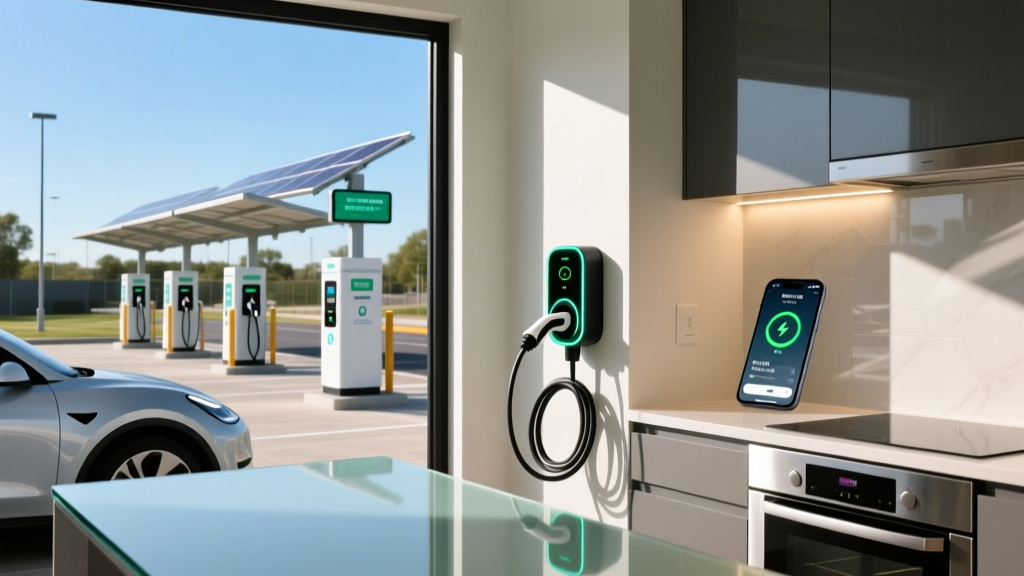
- Smart Features: Wi-Fi, app scheduling, Alexa integration, utility demand-response programs
- Connector: Available in NACS or J1772
- Price: ~$550–$650
- Best For: Flexible amperage adjustment for older panels; excellent app
Tesla Wall Connector (NACS)
- Power: Up to 11.5 kW (48A) on a 60A circuit
- Cable Length: 24 feet
- Smart Features: Wi-Fi, OTA updates, power sharing between multiple units, Tesla app integration
- Connector: NACS native; includes J1772 adapter in box
- Price: ~$450–$500
- Best For: Tesla and NACS-equipped EVs; cleanest installation aesthetic
Emporia Vue Level 2 Charger (J1772)
- Power: Up to 11.5 kW (48A)
- Cable Length: 24 feet
- Smart Features: Wi-Fi, energy monitoring (pairs with Emporia home energy monitor), solar integration, time-of-use scheduling
- Connector: J1772 (NACS vehicles use included adapter)
- Price: ~$350–$400
- Best For: Budget-conscious buyers who want detailed energy data and solar-aware charging
Before you buy: Check your EV's onboard charger capacity. Many EVs accept a maximum of 11.5 kW on Level 2, but some (particularly older or lower-cost models) cap at 7.7 kW or even 6.6 kW. Buying a 48A charger for a car that can only accept 32A isn't wasted — it's future-proof — but know what you're paying for.
Safety, Code, and Installation Best Practices
EV charging is a high-duration, high-current electrical load. Cutting corners here is dangerous and may void your homeowner's insurance if a fire traces back to unpermitted work.
- Dedicated circuit: Your Level 2 charger must be on its own dedicated breaker — not shared with other outlets or appliances.
- GFCI protection: NEC 2020 and later require GFCI (Ground Fault Circuit Interrupter) protection for all EV charging receptacles. Many chargers have built-in GFCI; hardwired units may satisfy this at the breaker.
- Outdoor rating: If your charger is mounted outside or in an open carport, ensure it carries a NEMA 4 (or IP65+) weather resistance rating. All recommended chargers above meet this standard.
- Permit and inspection: Most jurisdictions require an electrical permit for a new 240V circuit. The inspection ensures proper wire gauge, breaker sizing, and grounding. Skipping this risks insurance denial and resale complications.
- Wire gauge: A 60A circuit requires 6 AWG copper wire (THHN in conduit or NM-B rated cable). Your electrician will size this correctly — don't attempt DIY on a 240V circuit unless you're licensed.
For detailed code requirements, reference the National Electrical Code (NFPA 70) and consult a licensed electrician familiar with EV charger installations in your area.
Frequently Asked Questions
How much does it cost to install a home EV charger?
A standard Level 2 home charger installation (equipment + electrician + permit) typically costs $750–$2,150 if your electrical panel has sufficient capacity. If a panel upgrade from 100A to 200A is needed, add $1,500–$4,000+, bringing the total to $2,250–$6,150. Always get a load calculation from a licensed electrician before committing.
How fast will each charging level add range?
Level 1 (120V outlet): 3–5 miles per hour. Level 2 (240V, 32–48A): 25–44 miles per hour. DC Fast Charging (50–350 kW): effectively 150–1,200+ miles per hour at peak, though the charge curve tapers significantly above 80% SoC. For practical planning, use 10–80% charge times: 18–45 minutes depending on battery size and charger power.
Which connector/charger is compatible with my EV?
For 2026 models: Tesla, Ford, GM, Rivian, Hyundai, Kia, and Volvo/Polestar use NACS. Most European brands (VW, BMW, Mercedes) and Stellantis use CCS1. The Nissan Leaf (legacy) uses CHAdeMO. For home Level 2, all EVs accept J1772 or NACS (with adapter). When buying a new EV, NACS provides the broadest DC fast-charging network access.
How much does charging cost per mile vs gas?
Home charging at the national average electricity rate ($0.16/kWh) costs roughly $0.05/mile for an efficient EV. The 2009 SRT8 Charger at 14 mpg on $4.00 premium costs about $0.29/mile. Even exclusive DC fast charging ($0.35–$0.55/kWh) costs $0.12–$0.18/mile — still half the SRT8's fuel cost.
What electrical upgrades might I need?
The most common upgrade is a panel capacity increase from 100A to 200A service, required when your existing panel's load calculation doesn't have headroom for a 40–60A dedicated circuit. Homes built after ~2000 typically have 200A panels and won't need this. Other potential needs: conduit runs longer than 50 feet (adds wire cost), subpanel installation for detached garages, or a utility meter upgrade for very old service drops.
Can I use a regular 120V outlet to charge my EV?
Yes, but slowly. Level 1 charging adds only 3–5 miles of range per hour — adequate for plug-in hybrids with small batteries (15–40 miles of electric range) or for BEV owners who drive less than 30 miles daily and can charge for 10+ hours overnight. For a full-size BEV with a 80+ kWh battery, a Level 1 charge from empty would take 60+ hours. It's a backup, not a daily strategy.
Does the federal tax credit cover home charger installation?
The §30D New Clean Vehicle Credit applies to the EV purchase itself (up to $7,500, subject to IRS income caps, MSRP limits, and battery sourcing rules). A separate credit, the Alternative Fuel Vehicle Refueling Property Credit (§30C), covers up to 30% of home charger equipment and installation costs, capped at $1,000. Eligibility depends on your census tract. Consult a tax professional for your specific situation.