Why Compare a 2004 Impala SS Supercharged to a Modern EV?
The 2004 Chevrolet Impala SS Supercharged holds a cult following. Its 3.8L supercharged V6 (L67) produced 240 horsepower and 280 lb-ft of torque, pushing the full-size sedan to roughly 18 MPG combined on the highway-and-city mix. For enthusiasts who still own or admire this car, the question isn't whether it's a classic — it's whether trading supercharged grunt for electric efficiency makes financial sense in 2026.
This guide uses the 2004 Impala SS Supercharged as a real-world baseline to explain EV charging from scratch: the levels, the home installation realities, the connector landscape, and the true cost-per-mile versus burning premium gasoline through a roots-type supercharger.
Charging Levels Explained: Speeds in kW and Miles Per Hour
Before comparing costs, you need to understand the three charging tiers. The most common confusion in EV ownership is mixing up kW (kilowatts — the rate of power delivery, like water pressure) with kWh (kilowatt-hours — the total energy stored, like the size of the tank). A 60 kWh battery charged at 10 kW takes roughly 6 hours from empty. Keep that distinction front and center.
| Level | Voltage | Max Power (kW) | Miles of Range Added Per Hour | Typical Use Case |
|---|---|---|---|---|
| Level 1 | 120V AC | 1.0–1.4 kW | 3–5 miles | Overnight trickle; PHEVs; emergency top-ups |
| Level 2 | 240V AC | 3.3–19.2 kW | 12–75 miles | Home daily charging; workplace; destination |
| DC Fast Charge (Level 3) | 200–500V+ DC | 50–350+ kW | 150–1,200+ miles (equivalent) | Road trips; 10–80% in 15–30 minutes |
For a typical 75 kWh battery pack (comparable to a Tesla Model Y Long Range or Hyundai Ioniq 5), a Level 2 home charger running at 11.5 kW (48A on a 60A circuit) will refill from 10% to 80% in approximately 5–6 hours. A 350 kW DC fast charger can accomplish the same 10–80% top-up in roughly 18–25 minutes, depending on the vehicle's charge curve. Peak kW is never sustained — batteries throttle charge speed above ~80% State of Charge (SoC) to protect cell health, so the last 20% can take as long as the first 60%.
Home EV Charger Installation: Electrical Requirements and Costs
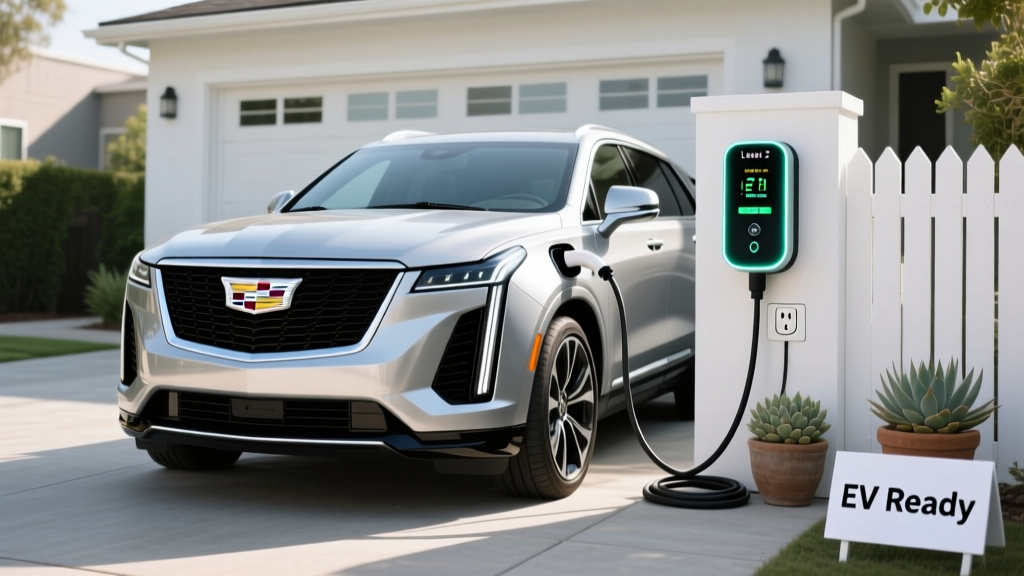
The single biggest barrier to EV adoption isn't the car — it's the home electrical infrastructure. Most modern Level 2 chargers draw between 32A and 48A at 240V, which requires a dedicated 40A or 60A circuit, respectively. Here's what that actually involves:
Electrical Panel and Circuit Requirements
A 48A continuous-draw charger (like the ChargePoint Home Flex or Tesla Wall Connector) requires a 60A dedicated breaker on a 240V circuit using 6 AWG copper wire (or 4 AWG aluminum). National Electrical Code (NEC) Article 625 mandates that EV charging circuits be rated at 125% of the continuous load — hence 48A × 1.25 = 60A breaker minimum.
Older homes — particularly those built before 1990 — often have 100A or 150A main service panels. If your panel is already near capacity (running central AC, electric dryer, electric range, and water heater), adding a 60A EV circuit may push you over the safe 80% continuous-load threshold. This is where a panel upgrade to 200A becomes necessary, and it's the cost variable that shocks many first-time EV buyers.
Installation Cost Breakdown
| Component | Low Estimate | High Estimate | Notes |
|---|---|---|---|
| Level 2 Charger Hardware | $350 | $750 | Hardwired vs. NEMA 14-50 plug; smart vs. basic |
| Electrician Labor (standard install) | $500 | $1,500 | Short wire run from panel to garage; no panel upgrade |
| Electrical Permit | $50 | $250 | Varies by municipality; some jurisdictions waive for EV |
| Panel Upgrade (if needed) | $1,800 | $4,500 | 100A → 200A service; includes new panel, labor, utility coordination |
| Wire Run (long distance) | $300 | $1,200 | $8–$15/ft for 6 AWG; matters if panel is far from garage |
| Total (no panel upgrade) | $900 | $2,500 | Most homes with 200A service fall here |
| Total (with panel upgrade) | $2,700 | $6,950 | Older homes or those with maxed-out panels |
If you owned a 2004 Impala SS Supercharged, you likely never thought about your home's electrical panel. With an EV, that panel becomes your personal gas station — and its capacity directly determines your charging speed and cost. Always get a licensed electrician to perform a load calculation before purchasing equipment.
Utility Rebates and the Federal §30D Charger Credit
Many utilities offer $250–$500 rebates for installing a smart Level 2 charger, and some provide off-peak EV electricity rates as low as $0.06–$0.08/kWh. The federal Alternative Fuel Vehicle Refueling Property Credit (IRC §30C, separate from the §30D vehicle credit) can cover up to 30% of home charger hardware and installation costs, capped at $1,000 — but it has specific census-tract eligibility requirements. Check IRS.gov §30C for current rules, as eligibility varies by location and tax year.
Connector Compatibility: NACS, CCS1, CHAdeMO, and Adapter Realities
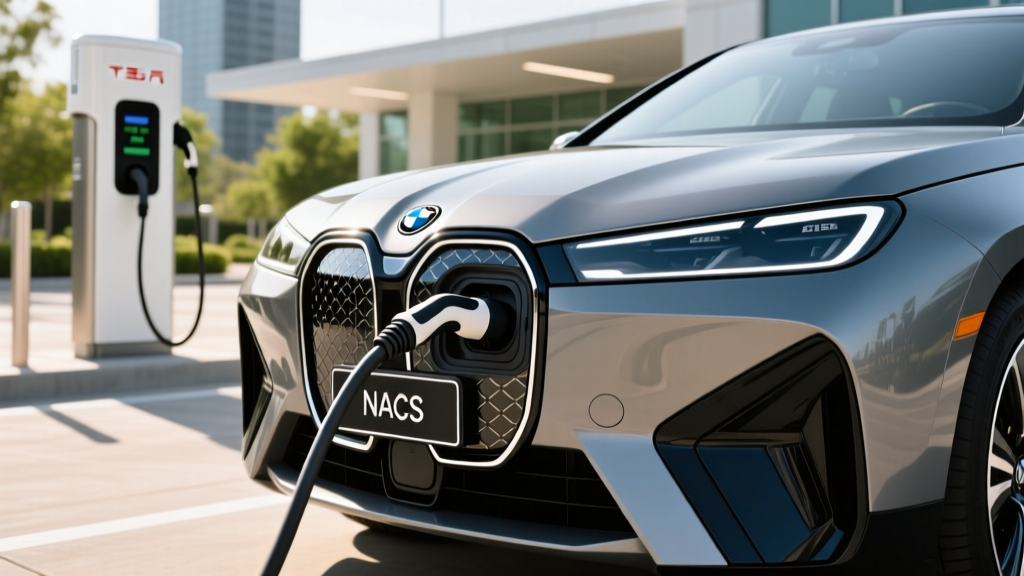
The connector landscape has consolidated significantly. As of 2026, the North American Charging Standard (NACS), developed by Tesla, has become the dominant connector for new vehicles sold in North America. Most legacy CCS1 vehicles can access Tesla Superchargers via a manufacturer-approved adapter, and CHAdeMO (used primarily by the Nissan Leaf) is being phased out at new public stations.
| Connector | Brands Using It (2026 Models) | Public Charger Availability | Adapter Needed? |
|---|---|---|---|
| NACS (Tesla) | Tesla, Ford, GM, Rivian, Volvo, Polestar, Hyundai/Kia (2025+), BMW, Mercedes | Dominant — 30,000+ Supercharger stalls + growing third-party NACS | No (native on most 2025+ vehicles) |
| CCS1 | Legacy VW ID.4, older Hyundai/Kia, BMW i4 (pre-2025), Stellantis EVs | Electrify America, EVgo, ChargePoint — still widespread but declining for new models | NACS-to-CCS adapter for Supercharger access (~$200–$250) |
| CHAdeMO | Nissan Leaf (discontinued after 2025), Mitsubishi Outlander PHEV (older) | Limited and shrinking; mostly legacy installations | No direct adapter to NACS; rely on remaining CHAdeMO stations |
For home Level 2 charging, the connector is the same J1772 (or NACS for Tesla) — and every EV sold in the US comes with a mobile Level 1 cord that plugs into a standard 120V outlet. If you're buying a non-Tesla EV in 2026, verify whether it has a native NACS port or still uses CCS1, as this affects your public charging flexibility long-term.
Cost to Charge an EV vs. Fueling a 2004 Impala SS Supercharged
The 2004 Impala SS Supercharged was EPA-rated at approximately 18 MPG combined (16 city / 24 highway per fueleconomy.gov). With regular unleaded averaging $3.30/gallon in early 2026 (and many supercharged-engine owners opting for premium at $3.90+), the fuel math is stark.
| Scenario | Energy Cost | Cost Per Mile | Annual Cost (12,000 mi) |
|---|---|---|---|
| 2004 Impala SS Supercharged (18 MPG, regular $3.30/gal) | $3.30/gallon | $0.183 | $2,196 |
| 2004 Impala SS (18 MPG, premium $3.90/gal) | $3.90/gallon | $0.217 | $2,604 |
| EV — Home off-peak charging ($0.08/kWh, 3.5 mi/kWh) | $0.08/kWh | $0.023 | $276 |
| EV — Home standard rate ($0.15/kWh, 3.5 mi/kWh) | $0.15/kWh | $0.043 | $516 |
| EV — Public Level 2 ($0.30/kWh) | $0.30/kWh | $0.086 | $1,032 |
| EV — DC Fast Charge ($0.45/kWh) | $0.45/kWh | $0.129 | $1,548 |
Even at the most expensive public DC fast charging rate, the EV costs $0.129/mile — still cheaper than the Impala's $0.183/mile on regular gas. At home on off-peak rates, the EV saves roughly $1,920 per year over the supercharged V6. Over five years of ownership, that's $9,600 in fuel savings alone, which more than offsets the $900–$2,500 home charger installation.
One critical caveat: if you rely exclusively on public DC fast charging (no home or workplace access), your cost-per-mile narrows significantly, and in some high-cost metro areas (California, Northeast), public rates can exceed $0.55/kWh, pushing EV costs above $0.157/mile — approaching the Impala's territory. Home charging access is the economic linchpin of EV ownership.
Equipment Recommendations: 2026 Home Charger Picks
Not all Level 2 chargers are equal. Here are three proven options with specific specs:
Tesla Wall Connector (Gen 3)
- Power Output: Up to 11.5 kW (48A) on a 60A circuit; adjustable down to 16A/32A/40A
- Connector: Native NACS; J1772 adapter included for non-Tesla vehicles
- Cable Length: 24 feet
- Smart Features: Wi-Fi for OTA updates, power-sharing between two units on one circuit, access control
- Price: ~$475
- Best For: Tesla owners or households with NACS-equipped vehicles; cleanest integration
ChargePoint Home Flex
- Power Output: Up to 12 kW (50A) on a 60A circuit; configurable via DIP switches from 16A–50A
- Connector: J1772 (NACS adapter available separately)
- Cable Length: 23 feet
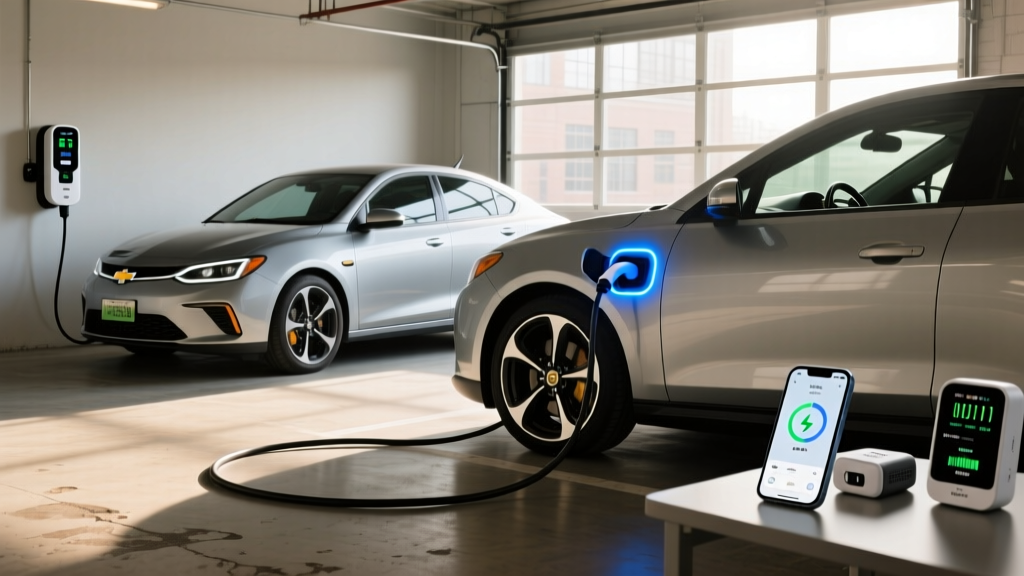
- Smart Features: Alexa integration, scheduling, detailed energy tracking via app, flexible amperage for older panels
- Price: ~$699
- Best For: Non-Tesla EV owners wanting maximum amperage flexibility and smart scheduling
Emporia Vue Level 2 Charger
- Power Output: Up to 11.5 kW (48A) on a 60A circuit
- Connector: J1772 (NACS version available)
- Cable Length: 24 feet
- Smart Features: Integrates with Emporia Vue energy monitor for whole-home load tracking; solar-aware charging
- Price: ~$399
- Best For: Budget-conscious buyers who want smart energy monitoring without a premium price
All three chargers are NEMA 4 (outdoor-rated) for garage or exterior installation and support hardwired or NEMA 14-50 plug configurations. Hardwired installations are preferred for 48A+ chargers because a NEMA 14-50 receptacle is rated for 50A but EV charging codes typically limit plug-in units to 40A continuous draw.
Safety and Code Considerations
EV charging involves sustained high-amperage draw — far more demanding on wiring than intermittent loads like a dryer or oven. Key safety requirements per NEC Article 625:
- Dedicated circuit: Your EV charger must have its own breaker — no sharing with other appliances.
- GFCI protection: Required for outdoor installations and for receptacle-based (plug-in) chargers. Hardwired indoor units may be exempt depending on local code.
- Wire gauge: 6 AWG copper minimum for 60A circuits; undersized wire creates a fire hazard under sustained load.
- Outdoor rating: If mounting outside, the charger must be rated NEMA 4 (weatherproof) and the conduit must be rated for wet locations.
- Cable management: NEC requires the charging cable not create a tripping hazard — wall-mounted retractors or cable organizers are recommended.
Never use an extension cord for EV charging. Never plug a Level 2 charger into a standard 120V outlet via an adapter. And always have the installation inspected — an unpermitted charger install can void your homeowner's insurance in the event of an electrical fire.
Charging Time Examples for Common EV Battery Sizes
Here's how long it actually takes to charge popular 2026 EVs from 10% to 80% SoC across different charger types. Remember: the charge curve tapers significantly above 80%, so these times reflect the practical fast-charging window most drivers use.
| Vehicle (2026) | Battery (kWh usable) | Level 2 at 11.5 kW (10–80%) | DC Fast Peak kW | DC Fast 10–80% Time |
|---|---|---|---|---|
| Tesla Model Y Long Range | 75 kWh (NMC) | ~4.5 hours | 250 kW | ~22 minutes |
| Hyundai Ioniq 5 (Long Range) | 77.4 kWh (NMC) | ~4.7 hours | 238 kW | ~18 minutes |
| Chevrolet Equinox EV 3RS | 85 kWh (NMC) | ~5.2 hours | 190 kW | ~28 minutes |
| Ford F-150 Lightning (Extended) | 131 kWh (NMC) | ~8.0 hours | 210 kW | ~40 minutes |
| BMW i4 eDrive40 | 81.5 kWh (NMC) | ~5.0 hours | 205 kW | ~27 minutes |
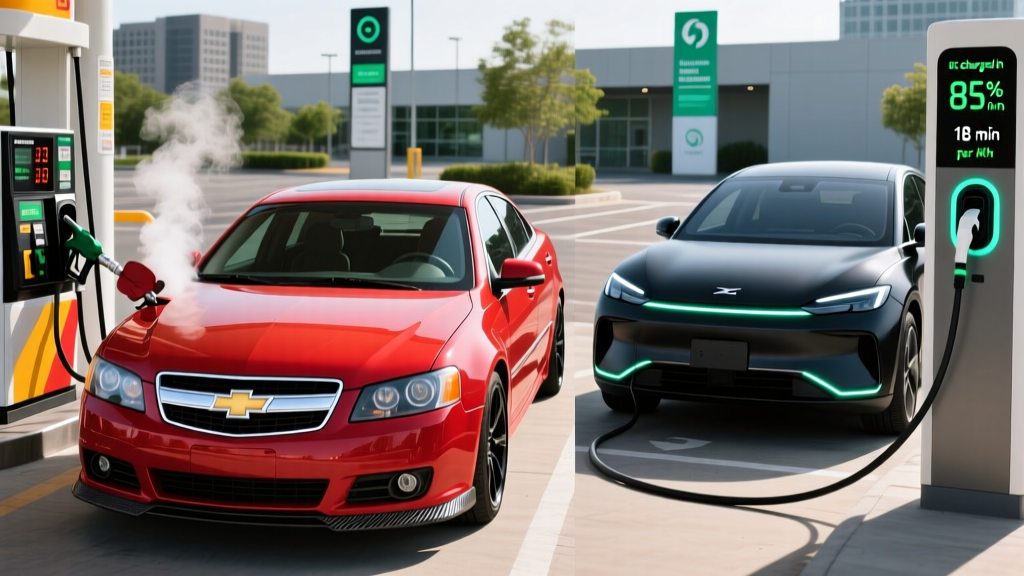
Compare that to the 2004 Impala SS Supercharged: a 17-gallon tank at 18 MPG gives roughly 306 miles of range, filled in about 3 minutes at any gas station. EVs trade that 3-minute convenience for the ability to "refuel" at home every night — waking up to a full charge daily, something no gas car can match. The road-trip penalty is real (20–40 minute stops), but 85%+ of all charging happens at home or work, where the time cost is effectively zero.
Frequently Asked Questions
How much does it cost to install a home EV charger?
A standard Level 2 home charger installation runs $900–$2,500 if your electrical panel has sufficient capacity. If you need a panel upgrade from 100A to 200A service, expect $2,700–$6,950 total. The charger hardware itself costs $350–$750, with the remainder going to electrician labor, wire, conduit, and permits.
How fast will each charging level add range?
Level 1 (120V) adds 3–5 miles per hour — adequate for plug-in hybrids with small batteries but painfully slow for full EVs. Level 2 (240V) at 11.5 kW adds roughly 35–40 miles per hour, fully recharging most EVs overnight. DC fast charging adds 150–1,200+ equivalent miles per hour at peak rates, making 10–80% top-ups possible in 18–40 minutes.
Which connector/charger is compatible with my EV?
If you're buying a 2025 or 2026 model-year EV, most now use the NACS connector natively (Tesla, Ford, GM, Hyundai, Kia, Rivian, Volvo, BMW, and more). Older CCS1 vehicles (pre-2025 VW, some Stellantis models) can access Tesla Superchargers with a $200–$250 adapter. CHAdeMO is effectively end-of-life for new vehicles. For home charging, confirm whether your vehicle has NACS or J1772 and buy the matching wall connector.
How much does charging cost per mile vs gas?
At home on off-peak rates ($0.08/kWh), an efficient EV costs about $0.023/mile — roughly 8x cheaper than the 2004 Impala SS Supercharged at $0.183/mile on regular gas. Even at public DC fast charging rates ($0.45/kWh), the EV still costs $0.129/mile, saving ~30% over the supercharged V6. The savings compound: $1,500–$2,000 annually for a typical 12,000-mile driver.
What electrical upgrades might I need?
The most common upgrade is adding a dedicated 60A, 240V circuit with 6 AWG wire. If your main panel is already at 80%+ capacity with existing loads, you may need a panel upgrade to 200A ($1,800–$4,500). In some cases, a "smart" load-management device (like the Emporia Smart Load Center or a Tesla Powerwall gateway) can avoid a panel upgrade by dynamically reducing charger draw when other appliances activate — saving thousands on electrical work. A licensed electrician's load calculation is the only way to know for sure.