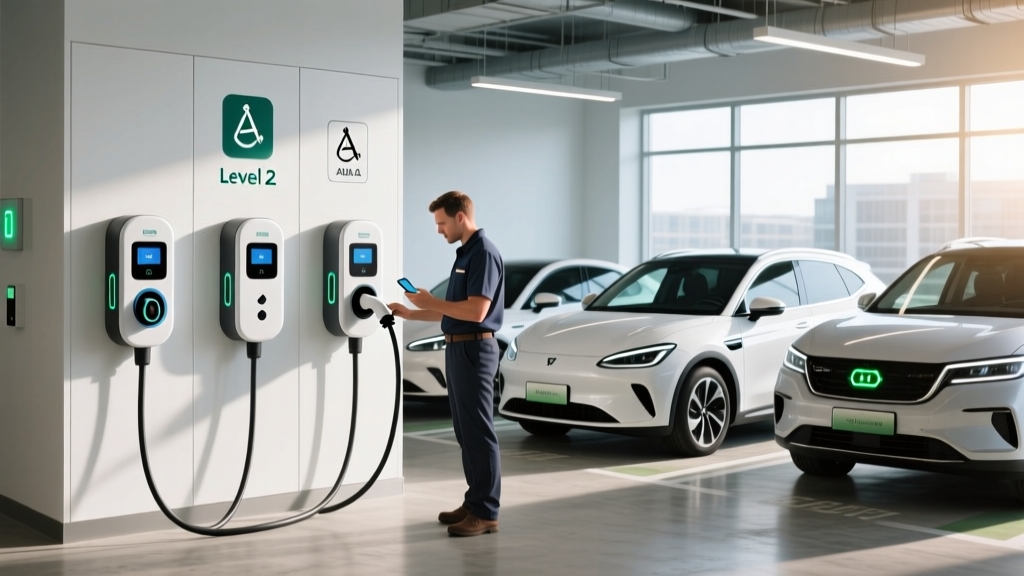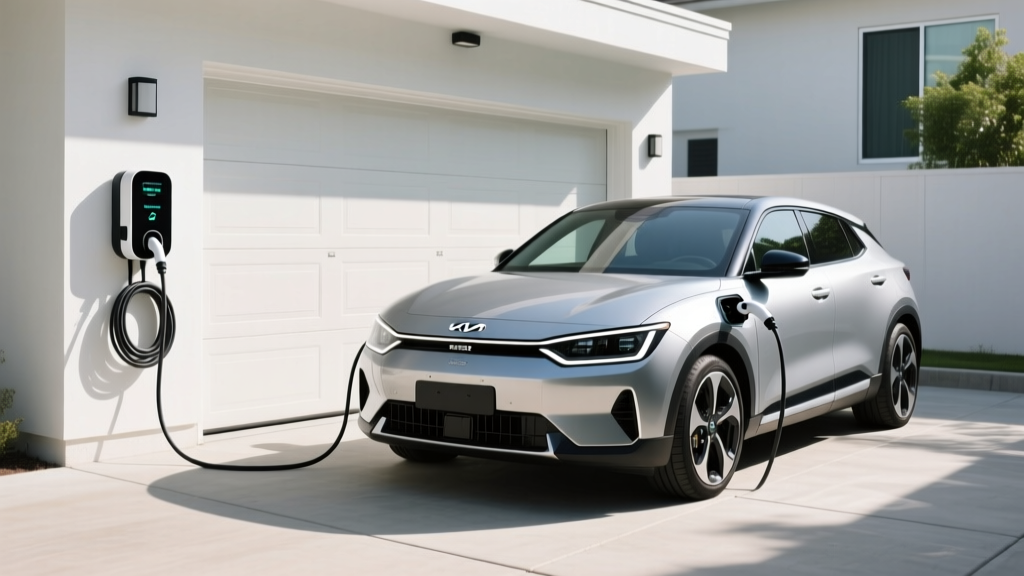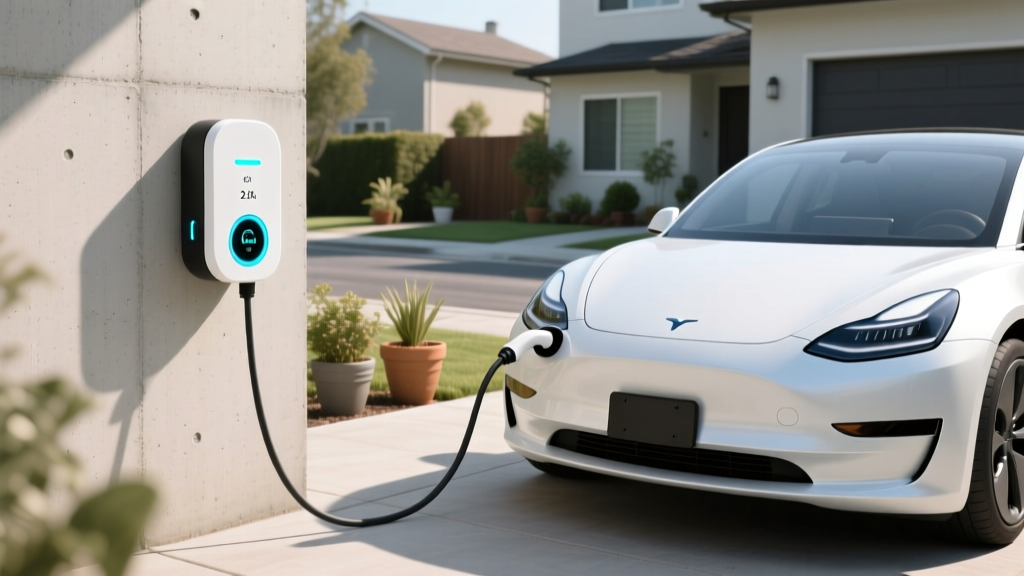
If you've been browsing portable EV chargers or trickle-charge adapters, you've likely encountered the term 2.2 kW charger — a low-power charging option that sits between a standard wall outlet and a full Level 2 home station. For some EV owners, a 2.2 kW unit fills a practical niche; for others, it's a frustrating bottleneck. This guide breaks down exactly what 2.2 kW delivers, how it compares to higher-power options, and whether it deserves a spot in your garage.
Charging Levels Explained: Where 2.2 kW Fits
EV charging is categorized by power output, measured in kilowatts (kW). Kilowatts measure the rate of energy transfer — think of it like water flow through a hose. Kilowatt-hours (kWh), by contrast, measure the total energy stored in your battery. A 2.2 kW charger delivers energy at 2.2 kilowatts per hour; filling a 75 kWh battery from empty would theoretically take roughly 34 hours.
| Level | Voltage | Power (kW) | Miles of Range Added/Hour | Typical Use Case |
|---|---|---|---|---|
| Level 1 | 120V AC | 1.0–1.9 kW | 3–5 mi/hr | Standard household outlet |
| Level 1 (High) | 120V AC | ~2.2 kW | 6–8 mi/hr | Portable 2.2 kW charger on 120V/20A circuit |
| Level 2 | 240V AC | 3.3–19.2 kW | 12–75 mi/hr | Home wallbox, public AC stations |
| DC Fast | 400–800V DC | 50–350 kW | 150–1,000+ mi/hr | Highway corridor fast charging |
A 2.2 kW charger typically operates on a 120V/20A circuit, making it an upgraded Level 1 solution. At roughly 6–8 miles of range per hour, an overnight 10-hour session adds approximately 60–80 miles — enough for many commuters with short daily drives, but inadequate for drivers covering 200+ miles between charges or those who need quick turnarounds.
How Much Does It Cost to Install a Home EV Charger?
A 2.2 kW charger's appeal lies partly in its minimal installation footprint — many units plug into an existing 120V/20A dedicated circuit without requiring an electrician. However, if your home lacks a suitable outlet near your parking spot, or if you decide to upgrade to a 240V Level 2 station later, here's what costs look like in 2026.
| Component | 2.2 kW (120V Plug-In) | Level 2 Hardwired (240V/48A) |
|---|---|---|
| Charger Equipment | $200–$400 | $400–$800 |
| Electrical Permit | $0–$50 (often not required for plug-in) | $50–$200 |
| Electrician Labor | $0 (if outlet exists) / $150–$300 (new outlet) | $500–$1,500 |
| Panel Upgrade (if needed) | N/A (low draw) | $1,500–$4,000 |
| Total Estimated Cost | $200–$750 | $950–$6,500 |
The 2.2 kW charger's low amperage draw (~18A on a 20A circuit) means it almost never triggers a panel upgrade. This is a genuine advantage for homes with older 100A electrical panels that would struggle to support a 48A Level 2 charger alongside existing loads like HVAC, electric ranges, and dryers.
Connector Compatibility: Will a 2.2 kW Charger Fit My EV?
Because 2.2 kW chargers deliver AC power, they use the same connector standards as Level 1 and Level 2 charging. Here's the 2026 connector landscape:
| Connector | Brands Using It | Notes |
|---|---|---|
| NACS (Tesla) | Tesla (all), Ford, GM, Rivian, Hyundai, Kia, Volvo, Polestar, others (2025+) | Now the dominant North American standard; most new EVs ship with NACS ports |
| CCS1 | Legacy models from VW, BMW, Mercedes, Stellantis (pre-2025) | Being phased out; adapters widely available |
| CHAdeMO | Nissan Leaf (legacy) | Discontinued for new vehicles; declining infrastructure |
| J1772 | All EVs (AC charging adapter) | Standard AC plug; NACS vehicles include a J1772-to-NACS adapter |
Most 2.2 kW portable chargers ship with a J1772 connector, which is the universal AC standard. If your EV has a NACS port (as most 2025+ models do), you'll use the J1772-to-NACS adapter that came with your vehicle. CCS1-equipped vehicles from the 2020–2024 era accept J1772 natively for AC charging — the CCS1 connector simply adds two DC pins below the J1772 inlet.
Cost Per Mile: Charging at 2.2 kW vs. Gasoline
The economics of EV charging depend heavily on your electricity rate. A 2.2 kW charger draws power slowly, which means you can take advantage of off-peak utility rates without stressing the grid — and your wallet.
| Scenario | Rate / Price | Cost Per Mile | Notes |
|---|---|---|---|
| Home Off-Peak (2.2 kW) | $0.08/kWh | $0.024 | Time-of-use plan, overnight |
| Home Standard Rate | $0.16/kWh | $0.048 | Average US residential |
| Public Level 2 | $0.30/kWh | $0.090 | ChargePoint, EVgo AC stations |
| DC Fast Charging | $0.48/kWh | $0.144 | Electrify America, Tesla Supercharger |
| Gasoline (30 MPG) | $3.40/gallon | $0.113 | US avg regular unleaded, 30 MPG combined |
| Gasoline (22 MPG) | $3.40/gallon | $0.155 | Truck/SUV average |
At off-peak home rates, a 2.2 kW charger delivers fuel at roughly $0.02–$0.05 per mile — a fraction of gasoline costs. Even at standard residential rates, home charging undercuts gasoline for vehicles averaging under 35 MPG. The trade-off is time: replenishing 150 miles at 2.2 kW takes roughly 20–25 hours, compared to about 5 hours on a 7.7 kW Level 2 charger.
Equipment Recommendations: 2.2 kW Chargers Worth Considering
The 2.2 kW charger market focuses on portability and simplicity. Here are well-regarded options available in 2026:
Lectron 120V Portable Charger (2.2 kW)
- Power: 2.2 kW (120V/18A)
- Connector: J1772 (NACS adapter included)
- Cable Length: 21 ft
- Smart Features: Basic LED status; no Wi-Fi or scheduling
- Price: ~$190
- Best For: Budget-conscious owners with short commutes and existing 120V garage outlets
Emporia Level 1/2 Portable (2.2 kW / 11.5 kW dual-mode)
- Power: 2.2 kW on 120V; 11.5 kW on 240V (with NEMA 14-50 plug)
- Connector: J1772 (NACS adapter available)
- Cable Length: 24 ft
- Smart Features: Wi-Fi, app scheduling, energy monitoring, solar integration
- Price: ~$350
- Best For: Owners who want a portable unit that can upgrade to Level 2 later
Tesla Mobile Connector (2.2 kW on 120V)
- Power: 2.2 kW (120V/20A NEMA 5-20 adapter)
- Connector: NACS native
- Cable Length: 20 ft
- Smart Features: Tesla app integration, scheduled charging, preconditioning
- Price: ~$250 (unit) + $35 (5-20 adapter)
- Best For: Tesla owners needing a backup/travel charger
For context, if you anticipate needing faster home charging within a year or two, the Emporia dual-mode unit offers a practical upgrade path — simply swap the 120V plug adapter for a NEMA 14-50 and connect to a 240V/50A circuit for 11.5 kW output, adding roughly 44 miles of range per hour.
Charging Time Examples: 10–80% at Different Battery Sizes
To illustrate the practical impact of 2.2 kW, here's how long common EVs take to charge from 10% to 80% State of Charge (SoC) — the typical daily charging window recommended for battery longevity.
| Vehicle (2026 MY) | Battery (kWh Usable) | 2.2 kW | 7.7 kW (Level 2) | 11.5 kW (Level 2) | 150 kW DC Fast |
|---|---|---|---|---|---|
| Chevy Equinox EV | 85 kWh | ~27 hrs | ~7.7 hrs | ~5.2 hrs | ~28 min |
| Tesla Model Y | 75 kWh | ~24 hrs | ~6.8 hrs | ~4.6 hrs | ~25 min |
| Hyundai Ioniq 5 | 77.4 kWh | ~25 hrs | ~7.0 hrs | ~4.7 hrs | ~18 min |
| Ford F-150 Lightning (Std) | 98 kWh | ~31 hrs | ~8.9 hrs | ~5.9 hrs | ~34 min |
| Toyota bZ4X | 64 kWh | ~20 hrs | ~5.8 hrs | ~3.9 hrs | ~30 min |
Safety and Code Considerations
Even low-power 2.2 kW chargers must meet electrical safety standards. Key considerations:
- Dedicated Circuit: The NEC requires EV chargers to be on a dedicated circuit not shared with other loads. A 2.2 kW charger needs a dedicated 120V/20A circuit — typically a single outlet on its own breaker.
- GFCI Protection: The 2023 NEC update (adopted by most states by 2026) requires GFCI (Ground-Fault Circuit Interrupter) protection for all EV charging outlets, including 120V. If your garage outlet predates this requirement, an electrician can install a GFCI breaker or outlet for $50–$150.
- Outdoor Rating: If you charge outside, ensure your charger carries an IP65 or higher ingress-protection rating. The Lectron and Tesla Mobile Connector both meet IP65; the Emporia unit is rated IP66.
- Cord Management: Never use an extension cord with a 2.2 kW EV charger. The continuous 18A draw over 10+ hours can overheat undersized extension cords, creating a fire hazard. If you need more reach, choose a charger with a longer cable or have an electrician relocate the outlet.
- UL Certification: Only purchase chargers with UL (Underwriters Laboratories) or ETL certification. Uncertified chargers from online marketplaces may lack proper thermal and overcurrent protection.
Who Should (and Shouldn't) Use a 2.2 kW Charger?
A 2.2 kW Charger Works If:
- Your daily driving is under 40 miles
- You have reliable overnight parking with a 120V outlet
- Your home has an older 100A panel with no spare 240V capacity
- You need a portable/travel charger for occasional use
- You're a PHEV owner with a small (10–20 kWh) battery — 2.2 kW fills a PHEV battery in 5–9 hours
Skip the 2.2 kW Charger If:
- Your daily driving exceeds 60 miles
- You frequently take road trips and need quick home turnarounds
- You own a large-battery EV (90+ kWh) and want daily full replenishment
- You rely on time-of-use rates and need to charge within a 4–6 hour off-peak window
- You plan to add a second EV to your household
For plug-in hybrid owners, a 2.2 kW charger is often ideal. The Toyota RAV4 Prime, for example, has an 18.1 kWh battery — a 10–80% charge at 2.2 kW takes roughly 5.8 hours, easily completed overnight.
Frequently Asked Questions
How fast will a 2.2 kW charger add range to my EV?
Expect 6–8 miles of range per hour of charging, depending on your vehicle's efficiency. A highly efficient sedan like the Lucid Air (approximately 4.0 mi/kWh) will gain closer to 8–9 miles per hour, while a less efficient truck like the Rivian R1T (approximately 2.5 mi/kWh) will add about 5–6 miles per hour at 2.2 kW.
How much does charging cost per mile compared to gas?
At the US average residential rate of ~$0.16/kWh, home EV charging costs roughly $0.04–$0.05 per mile — about one-third the cost of gasoline at $3.40/gallon in a 30 MPG vehicle ($0.11/mile). Off-peak rates can push that below $0.03/mile. See the cost-per-mile table above for detailed scenarios.
Which connector does a 2.2 kW charger use?
Most 2.2 kW chargers use the J1772 connector, which is the universal AC charging standard. NACS-equipped vehicles (Tesla and most 2025+ models) use a J1772-to-NACS adapter, typically included with the vehicle. CCS1 vehicles accept J1772 directly for AC charging.
Will a 2.2 kW charger damage my EV battery?
No — in fact, slow AC charging at 2.2 kW is among the gentlest charge rates for lithium-ion batteries. Low charge rates generate minimal heat and reduce stress on the battery cells. According to NREL battery degradation research, slow charging is associated with better long-term capacity retention compared to frequent DC fast charging.
What electrical upgrades might I need for a 2.2 kW charger?
Most homes need no upgrades. A 2.2 kW charger draws ~18A on a 120V/20A circuit — well within the capacity of standard household wiring. If you don't have a dedicated 20A outlet near your parking spot, an electrician can install one for $150–$300. A panel upgrade is virtually never required for a 2.2 kW unit.
Can I use a 2.2 kW charger for a large-battery EV like the F-150 Lightning?
You can, but it will be slow. The F-150 Lightning's 98 kWh (standard) or 131 kWh (extended) battery means a 10–80% session takes 31–42 hours at 2.2 kW. For large-battery vehicles, a 240V Level 2 charger at 7.7–11.5 kW is strongly recommended for practical daily use.
For more on Level 2 installation requirements and costs, the U.S. Department of Energy's Alternative Fuels Data Center provides state-by-state guidance on permits, incentives, and utility rebates for home charging equipment.