Wait — Does a 1998 Pontiac GTP Supercharged Grand Prix Even Charge?
Let's clear the air immediately: the 1998 Pontiac GTP Supercharged Grand Prix is a purely internal-combustion vehicle. It's powered by GM's legendary 3.8L L67 supercharged V6 producing 240 hp and 280 lb-ft of torque, paired with a 4-speed automatic and a 17.5-gallon fuel tank. It has no traction battery, no charge port, and no onboard charger. It cannot plug in, it cannot accept electrons, and no adapter in the world will change that.
So why does this keyword keep showing up in EV charging searches? Likely a search-engine mix-up, a meme, or someone conflating "supercharged" with electrified. Either way, if you landed here hoping to plug in a '98 GTP, the honest answer is: you can't. But if you're actually shopping for an electric vehicle and want to understand how charging works — or you're a GTP owner considering an EV as a second car — this guide delivers the exact numbers you need.
The Three Charging Levels, Explained With Real Numbers
EV charging comes in three tiers, defined by power (measured in kilowatts, kW) and the energy they deliver to a battery (measured in kilowatt-hours, kWh). Think of kW as the flow rate of a hose and kWh as the size of the bucket. Confusing the two is the single most common EV literacy mistake — they are not interchangeable.
| Level | Voltage | Max Power (kW) | Miles of Range Added per Hour | Typical Use Case |
|---|---|---|---|---|
| Level 1 | 120V AC | 1.0 – 1.4 kW | 3 – 5 mi/hr | Overnight top-ups, PHEVs, emergency |
| Level 2 | 240V AC | 7.2 – 19.2 kW | 20 – 70 mi/hr | Home daily charging, workplaces, retail |
| DC Fast | 400V–800V DC | 50 – 350 kW | 150 – 1,000+ mi/hr (peak) | Road trips, 10–80% top-ups |
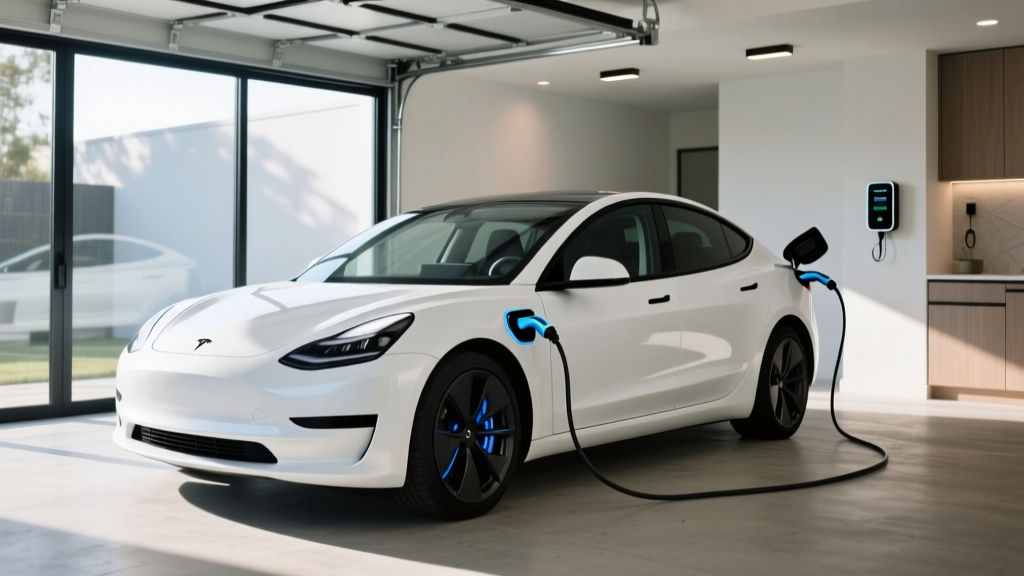
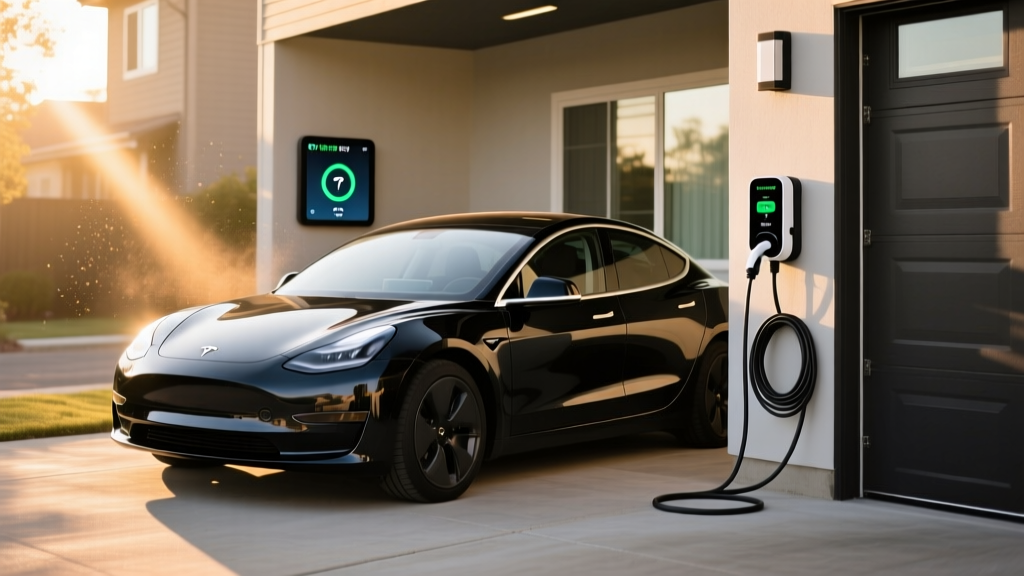
A Level 1 outlet (standard household 120V) is fine for plug-in hybrids with 30–40 miles of electric range, or for BEV owners who drive under 30 miles daily. A Level 2 home charger is the practical standard for BEV ownership. DC fast charging is for road trips and rapid top-ups — not daily use, since frequent high-power sessions can accelerate battery degradation.
How Much Does It Cost to Install a Home EV Charger?
This is where most buyers get surprised. The charger hardware itself is often the cheapest line item. The real cost is the electrical work, and in older homes (built before 2000 — including the era of that '98 Grand Prix), panel upgrades can dominate the budget.
| Component | Typical Cost Range | Notes |
|---|---|---|
| Level 2 Charger (hardwired or NEMA 14-50) | $400 – $800 | 32A–48A smart units |
| Electrician labor (240V circuit run) | $600 – $2,500 | Varies by panel-to-garage distance |
| Permit & inspection | $100 – $400 | Required in most jurisdictions |
| Electrical panel upgrade (100A → 200A) | $1,500 – $4,000 | Common in pre-2000 homes |
| Total (no panel upgrade) | $1,100 – $3,700 | Most newer homes |
| Total (with panel upgrade) | $2,600 – $7,700 | Older homes with 100A service |
Before you buy a charger, have a licensed electrician assess your panel's spare capacity. A 48A Level 2 charger on a 60A dedicated circuit requires roughly 11.5 kW continuous draw — a 100A panel already near capacity won't support it without an upgrade. The National Electrical Contractors Association and your local AHJ (Authority Having Jurisdiction) can clarify code requirements. Also check IRS.gov for the Residential Clean Energy Credit (IRC §25C), which covers 30% of home charging equipment and installation costs, up to $1,000 annually, through 2032.
Connector Compatibility: NACS, CCS, and CHAdeMO in 2026
The connector wars have largely settled. As of 2026, nearly every major automaker has adopted the North American Charging Standard (NACS), developed by Tesla, for new vehicles. CCS1 is still supported on many existing chargers and vehicles, while CHAdeMO is effectively legacy (Nissan Leaf being the last notable holdout).
| Connector | Brands Using It (New Vehicles) | Adapter Needed for Tesla Superchargers? |
|---|---|---|
| NACS (native) | Tesla, Ford, GM, Rivian, Volvo, Polestar, Hyundai/Kia (2025+), Honda, BMW, Mercedes | No — native Supercharger access |
| CCS1 | VW ID.4 (earlier builds), some legacy models | Yes — CCS-to-NACS adapter (~$200–$250) |
| CHAdeMO | Nissan Leaf (discontinued after 2025) | Yes — limited adapter options; network shrinking |
If you're buying a new EV in 2026, NACS is the default. For CCS-equipped vehicles already on the road, a certified CCS-to-NACS adapter unlocks Tesla's Supercharger network — over 30,000 stalls in North America. Always verify adapter compatibility with your specific model and model year before purchasing.
Charging Time Examples: 10–80% for Common Battery Sizes
Charging times depend on battery capacity (kWh), peak charge rate (kW), and the vehicle's charge curve. Most EVs peak in charge speed between 10–40% state of charge (SoC), then taper significantly above 80% to protect battery longevity. Here's what real-world 10–80% sessions look like for popular 2025–2026 models:
- Tesla Model Y Long Range (75 kWh usable, NMC, peak 250 kW): 10–80% in ~25 minutes at a V3 Supercharger
- Hyundai Ioniq 5 (77.4 kWh usable, NMC, peak 240 kW on 800V architecture): 10–80% in ~18 minutes at a 350 kW station
- Ford F-150 Lightning Extended Range (131 kWh usable, NMC, peak 150 kW): 10–80% in ~41 minutes
- Chevrolet Equinox EV (85 kWh usable, NMC, peak 150 kW): 10–80% in ~35 minutes
- BMW iX xDrive50 (105.2 kWh usable, NMC, peak 200 kW): 10–80% in ~34 minutes
These times assume preconditioned batteries (the vehicle's thermal management system warms the pack before arrival via navigation routing) and functional chargers operating at rated output. In cold weather (below 32°F / 0°C), expect 10–80% times to increase 20–40% if the battery isn't preconditioned.
Cost to Charge Per Mile vs. Gasoline
The economics of EV charging depend heavily on where and when you charge. Here's a realistic breakdown comparing a typical 2026 EV (3.5 mi/kWh efficiency, or ~28.5 kWh/100mi) against a gasoline sedan averaging 28 MPG combined.
| Scenario | Cost per kWh | Cost per Mile | vs. Gas (28 MPG, $3.40/gal) |
|---|---|---|---|
| Home Level 2, off-peak utility rate | $0.08 – $0.14 | $0.023 – $0.040 | 67–82% cheaper |
| Home Level 2, standard residential rate | $0.15 – $0.22 | $0.043 – $0.063 | 48–64% cheaper |
| Public Level 2 (ChargePoint, EVgo, etc.) | $0.25 – $0.45 | $0.071 – $0.129 | 14–52% cheaper |
| DC Fast Charging (Electrify America, Tesla) | $0.35 – $0.55 | $0.100 – $0.157 | 13% cheaper to 29% more expensive |
| Gasoline vehicle (28 MPG, $3.40/gal) | — | $0.121 | Baseline |
The takeaway: home charging is where EV ownership pays off. If you rely exclusively on DC fast charging at peak rates, the cost advantage shrinks or disappears. Time-of-use (TOU) utility plans — charging overnight at $0.08–$0.12/kWh — maximize savings. Check fueleconomy.gov for EPA-rated efficiency (kWh/100mi and MPGe) for specific models.
Level 2 Home Charger Recommendations (2026)
Here are four well-regarded Level 2 chargers for home use, spanning budget to premium. All are UL-listed, support NACS natively or via adapter, and offer smart features (Wi-Fi, scheduling, load management).
Grizzl-E Smart (40A)
Power: 9.6 kW (40A, 240V) · Cable: 24 ft · Connector: NACS (native) or J1772 · Smart features: Wi-Fi, app scheduling, OCPP support · Price: ~$599
Built in Canada, rugged aluminum enclosure, NEMA-4 outdoor rated. Good for cold climates. No-frills app but reliable hardware.
ChargePoint Home Flex (up to 50A)
Power: Up to 12 kW (50A configurable) · Cable: 23 ft · Connector: NACS (2025+ models) or J1772 · Smart features: Wi-Fi, Alexa integration, detailed energy reporting · Price: ~$699
Flexible amperage (16A–50A) lets you match your circuit. Strong app ecosystem and widely recommended by automakers.
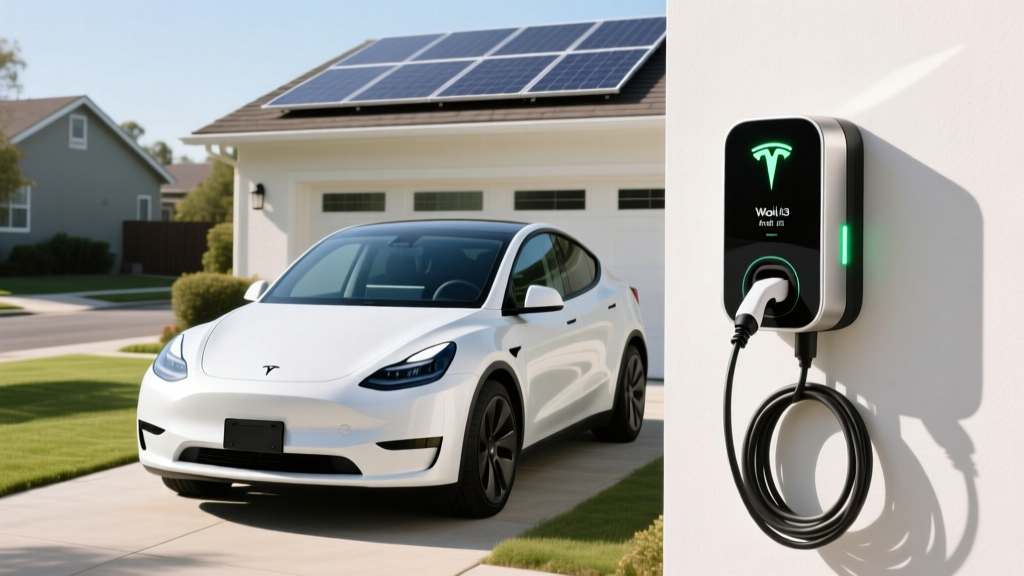
Tesla Wall Connector (48A)
Power: 11.5 kW (48A, 240V) · Cable: 24 ft · Connector: NACS native · Smart features: Wi-Fi, OTA updates, power sharing with second unit · Price: ~$475
Best value for NACS-native vehicles (Tesla, Ford, GM, Rivian, etc.). Sleek design, fast charging, but limited to NACS-equipped EVs without an adapter.
Emporia Level 2 Smart Charger (48A)
Power: 11.5 kW (48A) · Cable: 24 ft · Connector: J1772 (NACS adapter included in 2025+ kits) · Smart features: Energy monitoring, solar integration, time-of-use scheduling · Price: ~$399
Budget leader with surprisingly robust app features. Pairs well with Emporia's whole-home energy monitor. Build quality slightly below ChargePoint/Tesla.
Safety, Code, and Installation Must-Knows
EV charging involves sustained high-current draw — more like running an electric oven for 8 hours than plugging in a phone. Proper installation isn't optional; it's a fire-safety requirement.
- Dedicated circuit: Your Level 2 charger must be on its own dedicated breaker. Sharing a circuit with other appliances risks tripping or overheating.
- Continuous-load rule: The NEC requires EV chargers (classified as continuous loads) to use only 80% of a circuit's rated capacity. A 48A charger needs a 60A breaker and 60A-rated wiring.
- GFCI protection: NEC 2023 and later require GFCI protection for outdoor receptacles used for EV charging. Hardwired installations may be exempt in some jurisdictions — confirm with your electrician.
- Outdoor rating: If your charger lives outside, it must be rated NEMA 3R or NEMA 4 (rain and dust resistant). Indoor garages can use NEMA 1-rated units.
- Permit and inspection: Most municipalities require an electrical permit and post-installation inspection. Skipping this can void homeowner's insurance coverage for electrical fires.
- Panel capacity: A licensed electrician will perform a load calculation (NEC Article 220) to confirm your panel can handle the added draw. If not, a panel upgrade to 200A service is the standard fix.
Never use an extension cord for EV charging. Never plug a Level 1 charger into a power strip. And if your home was wired in the era of that 1998 Pontiac GTP — or earlier — budget for the possibility that your electrical panel needs modernization before any EV charger goes in.
Frequently Asked Questions
Can I charge a 1998 Pontiac GTP Supercharged Grand Prix at home?
No. The 1998 Pontiac GTP Supercharged Grand Prix is a gasoline vehicle with a 3.8L supercharged V6. It has no electric drivetrain, no battery pack, and no charge port. It cannot be plugged in. If you're looking to transition to an EV, this guide covers the charging infrastructure you'd need for an actual electric vehicle.
How fast will each charging level add range to a typical EV?
Level 1 (120V) adds roughly 3–5 miles per hour. Level 2 (240V, 48A) adds 30–45 miles per hour depending on the vehicle's onboard charger. DC fast charging adds 150–300+ miles in 15–25 minutes at peak speeds, though the rate tapers significantly above 80% SoC.
How much does it cost to install a home EV charger?
Expect $1,100–$3,700 total for a standard Level 2 installation in a home with adequate panel capacity. If your home needs a 100A-to-200A panel upgrade (common in homes built before 2000), total costs can reach $2,600–$7,700. The 30% federal Residential Clean Energy Credit (IRC §25C) can offset up to $1,000 of equipment and labor.
Which connector is compatible with my EV?
For 2025–2026 model-year vehicles, most brands now use NACS (Tesla's standard). Earlier CCS-equipped vehicles can access NACS/Supercharger networks with a certified adapter. CHAdeMO is legacy and should be avoided for new purchases. Check your vehicle's charge port or the manufacturer's spec sheet to confirm.
How much does charging cost per mile compared to gasoline?
Home charging at off-peak rates ($0.08–$0.14/kWh) costs $0.023–$0.040 per mile — 67–82% less than a 28 MPG gas car at $3.40/gallon. Public DC fast charging at $0.35–$0.55/kWh costs $0.10–$0.16 per mile, which can equal or exceed gasoline costs. Home charging access is the key economic advantage of EV ownership.
What electrical upgrades might I need for a home charger?
The most common upgrade is a panel capacity increase from 100A to 200A service ($1,500–$4,000). You'll also need a dedicated 240V circuit (typically 50A or 60A breaker) run from the panel to your garage or parking spot. Older homes may need wiring updates, GFCI breaker upgrades, or conduit installation. Always get a professional load calculation before purchasing equipment.