The Honest Truth About 120V EV Charging
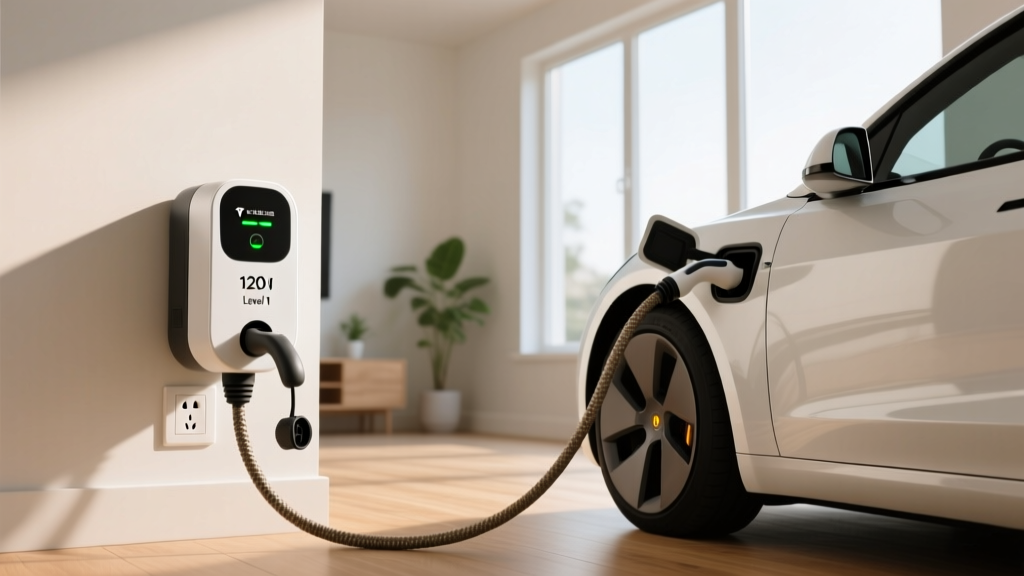
Plug into any standard household outlet and you can charge an electric vehicle. That's the promise of a 120V EV charger — also known as Level 1 charging. No electrician, no permit, no $2,000 installation bill. Just a NEMA 5-15 wall outlet and the portable cord that came with your car.
But here's what most guides gloss over: a 120V outlet delivers roughly 1.2 to 1.4 kW of power. For a modern EV with a 75–100 kWh battery, that means a full charge can take 3 to 4 days. Whether that's perfectly adequate or completely impractical depends entirely on your daily driving, your battery size, and your access to faster charging elsewhere.
This guide gives you the exact numbers — charge rates in kW, miles added per hour, real-world charging times, and cost comparisons — so you can decide if a 120V EV charger is your primary home solution or just an emergency backup.
kW (kilowatts) measures power — how fast energy flows into your battery, like water pressure from a hose. kWh (kilowatt-hours) measures energy capacity — how much total energy your battery holds, like the size of the tank. A 120V outlet delivers ~1.4 kW of power. An 82 kWh battery holds 82 kWh of energy. Never confuse the two.
Charging Levels Explained: Level 1 vs Level 2 vs DC Fast
Before evaluating a 120V charger specifically, it's worth seeing where it fits in the broader EV charging landscape. The U.S. Department of Energy classifies charging into three tiers:
| Level | Voltage | Max Power (kW) | Miles of Range Per Hour | Typical Use Case |
|---|---|---|---|---|
| Level 1 (120V) | 120V AC | 1.2–1.9 kW | 3–5 mi/hr | Standard household outlet; overnight top-ups |
| Level 2 (240V) | 240V AC | 7.2–19.2 kW | 20–75 mi/hr | Home wallbox, workplace, public AC stations |
| DC Fast Charging | 200–900V DC | 50–350+ kW | 150–1,000+ mi/hr | Highway rest stops, dedicated fast-charging hubs |
At 120V and 12 amps (the safe continuous draw for a standard 15A household circuit), you're looking at about 1.4 kW. Bump to a 20A circuit at 16A continuous and you can reach ~1.9 kW — roughly 5 miles of range per hour in an efficient EV like the Tesla Model 3 or Hyundai Ioniq 6.
For context, the average American drives 37 miles per day according to FHWA data. At 4 miles per hour of charging, a 120V EV charger plugged in for 10 hours overnight adds about 40 miles — enough for most commutes, but with almost no margin for longer trips, cold-weather range loss, or detours.
How Long Does a 120V Charger Take to Charge an EV?
Charging time depends on your battery's usable capacity (measured in kWh) and your vehicle's onboard charger efficiency. Here's what real-world 120V charging looks like for popular 2025–2026 EV models:
| Vehicle | Usable Battery (kWh) | Energy Needed (10–80%) | Time at 1.4 kW | Time at 1.9 kW (20A) |
|---|---|---|---|---|
| Chevrolet Equinox EV | 82 kWh | ~57 kWh | ~41 hours | ~30 hours |
| Tesla Model 3 (Long Range) | 75 kWh | ~53 kWh | ~38 hours | ~28 hours |
| Hyundai Ioniq 5 (Std Range) | 58 kWh | ~41 kWh | ~29 hours | ~21 hours |
| Ford F-150 Lightning (Std) | 98 kWh | ~69 kWh | ~49 hours | ~36 hours |
| Toyota bZ4X | 66 kWh | ~46 kWh | ~33 hours | ~24 hours |
| BMW i4 eDrive40 | 81 kWh | ~57 kWh | ~41 hours | ~30 hours |
These numbers assume you're charging from 10% to 80% — the range most EV owners use for daily driving to preserve long-term battery health. A full 0–100% charge on 120V for a large-battery EV like the F-150 Lightning could stretch past 70 hours.
Practical takeaway: If you drive 30–40 miles daily and plug in every night for 10–12 hours, a 120V charger can maintain your battery. But if you arrive home at 15% and need 80% by morning, Level 1 won't get you there.
Is a 120V Outlet Enough? Who Level 1 Charging Actually Works For
A 120V EV charger makes practical sense in specific scenarios:
- Low-mileage commuters: You drive under 35 miles round-trip and can plug in for 10+ hours nightly.
- PHEV owners: Plug-in hybrids like the Toyota RAV4 Prime (18.1 kWh battery) or Jeep Wrangler 4xe (17.3 kWh) fully charge in 5–6 hours on 120V — perfect for restoring 35–42 miles of electric range overnight.
- Apartment dwellers: You lack access to a 240V outlet but can reach a standard outlet from a ground-floor parking spot.
- Backup/emergency use: You have Level 2 or DC fast charging access elsewhere but keep the portable 120V cord for travel or power outages at relatives' homes.
- Pre-purchase bridge: You're waiting on a Level 2 installation and need to keep your EV charged in the meantime.
Level 1 charging falls short for:
- EVs with batteries over 75 kWh used for daily driving above 45 miles
- Cold-climate owners (battery preconditioning and cabin heating consume energy, reducing net miles gained)
- Drivers who frequently deplete below 30% and need rapid recovery
- Anyone who regularly tows or carries heavy loads (reducing vehicle efficiency below rated MPGe)
120V EV Charger Equipment: What to Buy in 2026
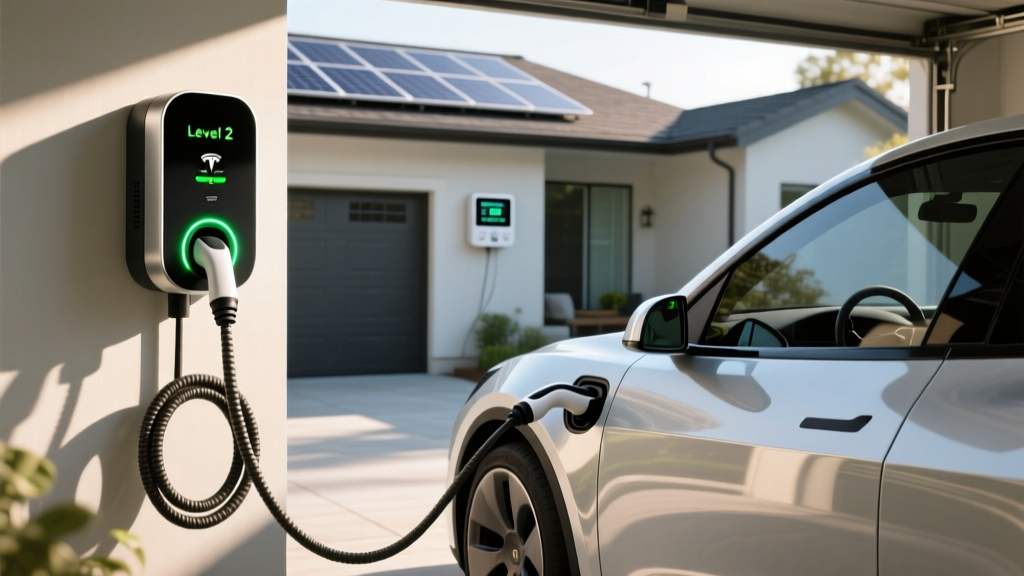
Every new EV sold in the U.S. comes with a portable Level 1 charging cord — typically 15–25 feet long with a NEMA 5-15 plug on one end and a J1772 (or NACS for Tesla) connector on the other. But aftermarket options offer better durability, longer cables, and smart features.
Emporia Vue Level 1 EV Charger
- Power: 1.44 kW (120V / 12A)
- Connector: J1772 (NACS adapter available)
- Cable length: 25 ft
- Smart features: Wi-Fi scheduling, energy monitoring via Emporia app, solar integration
- Price: ~$199
- Best for: Solar homeowners wanting to track charging energy separately
Lectron V-BOX J1772 Level 1
- Power: 1.44 kW (120V / 12A)
- Connector: J1772
- Cable length: 21 ft
- Smart features: LED status indicators, IP55 outdoor rating
- Price: ~$129
- Best for: Budget buyers who need a reliable backup cord
Tesla Mobile Connector (included with vehicle)
- Power: 1.3–1.9 kW (120V / 12–16A depending on adapter)
- Connector: NACS (native Tesla); J1772 adapter sold separately
- Cable length: 20 ft
- Smart features: Integrated with Tesla app for scheduling and current adjustment
- Price: Included; replacement ~$230
- Best for: Tesla owners — no aftermarket purchase needed for Level 1
ChargePoint Home Flex (120V mode)
- Power: 1.4 kW at 120V (switches to 12 kW at 240V with adapter)
- Connector: J1772 (NACS pigtail available)
- Cable length: 23 ft
- Smart features: Wi-Fi, Alexa, scheduling, charge session history, works on 120V or 240V
- Price: ~$599
- Best for: Future-proofers who want Level 1 now and Level 2 later without buying new hardware
Editor's note: If you're buying a dedicated Level 1 charger and don't plan to upgrade to 240V, the Emporia or Lectron units offer the best value. The ChargePoint Home Flex is overkill for 120V-only use but makes sense if you're renting and want to bring a single charger that adapts to whatever outlet your next home provides.
Connector Compatibility: Will a 120V Charger Plug Into Your EV?
Every EV sold in North America uses one of two AC charging connector standards. Your 120V cord must match your vehicle's inlet:
| Connector | Brands Using It (2026) | 120V Compatible? | Adapter Needed? |
|---|---|---|---|
| J1772 | Ford, GM, Hyundai/Kia, Toyota, VW, BMW, Rivian, Subaru, Nissan | Yes — native | None for J1772 vehicles |
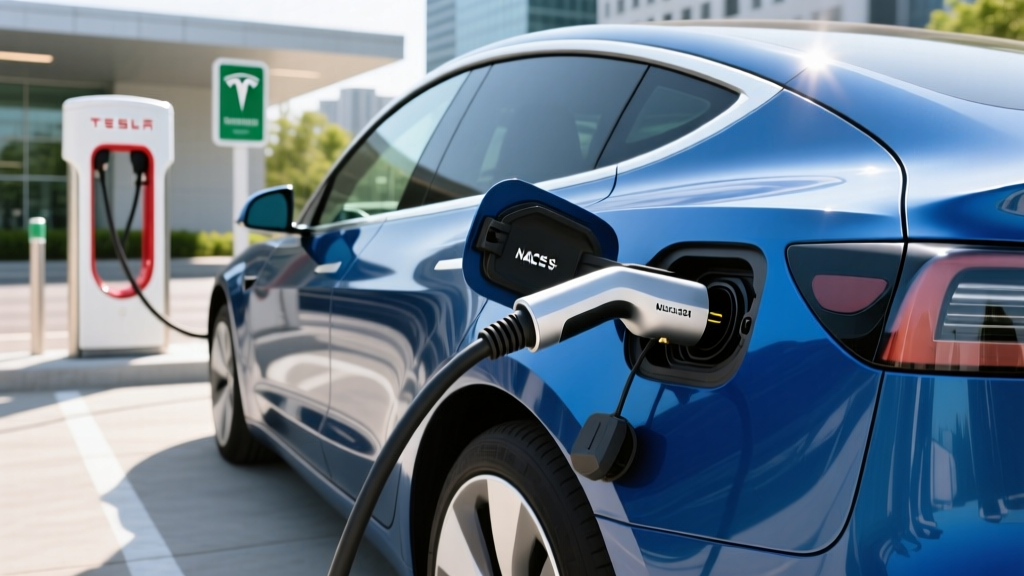
| NACS (Tesla) | Tesla (all models), Ford (2025+), GM (2025+), Rivian (2025+), Volvo, Polestar | Yes — native for Tesla; NACS cords for others | J1772-to-NACS adapters available (~$150–$250) if you have a J1772 cord and a NACS vehicle |
| CHAdeMO | Nissan Leaf (legacy, DC only) | N/A — CHAdeMO is DC-only; Leaf uses J1772 for AC/Level 1 | None for Level 1 |
The industry-wide shift to NACS (North American Charging Standard) is nearly complete for 2026 models. If you drive a Ford, GM, or Rivian vehicle produced in 2025 or later, your charge port is now NACS. Ensure your 120V cord has the correct connector — or budget for an adapter.
CCS1 note: CCS1 (Combined Charging System) was the prior DC fast-charging standard. As automakers adopt NACS, CCS1 ports are being phased out on new vehicles. For Level 1 AC charging, this transition doesn't affect you — both CCS1 and NACS vehicles use their respective AC inlets (J1772 or NACS) for 120V/240V charging.
Electrical Requirements and Safety for 120V EV Charging
A standard 120V household outlet (NEMA 5-15) is rated for 15 amps, but the National Electrical Code (NEC) requires that continuous loads — defined as running for 3 or more hours — be limited to 80% of the circuit rating. That means:
- 15A circuit: Max continuous draw = 12A → 1.44 kW
- 20A circuit: Max continuous draw = 16A → 1.92 kW (requires NEMA 5-20 outlet and compatible plug)
EV charging is the definition of a continuous load. Running at full capacity for 8–12 hours stresses wiring, outlets, and breakers. Here are critical safety requirements:
Use a Dedicated Circuit
Your 120V EV charger should be on a circuit that powers nothing else. Sharing a 15A circuit with a refrigerator, space heater, or window AC unit risks tripping the breaker or overheating wires. A licensed electrician can install a dedicated 20A/120V circuit for roughly $150–$400 if your panel has available slots.
Inspect the Outlet
Older homes (pre-1990s) may have worn, loose, or ungrounded outlets. A loose 120V receptacle under a sustained 12A load can overheat, melt, or arc. Replace any outlet that feels warm during charging, shows discoloration, or doesn't grip the plug firmly. A new commercial-grade NEMA 5-15R receptacle costs $5–$15 and takes 15 minutes to swap.
Outdoor Charging and GFCI
If your 120V outlet is outdoors, NEC 2023 and later codes require GFCI (Ground Fault Circuit Interrupter) protection. Use a charger rated IP55 or higher for weather resistance. Extension cords are strongly discouraged — if absolutely necessary, use only a 10-gauge or heavier outdoor-rated cord under 25 feet, and understand that voltage drop will reduce your already-low charge rate.
Do You Need a Panel Upgrade?
For 120V charging alone, almost certainly not. A 15A or 20A circuit draws minimal load compared to your home's total panel capacity (typically 100–200A). However, if you're considering a future upgrade to a 40A or 48A Level 2 charger, you'll need a 50A or 60A 240V circuit — and older homes with 100A panels may need a $1,500–$3,000 panel upgrade to 200A. Plan ahead if EV ownership is long-term.
How Much Does 120V Charging Cost vs. Gas and Public Charging?
Level 1 charging at home is the cheapest way to fuel an EV — but how cheap depends on your local electricity rate and whether you use time-of-use (TOU) pricing.
| Scenario | Rate | Vehicle Efficiency | Cost Per Mile |
|---|---|---|---|
| Home 120V — national avg electricity ($0.17/kWh) | $0.17/kWh | 3.5 mi/kWh (~120 MPGe) | $0.049 |
| Home 120V — off-peak TOU rate ($0.09/kWh) | $0.09/kWh | 3.5 mi/kWh | $0.026 |
| Home 120V — high-cost state (CA avg $0.30/kWh) | $0.30/kWh | 3.5 mi/kWh | $0.086 |
| Public DC fast — Electrify America ($0.48/kWh avg) | $0.48/kWh | 3.0 mi/kWh (highway) | $0.160 |
| Gas vehicle — 28 MPG combined ($3.30/gal) | $3.30/gal | 28 MPG | $0.118 |
| Gas vehicle — 22 MPG combined ($3.30/gal) | $3.30/gal | 22 MPG | $0.150 |
Even at California's high electricity rates, 120V home charging costs roughly half what gasoline does per mile. At off-peak TOU rates available in many utility districts, you're fueling your EV for under 3 cents per mile — roughly a quarter of what a 28 MPG gas car costs.
One caveat: 120V charging is slightly less efficient than Level 2 due to longer charge times and the vehicle's onboard systems (cooling, computers) drawing power during the extended session. Expect roughly 5–8% energy overhead versus Level 2 — a minor cost difference, but measurable over years of daily use.
When Should You Upgrade from 120V to 240V Level 2?
Most EV owners eventually install a 240V Level 2 home charger. The question is whether you need one immediately or can start with 120V.
Stick with 120V if:
- Your daily driving is under 40 miles round-trip
- You own a PHEV with under 20 kWh of battery
- You're renting and can't modify the electrical system
- You have reliable access to DC fast charging near your commute or workplace
- Your budget doesn't allow a $500–$2,000 installation right now
Upgrade to Level 2 (240V) if:
- You drive more than 45 miles daily
- You own a large-battery EV (80+ kWh) and regularly use 50%+ of your range
- You live in a cold climate where winter range loss of 20–30% cuts into your daily margin
- You want to precondition your battery and cabin while plugged in (Level 2 provides enough power to heat/cool without draining the battery)
- You plan to stay in your home 5+ years and want to increase resale value
120V works if: (miles driven per day) ÷ (hours plugged in) ≤ 4 miles/hour AND you rarely need a same-day full recharge.
Upgrade to 240V if: that ratio exceeds 4, or you need to recover from 20% to 80% in under 8 hours.
Frequently Asked Questions
Can I use an extension cord with a 120V EV charger?
It's strongly discouraged. Extension cords introduce voltage drop, which reduces your already-low charge rate and can cause the cord to overheat during multi-hour sessions. If you absolutely must use one, choose a 10-gauge (or thicker) cord rated for outdoor use, keep it under 25 feet, and monitor it for warmth. The safest solution is a dedicated outlet within reach of your vehicle's charge port.
Will 120V charging damage my EV battery?
No. Slow charging at 1.2–1.9 kW is actually gentle on lithium-ion cells. There's minimal heat generation, which reduces degradation stress. Many battery engineers consider Level 1 charging among the healthiest methods for long-term battery State of Health (SoH). The only concern is leaving the vehicle at 100% SoC for extended periods — set your charge limit to 80% for daily use.
How much does it cost to install a dedicated 120V circuit?
If your electrical panel has open slots and the outlet location is within 30–50 feet of the panel, a licensed electrician will typically charge $150–$400 for a dedicated 20A/120V circuit including materials, labor, and permit. This is far cheaper than a 240V Level 2 installation but ensures safe, code-compliant Level 1 charging.
Can I charge a Tesla on a 120V outlet?
Yes. Every Tesla ships with a Mobile Connector that includes a NEMA 5-15 adapter for standard 120V outlets. Expect roughly 1.3 kW (about 3–4 miles of range per hour) on a 15A circuit. The Tesla app lets you schedule charging and adjust amperage to match your circuit safely.
Does Level 1 charging use more electricity than Level 2?
Slightly. Because Level 1 takes many more hours to deliver the same energy, the vehicle's ancillary systems (battery management, thermal management, onboard computers) run longer, consuming a small amount of additional energy. Expect 5–8% more total kWh drawn from the grid compared to Level 2 for the same amount of energy stored in the battery. At $0.17/kWh, this overhead costs roughly $1–$3 per full charge — negligible for most owners.
Is a 120V EV charger enough for a road trip?
No. On a road trip, you'll rely on DC fast chargers (50–350 kW) along highways for 15–30 minute stops that add 100–250 miles of range. The 120V portable cord is useful as a backup if you're staying overnight at a destination without a Level 2 charger — it can restore 35–50 miles of range during an 8–10 hour hotel stop — but it cannot replace DC fast charging for highway travel.