Why Upgrade to a 240V Level 2 Hardwired Charger?
Transitioning from a standard 120V Level 1 trickle charger to a 240V Level 2 Electric Vehicle Supply Equipment (EVSE) is the single most impactful upgrade an EV owner can make. While Level 1 charging adds roughly 3 to 5 miles of range per hour, a 240V Level 2 system can deliver between 30 and 50 miles of range per hour, easily replenishing a full battery overnight. According to the U.S. Environmental Protection Agency (EPA), the vast majority of EV charging occurs at home, making a reliable, high-speed residential setup essential for daily convenience.
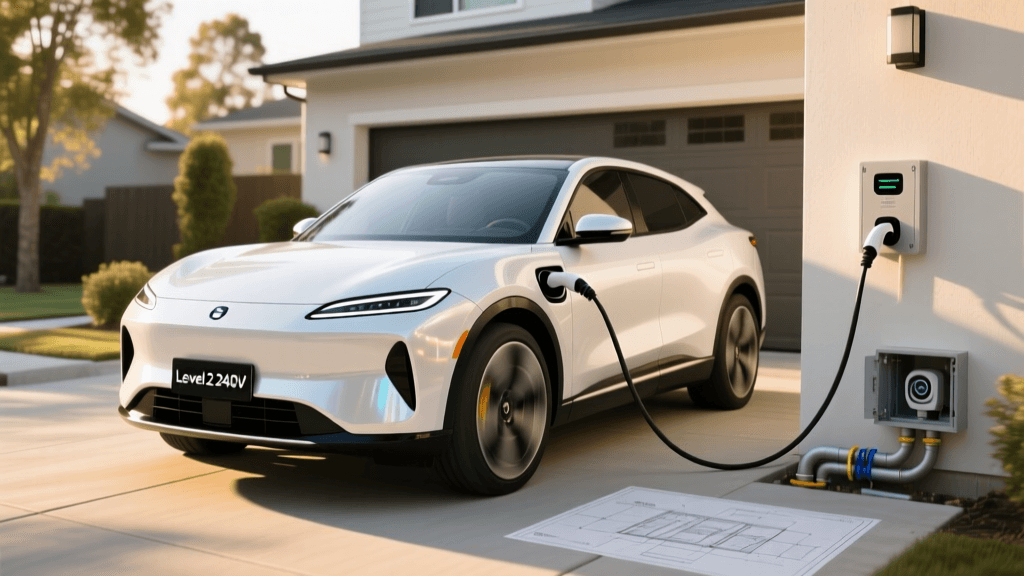
When installing a Level 2 charger, homeowners generally choose between a NEMA 14-50 receptacle (plug-in) or a direct hardwired connection. This comprehensive guide focuses specifically on the hardwired 240V installation. Hardwiring is increasingly recommended by master electricians and EV manufacturers for several reasons: it eliminates the risk of plug overheating, avoids the nuisance tripping of GFCI breakers mandated by recent National Electrical Code (NEC) updates for 50A receptacles, and allows for higher amperage circuits (up to 60A or 80A) that plug-in configurations cannot safely support.
Pre-Installation Planning and Electrical Load Calculation
Before purchasing wire or breakers, you must verify that your home's electrical panel has the capacity to support a new continuous load. The U.S. Department of Energy (DOE) strongly recommends having a licensed electrician perform a load calculation. Under NEC Article 220, an EV charger is considered a "continuous load" because it operates for three hours or more. Therefore, the circuit must be rated at 125% of the charger's maximum amperage.
- 40-Amp EVSE: Requires a 50-Amp double-pole breaker and 6 AWG copper wire.
- 48-Amp EVSE: Requires a 60-Amp double-pole breaker and 4 AWG copper wire.
- 80-Amp EVSE: Requires a 100-Amp double-pole breaker and 3 AWG copper wire.
If your home has an older 100-Amp main service panel, adding a 50-Amp EV circuit may exceed your panel's safe capacity. In such cases, you may need a panel upgrade to 200 Amps, or you can utilize a smart load-management system that dynamically throttles the charger's power draw based on the home's real-time electrical usage.
Tools and Materials Required
A safe, code-compliant installation requires specific materials rated for high-amperage continuous loads. Below is the standard bill of materials for a typical 50-Amp (40A continuous) hardwired indoor/outdoor installation.
| Item | Specification | Purpose |
|---|---|---|
| Double-Pole Breaker | 50-Amp, 240V (Square D, Eaton, or Siemens matching panel) | Overcurrent protection |
| Conductors | 6 AWG THHN/THWN-2 Copper (Black, Red, White, Green) | Power and grounding delivery |
| Conduit | 3/4-inch Liquid-Tight or EMT with sweep elbows | Physical wire protection |
| EVSE Unit | Hardwired Level 2 Charger (e.g., ChargePoint Home Flex, Wallbox Pulsar Plus) | Vehicle charging interface |
| Termination Tools | Calibrated Torque Screwdriver, Wire Strippers, Fish Tapes | Safe, fire-preventing connections |
Step-by-Step 240V Hardwired Installation Process
Disclaimer: Working inside a main electrical panel is inherently dangerous and potentially fatal. This guide is for educational purposes to help you understand the process, verify contractor work, or assist advanced DIYers. Always comply with local codes and hire a licensed electrician if you are uncertified.
Step 1: Secure Permits and Kill the Power
Adherence to the National Electrical Code (NEC), specifically NFPA 70, is legally required in almost all jurisdictions. Pull an electrical permit from your local Authority Having Jurisdiction (AHJ). Once permitted, shut off the main breaker to de-energize the entire panel. Use a non-contact voltage tester and a multimeter to verify that the bus bars are completely dead before touching any internal components.
Step 2: Install the Double-Pole Breaker
Locate two adjacent, available slots on the hot bus bars. Snap the 50-Amp double-pole breaker into place, ensuring it seats firmly onto the bus bar stabs. If your panel requires a hold-down kit or specific bus bar bracing for high-amperage breakers, install it now. Do not connect the wires to the breaker yet.
Step 3: Run Conduit and Pull Wiring
Mount your conduit from the panel to the EVSE location. For exposed indoor walls, EMT (Electrical Metallic Tubing) is standard; for outdoor or damp locations, use Liquid-Tight Flexible Metal Conduit or Schedule 80 PVC.
Pull three current-carrying conductors (Black for Line 1, Red for Line 2, White for Line 1/Neutral if required by the EVSE, though most 240V EVSEs only need two hots and a ground) and one green equipment grounding conductor. Leave at least 6 to 8 inches of slack inside the panel and the EVSE junction box. Strip exactly the amount of insulation required by the EVSE manufacturer's terminal specifications—exposed copper outside the terminal is a severe shock and short-circuit hazard.
Step 4: Mount the EVSE and Terminate Connections
Secure the EVSE backing plate to the wall using lag bolts driven into wall studs. Feed the wires through the EVSE's integrated strain relief or conduit hub.
Critical Step: Connect the Line 1, Line 2, and Ground wires to the EVSE's internal terminal block. You must use a calibrated torque screwdriver set to the exact inch-pound specification listed in the EVSE manual (typically between 25 to 45 in-lbs). Under-torqued connections cause electrical arcing and fires; over-torqued connections strip threads and damage wire strands. The Electrical Safety Foundation International (ESFI) emphasizes that proper termination torque is one of the most overlooked safety factors in residential EV charging.
Step 5: Final Panel Connections and Commissioning
Return to the panel. Connect the ground wire to the equipment grounding bus bar. Connect the two hot wires (Black and Red) to the terminals on the 50-Amp breaker, again using your torque screwdriver to meet the breaker manufacturer's specifications. Reinstall the panel cover, leaving only the breaker toggle exposed. Turn on the main breaker, followed by the new EVSE breaker. Use a multimeter at the EVSE terminals to verify you are reading approximately 240V across Line 1 and Line 2 before sealing the EVSE casing.
Common Pitfalls to Avoid
- Using Romex (NM-B) in Conduit: NM-B cable is not rated for wet locations and its outer sheath traps heat when run through conduit. Always use individual THHN/THWN-2 wires in conduit.
- Ignoring the 125% Continuous Load Rule: Never put a 48-Amp EVSE on a 50-Amp breaker. The breaker will eventually trip due to thermal overload. Always upsize the breaker and wire by 25%.
- Skipping the Inspection: Failing to get a final sign-off from your local inspector can void your home insurance in the event of an electrical fire and may disqualify you from local utility EV rebates.
Cost Analysis: What to Expect
The cost of a 240V hardwired installation varies wildly based on the distance from the panel to the garage and whether a panel upgrade is needed. Below is an average cost breakdown for a standard 50-Amp installation within 20 feet of the main panel.
| Cost Factor | Estimated Range | Notes |
|---|---|---|
| Level 2 EVSE Hardware | $400 - $700 | Depends on brand and smart features |
| Materials (Wire, Conduit, Breaker) | $150 - $300 | Copper prices fluctuate heavily |
| Permits & Inspection Fees | $50 - $150 | Varies by local municipality |
| Professional Labor (Electrician) | $400 - $1,200 | Highly dependent on routing complexity |
| Main Panel Upgrade (If needed) | $1,500 - $3,000+ | Required if upgrading from 100A to 200A |
Conclusion
Installing a hardwired 240V Level 2 EV charger is a highly rewarding home improvement project that drastically enhances the ownership experience of any electric vehicle. By prioritizing proper load calculations, utilizing THHN wiring in protective conduit, and strictly adhering to torque specifications, you ensure a charging setup that is not only blazing fast but exceptionally safe. Always partner with a licensed electrical professional to guarantee your installation meets the rigorous standards of the NEC and local building codes, securing your home and your vehicle for years of reliable service.