Why a 2007 Chevy Cobalt SS Supercharged Owner Might Look at EVs in 2026
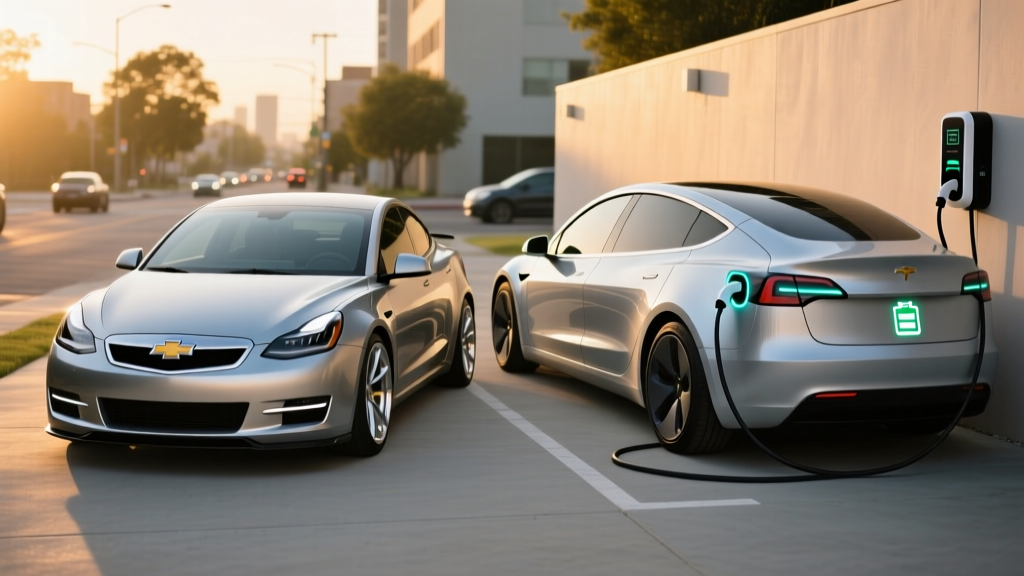
The 2007 Chevrolet Cobalt SS Supercharged is a cult classic. Its 2.0L Ecotec LSJ supercharged inline-four produces 205 hp and 200 lb-ft of torque, paired with a 5-speed manual and a curb weight around 2,800 lbs. Enthusiasts love the raw, analog feel. But in 2026, with gas prices averaging $3.50–$4.20/gallon and modern EVs offering instant torque, sub-5-second 0–60 times, and fueling costs under $0.04/mile, many Cobalt SS owners are running the numbers on going electric — or at least adding an EV to the garage as a daily driver while the Cobalt stays a weekend toy.
This guide breaks down exactly what EV charging looks like today: home installation costs, charging speeds at every level, connector compatibility, and a direct cost-per-mile comparison against the supercharged Cobalt SS. Whether you're keeping the LSJ alive or parking it for a battery-electric commuter, the data below will ground your decision in real numbers.
The Cobalt SS Supercharged Baseline: MPG, Cost Per Mile, and What You're Replacing
Before comparing charging costs, we need a clear baseline for the Cobalt SS. According to fueleconomy.gov, the 2007 Chevy Cobalt SS Supercharged is EPA-rated at:
- City: 22 MPG
- Highway: 30 MPG
- Combined: 25 MPG
Real-world driving — especially with any enthusiasm on the throttle — often drops that to 20–22 MPG combined. At $3.80/gallon (a realistic 2026 national average for regular unleaded), the Cobalt SS costs roughly:
- EPA combined (25 MPG): $0.152/mile
- Real-world (21 MPG): $0.181/mile
- Annual cost at 12,000 miles: $1,824–$2,172
That's the number an EV needs to beat. Let's see how charging costs stack up.
Charging Levels Explained: kW, Miles Per Hour, and What Each Level Delivers
EV charging comes in three tiers. The critical distinction: kW (kilowatts) measures power — how fast energy flows into the battery, while kWh (kilowatt-hours) measures energy capacity — the total amount the battery stores. Think of kW as the diameter of a hose and kWh as the size of the bucket.
| Level | Voltage / Amps | Power (kW) | Miles of Range Added Per Hour | Best Use Case |
|---|---|---|---|---|
| Level 1 (120V) | 120V / 12A | 1.4 kW | 3–5 mi/hr | Overnight trickle; PHEVs; emergency top-ups |
| Level 2 (240V) | 240V / 32–48A | 7.7–11.5 kW | 25–44 mi/hr | Daily home charging; overnight full charge |
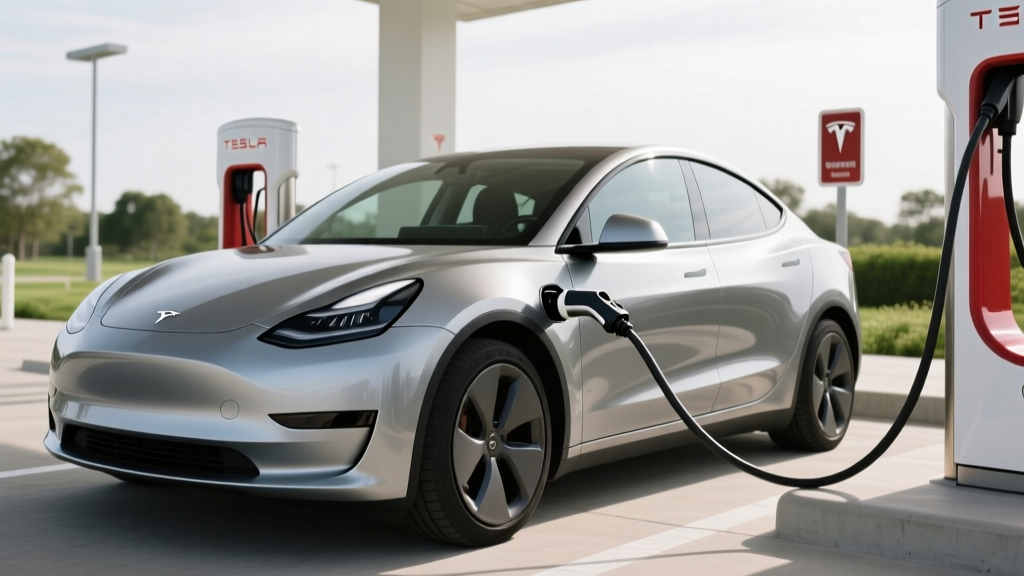
| DC Fast Charge | 400–800V DC | 50–350 kW | 150–1,000+ mi/hr (peak) | Road trips; rapid top-ups in 15–30 min |
Real-world caveat: DC fast charging does not sustain peak kW for the entire session. A vehicle rated for 250 kW peak may only hold that rate from 10–40% State of Charge (SoC), then taper to 150 kW, then 80 kW, then 40 kW as the battery fills. This is the charge curve, and it's why manufacturers quote 10–80% times rather than 0–100% times. Most modern EVs add the bulk of their range in the first 20 minutes, then slow dramatically above 80% to protect battery chemistry.
- 60 kWh battery at 150 kW peak (e.g., base Tesla Model 3): ~25 minutes
- 77 kWh battery at 240 kW peak (e.g., Hyundai Ioniq 5): ~18 minutes
- 100 kWh battery at 250 kW peak (e.g., Tesla Model S): ~30 minutes
- Level 2 home charge (11.5 kW) for a 77 kWh battery, 10–80%: ~4.7 hours
Home Charger Installation: Electrical Requirements, Panel Upgrades, and Real Costs
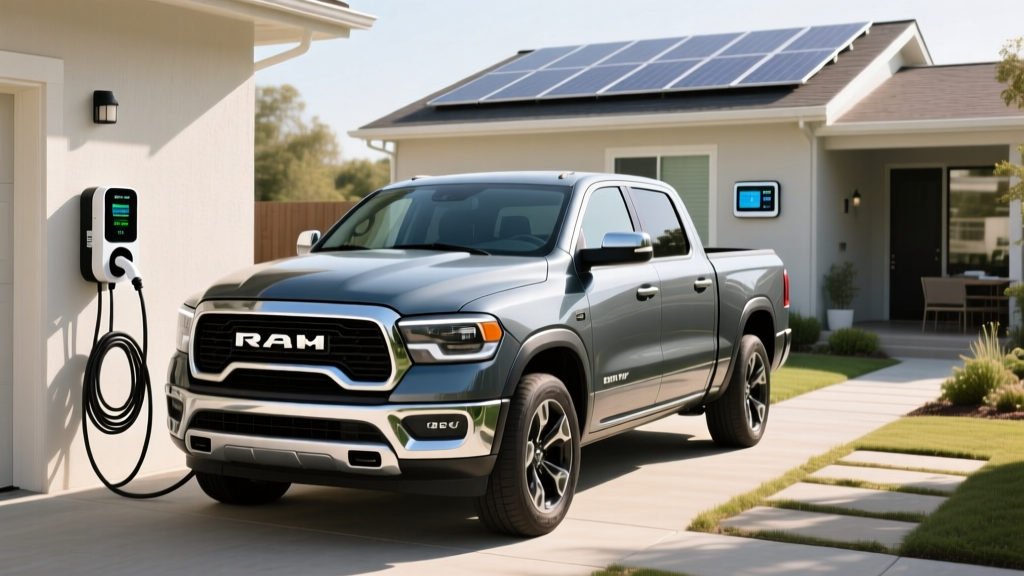
Most EV owners charge at home 80–90% of the time. A Level 2 home charger on a 240V circuit is the practical standard. Here's what installation actually involves and what it costs.
Electrical Requirements
A typical Level 2 charger draws 32A to 48A at 240V. The National Electrical Code (NEC) requires the circuit breaker to be rated at 125% of the continuous load, so:
- 32A charger: requires a 40A breaker, 8-gauge wire
- 40A charger: requires a 50A breaker, 6-gauge wire
- 48A charger: requires a 60A breaker, 4-gauge wire
Your home's electrical panel must have enough spare capacity (measured in amps) to support this new circuit. Most modern homes with a 200A panel have sufficient headroom. Older homes with 100A service — common in houses built before the 1990s — often require a panel upgrade to 200A, which is a significant added cost.
Permit and Inspection
Nearly every jurisdiction requires an electrical permit for a new 240V circuit. The permit fee typically ranges from $50–$200, and a city or county inspector will verify the work after installation. Skipping the permit risks insurance claim denial if an electrical fire occurs.
| Component | Low End | Typical | High End |
|---|---|---|---|
| Level 2 Charger (hardware) | $300 | $500 | $700 |
| Electrician labor (standard install, <50 ft run) | $400 | $800 | $1,500 |
| Electrical permit | $50 | $100 | $200 |
| Panel upgrade (100A → 200A, if needed) | $1,500 | $2,500 | $4,000 |
| Total (no panel upgrade) | $750 | $1,400 | $2,400 |
| Total (with panel upgrade) | $2,250 | $3,900 | $6,400 |
Safety and Code Considerations
- Dedicated circuit: The EV charger must be on its own dedicated breaker — no sharing with other appliances.
- GFCI protection: NEC 2020 and later require GFCI protection for outdoor receptacles; many electricians also recommend it for indoor garage installations.
- Outdoor rating: If the charger is mounted outside, it must carry a NEMA 4 or IP65 weather-resistance rating. All major chargers listed below meet this.
- Hardwired vs. plug: Chargers above 40A typically require hardwiring (no NEMA 14-50 receptacle). Hardwired installs are often more reliable and eliminate the receptacle as a failure point.
Connector Compatibility: NACS, CCS1, CHAdeMO, and What You Need to Know
As of 2026, the North American EV charging connector landscape has consolidated significantly. Here's the current state:
| Connector | Status in 2026 | Compatible Brands | Adapter Needed? |
|---|---|---|---|
| NACS (Tesla / SAE J3400) | Industry standard for new vehicles | Tesla (all), Ford, GM, Rivian, Volvo, Polestar, Hyundai/Kia (2025+), BMW, Mercedes | No — native on most 2025+ EVs |
| CCS1 | Legacy; still on 2021–2024 models | Older Ford, GM, VW, Hyundai/Kia, BMW, Mercedes EVs | CCS-to-NACS adapter (~$200–$300) needed for Tesla Supercharger access |
| CHAdeMO | Discontinued for new vehicles | Nissan Leaf (all years), Mitsubishi Outlander PHEV | No adapter available for NACS; limited DC fast-charge network |
Home charging connector: All Level 2 home chargers use the J1772 connector (or NACS for Tesla-specific units). Every non-Tesla EV sold in the US includes a J1772 inlet, and Tesla includes a J1772-to-NACS adapter in the vehicle. This means any Level 2 home charger will work with any EV you buy — no compatibility issues at home.
Level 2 Home Charger Recommendations: Power, Features, and Price
Here are four proven Level 2 chargers across price tiers, all NEMA 4 rated for indoor/outdoor use:
Grizzl-E Smart (40A)
- Power: 9.6 kW (240V / 40A)
- Cable length: 24 ft
- Connector: J1772
- Smart features: Wi-Fi, app scheduling, energy tracking
- Price: ~$399
Best for: Budget-conscious buyers who want smart scheduling for off-peak utility rates.
ChargePoint Home Flex (50A)
- Power: 12 kW (240V / 50A)
- Cable length: 23 ft
- Connector: J1772
- Smart features: Wi-Fi, Alexa, detailed energy reports, adjustable amperage
- Price: ~$549
Best for: Adjustable amperage lets you match the charger to your panel's capacity without buying a new unit.
Tesla Wall Connector (48A)
- Power: 11.5 kW (240V / 48A)
- Cable length: 24 ft
- Connector: NACS (native Tesla); includes J1772 adapter for other EVs
- Smart features: Wi-Fi, OTA updates, power sharing between two units
- Price: ~$475
Best for: Tesla owners or mixed-EV households (with the J1772 adapter).
Emporia Vue + EV Charger (48A)
- Power: 11.5 kW (240V / 48A)
- Cable length: 24 ft
- Connector: J1772
- Smart features: Whole-home energy monitoring, solar integration, load management
- Price: ~$599 (charger + energy monitor)
Best for: Solar-equipped homes or those wanting detailed whole-home energy visibility.
Charging Cost Per Mile vs. the Cobalt SS Supercharged: The Full Comparison
Now the numbers that matter. Here's a direct cost-per-mile comparison across multiple charging scenarios vs. the 2007 Cobalt SS Supercharged at real-world fuel economy.
| Scenario | Rate | Cost Per Mile (at 3.5 mi/kWh efficiency) | Annual Cost (12,000 mi) |
|---|---|---|---|
| Cobalt SS (21 MPG real-world, $3.80/gal) | $3.80/gallon | $0.181 | $2,172 |
| Home Level 2 — off-peak utility rate | $0.09/kWh | $0.026 | $312 |
| Home Level 2 — standard residential rate | $0.16/kWh | $0.046 | $552 |
| Home Level 2 — high-cost state (CA, HI, MA) | $0.30/kWh | $0.086 | $1,032 |
| Public Level 2 (ChargePoint, EVgo L2) | $0.35/kWh | $0.100 | $1,200 |
| DC Fast Charge (Electrify America, Tesla Supercharger) | $0.48/kWh avg | $0.137 | $1,644 |
Key takeaways:
- Even at the most expensive home rate ($0.30/kWh), EV charging costs less than half of what the Cobalt SS burns in fuel per mile.
- At off-peak home rates, the EV costs 86% less per mile than the Cobalt SS.
- Exclusive DC fast charging (no home charging) still saves ~$528/year vs. the Cobalt SS — but you lose the convenience and time advantage.
- The Cobalt SS's supercharged engine is particularly thirsty in city driving (22 MPG), where EVs are most efficient thanks to regenerative braking.
Real-World Ownership Context: What the Cobalt SS Has That EVs Don't (and Vice Versa)
Numbers don't capture everything. Here's an honest look at the trade-offs:
What the Cobalt SS Supercharged Offers
- Mechanical simplicity: Any competent shop can work on the LSJ Ecotec. Parts are available, and the aftermarket is deep.
- Engagement: A 5-speed manual, hydraulic steering, and supercharger whine deliver a tactile experience most EVs can't replicate.
- Refueling speed: 3 minutes at a gas station, anywhere in the country, with no charging network dependency.
- Low acquisition cost: Clean examples trade for $6,000–$12,000 in 2026 — far below any new EV.
What a Modern EV Delivers
- Instant torque: Even a base Tesla Model 3 RWD (0–60 in 5.8 sec) matches the Cobalt SS's acceleration without the supercharger lag or gear shifts.
- Home fueling: Wake up to a full "tank" every morning — no gas station detours.
- Maintenance: No oil changes, no supercharger belt, no clutch replacement, no spark plugs. Brake pad life extends dramatically with regenerative braking.
- Tech and safety: Modern ADAS (automatic emergency braking, lane-keeping, blind-spot monitoring), OTA updates, and preheating/cooling from your phone.
Frequently Asked Questions
How much does it cost to install a home EV charger?
A standard Level 2 home charger installation (40A–50A circuit, <50 ft wire run, no panel upgrade) costs $750–$2,400 including equipment, electrician labor, and permit. If your home needs a panel upgrade from 100A to 200A service, add $1,500–$4,000, bringing the total to $2,250–$6,400. Get at least three quotes from licensed electricians — prices vary significantly by region and wire-run complexity.
How fast will each charging level add range?
Level 1 (120V) adds 3–5 miles of range per hour — adequate for plug-in hybrids with small batteries but impractical for full EVs. Level 2 (240V) adds 25–44 miles per hour depending on amperage, fully recharging most EVs overnight in 5–8 hours. DC fast charging adds 150–1,000+ miles per hour at peak rate, but the charge curve tapers significantly above 80% SoC. A typical 10–80% DC fast-charge session takes 18–30 minutes for modern EVs.
Which connector/charger is compatible with my EV?
For home Level 2 charging, every EV sold in the US uses either a J1772 inlet (non-Tesla) or a NACS inlet (Tesla). Any J1772 charger works with any non-Tesla EV natively, and Tesla provides a J1772-to-NACS adapter. For DC fast charging, most 2025+ EVs use NACS; older CCS1 vehicles need a CCS-to-NACS adapter (~$200–$300) to access Tesla Superchargers. CHAdeMO vehicles (Nissan Leaf) have a shrinking fast-charge network and no adapter path to NACS.
How much does charging cost per mile vs. gas?
At a national average residential electricity rate of $0.16/kWh and a typical EV efficiency of 3.5 miles/kWh, home charging costs ~$0.046/mile. The 2007 Cobalt SS Supercharged at 21 MPG real-world and $3.80/gallon costs $0.181/mile. That's a $0.135/mile savings with an EV — or roughly $1,620 per year at 12,000 miles. Even exclusive DC fast charging ($0.48/kWh) comes in at $0.137/mile, still cheaper than the Cobalt SS.
What electrical upgrades might I need?
The most common upgrade is a panel capacity increase. If your home has a 100A electrical panel and existing high-draw appliances (electric range, dryer, central A/C), a 40A–48A EV circuit may exceed your panel's capacity. Options include upgrading to 200A service ($1,500–$4,000), installing a lower-amperage charger (24A–32A on a 30A–40A breaker), or using a smart load-management device that dynamically reduces charger draw when other appliances are running. A licensed electrician can perform a load calculation per NEC Article 220 to determine your exact requirements. Per the National Electrical Code, all EV circuits require a dedicated breaker and should include GFCI protection for outdoor installations.
Can I charge an EV with solar panels?
Yes — and it's one of the strongest economic cases for EV ownership. A typical home solar system (8–10 kW) generates enough surplus energy during the day to cover 30–40 miles of daily driving. Paired with a smart charger that schedules charging during peak solar production (like the Emporia or ChargePoint Home Flex), your effective fuel cost drops to near zero after the solar system payback period. Consult a solar installer for a system sized to cover both household load and EV charging.
Sources: fueleconomy.gov — 2007 Chevrolet Cobalt SS, IRS §30D Clean Vehicle Credit, NHTSA