The Urgent Need for Domestic Lithium in the US
As the electric vehicle (EV) revolution accelerates, the demand for lithium-ion batteries has pushed critical mineral supply chains to their limits. For domestic automakers and battery manufacturers, securing a reliable, localized supply of lithium is no longer just an economic preference—it is a national security imperative. According to the United States Geological Survey (USGS), the United States currently imports the vast majority of its lithium, relying heavily on processing hubs in China and raw material exports from Australia and Chile. However, a wave of breakthrough extraction technologies is poised to reshape the domestic landscape, turning previously untapped or inefficient US brine resources into high-yield lithium goldmines.
To understand the magnitude of this shift, we must look at the data. The legacy method of lithium extraction—solar evaporation ponds—is fundamentally incompatible with the geographic, environmental, and temporal constraints of the US battery supply chain. In its place, Direct Lithium Extraction (DLE) has emerged as the premier breakthrough technology. This data-driven comparison analysis will break down the yield, environmental footprint, and commercial viability of DLE versus traditional evaporation, focusing specifically on US-based geological formations.
Traditional Evaporation Ponds: The Legacy Bottleneck
Historically, the majority of the world's brine-based lithium has been sourced from the "Lithium Triangle" in South America using solar evaporation. This process involves pumping lithium-rich brine from underground aquifers into massive, shallow ponds. Over the course of 18 to 24 months, solar energy and wind evaporate the water, concentrating the lithium and other salts until the lithium can be chemically precipitated.
While the operational expenditure (OPEX) of this method can be low, the data reveals severe drawbacks that make it unviable for most US deposits:
- Abysmal Recovery Rates: Evaporation ponds typically yield a lithium recovery rate of only 30% to 50%. The rest is lost to the environment or trapped in salt matrices.
- Massive Land and Water Footprint: The process requires thousands of acres of land and results in the permanent loss of billions of gallons of water to the atmosphere—a non-starter in arid US regions like Nevada and Southern California.
- Geological Limitations: Evaporation requires a low magnesium-to-lithium (Mg/Li) ratio. If magnesium levels are too high, the chemical separation becomes prohibitively expensive. Many US brine sources, such as those in the Smackover Formation, have high Mg/Li ratios, rendering evaporation entirely useless.
The DLE Breakthrough: Precision Chemistry
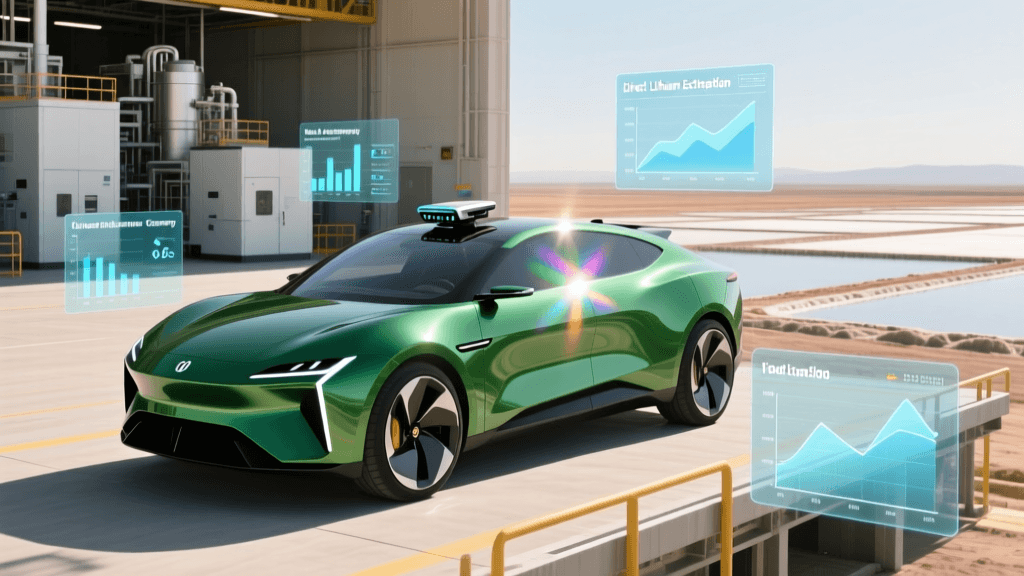
Direct Lithium Extraction (DLE) bypasses the need for solar evaporation entirely. Instead, DLE utilizes advanced chemical engineering—specifically ion exchange, adsorption, and solvent extraction—to selectively pull lithium ions directly from the brine in a matter of hours. The depleted brine is then reinjected into the source aquifer, creating a closed-loop system.
The U.S. Department of Energy (DOE) has heavily backed DLE research, noting its potential to unlock domestic resources that were previously considered technologically inaccessible. By using specialized sorbent materials (such as titanium-based or aluminum-based ion sieves), DLE facilities can target lithium ions with extreme precision, ignoring competing elements like magnesium, calcium, and sodium.
Data-Driven Comparison: DLE vs. Evaporation
The following table highlights the stark operational differences between legacy evaporation ponds and modern DLE facilities, based on aggregated industry pilot data and commercial feasibility studies.
| Metric | Solar Evaporation Ponds | Direct Lithium Extraction (DLE) |
|---|---|---|
| Extraction Time | 18 - 24 Months | 24 - 48 Hours |
| Lithium Recovery Rate | 30% - 50% | 80% - 90%+ |
| Land Footprint | Massive (1,000s of acres) | Compact (Modular, 10s of acres) |
| Water Impact | High permanent evaporative loss | Closed-loop reinjection (minimal loss) |
| Brine Compatibility | Requires low Mg/Li ratio | Tolerates high Mg/Li & impurities |
| CAPEX Profile | Low to Moderate (Earthworks) | High (Specialized chemical plants) |
| OPEX Profile | Low (Passive solar) | Moderate to High (Reagents, energy) |
Analyzing the Yield and Time Data
The most disruptive data point in the table above is the extraction time. Reducing the production cycle from two years to two days fundamentally alters the economics of the lithium market. Evaporation ponds require producers to predict market demand and lock up capital in inventory years in advance. DLE allows for agile, on-demand production that can respond to real-time EV battery market fluctuations. Furthermore, doubling the recovery rate from 40% to 80%+ effectively doubles the proven reserves of any given US brine site without drilling a single new well.
Leading US DLE Hubs: Salton Sea and Smackover
The United States features several unique geological formations where DLE is currently transitioning from pilot phases to commercial scale.
1. The Salton Sea, California (Geothermal Brine)
Dubbed "Lithium Valley," the Salton Sea holds an estimated 3.4 million metric tons of accessible lithium. The brine here is uniquely hot (up to 300°C) and highly mineralized, with lithium concentrations ranging from 200 to 300 mg/L. Companies like Controlled Thermal Resources (CTR) and EnergySource Minerals are leveraging DLE alongside existing geothermal power plants. The geothermal facilities already pump the brine to the surface for electricity generation; DLE tech simply intercepts the brine, extracts the lithium, and reinjects the fluid to maintain reservoir pressure. This co-production model drastically reduces the carbon footprint and energy costs of the extraction process.
2. The Smackover Formation, Arkansas (Oilfield Brine)
The Smackover Formation is a massive geological trend stretching across the US Gulf Coast. Historically known for oil and gas, the formation produces massive volumes of brine as a byproduct. Lithium concentrations here are generally lower than in the Salton Sea (typically 100 to 200 mg/L), but the sheer volume of existing infrastructure and brine production makes it highly attractive. Standard Lithium, in partnership with major energy corporations, has successfully deployed continuous ion exchange (IX) DLE technology in this region. The data from their demonstration plants shows consistent production of battery-grade lithium chloride with recovery rates exceeding 85%, proving that DLE can be economically viable even at lower concentrations if the brine is already being pumped.
Cost Analysis: The CAPEX vs. OPEX Reality
Critics of DLE often point to the high Capital Expenditure (CAPEX) required to build complex chemical processing plants compared to simply digging evaporation ponds. A commercial-scale DLE facility can cost hundreds of millions of dollars to engineer and construct. Furthermore, the OPEX involves continuous procurement of chemical reagents (like hydrochloric acid for elution) and electricity to run pumps and nanofiltration membranes.
However, a comprehensive Net Present Value (NPV) analysis favors DLE in the US market for three reasons:
- Time Value of Money: Generating revenue in year one (DLE) versus year three (evaporation) significantly boosts project NPV.
- Land and Permitting: Securing environmental permits for thousands of acres of open-air, toxic evaporation ponds in the US is a multi-year legal nightmare. DLE facilities, which resemble standard water treatment plants, face vastly fewer zoning and environmental hurdles.
- Water Scarcity Costs: In states like California and Nevada, water rights are expensive and heavily regulated. The closed-loop reinjection of DLE eliminates the cost and legal liability of permanent water depletion.
Environmental and Supply Chain Impacts
From an ESG (Environmental, Social, and Governance) perspective, DLE represents a massive leap forward. According to the USGS Mineral Commodity Summaries 2024, securing sustainable, traceable critical minerals is a top priority for US policymakers. DLE facilities produce a much higher purity of lithium chloride or lithium carbonate on-site, reducing the need to ship raw, unrefined materials overseas for processing. By keeping the extraction and initial refining domestic, the US can establish a true "mine-to-megawatt" battery supply chain, insulating EV manufacturers from geopolitical trade disruptions and maritime shipping delays.
Conclusion: The Future of US Battery Supply Chains
The data is unequivocal: solar evaporation ponds are a relic of a slower, less environmentally conscious era of mining. For the United States to achieve its EV manufacturing goals and secure its energy independence, Direct Lithium Extraction is not just an option; it is the only technologically and geographically viable path forward. While the upfront capital requirements for DLE are steep, the unparalleled recovery rates, minimal land footprints, and rapid production timelines offer a compelling return on investment. As pilot plants in the Smackover Formation and the Salton Sea scale into full commercial production, DLE will undoubtedly serve as the bedrock of the American lithium-ion battery revolution.