The Silicon Anode Revolution: Breaking the Graphite Ceiling
For the past decade, the electric vehicle industry has relied almost exclusively on graphite for battery anodes. While graphite is stable, cheap, and abundant, it is rapidly approaching its theoretical energy density limit of 372 mAh/g. As automakers push for 400-mile ranges and 10-minute fast-charging capabilities, the traditional lithium-ion architecture is hitting a wall. Enter silicon: a material that boasts a theoretical capacity of over 4,200 mAh/g—more than ten times that of graphite. According to the International Energy Agency (IEA), advanced anode materials like silicon are critical to unlocking the next generation of high-performance, long-range EVs.
However, silicon has a notorious flaw. When it absorbs lithium ions during charging, it swells by up to 300%. This massive volume expansion causes the anode to pulverize and the Solid Electrolyte Interphase (SEI) layer to crack, leading to rapid battery degradation. For years, this made silicon commercially unviable for EVs. Today, two advanced material science giants have engineered breakthrough solutions to tame silicon's swelling: Sila Nanotechnologies and Group14 Technologies. In this head-to-head showdown, we break down their respective technologies, commercialization timelines, and what they mean for the future of your EV.
Contender 1: Sila Nanotechnologies and Titan Silicon
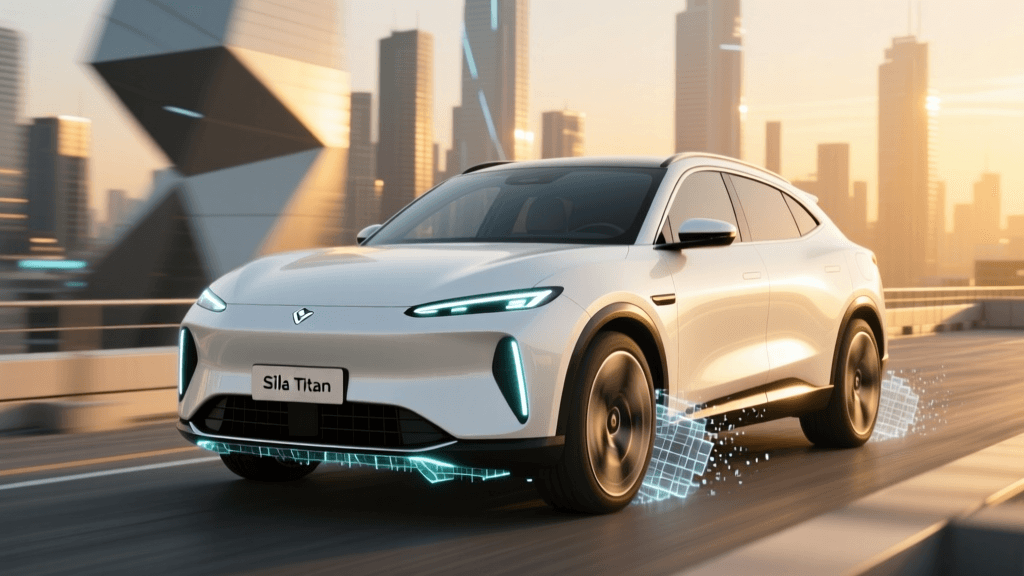
Sila Nanotechnologies, co-founded by Tesla's seventh employee, Gene Berdichevsky, has spent over a decade developing its proprietary drop-in replacement material known as Titan Silicon. Rather than simply mixing silicon powder with graphite, Sila engineered a nano-architecture. Their technology utilizes a porous, nanostructured scaffold that houses the silicon. When lithium ions enter the anode during charging, the silicon expands into the empty nanoscopic voids within the scaffold rather than expanding outward.
This inward expansion prevents the anode from swelling at the macro level, keeping the SEI layer intact and preserving battery cycle life. Sila's approach is designed to be a direct drop-in replacement for graphite in existing battery manufacturing lines, requiring minimal retooling for gigafactories. Their commercialization strategy is heavily backed by Panasonic, and the technology is slated to debut in the highly anticipated all-electric Mercedes-Benz G-Class, promising a significant boost in energy density without increasing the physical footprint of the battery pack.
Contender 2: Group14 Technologies and SCC55
Based in Woodinville, Washington, Group14 Technologies takes a slightly different approach with its flagship product, SCC55 (Silicon Carbon Composite). SCC55 is an advanced composite material that integrates silicon into a highly stable, proprietary carbon scaffold. The carbon structure acts as a mechanical buffer, accommodating the volume changes of the silicon while maintaining excellent electrical conductivity.
Group14's primary advantage lies in its manufacturing scalability and its aggressive partnership with Porsche. Through the Cellforce Group joint venture, Porsche is integrating Group14's SCC55 into high-performance battery cells destined for upcoming EVs, including the next-generation Boxster and Cayman, as well as motorsport applications. SCC55 is engineered to handle the extreme C-rates (charge and discharge speeds) required for high-performance sports cars, making it a favorite for automakers prioritizing blistering acceleration and ultra-fast DC charging.
Technical Showdown: Data and Performance Comparison
How do these two silicon anode pioneers stack up against each other on paper and in pilot programs? Below is a structured comparison of their core technologies and commercialization metrics.
| Feature | Sila Nanotechnologies (Titan Silicon) | Group14 Technologies (SCC55) |
|---|---|---|
| Core Architecture | Nanostructured silicon-carbon scaffold | Silicon-carbon composite matrix |
| Primary EV Partner | Mercedes-Benz (via Panasonic) | Porsche (via Cellforce Group) |
| Energy Density Boost | Up to 20% - 40% over standard graphite | Up to 20% - 30% over standard graphite |
| Fast Charge Capability | 10-80% in approximately 12 minutes | 10-80% in under 15 minutes (High C-rate) |
| Manufacturing Footprint | Moses Lake, WA (Active Materials Facility) | Woodinville, WA & Kirchardt, Germany |
| Target EV Segment | Luxury SUVs, Long-Range Daily Drivers | High-Performance Sports Cars, Motorsport |
| Estimated Market Debut | 2025 - 2026 | 2025 |
The Dark Horse: Amprius and Silicon Nanowires
While Sila and Group14 dominate the EV conversation, it is worth mentioning Amprius Technologies. Amprius utilizes a radically different approach: silicon nanowires (SiCore and SiMaxx). By growing silicon directly on the current collector as microscopic nanowires, they completely eliminate the need for binders and conductive additives, achieving energy densities upwards of 450 Wh/kg. Currently, Amprius is heavily focused on the aerospace, drone, and aviation sectors where weight is the ultimate enemy. While their tech is currently too expensive for mass-market EVs, their ongoing cost-reduction roadmap makes them a formidable future contender in the automotive space.
What This Means for EV Buyers: Actionable Insights
The transition from graphite to silicon anodes is not just a manufacturing footnote; it will fundamentally change the ownership experience. If you are in the market for a new EV, here is how you should navigate this technological shift:
- Time Your Purchase for 2025-2026 Models: If you are currently cross-shopping luxury EVs like the Mercedes EQG or high-performance Porsches, be aware that the first-generation models may still utilize advanced graphite or silicon-blend anodes. Waiting for the 2026 model year refreshes will likely yield vehicles equipped with pure Titan Silicon or SCC55 anodes, granting you an extra 40-60 miles of range on the exact same battery footprint.
- Rethink Your Fast-Charging Habits: Silicon anodes dramatically alter the charging curve. Traditional graphite batteries must taper charging speeds significantly past 80% to prevent lithium plating. Silicon's structural resilience allows it to accept high-current DC fast charging deeper into the state-of-charge window. When buying a silicon-anode EV, plan your road trips around 10% to 80% charging sprints, which will take nearly the same amount of time as a 10% to 50% sprint on older chemistries.
- Look for Specific Battery Badging: Automakers are beginning to treat battery chemistry as a premium trim level. Just as Porsche differentiates its Performance Battery Plus, expect marketing terms like 'Silicon-Enhanced' or 'High-Density Anode' to appear on window stickers. These vehicles will command a premium, but the reduction in overall vehicle weight (due to needing fewer cells for the same range) will improve tire wear and suspension longevity.
- Monitor Cycle Life Warranties: Early silicon anodes suffered from poor cycle life. As you evaluate new EV warranties, pay close attention to the guaranteed capacity retention at 100,000 miles. Both Sila and Group14 claim their scaffolding technologies have solved the degradation issue, but real-world fleet data from early adopters will be the ultimate proof. Look for third-party battery health reports from telematics companies like Geotab before committing to early-production silicon-anode vehicles.
Conclusion: Who Wins the Silicon Anode Race?
The showdown between Sila Nanotechnologies and Group14 Technologies is not a zero-sum game; rather, it represents the bifurcation of the premium EV market. Sila's Titan Silicon is perfectly positioned for the luxury and long-range segment, where maximizing volumetric energy density and extending cruising range are paramount. Conversely, Group14's SCC55 is tailor-made for the high-performance sector, where rapid ion transfer, extreme discharge rates, and ultra-fast charging take precedence.
For the consumer, the true winner is the EV itself. The commercialization of silicon anodes marks the end of the 'graphite ceiling' and the beginning of a new era where 400-mile ranges and 12-minute charge times become the industry standard rather than the exception. As gigafactories in Washington and Germany ramp up production of these advanced materials, the next three years will redefine what we expect from electric mobility.