The Rise of Second-Life EV Batteries in Grid Storage
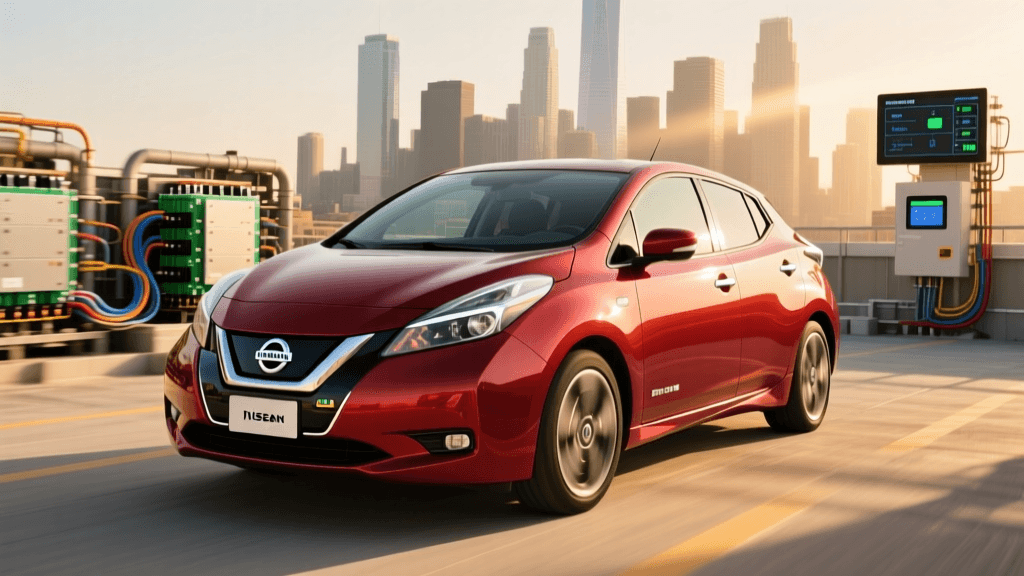
As the global push for renewable energy accelerates, the demand for stationary Battery Energy Storage Systems (BESS) has skyrocketed. According to the International Energy Agency (IEA), the exponential surge in EV adoption is creating a massive future pipeline of retired lithium-ion packs. Repurposing these 'second-life' batteries for grid storage presents a lucrative opportunity, often cutting capital expenditures by 40% to 60% compared to purchasing new LFP server-rack cells. A retired Nissan Leaf 40kWh pack or a Chevy Bolt 65kWh module may no longer have the range for highway driving, but it still retains 70% to 80% of its original capacity—more than enough for daily solar arbitrage and peak shaving.
However, transitioning a battery designed for the dynamic, high-current load of a vehicle into a stationary grid-storage application introduces complex integration hurdles. OEM Battery Management Systems (BMS) are notoriously proprietary, and degraded cells behave unpredictably. For DIY solar enthusiasts and commercial BESS integrators, troubleshooting the unique electrical, communication, and thermal quirks of repurposed packs is essential for safety and longevity. Below, we break down the most common problems encountered when building second-life grid storage and provide actionable, step-by-step solutions.
1. BMS CAN Bus Communication Dropouts
When repurposing an OEM pack, the first major roadblock is establishing communication between the vehicle's BMS and your stationary hybrid inverter (such as a Victron Quattro, SMA Sunny Island, or Deye Sunsynk). The BMS relies on a Controller Area Network (CAN bus) to report State of Charge (SoC), State of Health (SoH), and charge/discharge limits. A common troubleshooting scenario involves the inverter throwing a 'BMS Communication Lost' error after a few minutes of operation.
Troubleshooting Steps:
- Check Termination Resistors: A standard CAN bus network requires exactly two 120-ohm termination resistors—one at each physical end of the bus. OEM battery packs usually have one internal resistor. If your custom wiring harness or inverter does not provide the second resistor, the signal will reflect and cause data packet collisions. Use a digital multimeter to measure the resistance across the CAN_H and CAN_L pins. It should read exactly 60 ohms. If it reads 120 ohms, you must solder or wire in a 120-ohm terminating resistor at the inverter end.
- Verify Baud Rate and Pinout: Most automotive EV battery packs operate at a baud rate of 500 kbps. Ensure your inverter's CAN settings match this exactly. Furthermore, OEM pinouts are rarely standardized. Consult the specific service manual for your pack (e.g., the Nissan Leaf BMS pinout typically uses specific pins on the 40-way connector for CAN_H, CAN_L, and 12V wake-up). Ensure the 12V wake-up signal is being supplied by your inverter or a dedicated DC-DC converter; without it, the BMS contactors will remain open.
2. Cell Voltage Delta and Balancing Errors
Second-life cells suffer from increased internal resistance and uneven capacity fade. In a stationary BESS, a common shutdown occurs when the cell voltage delta (the difference between the highest and lowest cell in the pack) exceeds the safety threshold, typically 200mV to 300mV during heavy charge or discharge cycles. The OEM BMS relies on passive balancing, which uses small resistors to bleed off excess voltage from high cells. On degraded second-life cells, passive balancing (usually limited to 50mA - 100mA) is far too slow to correct large deltas.
Troubleshooting Steps:
- Perform a Deep Top-Balance: Before integrating the pack, charge the battery to its absolute maximum safe voltage (e.g., 4.2V per cell for NMC chemistries) at a very low current (0.05C to 0.1C). Hold it at this voltage until the current drops to near zero. This allows the passive balancers time to catch up.
- Install an Active Balancer: If the voltage delta persists during daily cycling, passive balancing is insufficient. The most effective solution is to wire a high-current active balancer (such as a Heltec or Daly 5A to 10A active balancer) in parallel with the OEM BMS sense leads. Active balancers use capacitive or inductive transfer to move energy from high-voltage cells to low-voltage cells rather than burning it as heat. A 5A active balancer can resolve a 300mV delta in a 40kWh pack within 12 to 24 hours, completely eliminating BMS cell-delta fault codes.
3. Thermal Derating and NTC Thermistor Faults
Grid storage cycles are often deeper and more sustained than typical EV driving. Packs designed for active liquid cooling (like the Tesla Model S or Chevy Bolt) will aggressively derate their charge/discharge limits if the liquid cooling loop is inactive, or if the internal NTC thermistors read out-of-range temperatures. If you are converting a liquid-cooled pack to air-cooled for a stationary garage installation, the OEM BMS will likely throw a thermal fault and open the main contactors.
Troubleshooting Steps:
- Spoof the NTC Thermistors: To bypass liquid cooling requirements, you must simulate a safe operating temperature to the BMS. Identify the NTC thermistor pins on the BMS connector. Most automotive thermistors are 10kΩ at 25°C. By wiring a precision 10kΩ resistor across the signal and ground pins, you can trick the BMS into believing the battery is sitting at a perfect 25°C (77°F), preventing false thermal derating.
- Implement Forced Convection: Spoofing the sensor does not remove the actual heat. You must ensure the physical enclosure has adequate forced convection. Install dual 120mm exhaust fans capable of moving at least 150 CFM, triggered by a standalone thermal switch set to 30°C (86°F) to maintain safe ambient temperatures inside the battery enclosure.
Data Table: First-Life vs. Second-Life BESS Integration
| Parameter | New LFP Server Rack (e.g., BYD/Sok) | Second-Life Nissan Leaf 40kWh Pack |
|---|---|---|
| Approximate Cost per kWh | $220 - $280 / kWh$85 - $120 / kWh||
| BMS Integration | Plug-and-play (Standard RS485/CAN)Requires custom pinout mapping & termination||
| Cycle Life Remaining | 6,000+ Cycles (100% SoH)1,500 - 3,000 Cycles (75% SoH)||
| Balancing Method | Active or High-Current PassiveOEM Passive (Requires Active Supplement)||
| Warranty | 10-Year Manufacturer WarrantyAs-Is / Salvage (No Warranty)
4. Safety and Off-Gassing Troubleshooting
A critical, often overlooked aspect of second-life troubleshooting is monitoring for early signs of thermal runaway. Degraded cells with dendrite buildup or micro-shorts can begin to vent electrolyte gases long before they reach critical thermal thresholds. According to foundational research by the National Renewable Energy Laboratory (NREL), ensuring proper ventilation and monitoring is paramount when deploying second-use advanced batteries in enclosed spaces.
Troubleshooting Steps:
- Install VOC Sensors: Do not rely solely on smoke detectors. Install a Volatile Organic Compound (VOC) sensor or a dedicated lithium-ion off-gassing detector (such as those made by Li-Ion Tamer) inside the battery enclosure. These sensors detect the specific electrolyte vapors released during the very first stage of cell failure, giving you minutes to hours of warning before thermal propagation occurs.
- Contact Contactor Troubleshooting: If the off-gassing sensor trips, your system must physically disconnect. Wire the VOC sensor's dry contact relay in series with the BMS contactor coil. If gas is detected, the circuit breaks, dropping the main contactors and isolating the faulty pack from the inverter and the rest of the battery bank.
Step-by-Step Commissioning Checklist
Before connecting your second-life battery bank to the grid-tied inverter, run through this troubleshooting checklist to ensure safe operation:
- Step 1: Verify main contactor operation by applying 12V directly to the BMS wake-up and contactor pins. Listen for the mechanical 'clack'.
- Step 2: Measure CAN bus resistance (must be 60 ohms).
- Step 3: Confirm inverter CAN baud rate matches the OEM BMS (usually 500 kbps).
- Step 4: Check cell voltage delta via BMS software; ensure it is under 50mV after top-balancing.
- Step 5: Verify NTC thermistor spoofing or active cooling loop functionality.
- Step 6: Test VOC off-gassing sensor integration with the emergency contactor disconnect.
- Step 7: Set inverter charge/discharge limits to 80% Depth of Discharge (DoD) to maximize the remaining lifespan of the degraded cells.
Conclusion
Repurposing EV batteries for grid storage is an excellent way to lower the cost of residential and commercial solar microgrids while keeping hazardous e-waste out of landfills. However, it requires a shift in mindset from 'plug-and-play' consumer electronics to hands-on electrical troubleshooting. By understanding CAN bus termination, supplementing passive balancing with active modules, and properly managing thermal and off-gassing safety protocols, integrators can reliably extract another decade of safe, profitable service from second-life lithium-ion packs.