Why a Portable Power Station Matters to EV Buyers
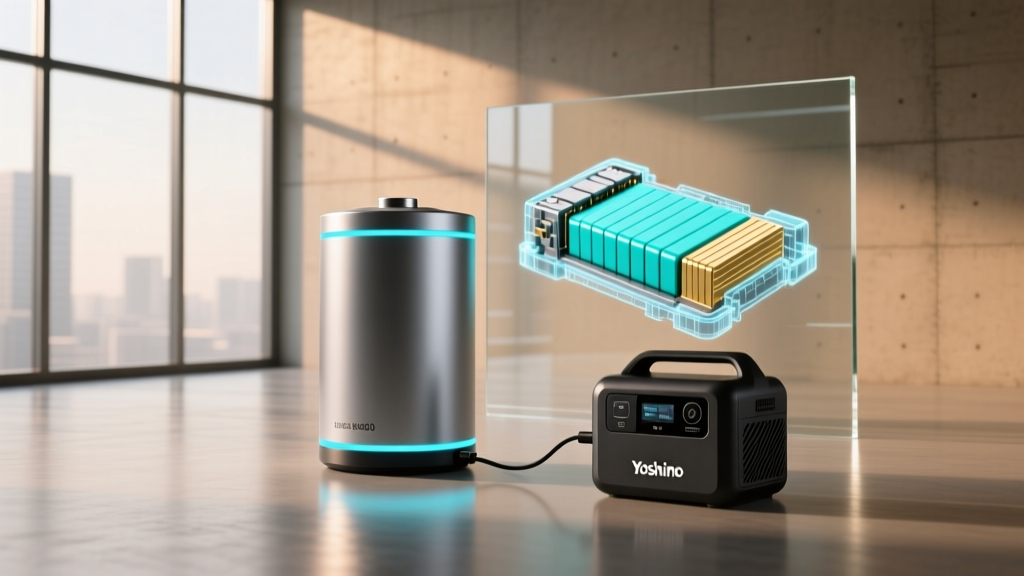
The Yoshino B4000 solid-state portable power station made waves when it became one of the first consumer products to ship with solid-state battery cells. At 2,611 watt-hours (roughly 2.6 kWh) of usable energy, it's a fraction of the 60–100+ kWh packs in modern electric vehicles — but it represents the exact chemistry pathway that automakers from Toyota to Nissan are betting on for next-generation EVs. Understanding what solid-state means in a product you can buy today helps decode what's coming to EV drivetrains in the 2028–2032 window, and it clarifies why today's proven lithium-ion chemistries (LFP and NMC) remain the right choice for any EV purchased now.
This guide covers the full spectrum of EV battery technology: the chemistries in current production vehicles, real degradation data, warranty structures, replacement economics, and the realistic timeline for solid-state packs to reach showrooms.
Battery Chemistry 101: LFP vs NMC vs Solid-State
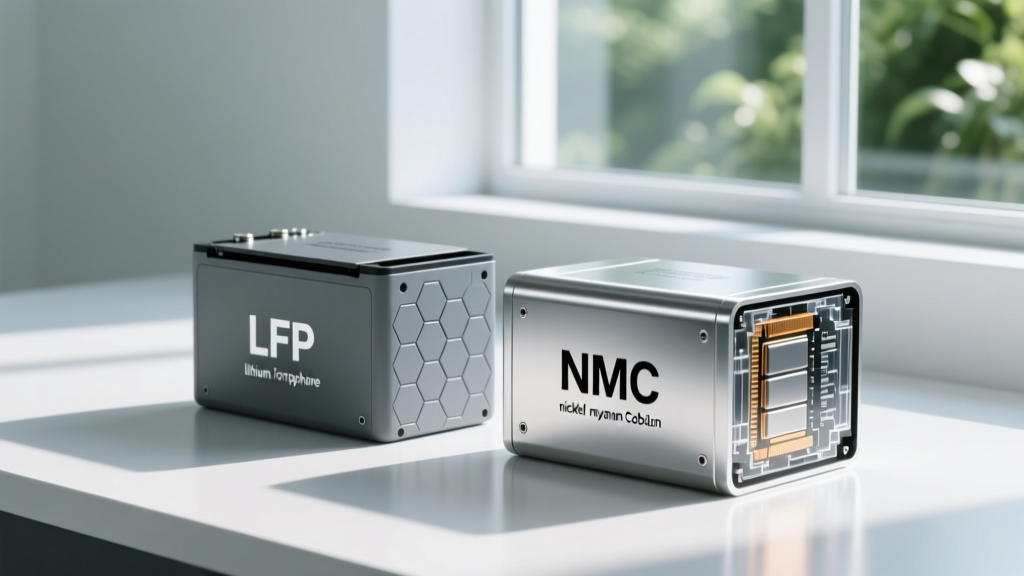
Every production EV sold in the US today uses a lithium-ion battery, but the cathode material defines the pack's personality. The two dominant chemistries are LFP (lithium iron phosphate) and NMC/NCA (nickel manganese cobalt / nickel cobalt aluminum). Solid-state batteries replace the liquid electrolyte with a solid conductor — a fundamental architecture change, not just a cathode swap.
| Attribute | LFP (e.g., Tesla Model 3 RWD, base Model Y) | NMC/NCA (e.g., Hyundai Ioniq 5, Ford F-150 Lightning ER) | Solid-State (announced/prototype) |
|---|---|---|---|
| Energy density (Wh/kg) | 160–180 | 220–300 | 350–500 (projected) |
| Cycle life (to 80% capacity) | 3,000–5,000+ | 1,000–2,000 | Claimed 2,000–5,000+ |
| Cold-weather performance | Moderate loss; ~20–30% range drop below 20°F | Better low-temp conductivity; ~15–25% range drop | Theoretically superior; unproven at scale |
| Cost per kWh (pack level) | ~$80–100 | ~$110–140 | Estimated $150–250+ (early production) |
| Thermal runaway risk | Very low | Low (with management systems) | Very low (no liquid electrolyte) |
| Recommended daily SoC | 100% OK | 80% for daily; 100% for trips | TBD by OEM |
| Current EV availability | Wide (Tesla, BYD, Rivian Standard) | Wide (most long-range models) | None in US production EVs |
Which is better? It depends on your use case. LFP wins on longevity and cost — ideal for daily commuters who charge at home and don't need maximum range. NMC wins on energy density — the right call for road-trippers and towing-heavy owners who need every mile per kWh. Solid-state promises to eventually combine both advantages, but it remains in the prototype and limited-production stage as of 2026.
The Yoshino B4000: What Solid-State Looks Like Today
The Yoshino B4000 uses a solid-state (more precisely, semi-solid-state) lithium battery to deliver 2,611 Wh in a package weighing approximately 55 lbs. By comparison, a similar-capacity NMC portable station typically weighs 65–75 lbs. The weight reduction — roughly 15–25% — illustrates the energy-density advantage that has automakers investing billions in solid-state R&D.
But the B4000 also reveals the limitations. At roughly $3,500–$4,000 MSRP, its cost per kWh is approximately $1,400–$1,500 — roughly 10–15x what automakers pay for NMC cells at scale. Scaling solid-state to a 75 kWh EV pack at that rate would add $100,000+ to a vehicle's price. That's why Toyota's announced 2027–2028 solid-state EV timeline targets limited, premium-segment production first, with cost parity to NMC not expected until the early 2030s.
For context, the B4000's solid-state cells claim over 2,500 charge cycles to 80% capacity retention. That's competitive with high-quality NMC and approaching LFP territory — encouraging for eventual automotive applications where cycle life directly translates to miles driven.
How Long Do EV Batteries Actually Last?
The data from hundreds of thousands of real-world EVs tells a reassuring story: most modern EV batteries outlast the vehicles they're installed in.
Real-World Degradation Data Points:
- Tesla 2025 Impact Report (citing fleet data): Model 3/Y packs retain approximately 85% of original capacity at 150,000 miles — roughly 8–10% loss over a typical ownership period.
- Geotab fleet study (6,300+ EVs): Average annual degradation of 1.8% across all chemistries, meaning ~82% retention at year 10 under normal use.
- LFP-specific data (Tesla Model 3 RWD fleet): Degradation curves flatten after the initial 5–7% loss in year one, with many packs showing less than 12% total loss at 200,000 miles.
- Hyundai/Kia E-GMP platforms (Ioniq 5, EV6): Owner-reported data clusters around 5–8% loss at 60,000 miles, consistent with NMC811 chemistry and aggressive thermal management.
Bottom line: Expect 80–90% capacity retention at 100,000 miles for NMC packs, and 85–93% for LFP packs. A pack reaching 70% capacity — the typical warranty threshold — at under 150,000 miles is unusual and suggests a defect, not normal wear.
What Does the Battery Warranty Actually Cover?
Federal law mandates a minimum 8-year/100,000-mile warranty on EV battery packs (10 years/150,000 miles in California Air Resources Board states). Most automakers meet or exceed this floor, and the warranty covers capacity loss below a defined threshold — typically 70% of original capacity — as well as manufacturing defects.
| Manufacturer | Warranty Period | Mileage Limit | Capacity Retention Threshold |
|---|---|---|---|
| Tesla (Model 3/Y LFP) | 8 years | 120,000 mi (LFP) / 100,000 mi (NMC) | 70% |
| Hyundai / Kia | 10 years | 100,000 miles | 70% |
| Ford (F-150 Lightning, Mustang Mach-E) | 8 years | 100,000 miles | 70% |
| Rivian | 8 years | 175,000 mi (Max pack) / 120,000 mi (Standard) | 70% |
| GM (Ultium platform) | 8 years | 100,000 miles | 70% (60% for commercial) |
| BMW / Mercedes | 8 years | 100,000 miles | 70% |
Key nuance: Warranties cover the traction battery — the high-voltage pack that propels the vehicle. The 12V auxiliary battery (which powers lights, infotainment, and computers) is covered under the standard bumper-to-bumper warranty, typically 3–4 years. If your EV won't start because the 12V died, that's not a traction-battery claim.
EV Battery Replacement Cost: What the Numbers Say
Battery replacement is the single biggest fear among prospective EV buyers — and the most misunderstood. The vast majority of EVs will never need a pack replacement under normal ownership. But if you're buying used, planning to keep a vehicle past 200,000 miles, or facing an out-of-warranty failure, here's what the economics look like in 2026.
| Vehicle / Pack Size | Battery kWh | Estimated Replacement Cost (parts + labor) | Typical Replacement Trigger |
|---|---|---|---|
| Tesla Model 3 RWD (LFP) | ~60 kWh | $10,000–$14,000 | Rare before 250,000+ mi |
| Tesla Model Y Long Range (NMC) | ~75 kWh | $13,000–$18,000 | Rare before 200,000 mi |
| Hyundai Ioniq 5 (NMC) | 77.4 kWh | $14,000–$20,000 | Rare before 200,000 mi |
| Ford F-150 Lightning ER | 131 kWh | $22,000–$32,000 | Rare before 150,000 mi |
| Chevrolet Bolt EV (older NMC) | 65 kWh | $9,000–$14,000 | Some early packs replaced under recall |
| Nissan LEAF (passive-cooled) | 40–62 kWh | $7,000–$12,000 | Higher degradation; 100,000–150,000 mi |
Important context: These are full-pack replacement figures. Many out-of-warranty failures involve individual module or cell replacement at $2,000–$6,000, not a complete pack swap. Additionally, pack costs continue declining — BloombergNEF reports average pack-level prices falling below $120/kWh in 2025, meaning a 75 kWh replacement pack in 2030 could cost $9,000 or less at the cell level.
Factors That Accelerate (or Preserve) Battery Life
Battery degradation isn't purely a function of time or mileage — how you use and charge the pack matters significantly.
What accelerates degradation:
- Frequent DC fast charging above 150 kW — sustained high-C-rate charging generates heat. Occasional road-trip fast charging is fine; daily reliance on 250+ kW chargers adds cumulative stress.
- Regularly charging to 100% (NMC/NCA packs) — high state of charge increases cell voltage stress. LFP packs tolerate 100% better and manufacturers recommend periodic full charges for BMS calibration.
- Deep discharges below 10% — consistently running the pack near empty stresses the chemistry. The usable buffer (typically 3–5% at the bottom) protects against catastrophic damage, but habitual low-SoC driving isn't ideal.
- Extreme heat exposure — parking in 100°F+ environments for extended periods without thermal management active accelerates calendar aging. Vehicles with active liquid cooling (most modern EVs) handle this far better than passively cooled packs (older Nissan LEAF).
- Storing at 100% or 0% SoC for weeks — if leaving your EV unused, set the charge limit to 50–60%.
What preserves battery health:
- Level 2 home charging at 7–11 kW — gentle charge rates produce minimal heat and are the single best thing you can do for long-term pack health.
- 20–80% daily SoC window (NMC) — this "middle half" of the charge curve minimizes voltage stress.
- Preconditioning before fast charging — warming the battery (via the vehicle's navigation-routed preconditioning or manual activation) ensures the pack accepts charge at optimal temperature, reducing lithium plating risk.
- Driving the car regularly — calendar aging affects all lithium-ion cells, but regular cycling with moderate SoC swings keeps the chemistry balanced.
How to Check and Monitor Battery Health (SoH)
State of Health (SoH) is the percentage of original capacity your pack can still hold. Most EVs don't display SoH directly on the dash, but several methods exist to check it:
- OEM apps: Tesla, Hyundai, Ford, and GM provide estimated range or battery health indicators in their companion apps. Tesla's service menu (accessible via the software screen) shows a "Battery Health" percentage on newer software versions.
- OBD-II diagnostic tools: Devices like the OBDLink SX paired with apps such as EVNotify or LeafSpy (for Nissan) can read the BMS-reported SoH directly.
- Manual calculation: Charge to 100%, note the displayed range, and compare to the original EPA range adjusted for your typical conditions. A 310-mile EPA vehicle showing 270 miles at 100% SoC in mild weather suggests roughly 87% SoH — though the BMS estimate may differ slightly.
- Dealer diagnostic: Request a battery health report during service visits. Most manufacturers can pull a detailed SoH printout, which is especially valuable when buying a used EV.
According to fueleconomy.gov, EPA range estimates are measured at 100% SoC under controlled conditions — real-world range will always be lower due to driving style, temperature, and terrain. Use the EPA number as a baseline for SoH comparison, not as a daily range expectation.
Solid-State Batteries: When Will They Reach EVs?
The Yoshino B4000 demonstrates that solid-state cells can be manufactured and shipped in consumer products — but a 2.6 kWh portable station and a 75+ kWh vehicle pack present vastly different engineering challenges. Here's where the major programs stand as of 2026:
- Toyota: Has announced a 2027–2028 launch for its first solid-state EV, targeting 750 km (~465 miles) of range and 10-minute 10–80% charging. Production will be limited initially, likely for a premium Lexus model.
- Nissan: Plans a pilot production line by 2025 with a commercial launch targeted for 2028–2029.
- Samsung SDI: Supplying solid-state cells for automotive prototypes; volume production projected for 2027+.
- QuantumScape: Continues validation with Volkswagen's PowerCo. Volume production timelines remain "2026–2027" for initial limited deployment, with broader availability unlikely before 2029.
Realistic timeline for mainstream EV buyers: Solid-state packs are expected to appear in limited premium models by 2028 and may reach cost-competitive, high-volume production by 2031–2033. If you're buying an EV in the 2025–2028 window, LFP and NMC are mature, well-understood, and backed by extensive warranty coverage. Waiting for solid-state means waiting at minimum 3–5 years for broad availability.
Frequently Asked Questions
How long do EV batteries last in years and miles?
Most modern EV batteries retain 80–90% of original capacity at 100,000–150,000 miles. Based on current fleet data, a well-maintained pack should provide reliable service for 15–20 years or 200,000+ miles before reaching the 70% capacity threshold that defines "end of life" for automotive use (the pack still works — it just holds less energy).
How much does it cost to replace an EV battery?
Full pack replacement runs $7,000–$32,000 depending on pack size and vehicle, with most mid-size SUVs in the $13,000–$18,000 range. However, the vast majority of EVs never need replacement — the pack typically outlasts the vehicle's economic life. Module-level repairs cost $2,000–$6,000 and are increasingly common as an alternative to full swaps.
What does the EV battery warranty cover?
Federally mandated minimums are 8 years/100,000 miles (10/150,000 in CARB states). Coverage applies when the pack falls below ~70% of original capacity or has a manufacturing defect. The warranty covers the high-voltage traction battery only — not the 12V auxiliary battery, which carries the standard bumper-to-bumper warranty.
How do I check my EV's battery health?
Use your OEM app's battery health indicator, an OBD-II scanner with EV-compatible software, or request a dealer diagnostic report. For a quick estimate, compare your 100% displayed range to the original EPA figure (adjusted for temperature and driving conditions).
LFP vs NMC — which chemistry should I choose?
Choose LFP if you prioritize longevity, charge mostly at home, and don't need maximum range — it handles daily 100% charging well and offers 3,000–5,000+ cycle life. Choose NMC if you need longer range per charge, tow frequently, or take regular road trips — its higher energy density means more miles in the same pack weight, but you should limit daily charges to 80%.
Is the Yoshino B4000 solid-state battery the same tech that will go in future EVs?
Similar in principle, different in scale. The B4000 uses semi-solid-state cells optimized for portable power — high energy density in a small package at premium cost. Automotive solid-state packs need to deliver 30–40x the energy at a fraction of the per-kWh cost, which requires manufacturing breakthroughs still in development. The B4000 proves the chemistry works; EV-scale deployment is a manufacturing and cost challenge that will take years to solve.