Why Battery Chemistry Determines Your Replacement Timeline
When EV owners start researching long-term ownership costs, they quickly encounter a critical decision point: understanding the battery chemistry inside their vehicle and how it affects longevity, replacement probability, and total cost of ownership. The phrase "battery replacement order" takes on real meaning when you realize that lithium iron phosphate (LFP) and nickel manganese cobalt (NMC/NCA) batteries age at fundamentally different rates — and that difference can translate to thousands of dollars and years of additional service life.
This guide breaks down the chemistry, the degradation data, the real replacement costs, and the maintenance habits that determine whether your EV's traction battery outlasts the car itself — or becomes an expensive liability.
LFP vs NMC/NCA: The Chemistry Trade-Off Matrix
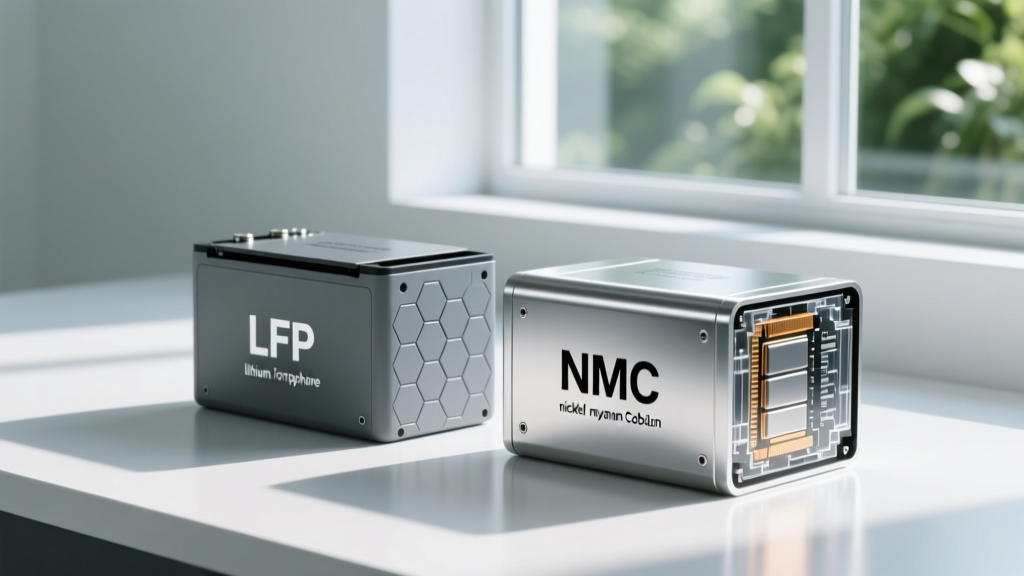
Every EV battery pack on the road today uses one of two dominant lithium-ion chemistries. The choice your automaker made at the factory determines your energy density, charge-cycle lifespan, cold-weather behavior, and eventual replacement cost.
| Attribute | LFP (Lithium Iron Phosphate) | NMC/NCA (Nickel Manganese Cobalt / Nickel Cobalt Aluminum) |
|---|---|---|
| Energy Density | ~160-180 Wh/kg (lower) | ~220-280 Wh/kg (higher) |
| Typical Cycle Life | 3,000-5,000+ full cycles | 1,000-2,000 full cycles |
| Calendar Lifespan | 15-20+ years projected | 10-15 years typical |
| Cold-Weather Performance | Moderate loss (~15-25% at 20°F) | Better retention (~10-18% at 20°F) |
| Fast-Charge Tolerance | Excellent — handles frequent DCFC well | Accelerated degradation above 80% SoC with frequent DCFC |
| Optimal Daily SoC | Can charge to 100% daily | Best kept 20-80% for longevity |
| Cost per kWh (pack-level) | ~$90-$110 | ~$120-$150 |
| Common In (2026) | Tesla Model 3/Y RWD, Ford Mustang Mach-E Select, BYD models, base Chevy Equinox EV | Tesla Long Range, Hyundai Ioniq 5/6, Rivian, BMW iX, most premium EVs |
| Cobalt/Content | Zero cobalt, zero nickel | Contains cobalt and/or nickel |
The practical takeaway: LFP sacrifices range-per-pound for dramatically longer cycle life and simpler daily charging habits. NMC/NCA delivers the range and cold-weather performance that premium and long-range buyers demand, but requires more careful state-of-charge management to maximize lifespan. Neither chemistry is universally "better" — the right choice depends on your driving pattern, climate, and how long you plan to keep the vehicle.
Real-World Degradation: What the Data Actually Shows
Battery degradation is not a cliff — it's a curve. Most EV batteries lose capacity rapidly in the first 12-18 months (typically 2-5%), then settle into a slow, linear decline for the remainder of their life. Here's what aggregated fleet data and long-term owner studies reveal:
Typical Capacity Retention by Mileage (Aggregated Fleet Data)
| Mileage | NMC/NCA Avg Retention | LFP Avg Retention | Source Context |
|---|---|---|---|
| 30,000 mi | 94-97% | 96-98% | Tesla Impact Report 2024; Recurrent Auto fleet data |
| 60,000 mi | 90-94% | 93-96% | Recurrent Auto; Geotab fleet study |
| 100,000 mi | 85-91% | 90-95% | Long-term owner surveys; fleet telematics |
| 150,000 mi | 80-88% | 87-93% | High-mileage Tesla taxi/fleet data; LFP projections from cycle-life models |
| 200,000 mi | 75-85% | 84-91% | Extrapolated from Geotab/Recurrent data; Tesla 200k-mile owner reports |
Note: Individual results vary significantly based on climate, charging habits, and thermal management system quality. Vehicles with active liquid cooling (Tesla, Hyundai/Kia, BMW) consistently outperform passive-cooled packs.
According to Recurrent Auto's analysis of over 15,000 EVs, the median battery at 100,000 miles retains approximately 90% of original capacity across all chemistries. That's a far cry from the catastrophic failure scenarios that dominate online forums. The vast majority of EV batteries will retain 70-80%+ capacity well past 150,000 miles — meaning most will outlast the vehicle's structural and mechanical components.
Battery Warranty Coverage: What's Actually Protected
Federal law (EPA emissions warranty requirements) mandates a minimum 8-year/100,000-mile warranty on EV battery packs, but most automakers exceed this baseline. Here's how the major warranties stack up in 2026:
| Manufacturer | Warranty Period | Mileage Cap | Capacity Threshold | Notes |
|---|---|---|---|---|
| Tesla (Model 3/Y RWD — LFP) | 8 years | 100,000 mi | 70% retention | LFP pack; simpler replacement |
| Tesla (Model 3/Y LR — NMC) | 8 years | 120,000 mi | 70% retention | Higher mileage cap on LR trims |
| Hyundai / Kia | 10 years | 100,000 mi | 70% retention | Among the longest calendar coverage |
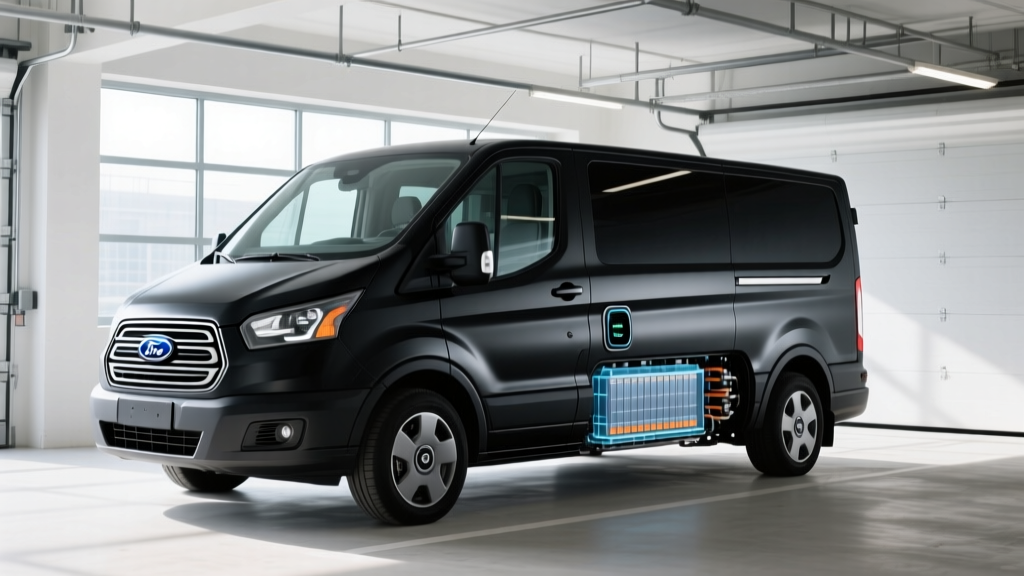
| Ford (Mach-E, F-150 Lightning) | 8 years | 100,000 mi | 70% retention | LFP on base trims; NMC on extended range |
| General Motors (Ultium platform) | 8 years | 100,000 mi | 70% retention | Covers battery and electric drive components |
| BMW | 8 years | 100,000 mi | 70% retention | Includes thermal management system |
| Rivian | 8 years | 120,000 mi | 70% retention | Higher mileage cap for adventure-use vehicles |
What triggers a warranty claim: If your battery's State of Health (SoH) drops below the stated threshold (typically 70% of original capacity) within the warranty period, the manufacturer must repair or replace the pack at no cost. Most warranties also cover individual module or cell replacement, thermal management failures, and battery management system (BMS) defects. Warranties do not cover damage from accidents, flooding, unauthorized modifications, or improper charging equipment.
For detailed federal warranty requirements, the U.S. Department of Energy's EV technology page provides baseline coverage expectations, while individual manufacturer sites detail specific terms.
EV Battery Replacement Costs: The Real Numbers
This is the question that drives the most anxiety — and the most misinformation. Here are the actual replacement cost ranges for common EV platforms as of 2026, based on dealer service quotes, third-party battery specialists, and manufacturer parts pricing:
| Vehicle / Platform | Battery Size | Chemistry | Full Pack Replacement | Module Repair (if available) |
|---|---|---|---|---|
| Tesla Model 3 RWD | ~60 kWh | LFP | $7,000 - $10,000 | $1,500 - $3,000 per module |
| Tesla Model Y Long Range | ~75 kWh | NMC | $12,000 - $16,000 | $2,000 - $4,000 per module |
| Hyundai Ioniq 5 | 77.4 kWh | NMC | $13,000 - $18,000 | Module-level repair available |
| Ford Mustang Mach-E (Std Range) | ~70 kWh (LFP) | LFP | $8,000 - $12,000 | Limited module service |
| Ford F-150 Lightning (Ext Range) | ~131 kWh | NMC | $18,000 - $25,000 | Module repair available |
| Chevrolet Equinox EV | ~85 kWh | NMC (Ultium) | $12,000 - $17,000 | Ultium modular design supports partial replacement |
| BMW iX xDrive50 | ~105 kWh | NMC | $18,000 - $24,000 | Module-level service at certified centers |
| Rivian R1T (Large Pack) | ~135 kWh | NMC | $20,000 - $28,000 | Module-level replacement supported |
Key context that most coverage omits: Full pack replacement is rare. Most battery issues involve a single degraded or defective module, and modern packs from GM (Ultium), Hyundai, BMW, and Rivian are designed for module-level service — replacing just the failing unit for $1,500-$4,000 rather than the entire pack. Tesla's structural battery pack design makes module-level repair more difficult, which is why Tesla replacements tend to be full-pack swaps.
The other critical context: most EV batteries never need replacement during typical ownership. At 12,000-15,000 miles driven annually, a battery retaining 85%+ capacity at 150,000 miles (10-12 years) still provides 200+ miles of real-world range for most vehicles — perfectly usable for daily driving. Replacement typically becomes relevant only for high-mileage fleet vehicles, taxis, or owners who plan to keep their EV past 200,000 miles.
Factors That Accelerate (or Preserve) Battery Life
Battery degradation is not random — it's driven by specific, controllable factors. Understanding these lets you maximize your pack's lifespan and avoid the conditions that push you toward an early replacement order.
Battery Longevity: Do's and Don'ts
- DO charge LFP to 100% regularly. LFP batteries benefit from periodic full charges to recalibrate the BMS. Tesla and Ford recommend 100% at least once weekly for LFP packs.
- DO keep NMC/NCA between 20-80% for daily use. Set your charge limit to 80% for routine driving; reserve 100% for road trips.
- DO precondition your battery before DC fast charging. Most EVs do this automatically when you navigate to a charger. Preconditioning warms the cells to optimal temperature (typically 85-95°F / 30-35°C), enabling faster charging and reducing lithium plating risk.
- DO use Level 2 home charging as your primary method. Slow, steady Level 2 charging (7-11 kW) generates far less heat and stress than repeated DC fast charging.
- DO park in shade or a garage in hot climates. Sustained high ambient temperatures (above 95°F / 35°C) accelerate calendar degradation, especially at high SoC.
- DON'T rely exclusively on DC fast charging. Occasional DCFC is fine, but daily use — especially at rates above 150 kW — measurably accelerates degradation. Studies show vehicles that DCFC more than 3x/week degrade ~2-3% faster over 100k miles.
- DON'T store your EV at 100% or 0% SoC for extended periods. If leaving your car for a week or more, aim for 50-60% SoC.
- DON'T ignore extreme cold without preconditioning. Charging a cold battery (below 32°F / 0°C) without preconditioning causes lithium plating — a permanent, irreversible capacity loss mechanism.
- DON'T let your EV sit unplugged at very low SoC in hot weather. The combination of heat and low voltage stresses cell chemistry.
Monitoring Your Battery's State of Health (SoH)
State of Health (SoH) is the percentage of your battery's original capacity that remains usable. A new EV starts at 100% SoH; a battery at 85% SoH holds 85% of its original kWh. Here's how to track it:
Manufacturer apps and in-car displays: Tesla provides battery health estimates through the service menu (accessible via the touchscreen). Hyundai/Kia's Bluelink/Uvo connected services include SoH readouts. BMW's iDrive system displays battery health in the vehicle status menu. Not all manufacturers expose SoH directly — some only show estimated range, which is influenced by temperature and driving style.
Third-party OBD-II tools: Devices like the OBDLink SX paired with apps such as EV Bat Health or LeafSpy (for Nissan Leaf) can read BMS data directly, providing SoH percentage, cell voltage variance, and cycle count. These tools typically cost $30-$80 and work on most OBD-II-compliant EVs.
Charging-log analysis: Services like Recurrent Auto (free for owners) analyze your charging patterns and provide SoH estimates benchmarked against their fleet database. This is the lowest-friction option — it works passively through your vehicle's connected services.
When to be concerned: If your SoH drops more than 2-3% per year after the initial break-in period, or if you notice sudden range loss (e.g., 15+ miles overnight that can't be explained by temperature), schedule a battery diagnostic with your dealer. These can indicate a failing module or BMS issue that may be covered under warranty.
Emerging Battery Technology: What's Next (and When)
Several next-generation battery technologies promise to reshape the replacement calculus — but none are available in production EVs as of 2026. Here's a realistic timeline assessment:
Solid-state batteries replace the liquid electrolyte with a solid ceramic, polymer, or glass separator. Benefits include higher energy density (potentially 400+ Wh/kg), faster charging, improved safety (no flammable electrolyte), and longer cycle life. Toyota has announced solid-state EV prototypes targeting 2027-2028 limited production, but cost and manufacturing scale remain significant barriers. Widespread solid-state adoption is realistically a 2029-2032 timeline for mainstream vehicles.
Silicon-dominant anodes replace graphite anodes with silicon, which can store roughly 10x more lithium ions per unit mass. Companies like Sila Nanotechnologies and Group14 are supplying silicon anode materials to automakers, with early commercial deployments in premium models (Mercedes-Benz G-Class EV, announced). Expect silicon-anode enhancements to incrementally improve energy density in NMC cells through the late 2020s — but this is an evolution, not a revolution in replacement timelines.
Sodium-ion batteries use abundant sodium instead of lithium, dramatically reducing material costs. CATL and BYD have begun deploying sodium-ion packs in Chinese-market EVs. These offer lower energy density than LFP but could appear in entry-level US-market EVs by 2028-2030, primarily in urban commuter vehicles where range requirements are modest.
What this means for current owners: Today's LFP and NMC batteries are mature, well-understood technologies with predictable degradation curves. There is no compelling reason to delay an EV purchase waiting for next-generation chemistry — current packs are engineered to outlast the vehicle's useful life in the majority of ownership scenarios.
Frequently Asked Questions
How long do EV batteries actually last in years and miles?
Based on aggregated fleet data, most modern EV batteries (2020+) retain 80-90% of original capacity at 150,000 miles (approximately 10-12 years at average US driving rates). LFP batteries typically outlast NMC/NCA by 20-40% in cycle life. Full battery failure before 100,000 miles is statistically rare — under 1% of the fleet according to Recurrent Auto and Geotab studies. Most EV batteries will outlast the vehicle's suspension, interior, and body panels.
How much does an EV battery cost to replace in 2026?
Full pack replacement ranges from approximately $7,000 (smaller LFP packs like the Tesla Model 3 RWD) to $28,000 (large NMC packs like the Rivian R1T). However, most battery issues require only module-level repair at $1,500-$4,000 per module. Full replacement is uncommon and typically only necessary for high-mileage vehicles past 200,000 miles or packs with widespread cell failure. Always check warranty coverage first — if your pack drops below 70% SoH within 8 years/100,000 miles, replacement is free.
What exactly does the EV battery warranty cover?
Federally mandated minimum coverage is 8 years/100,000 miles (some states require 10 years/150,000 miles for PZEV/EV components). The warranty guarantees your battery will retain at least 70% of original capacity. Coverage includes cell/module defects, BMS failures, and thermal management system issues. It does not cover damage from collisions, flooding, unauthorized modifications, or use of non-certified charging equipment. Hyundai and Kia extend this to 10 years/100,000 miles as a competitive differentiator.
How do I check my EV battery health at home?
Three approaches: (1) Check your manufacturer's app or in-car service menu for an SoH readout — Tesla, Hyundai, BMW, and others provide this directly. (2) Use an OBD-II scanner ($30-$80) with EV-specific software like EV Bat Health to pull BMS data including SoH percentage, cell voltage spread, and charge cycle count. (3) Enroll in a free service like Recurrent Auto, which passively monitors your battery through connected vehicle data and provides SoH reports benchmarked against their 15,000+ vehicle fleet.
Is LFP or NMC better for long-term ownership?
For long-term ownership (8+ years), LFP has a measurable advantage: 3,000-5,000+ cycle life vs 1,000-2,000 for NMC, tolerance for daily 100% charging, lower replacement cost, and no cobalt/nickel supply-chain risk. The trade-off is ~10-15% less range for the same pack weight and slightly worse cold-weather performance. If you prioritize maximum range, tow frequently, or live in a cold climate, NMC/NCA remains the better choice — just maintain 20-80% SoC habits and limit DC fast charging frequency. For a second car, city commuter, or lease-to-own scenario, LFP is the durability winner.
Does frequent DC fast charging really damage my battery?
Yes, but the effect is moderate, not catastrophic. Studies from the Idaho National Laboratory and Geotab show that vehicles DC fast-charging 3+ times per week lose approximately 2-3% more capacity over 100,000 miles compared to vehicles primarily using Level 2 charging. The mechanism is heat generation and lithium plating at high charge rates. Occasional DCFC on road trips has negligible impact. The risk is highest when combining frequent DCFC with high ambient temperatures and charging above 80% SoC without adequate preconditioning.
Should I wait for solid-state batteries before buying an EV?
No. Solid-state batteries remain in prototype and limited pilot production as of 2026, with realistic mainstream availability projected for 2029-2032. Current LFP and NMC batteries are proven, well-understood technologies with predictable 150,000-200,000+ mile lifespans. Waiting 3-6 years for solid-state means forgoing years of EV ownership savings (fuel, maintenance, tax credits) and paying higher prices for early-adopter solid-state vehicles. The smart financial move is to buy a current-generation EV with strong battery warranty coverage and benefit from today's mature technology.