The Beginner's Guide to Seasonal EV Battery Performance
Transitioning from a gas-powered car to an electric vehicle (EV) is an exciting leap into the future of driving. However, new EV owners quickly learn that their vehicle's battery behaves much like a living organism—it is highly sensitive to its environment. If you have noticed your EV's range dropping during a freezing January morning or its battery draining faster while parked in the July sun, you are not alone. Seasonal temperature variations profoundly impact lithium-ion battery chemistry, energy consumption, and overall driving range.
This complete beginner's guide breaks down the science behind seasonal EV battery performance and provides actionable, model-agnostic optimization tips to help you maximize your efficiency, protect your battery's lifespan, and conquer the elements year-round.
The Science of Temperature Sensitivity
To understand why seasons affect your EV, you need a basic understanding of lithium-ion battery chemistry. Your EV's battery pack relies on liquid electrolytes to shuttle lithium ions between the cathode and anode. This chemical reaction generates the electricity that powers your motor.
When temperatures drop, the electrolyte becomes more viscous (thicker), increasing internal electrical resistance. The ions move sluggishly, meaning the battery cannot accept a charge as quickly or discharge energy as efficiently. Conversely, extreme heat accelerates chemical reactions and forces the vehicle's thermal management system to work overtime to cool the battery pack, drawing parasitic power directly from the cells.
Winter Range Loss: The Cold Hard Truth
Cold weather is the most notorious enemy of EV range. According to research highlighted by the U.S. Department of Energy, cold temperatures can reduce an EV's range significantly, primarily because the battery must use extra energy to heat both the cabin and the battery pack itself. Unlike internal combustion engine (ICE) vehicles that use 'waste heat' from the engine to warm the cabin, EVs must generate heat from scratch using the battery.
Furthermore, cold weather limits regenerative braking. Because a cold battery cannot safely absorb high rates of incoming energy, the vehicle's software will artificially limit regen braking until the battery warms up, forcing you to use the friction brakes and lose kinetic energy.
Expected Range Loss by Temperature
The table below illustrates average range reduction based on ambient temperature, assuming no cabin preconditioning is utilized.
| Ambient Temperature | Estimated Range Loss | Primary Cause of Loss |
|---|---|---|
| 70°F (21°C) | 0% (Baseline Peak) | Optimal operating temperature |
| 40°F (4°C) | 10% - 15% | Battery resistance, mild cabin heating |
| 20°F (-6°C) | 20% - 30% | Heavy cabin heating, restricted regen braking |
| 0°F (-18°C) | 30% - 40%+ | Extreme battery heating, maximum HVAC draw |
| 95°F (35°C) | 5% - 10% | Battery cooling systems, cabin AC |
Summer Heat: Degradation vs. Range
While winter causes the most dramatic temporary range loss, summer heat poses a greater risk to long-term battery health. Lithium-ion cells degrade faster when exposed to prolonged temperatures above 90°F (32°C), especially if sitting at a high state of charge (100%).
Modern EVs are equipped with active liquid cooling systems. When you park in the hot sun or fast-charge in the summer, the car's compressor runs to keep the battery within a safe temperature window. As noted by FuelEconomy.gov, running the air conditioning and active thermal management systems draws a measurable amount of power from the battery, reducing your available driving range by roughly 5% to 10% during peak summer months.
7 Actionable Tips for Seasonal EV Optimization
Now that you understand the 'why,' here is the 'how.' Implement these strategies to optimize your EV's performance regardless of the season.
1. Master the Art of Preconditioning
Preconditioning is the single most effective habit for winter EV ownership. By using your vehicle's mobile app (such as Tesla, FordPass, or Hyundai BlueLink) to schedule a departure time while the car is still plugged into your home charger, the vehicle uses grid electricity—not battery power—to warm the battery and the cabin. This ensures you leave with a warm battery capable of full regenerative braking and 100% of your available range.
2. Rethink Cabin Heating Strategies
Heating the air in a large cabin requires massive amounts of energy. If your EV is equipped with heated seats and a heated steering wheel, use them! These elements use conductive heat, which requires a fraction of the wattage compared to the HVAC PTC (Positive Temperature Coefficient) heater. For those buying a new EV, prioritize models with a Heat Pump (like the Tesla Model Y, Hyundai Ioniq 5, or Kia EV6), which can reduce winter range loss by up to 30% compared to traditional resistive heaters.
3. Adjust Regenerative Braking for Winter
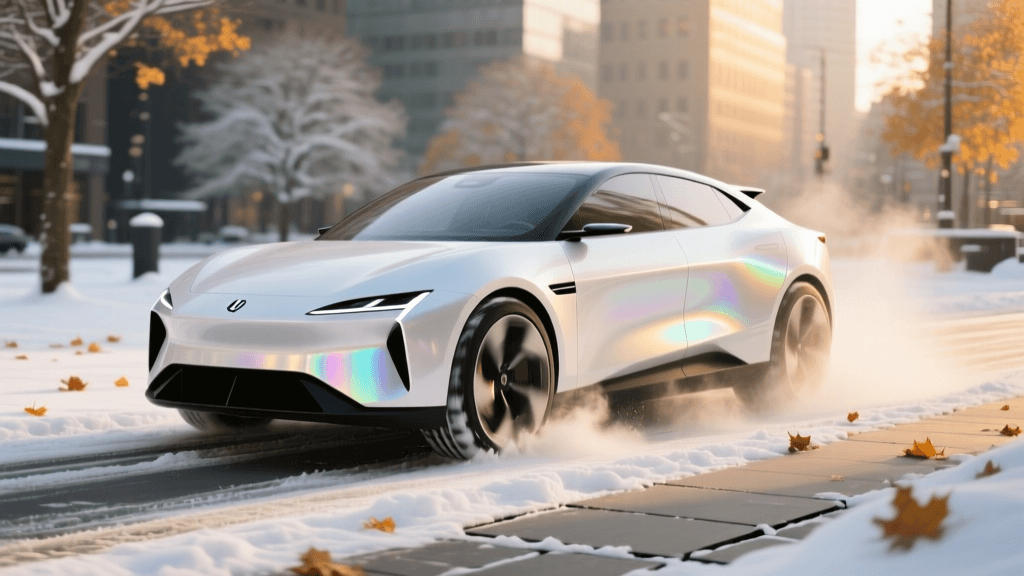
If your EV allows you to adjust regenerative braking levels, lower the setting in snowy or icy conditions. Aggressive regen on slippery roads can cause the drive wheels to lock up and lose traction. Lowering the setting provides a smoother, safer coasting experience similar to a traditional gas car.
4. Optimize Your State of Charge (SoC)
For daily driving, the Alternative Fuels Data Center (AFDC) recommends keeping your battery between 20% and 80% to minimize degradation. However, in extreme winter conditions, if you need every available mile for a road trip, charging to 100% right before departure is acceptable and necessary. Just avoid letting the car sit at 100% for days on end.
5. Monitor Tire Pressure Religiously
Temperature drops directly affect tire pressure. For every 10°F drop in temperature, your tires lose about 1 PSI (pound per square inch). Under-inflated tires increase rolling resistance, which can silently eat up 5% to 10% of your range. Check and adjust your tire pressure to the manufacturer's door-jamb specification at the start of every winter and summer.
6. Manage Phantom Drain and Sentry Modes
Features like Tesla's Sentry Mode, cabin overheat protection, and continuous app polling prevent the car from entering a deep sleep state. In extreme cold or heat, the car will actively use battery power to maintain battery temperature while parked. If you are parking outside in extreme weather for an extended period, disable Sentry Mode and cabin overheat protection to preserve your battery's state of charge.
7. Plan Road Trips with a Buffer
When mapping out winter road trips using tools like A Better Routeplanner (ABRP) or your car's native navigation, always add a 15% to 20% buffer for cold weather and headwinds. Highway speeds (75+ mph) combined with freezing temperatures and cabin heating create the 'perfect storm' for range depletion. Plan to arrive at DC Fast Chargers with at least 15% battery remaining to avoid being stranded if a charger is out of service.
Long-Term Battery Health Across Seasons
Optimizing for the seasons isn't just about maximizing today's range; it is about protecting your investment. EV batteries are designed to last hundreds of thousands of miles, but their lifespan is heavily dictated by thermal management. By utilizing preconditioning, avoiding extreme states of charge during heatwaves, and relying on active liquid cooling, you ensure your battery's degradation curve remains flat for years to come.
Embrace the seasons with confidence. By understanding how your EV interacts with the environment and adopting these simple, tech-savvy habits, you will enjoy a smooth, efficient, and worry-free electric driving experience all year long.