Today's EV Batteries: LFP vs NMC Chemistry Explained
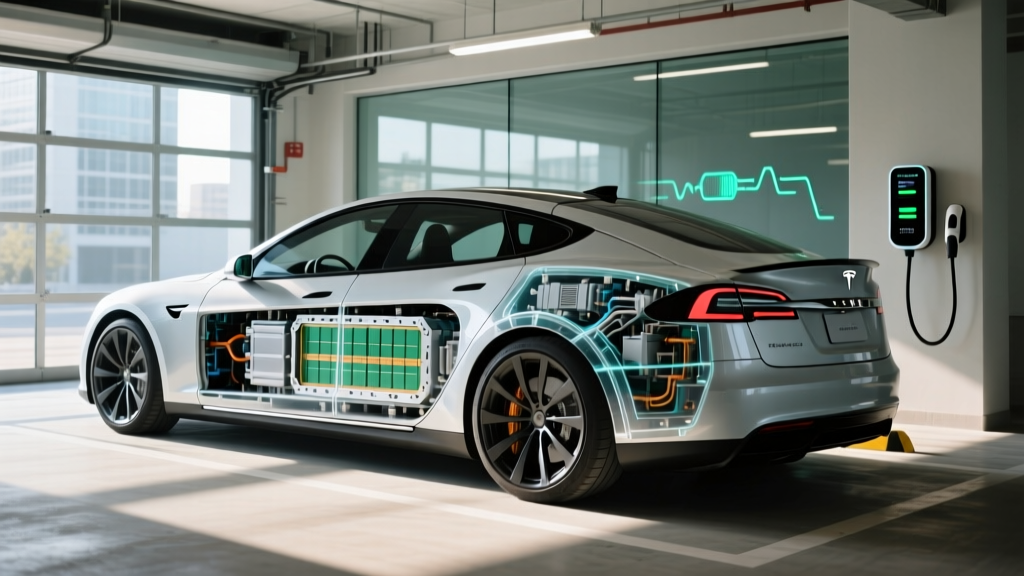
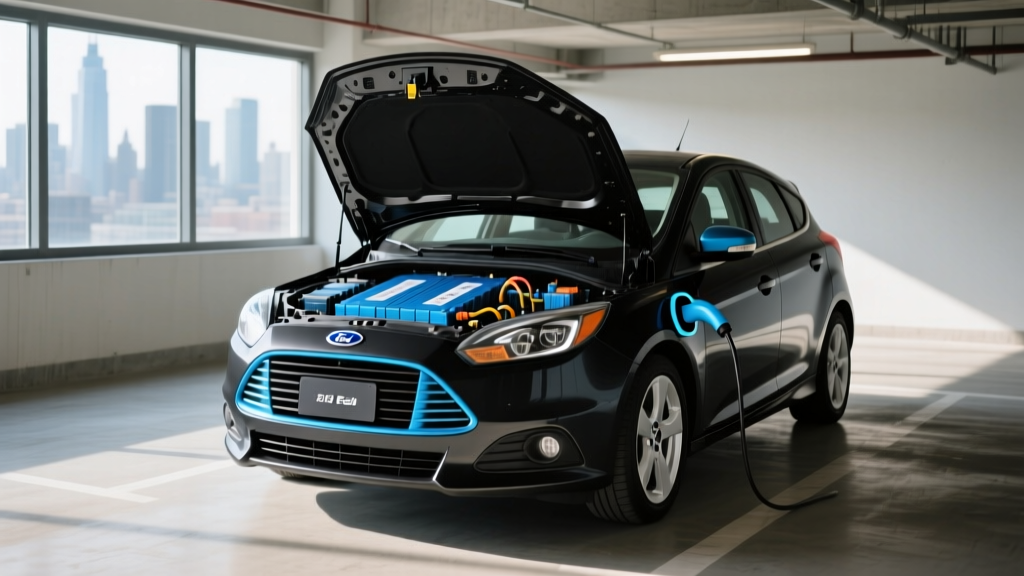
Before chasing tomorrow's battery breakthroughs, it's worth understanding what's actually powering the EVs you can buy right now. In 2026, virtually every production EV uses one of two lithium-ion chemistries: NMC/NCA (nickel-manganese-cobalt or nickel-cobalt-aluminum) or LFP (lithium iron phosphate). The chemistry inside the pack determines your range, charging speed, longevity, and even how the car behaves in a Minnesota winter.
NMC and NCA cells dominate long-range and performance models — think Tesla Model 3 Long Range, Hyundai Ioniq 5, Ford Mustang Mach-E Extended Range. They pack more energy into less weight (higher energy density), which translates to 300+ mile EPA ranges without a two-ton battery. LFP cells, meanwhile, have become the go-to for standard-range and cost-optimized trims — the Tesla Model 3 RWD, base Ford Mach-E Select, and BYD's global lineup all lean on LFP. They're cheaper to produce, tolerate deeper daily cycling, and don't rely on cobalt, but they carry a weight and energy-density penalty.
| Attribute | LFP (Lithium Iron Phosphate) | NMC / NCA (Nickel-Based) |
|---|---|---|
| Energy Density | ~160–180 Wh/kg (cell-level) | ~220–300 Wh/kg (cell-level) |
| Typical EPA Range | 240–290 mi (standard-range trims) | 290–400+ mi (long-range trims) |
| Cycle Life | 3,000–5,000+ full cycles | 1,000–2,000 full cycles |
| Cold-Weather Performance | More range loss below 32°F; slower cold charging | Better low-temp conductivity; less range penalty |
| Cost per kWh (2026) | ~$80–100/kWh at pack level | ~$110–140/kWh at pack level |
| Recommended Daily SoC | 100% OK; benefits from periodic full charges for BMS calibration | 80% daily; 100% only before long trips |
| Thermal Stability | Higher thermal runaway threshold (~270°C) | Lower thermal runaway threshold (~210°C) |
| Notable 2026 Vehicles | Tesla Model 3 RWD, Ford Mach-E Select, Rivian Standard | Tesla Model 3 LR, Ioniq 5 LR, BMW i4 eDrive40 |
Which is better? Neither is universally superior. If you commute 40 miles a day, charge at home, and want the lowest cost of ownership, LFP is arguably the smarter pick — the cycle life is exceptional, and charging to 100% nightly eliminates the SoC management headache. If you road-trip frequently, live in a cold climate, or need 320+ miles of range, NMC/NCA's energy density is still the practical choice. The "better" battery is the one matched to your driving pattern.
How Long Do EV Batteries Actually Last? Degradation Data
The most persistent myth in EV ownership is that the battery will fail like a smartphone — losing half its capacity in three years and bricking the car. The real-world data tells a very different story. Modern EV traction batteries are engineered with thermal management systems, buffer zones (typically 5–10% of gross capacity hidden from the user), and chemistries designed for 1,500 to 5,000+ charge cycles before hitting 80% of original capacity.
Here's what actual fleet and owner data shows for degradation in current-generation packs:
- Tesla Model 3/Y (NMC, 2019–2023 fleets): ~5–7% capacity loss at 100,000 miles; ~8–12% at 200,000 miles. Tesla's own 2024 Impact Report showed average retention of ~88% at 200,000 miles across the fleet.
- Chevrolet Bolt EV/EUV (NMC, LG cells): Early 2017–2019 models saw ~8–10% loss at 80,000 miles, partly attributable to the recall-related battery replacements. Post-recall packs performing better.
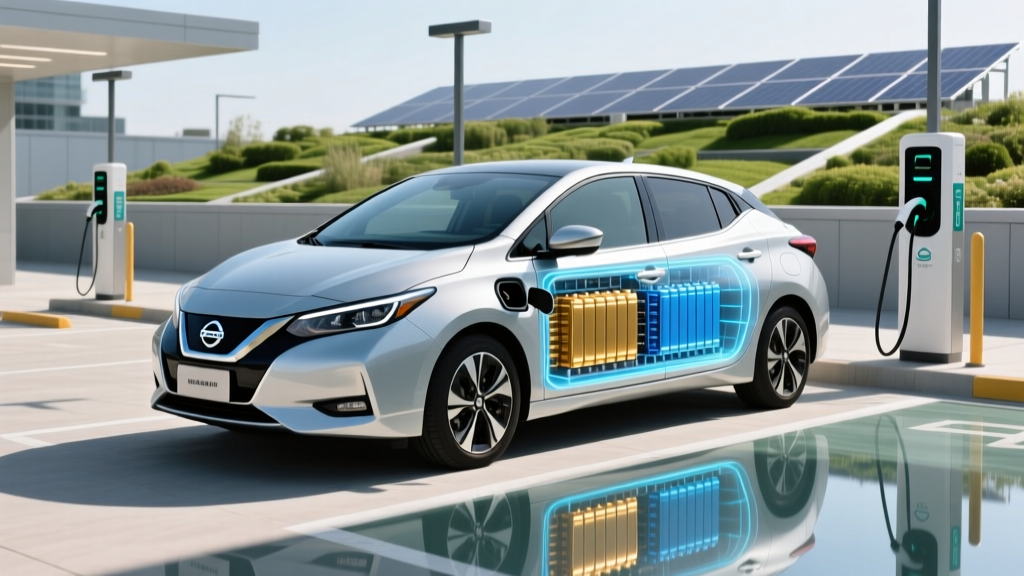
- Nissan LEAF (passive air cooling, older NMC): Historically the worst-case data point — 2011–2017 LEAFs without active thermal management showed 15–25% loss at 80,000–100,000 miles, especially in hot climates. A cautionary tale for why liquid cooling matters.
- LFP-equipped vehicles (Tesla Model 3 RWD 2022+, BYD Atto 3): Early fleet data suggests ~2–4% loss at 60,000 miles, with the degradation curve flattening significantly after the first year. LFP's cycle-life advantage shows up clearly here.
- Hyundai/Kia E-GMP platform (Ioniq 5, EV6): ~4–6% loss reported at 60,000 miles in owner surveys, aided by robust liquid thermal management and conservative buffer sizing.
Sources: Tesla Impact Report, Recurrent Auto fleet data, owner-reported datasets.
The takeaway: a well-managed NMC battery from a 2024–2026 model-year EV should retain 85–90% of its original capacity at 150,000 miles. An LFP pack may retain 90–95% over the same distance. For most owners, the battery will outlast the rest of the car.
What Does the EV Battery Warranty Actually Cover?
Federal regulation in the U.S. mandates that EV batteries carry a minimum warranty of 8 years or 100,000 miles (whichever comes first). In California Air Resources Board (CARB) states — which include California, New York, Massachusetts, and over a dozen others — the requirement extends to 10 years or 150,000 miles. Most major automakers meet or exceed these minimums across all 50 states.
| Manufacturer | Battery Warranty | Capacity Retention Threshold | Notes |
|---|---|---|---|
| Tesla | 8 yr / 120,000 mi (Model 3/Y); 8 yr / 150,000 mi (Model S/X) | 70% | Covers defects + degradation below threshold |
| Hyundai / Kia | 10 yr / 100,000 mi | 70% | Among the longest standard warranties |
| Ford | 8 yr / 100,000 mi | 70% | Covers battery + high-voltage components |
| General Motors (Chevrolet, Cadillac) | 8 yr / 100,000 mi | 70% (60% on some older Bolt terms) | Ultium packs covered across EV lineup |
| BMW | 8 yr / 100,000 mi | 70% | Includes i4, i5, i7, iX |
| Rivian | 8 yr / 175,000 mi | 70% | Highest mileage threshold in the segment |
| Volkswagen | 8 yr / 100,000 mi | 70% | ID.4 and ID.7 coverage |
What triggers a warranty claim? The key number is the capacity retention threshold — almost universally set at 70% of original capacity. If your 82 kWh (usable) pack degrades to the point where it holds less than ~57 kWh as confirmed by dealer diagnostics, you're eligible for a replacement or repair. In practice, very few 2020+ EVs are hitting this threshold within the warranty window. The warranty also covers manufacturing defects — bad cells, BMS failures, coolant leaks into the pack — which are distinct from gradual degradation.
One nuance worth noting: some warranties differentiate between "defect" coverage and "degradation" coverage, and a few exclude degradation entirely on certain components. Always read the specific warranty booklet for your model year, not just the marketing summary.
EV Battery Replacement Cost: What Owners Actually Pay
This is the question that generates the most anxiety — and the most misleading headlines. Yes, a full EV battery pack is expensive. But the context most fear-mongering articles omit is that the vast majority of EV batteries never need replacement during the vehicle's useful life. When they do, it's usually a partial repair (replacing individual modules or cell groups), not a full pack swap.
| Vehicle / Platform | Battery Size (Usable kWh) | Full Pack Replacement (Parts + Labor) | Module-Level Repair |
|---|---|---|---|
| Tesla Model 3 / Model Y | 57–82 kWh | $12,000–$18,000 | $3,000–$6,000 (per module section) |
| Hyundai Ioniq 5 / Kia EV6 | 58–77.4 kWh | $11,000–$16,000 | $2,500–$5,500 |
| Ford Mustang Mach-E | 70–91 kWh | $14,000–$22,000 | $3,500–$7,000 |
| Chevrolet Equinox EV / Blazer EV | 85–102 kWh | $15,000–$25,000 | $4,000–$8,000 |
| BMW i4 / iX | 81–111 kWh | $18,000–$30,000 | $5,000–$9,000 |
| Rivian R1T / R1S | 106–149 kWh | $20,000–$35,000 | $5,000–$10,000 |
When is replacement typically needed? For liquid-cooled packs from 2020 onward, full replacement due to degradation alone is rare before 200,000+ miles. The more common scenarios are collision damage, manufacturing defects (covered under warranty), or isolated cell failures that a module-level repair can address. The Chevrolet Bolt recall of 2021–2022, which involved replacing entire packs due to manufacturing defects in LG cells, was an outlier — and GM covered it fully.
It's also worth noting that replacement costs have been declining. According to BloombergNEF's annual battery price survey, average pack prices fell below $130/kWh at the cell level in 2025, and continue trending downward. A replacement pack in 2030 will likely cost significantly less than today's estimates.
Factors That Kill (or Preserve) Your EV Battery
Battery degradation isn't random — it's driven by specific, controllable factors. Understanding these lets you maximize your pack's lifespan, whether you're driving an LFP or NMC vehicle.
🔴 What Accelerates Degradation
- Frequent DC fast charging at high power: Repeated 150–350 kW sessions generate significant heat inside the cells. Occasional road-trip fast charging is fine, but daily DCFC as your primary charging method can add 1–3% extra annual degradation versus Level 2 home charging.
- Sustained high State of Charge (NMC/NCA): Storing an NMC battery at 100% SoC for days or weeks — especially in hot weather — stresses the cathode. This is why automakers recommend 80% daily charge limits for NMC vehicles.
- Deep discharges to 0%: Regularly running the battery to near-empty (below 5–10% SoC) accelerates anode wear. The buffer helps, but habitually arriving at 0% is unnecessary stress.
- Extreme heat exposure: Parking in direct sun in Phoenix or Dubai summer heat with a high SoC is one of the worst combinations for lithium-ion chemistry. Liquid cooling mitigates this, but doesn't eliminate it.
- Aggressive driving in extreme cold without preconditioning: Drawing high current from a cold battery causes lithium plating on the anode, which is partially irreversible. Always use your car's preconditioning feature before hard acceleration in sub-freezing temps.
🟢 What Maximizes Battery Life
- Level 2 home charging as your primary method: Slower charging (7–11 kW) generates far less heat and is the single best habit for long-term pack health.
- 20–80% SoC window for NMC; 100% is fine for LFP: Follow your manufacturer's SoC guidance. For NMC, the 20–80% daily window is the sweet spot. For LFP, periodic 100% charges are actually recommended for BMS cell-balancing accuracy.
- Precondition the battery before fast charging: Most EVs automatically precondition when you navigate to a DC fast charger. This brings the cells to optimal temperature (~25–35°C), enabling faster charging AND reducing stress. If your car offers manual preconditioning, use it.
- Garage parking in extreme climates: Keeping the pack out of 110°F ambient heat or -20°F cold reduces both calendar and cyclic degradation.
- Drive it regularly: Lithium-ion batteries prefer moderate, regular cycling over long-term storage at high SoC. A daily-driven EV with 80% charge is healthier than one sitting at 90% for weeks.
How to Check Your EV's Battery Health (State of Health)
State of Health (SoH) is the metric that tells you what percentage of your battery's original capacity remains usable. A new battery is 100% SoH; one that's degraded to hold only 85% of its original kWh is at 85% SoH. Monitoring this number is essential for peace of mind and resale value.
How to check SoH in 2026 EVs:
- In-car displays: Tesla added a battery health percentage readout in 2024 software updates. Hyundai/Kia provides a battery health indicator via the infotainment system's EV diagnostics menu. BMW iDrive includes a battery health report accessible through the ConnectedDrive app.
- OBD-II diagnostic apps: Third-party tools like OBD2 scanners paired with apps such as Car Scanner, ABRP (A Better Route Planner), or LeafSpy (for Nissan LEAF) can read the BMS-reported SoH directly. A quality OBD-II Bluetooth adapter costs $30–$60 and gives you dealer-level data.
- Dealer diagnostic reports: Any authorized service center can pull a full battery health report. Request one before purchasing a used EV — it's the single most important data point for a pre-purchase inspection.
- Third-party services: Companies like Recurrent Auto offer free battery health reports that compare your pack's degradation against a fleet of identical vehicles, giving you context on whether your degradation is normal or concerning.
What SoH number should concern you? For a used EV purchase, anything above 90% SoH is excellent for a vehicle under 60,000 miles. Between 85–90% is typical and healthy. Below 80% on a vehicle still under warranty should trigger a warranty claim conversation. Below 70% is the contractual replacement threshold for most manufacturers.
Solid-State Batteries: When Will They Actually Arrive?
Now to the question driving this article's search traffic: when will solid-state batteries be in cars? The honest, data-grounded answer is more nuanced than either the hype cycle or the skeptics suggest.
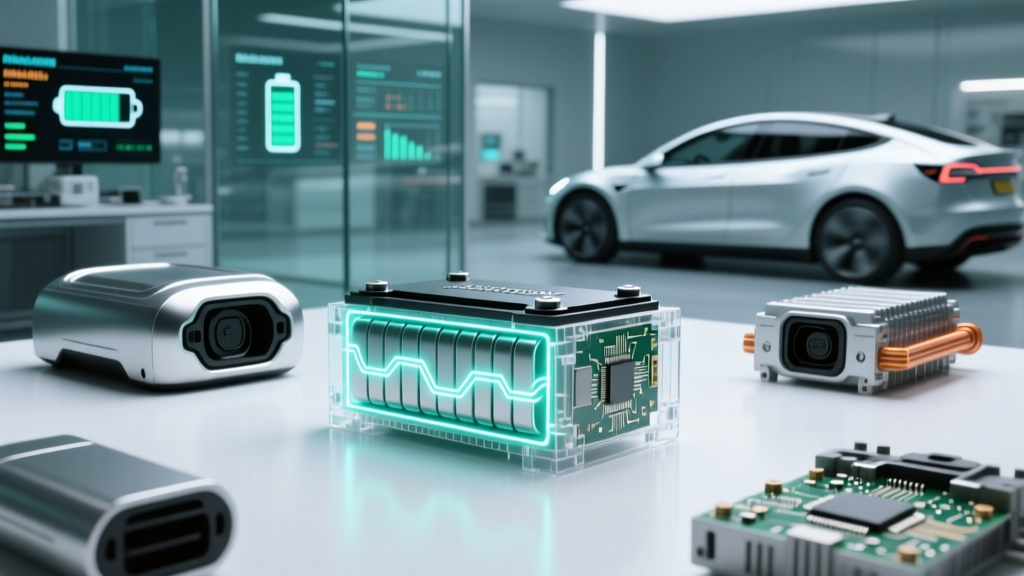
Solid-state batteries (SSBs) replace the liquid electrolyte in current lithium-ion cells with a solid material — typically a ceramic, sulfide, or polymer compound. The theoretical advantages are significant:
- Higher energy density: 400–500+ Wh/kg at the cell level (vs. ~250–300 Wh/kg for current NMC), potentially enabling 500+ mile ranges without increasing pack weight.
- Faster charging: Solid electrolytes can theoretically handle higher C-rates without lithium plating, potentially enabling 10–80% charges in under 10 minutes.
- Improved safety: No flammable liquid electrolyte dramatically reduces thermal runaway risk.
- Longer cycle life: Some solid-state prototypes have demonstrated 10,000+ cycles in lab conditions.
The reality as of 2026:
- Toyota remains the most vocal SSB proponent, with an announced timeline of 2027–2028 for limited production in a next-generation EV. However, Toyota has revised this timeline multiple times (originally targeting 2025), and "limited production" likely means a low-volume, high-price flagship — not a mass-market Camry replacement. Treat the 2027–2028 date as preliminary.
- Samsung SDI has announced plans to begin mass production of solid-state batteries by 2027, targeting automotive customers. Their sulfide-based prototype claims 900 Wh/L volumetric density and 10-minute fast-charge capability — in lab conditions.
- QuantumScape, the Volkswagen-backed startup, has delivered prototype cells to automotive partners and reported promising test results. But scaling from lab prototypes to gigawatt-hour factory production remains an unsolved engineering and economics challenge. VW's PowerCo division has been cautious about timelines, suggesting 2028–2030 for any production vehicle integration.
- Nissan has a pilot solid-state cell production line running and targets 2028 for a production vehicle — again, likely limited and premium.
- CATL, the world's largest battery maker, has been more candid: their leadership has publicly stated that solid-state batteries will not be cost-competitive with advanced liquid lithium-ion until at least 2030, and that their current condensed-matter battery (a semi-solid hybrid) is the more practical near-term bridge technology.
The realistic timeline for most buyers: Expect solid-state batteries to appear in limited, premium vehicles from select automakers between 2028–2030. Expect them to reach mainstream, cost-competitive production vehicles between 2032–2035. The manufacturing infrastructure required — new factory tooling, dry-room processes, supply chains for solid electrolyte materials — represents tens of billions of dollars in investment that cannot be rushed.
Meanwhile, today's liquid lithium-ion technology is not standing still. Silicon-dominant anodes (already in limited use by Mercedes-Benz's EQG and Amprius-supplied applications), advanced dry-electrode manufacturing (pioneered by Tesla's 4680 cell production), and improved electrolyte additives continue to push energy density up and costs down incrementally every year. The gap between today's best cells and tomorrow's solid-state cells is narrowing from both sides.
Should You Wait for Solid-State, or Buy Now?
Buy an EV now if:
- You need a vehicle within the next 12–24 months
- Your daily driving fits within today's 250–350 mile EPA ranges
- You have home Level 2 charging access
- You qualify for the current §30D federal tax credit (up to $7,500, subject to MSRP caps, buyer income limits, and battery sourcing requirements — consult a tax professional for your specific eligibility)
- You want to stop paying $3.50+/gallon for gas today
Wait for solid-state (or next-gen lithium-ion) if:
- You need 500+ miles of real-world range for frequent long-distance towing or remote-area driving
- Your current vehicle is functional and you can wait until 2030+
- You live in an extreme-cold climate where current EVs lose 30–40% of range in winter and you need every mile
- You're specifically targeting a next-gen platform (e.g., Toyota's announced SSB vehicle) and are comfortable with an announced/preliminary timeline
For the overwhelming majority of EV shoppers in 2026, today's batteries are already good enough. The average American drives 37 miles per day, according to the Federal Highway Administration. A 2026 Model 3 Long Range with its 341-mile EPA rating, 8-year/120,000-mile battery warranty, and ~$42,000 MSRP (before incentives) will serve reliably for 15+ years and 200,000+ miles with minimal degradation. Waiting for a technology that may not be affordable until the mid-2030s means years of additional fuel costs, emissions, and missed incentives.
Frequently Asked Questions
How long do EV batteries last in years and miles?
Modern liquid-cooled EV batteries from 2020+ model years typically last 15–20 years or 200,000–300,000 miles before degrading to 80% of original capacity. LFP chemistries may extend this to 300,000+ miles based on their superior cycle life. The battery will generally outlast the vehicle's other major components.
How much does it cost to replace an EV battery in 2026?
A full pack replacement ranges from approximately $12,000 for a Tesla Model 3 to $35,000 for a large Rivian pack. However, most replacements are partial (module-level repairs at $2,500–$10,000), and full replacements due to degradation alone are rare before 200,000 miles. Warranty coverage handles manufacturing defects for 8–10 years.
What does the EV battery warranty actually cover?
Standard battery warranties cover both manufacturing defects and capacity degradation below a set threshold (typically 70% of original capacity) for 8 years/100,000 miles (10 years/150,000 miles in CARB states). If your battery's State of Health drops below the threshold within the warranty period, the manufacturer will repair or replace it at no cost.
How do I check my EV battery's State of Health?
Check via your vehicle's built-in battery health display (available on Tesla, Hyundai, BMW, and others), use an OBD-II scanner with an EV-compatible app like Car Scanner or LeafSpy, request a diagnostic report from your dealer, or use a free third-party service like Recurrent Auto. Always get a battery health report before buying a used EV.
Is LFP better than NMC for battery longevity?
For pure cycle life and longevity, yes — LFP batteries typically endure 3,000–5,000+ full cycles versus 1,000–2,000 for NMC, and can be charged to 100% daily without accelerated degradation. However, NMC offers higher energy density (more range in a lighter pack) and better cold-weather performance. Choose LFP for maximum lifespan and daily convenience; choose NMC for maximum range and cold-climate efficiency.
When will solid-state batteries be in cars I can actually buy?
Limited production vehicles with solid-state batteries are expected from Toyota, Samsung SDI partners, and potentially QuantumScape/VW between 2028–2030, but these will likely be premium, low-volume models. Mass-market, cost-competitive solid-state EVs are not expected until 2032–2035 at the earliest. Today's advanced lithium-ion batteries remain the practical choice for 2026 buyers.
Does fast charging damage my EV battery?
Occasional DC fast charging (road trips, a few times per month) has minimal impact on modern batteries with active thermal management. However, using DC fast charging as your daily primary charging method can add 1–3% extra annual degradation compared to Level 2 home charging. For daily charging, a home Level 2 setup at 7–11 kW is the best practice for long-term battery health.