The Real Cost of Replacing a Nissan LEAF Battery
Of every question we hear from prospective used-EV buyers and long-term Nissan LEAF owners, one dominates: how much does a Nissan LEAF battery replacement cost? The short answer for 2026 is between $6,500 and $12,000 out of warranty, depending on the pack size (40 kWh vs. 60 kWh), whether you go through a Nissan dealer or an independent EV shop, and whether you opt for a new, refurbished, or salvaged module set. But before you fixate on that sticker, context matters: the vast majority of LEAF batteries outlast the economic life of the car itself, and Nissan's warranty still protects a meaningful slice of the current fleet.
This guide breaks down the actual replacement pricing, the degradation data behind it, warranty coverage, and the charging habits that determine whether you'll ever need to pay for a pack swap at all.
Nissan LEAF Battery Specs and Chemistry
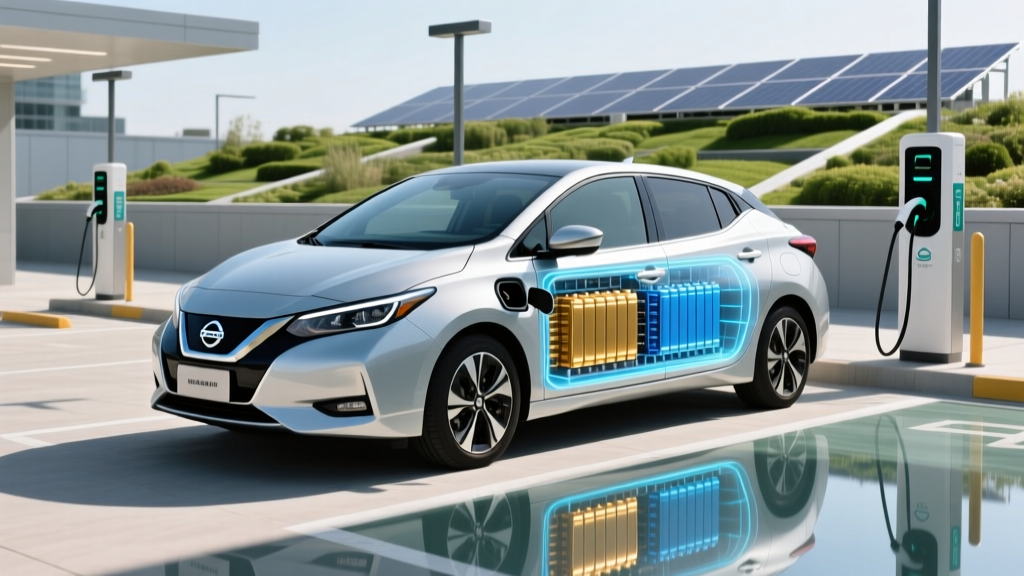
The 2025–2026 Nissan LEAF is offered in two trims with distinct high-voltage traction batteries:
| Spec | LEAF S (40 kWh) | LEAF SV PLUS (60 kWh) |
|---|---|---|
| Usable battery capacity | ~39 kWh | ~59 kWh |
| Chemistry | NMC (Nickel Manganese Cobalt) | NMC |
| EPA range | 149 mi | 212 mi |
| Real-world range (70°F, mixed) | ~130–140 mi | ~190–200 mi |
| Peak DC fast charge | ~50 kW (CHAdeMO) | ~100 kW (CHAdeMO) |
| 10–80% DCFC time (est.) | ~40 min | ~45 min |
| Level 2 onboard charger | 6.6 kW | 6.6 kW |
| Horsepower | 147 hp | 214 hp |
| 0–60 mph | ~7.9 sec | ~6.5 sec |
| Starting MSRP (2025) | ~$28,140 | ~$36,190 |
Both packs use NMC lithium-ion cells. Unlike the passive air-cooling strategy used in early 2011–2017 LEAFs — which led to notorious heat-related degradation in hot climates — the current generation uses an improved thermal management approach, though it still lacks the active liquid cooling found in vehicles like the Hyundai Ioniq 5 or Tesla Model 3. That distinction matters for long-term health.
LFP vs. NMC: Which Chemistry Is Better and Why?
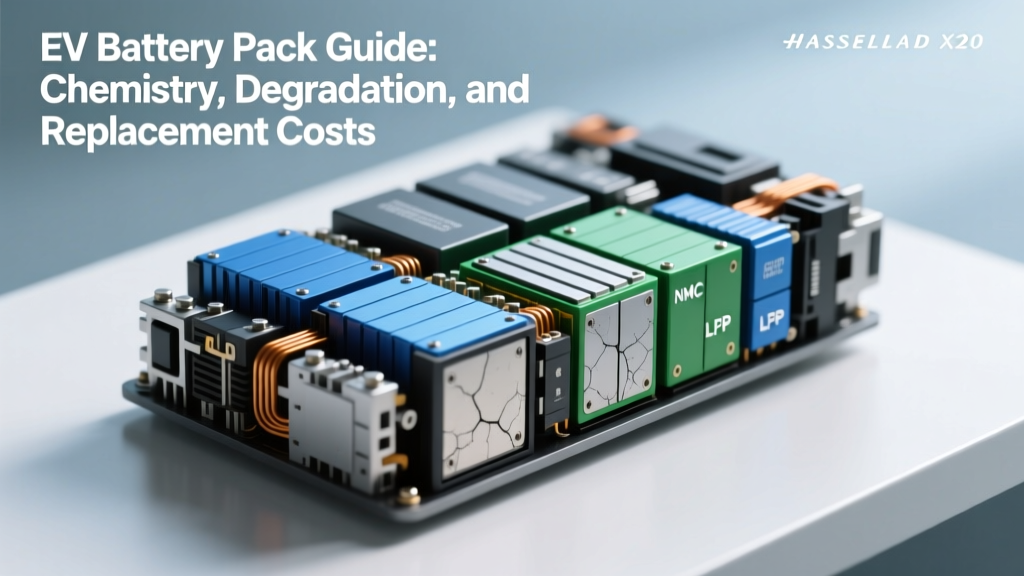
The LEAF's NMC chemistry is one of two dominant EV battery types in the market. The other, LFP (Lithium Iron Phosphate), powers vehicles like the base Tesla Model 3 RWD and several BYD models. Here's how they compare:
| Factor | NMC / NCA | LFP |
|---|---|---|
| Energy density | Higher (more range per kg) | Lower (heavier for same kWh) |
| Cycle life | ~1,000–2,000 cycles | ~3,000–5,000+ cycles |
| Cold-weather performance | Better at low temps | More range loss in cold |
| Cost per kWh | Higher | Lower (no cobalt/nickel) |
| Optimal daily SoC | 80% recommended | 100% OK periodically |
| Thermal runaway risk | Moderate | Very low |
For the LEAF, NMC made sense because Nissan needed the energy density to deliver 212 miles of EPA range from a compact crossover platform. LFP packs are heavier and bulkier for the same capacity. The trade-off is that NMC is more sensitive to sustained high states of charge and repeated DC fast charging — habits that accelerate degradation.
How Long Do Nissan LEAF Batteries Last? Degradation Data
Nissan warrants the LEAF battery for 8 years or 100,000 miles against capacity loss below 9 bars out of 12 on the dashboard capacity gauge (roughly 70–75% of original capacity). But what does degradation look like in practice?
Based on aggregated fleet data and owner reports (including DOV/EPA battery technology research):
- Year 1–2: ~2–4% capacity loss (initial settling)
- Year 3–5: ~1–2% loss per year under normal use
- Year 6–8: Degradation curve flattens; total loss typically 12–18% by 100k miles
- Year 10+: Some packs retain 75–80% SoH; others in hot climates may dip below 70%
A 2022 study by Geotab analyzing over 6,000 EVs found average annual degradation across all models at approximately 2.3% per year, with air-cooled packs (like earlier LEAFs) showing higher rates than liquid-cooled systems. The 2025–2026 LEAF benefits from improved cell chemistry and thermal controls, but it remains more heat-sensitive than liquid-cooled competitors.
The practical takeaway: a 2026 LEAF SV PLUS with 212 miles of EPA range should still deliver roughly 175–190 miles after 8 years and 100,000 miles of typical driving. That's reduced but still livable for most commutes.
Nissan LEAF Battery Replacement Cost: What You'll Pay
If your LEAF battery does fall below the warranty threshold — or if you're buying a used LEAF outside warranty and want to budget ahead — here's the 2026 pricing landscape:
| Pack / Scenario | Battery Cost | Labor | Total Range |
|---|---|---|---|
| 40 kWh (new, OEM via dealer) | $6,500–$8,000 | $1,000–$1,500 | $7,500–$9,500 |
| 60 kWh (new, OEM via dealer) | $9,000–$11,000 | $1,200–$1,800 | $10,200–$12,800 |
| Refurbished / reconditioned pack | $4,000–$6,500 | $1,000–$1,500 | $5,000–$8,000 |
| Salvage yard / used pack | $2,500–$4,500 | $1,000–$1,500 | $3,500–$6,000 |
A few critical notes on these figures:
- Warranty replacements are free if your pack drops below 9/12 capacity bars within 8 years/100,000 miles. Nissan covers parts and labor.
- Independent EV shops often beat dealer pricing by 15–25% and may offer module-level repair (replacing only degraded cells rather than the full pack) for $2,500–$5,000.
- CHAdeMO obsolescence risk: Nissan has not committed to CHAdeMO on future models, and the connector is losing ground to NACS. A replacement battery in a 2018–2023 LEAF may not be worth the investment if you plan to keep the car beyond 2030, when CHAdeMO infrastructure may be sparse.
- The 12V auxiliary battery is separate — a standard lead-acid or AGM unit that costs $150–$300 to replace and has nothing to do with the high-voltage traction pack.
What Does the Nissan LEAF Battery Warranty Cover?
Nissan provides two layers of battery warranty coverage on the 2025–2026 LEAF:
| Warranty Type | Duration | Coverage |
|---|---|---|
| Lithium-ion battery capacity coverage | 8 years / 100,000 miles | Replacement or repair if capacity drops below 9 of 12 bars (~70–75% SoH) |
| Battery defect coverage | 8 years / 100,000 miles | Manufacturing defects, premature failure, electrical faults |
| EV system coverage | 5 years / 60,000 miles | Inverter, onboard charger, reduction gear, related components |
The capacity warranty uses Nissan's dashboard bar display rather than a precise percentage. When the battery health indicator drops from 12 bars to 8 or fewer, the pack qualifies for warranty service. In practice, this threshold corresponds to approximately 66–75% of original usable capacity, depending on the model year and BMS calibration.
According to Nissan's owner documentation, the warranty is fully transferable to subsequent owners, which is a meaningful value-add for used-LEAF buyers.
How to Check and Maximize Your LEAF Battery Health
Nissan LEAF owners have several tools for monitoring State of Health (SoH):
- Dashboard capacity bars: The 12-bar gauge on the instrument cluster provides a coarse SoH reading. 12 bars = near-new; 9 bars = warranty threshold; 8 or below = warranty claim eligible.
- LeafSpy (third-party OBD-II app): Connects via a compatible Bluetooth OBD dongle to read precise SoH percentage, cell voltages, battery temperature, and cycle count. This is the gold standard for LEAF health monitoring and costs ~$20 for the app plus ~$30 for the dongle.
- Nissan dealer diagnostic: A service department can pull a full battery health report. Request this during routine service or a pre-purchase inspection on a used LEAF.
Battery Care Checklist for Nissan LEAF Owners
- Set daily charge limit to 80% unless you need full range for a trip (NMC chemistry degrades faster at sustained 100% SoC).
- Minimize DC fast charging to 1–2 sessions per week; rely on Level 2 home charging for daily needs.
- Avoid leaving the car at 100% SoC for more than a few hours — schedule charging to finish just before you leave.
- In hot climates (Arizona, Texas, SoCal), park in shade or a garage whenever possible. Battery temperature is the #1 degradation accelerant.
- In cold weather, use the LEAF's charge timer and preconditioning feature to warm the battery before driving — this improves regen efficiency and reduces stress.
- Don't let the pack sit below 10% SoC for extended periods (weeks). If storing the car, leave it at ~50% SoC.
- Monitor SoH via LeafSpy every 3–6 months to catch abnormal degradation early.
Factors That Accelerate Battery Degradation
Not all LEAF batteries age equally. The spread between a well-maintained pack at 92% SoH after 5 years and a neglected one at 78% comes down to these variables:
- DC fast charging frequency: Every DCFC session exposes NMC cells to high current and heat. LEAF owners who DCFC daily (common among rideshare drivers) see measurably faster degradation than those who charge primarily on Level 2.
- Thermal exposure: Sustained battery temperatures above 95°F (35°C) accelerate chemical degradation. The LEAF's passive thermal management makes it more vulnerable than liquid-cooled EVs in Phoenix or Houston summers.
- State of charge extremes: Storing at 100% or below 10% for prolonged periods causes irreversible capacity loss through electrolyte decomposition and SEI layer growth.
- Annual mileage: Higher miles mean more charge cycles, but moderate driving (10,000–15,000 miles/year) keeps degradation in the 1.5–2.5%/year range.
- Model year: Pre-2018 LEAFs (24 kWh and 30 kWh packs, air-cooled) degraded significantly faster than 2018+ models. If you're buying used, prioritize 2018 or newer.
Looking Ahead: Solid-State and Next-Gen Battery Technology
Nissan has publicly committed to bringing solid-state battery technology to market by the late 2020s, with prototype cells demonstrating roughly double the energy density of current NMC packs and faster charging capability. However, as of 2026, solid-state batteries remain in pilot production and are not available in any consumer vehicle.
Realistic timelines based on current industry trajectories:
- 2027–2028: Limited production of solid-state packs in premium Nissan/Alliance models (likely Japan-market first).
- 2029–2032: Broader availability, potentially in vehicles succeeding the LEAF.
- Silicon anode batteries: Incremental improvements (10–20% more energy density) are already appearing in some 2025–2026 models from other manufacturers, but Nissan has not confirmed adoption for the LEAF line.
If you're deciding whether to replace a LEAF battery today or wait for future tech, the economics favor replacement if the car is otherwise in good condition and you plan to keep it 3+ more years. Waiting for solid-state means buying an entirely new vehicle at current prices of $35,000–$55,000+.
Frequently Asked Questions
How long do EV batteries last in years and miles?
Most modern EV batteries, including the LEAF's NMC pack, are designed to last 150,000–200,000 miles before dropping below 70% capacity. In calendar years, that's typically 10–15 years of average driving. The LEAF's 8-year/100,000-mile warranty provides a guaranteed floor, but many packs exceed this substantially.
How much does an EV battery cost to replace?
Replacement costs vary widely by model and pack size. For the Nissan LEAF, expect $7,500–$12,800 for a new OEM pack installed at a dealer (40 kWh or 60 kWh). Refurbished packs run $5,000–$8,000. For context, other EVs range from ~$5,000 (small packs like the Chevy Bolt) to $20,000+ (large packs like the Ford F-150 Lightning Extended Range).
What does the LEAF battery warranty actually cover?
Nissan covers capacity loss below 9 of 12 dashboard bars (~70–75% original capacity) for 8 years or 100,000 miles, whichever comes first. It also covers manufacturing defects and premature failures. The warranty is transferable to second owners.
How do I check my LEAF battery health?
The quickest method is reading the 12-bar capacity gauge on the dashboard. For precise data (exact SoH percentage, individual cell voltages, temperature, cycle count), use the LeafSpy app with a compatible OBD-II Bluetooth dongle. Your Nissan dealer can also pull a detailed battery health report.
Is LFP better than NMC for the LEAF?
It depends on your priorities. LFP offers longer cycle life, lower cost, and better safety but lower energy density and worse cold-weather performance. For the LEAF's compact platform, Nissan chose NMC to maximize range within a limited physical battery volume. LFP is better suited to vehicles with more under-floor space or buyers who prioritize longevity over maximum range.
Is a LEAF battery replacement worth it on a used car?
If the car is a 2018+ model in good overall condition and you plan to drive it 3+ more years, a replacement (especially a refurbished pack at $5,000–$8,000) can be cost-effective — it's still far cheaper than buying a new EV. For pre-2018 models with high miles, the math usually favors trading in for a newer EV.
Will CHAdeMO charging still be available if I replace my LEAF battery?
CHAdeMO infrastructure is declining as NACS becomes the North American standard. As of 2026, Electrify America and other networks still maintain CHAdeMO connectors at many stations, but new installations overwhelmingly favor NACS/CCS. If you rely heavily on public DC fast charging, factor in the growing inconvenience of CHAdeMO when deciding on a major battery investment.