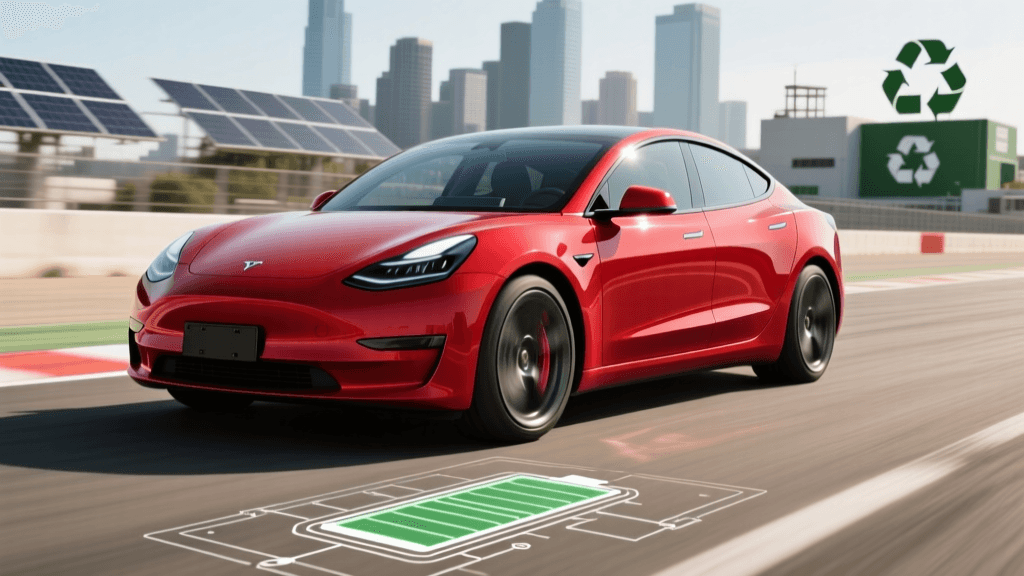
The Hidden Data Behind Used EV Battery Health
Purchasing a used electric vehicle is fundamentally different from buying a traditional internal combustion engine (ICE) vehicle. While an ICE buyer might focus on engine compression, transmission shifts, and exhaust health, an EV buyer must focus almost entirely on the high-voltage battery pack. The battery represents up to 40% of the vehicle's total replacement value and dictates the car's daily usability, range, and long-term financial viability. According to the Alternative Fuels Data Center, modern EV batteries are designed to outlast the vehicles themselves, but degradation patterns vary wildly based on charging habits, climate exposure, and battery chemistry.
To make a truly informed purchase, buyers must move beyond the dashboard's estimated range display and dive into the raw telemetry data. This data-driven comparison analysis provides a comprehensive, actionable checklist to assess used EV battery health, leveraging onboard diagnostics (OBD2) and historical degradation curves to separate a pristine battery pack from a ticking financial time bomb.
The Dashboard Illusion: Why Guess-O-Meters Fail
The most common mistake used EV buyers make is relying on the dashboard's estimated range or the vehicle's native State of Health (SoH) percentage. The dashboard range estimator—often colloquially called the 'guess-o-meter'—calculates range based on recent driving efficiency, ambient temperature, and elevation changes. It does not measure the actual chemical capacity of the battery cells.
Furthermore, the Battery Management System (BMS) often masks true degradation to prevent range-anxiety shock for the original owner. A vehicle might display 250 miles of range at 100% charge, but if the BMS has artificially locked off the bottom 10% of the battery buffer to prevent voltage sag, your usable capacity is significantly lower than the screen implies. To uncover the truth, you must bypass the infotainment screen and query the BMS directly.
Essential Tools for Data-Driven Battery Assessment
Before viewing a used EV, equip yourself with the right diagnostic tools. You will need an OBD2 scanner capable of reading manufacturer-specific EV telemetry, paired with a dedicated smartphone application.
- Hardware: The OBDLink CX or OBDLink MX+ are industry standards for EV diagnostics, offering fast, reliable Bluetooth connectivity and broad protocol support.
- Software (Nissan/Renault): Leaf Spy Pro is mandatory for inspecting Nissan Leaf and Renault Zoe battery packs, providing granular cell-level data.
- Software (Tesla): While Tesla limits third-party OBD2 access, utilizing the TeslaFi API or third-party apps like Tessie (with the owner's permission) can pull historical battery health and charging logs.
- Software (Hyundai/Kia/GM): Apps like Car Scanner ELM OBD2 or EVNotify can pull SoH and cell deviation metrics on these platforms.
The Used EV Battery Health Assessment Checklist
When you plug your OBD2 scanner into the used EV, follow this strict five-point data assessment checklist to determine the true health of the high-voltage pack.
1. Verify True State of Health (SoH)
State of Health (SoH) is the ratio of the battery's current maximum capacity compared to its original factory capacity. According to extensive fleet data analyzed by Recurrent Auto, most modern liquid-cooled EV batteries retain between 85% and 95% of their capacity after 100,000 miles. If the OBD2 scanner reports an SoH below 80%, the vehicle is likely approaching the threshold for a warranty claim, and you should negotiate the price down by the cost of a potential out-of-warranty replacement.
2. Analyze Cell Voltage Deviation (The Red Flag Metric)
This is the most critical metric for identifying a failing battery module. A battery pack is made of dozens of individual cells. When healthy, they charge and discharge uniformly. Query the 'Cell Voltage Delta' or 'Max Cell Deviation' via your OBD2 app.
- 0mV - 20mV: Excellent. The cells are perfectly balanced.
- 21mV - 50mV: Normal. Slight imbalance is expected in older packs or extreme temperatures.
- 51mV - 100mV: Warning. A weak module is developing. Expect range loss and slower charging speeds as the BMS restricts power to protect the weak cell.
- Over 100mV: Critical Failure Imminent. Do not purchase unless a module replacement is factored into the price.
3. Review DC Fast Charging (DCFC) History
While modern thermal management systems mitigate damage, a lifetime of exclusive DC Fast Charging accelerates lithium plating and electrolyte degradation. Use the vehicle's infotainment system or connected app to check the lifetime charging stats. If the vehicle shows over 70% of its total energy intake came from DCFC stations (50kW or higher), expect the degradation curve to be steeper than average.
4. Check the 12V Auxiliary Battery Age
EVs use a standard 12V lead-acid or lithium-ion battery to run computers and close the high-voltage contactors. A failing 12V battery can cause the main BMS to throw false error codes or fail to charge. Check the date stamp on the 12V battery; if it is over 3 years old, factor a $200-$300 replacement cost into your offer.
5. Confirm Warranty Transferability and Status
Federal law in the US mandates that EV batteries carry a minimum warranty of 8 years or 100,000 miles (10 years/150,000 miles in CARB states). However, you must verify if the warranty is tied to the VIN (fully transferable) or the original owner. Pull the vehicle's warranty status through the manufacturer's portal using the VIN to ensure you are covered against premature degradation.
Data Comparison: Battery Health vs. Real-World Impact
Understanding how SoH translates to daily usability and financial risk is crucial for negotiation. The table below compares OBD2 health metrics against real-world range retention and financial exposure.
| OBD2 State of Health (SoH) | Est. Range Retention | Degradation Curve Phase | Financial Risk Level | Buyer Action |
|---|---|---|---|---|
| 95% - 100% | 97% - 100% | Initial Settling | Very Low | Pay market premium |
| 88% - 94% | 90% - 96% | Linear Degradation | Low | Standard market purchase |
| 80% - 87% | 82% - 89% | Mid-Life Plateau | Moderate | Negotiate 10-15% discount |
| 70% - 79% | 75% - 81% | Accelerated Drop-off | High | Require module replacement |
| Below 70% | Under 75% | End of Automotive Life | Severe | Walk away or salvage value |
Chemistry Nuances: NMC vs. LFP Data Interpretation
When analyzing OBD2 data, you must know which battery chemistry is under the floorboard, as the data interpretation changes drastically.
NMC / NCA (Nickel Manganese Cobalt / Nickel Cobalt Aluminum): Found in most long-range Teslas, Hyundai Ioniq 5s, and Ford Mustang Mach-Es. These batteries prefer to operate between 20% and 80%. If an NMC battery shows high cell deviation at low states of charge, it indicates true chemical wear.
LFP (Lithium Iron Phosphate): Found in standard-range Teslas and many newer budget EVs. LFP batteries have a very flat voltage curve, making it incredibly difficult for the BMS to guess the SoC. Consequently, LFP vehicles must be charged to 100% regularly to calibrate the BMS. If you test a used LFP vehicle and the dashboard shows unusually low range or erratic SoH data, the battery might not be degraded; it may simply be out of calibration. Instruct the seller to charge the vehicle to 100% and let it sit plugged in for two hours to allow the BMS to top-balance the cells before re-reading the OBD2 data.
Financial Risk and Replacement Cost Analysis
Battery replacement costs remain the ultimate boogeyman of used EV ownership. While complete pack failures are rare, out-of-warranty replacements can range from $8,000 for a Nissan Leaf to over $18,000 for a long-range luxury EV. Data from FuelEconomy.gov highlights that as the EV market matures, the availability of refurbished modules and third-party repair shops is increasing, which helps mitigate total-loss scenarios. However, buying a used EV with an SoH below 80% without an active warranty means you are effectively self-insuring a $15,000 liability. Always price the vehicle under the assumption that a battery repair may be in its future if the data shows high cell deviation.
Conclusion: Making the Data-Driven Decision
A used EV is a brilliant financial and environmental choice, provided you verify the health of its most expensive component. By ignoring the dashboard guess-o-meter and relying on hard OBD2 data—specifically State of Health, cell voltage deviation, and charging history—you eliminate the guesswork from the buying process. Bring your scanner, run the checklist, and let the telemetry dictate your final offer.