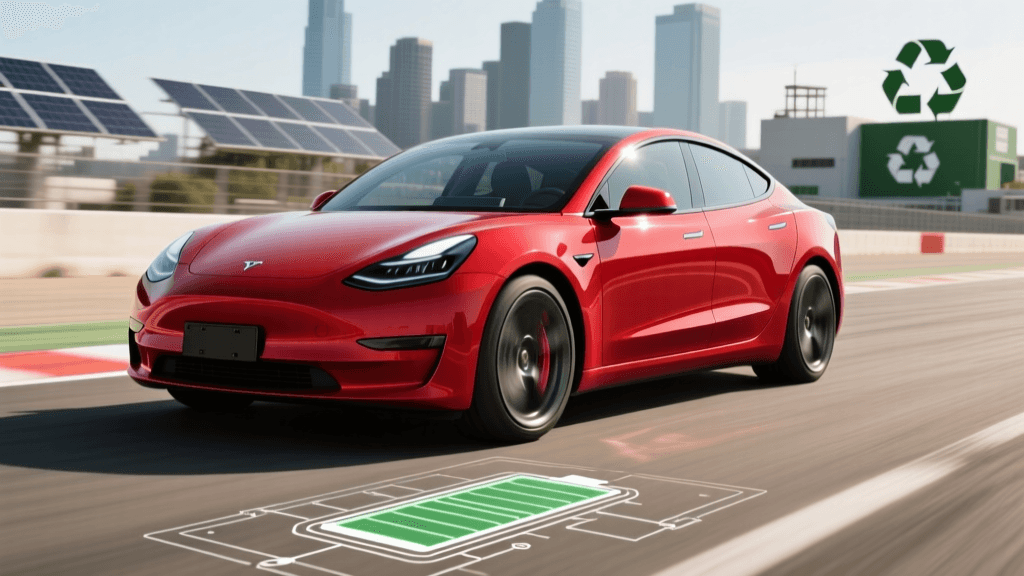
The Impending EV Battery Recycling Wave
As the global electric vehicle fleet matures, the automotive industry is approaching a critical inflection point: the first massive wave of end-of-life (EOL) lithium-ion batteries. According to the International Energy Agency's Global EV Outlook, the demand for critical minerals like lithium, cobalt, and nickel is skyrocketing, making the circular economy not just an environmental imperative, but a geopolitical and economic necessity. By 2030, millions of tons of EV battery packs will reach their 70-80% state of health (SoH) threshold, rendering them unsuitable for automotive propulsion but ripe for material recovery. Understanding the deep technology behind how these batteries are recycled is essential for evaluating the true lifecycle cost and environmental footprint of electric mobility.
Currently, the battery recycling industry is dominated by two primary technological pathways: pyrometallurgy and hydrometallurgy, with a third, highly promising method known as direct recycling emerging from the laboratory phase. Each method presents distinct chemical processes, energy requirements, and material recovery rates that directly impact the environmental footprint of your EV.
Pyrometallurgy: The Traditional Smelting Approach
Pyrometallurgy, often referred to as smelting, is the oldest and most commercially established method for recycling lithium-ion batteries. The process begins with the mechanical shredding of battery modules, often without prior deep discharge, which carries a risk of thermal runaway and the release of toxic hydrofluoric acid (HF) gas. To mitigate this, shredding is sometimes performed in inert atmospheres or the materials are fed directly into a high-temperature rotary kiln or blast furnace.
Inside the furnace, temperatures exceed 1,500°C. The organic components of the battery, including the plastic separators and liquid electrolytes, are incinerated, providing some of the thermal energy required for the process. The remaining inorganic materials melt and separate into two distinct phases based on density: a metallic alloy at the bottom and a slag layer on top.
The Recovery Reality of Smelting
The metallic alloy is rich in high-value transition metals such as cobalt, nickel, and copper, which are subsequently refined using traditional metallurgical techniques. However, pyrometallurgy has a fatal flaw regarding modern battery chemistries: lithium, aluminum, and manganese are largely oxidized and lost in the slag phase. Because lithium is the foundational element of all lithium-ion batteries, losing it to slag (which is often downcycled into construction aggregates) represents a massive inefficiency. Furthermore, the extreme energy intensity of maintaining 1,500°C furnaces results in a high carbon footprint, somewhat negating the environmental benefits of driving an EV in the first place.
Hydrometallurgy: The Chemical Leaching Standard
Hydrometallurgy has rapidly become the preferred technology for modern battery recycling facilities, championed by industry leaders like Redwood Materials and Li-Cycle. This approach relies on aqueous chemistry to dissolve and separate battery materials at a molecular level, operating at significantly lower temperatures than smelting.
The process begins with the safe discharging and mechanical shredding of battery packs in an oxygen-depleted environment to prevent fires and capture volatile electrolyte gases. The resulting shredded material is sieved to isolate the 'black mass'—a powdery mixture containing the highly valuable cathode and anode active materials.
The Leaching and Extraction Process
The black mass is subjected to a chemical leaching process, typically using sulfuric acid (H2SO4) combined with a reducing agent like hydrogen peroxide (H2O2). This acidic bath dissolves the lithium, cobalt, nickel, and manganese into an aqueous solution. From there, the solution undergoes a series of purification steps:
- Precipitation: Impurities like iron, aluminum, and copper are precipitated out of the solution by carefully adjusting the pH levels.
- Solvent Extraction (SX):strong> Organic solvents are introduced to selectively bind and separate cobalt, nickel, and manganese based on their distinct chemical affinities.
- Lithium Recovery: Finally, lithium is recovered from the remaining raffinate solution, usually by precipitating it as lithium carbonate or lithium phosphate using sodium carbonate.
Hydrometallurgy boasts exceptional recovery rates, often exceeding 95% for cobalt and nickel, and up to 85-90% for lithium. The U.S. Department of Energy's ReCell Center has extensively documented how these advanced hydrometallurgical techniques can produce battery-grade precursor materials that are indistinguishable from those derived from virgin mining.
Direct Recycling: The Holy Grail of Battery Circularity
While hydrometallurgy breaks materials down to their elemental salts, direct recycling seeks to preserve the complex crystalline structure of the cathode itself. Manufacturing a cathode from raw elements requires immense energy: mining, refining, precursor synthesis, and high-temperature calcination. Direct recycling bypasses these steps by 'healing' the degraded cathode.
During an EV battery's life, lithium ions are gradually lost to the solid electrolyte interphase (SEI) layer on the anode, leaving the cathode 'lithium-deficient' and structurally fatigued. Direct recycling involves separating the black mass, floating the cathode material off the aluminum foil current collector, and subjecting it to a 'relithiation' process. Using supercritical fluids or solid-state hydrothermal methods, lithium is re-inserted into the cathode lattice, and the material is annealed to restore its original electrochemical performance. While currently at a lower Technology Readiness Level (TRL) than hydro or pyro, direct recycling promises the lowest carbon footprint and highest economic margin, especially for lower-value chemistries.
Comparative Analysis: Recovery Rates and Environmental Impact
To understand how these technologies stack up against one another, we must look at the data regarding material recovery, energy consumption, and commercial viability. The following table outlines the core metrics of the three primary recycling pathways.
| Recycling Method | Lithium Recovery Rate | Co / Ni Recovery Rate | Energy Intensity | Tech Readiness (TRL) |
|---|---|---|---|---|
| Pyrometallurgy | < 10% (Lost in slag) | 95%+ | Very High (1500°C+) | Commercial (TRL 9) |
| Hydrometallurgy | 85% - 95% | 95% - 99% | Moderate (Chemical heating) | Commercial (TRL 8-9) |
| Direct Recycling | ~100% (Retained in lattice) | 100% (Retained in lattice) | Low (Mild thermal/chemical) | Pilot / Demo (TRL 5-7) |
The Carbon Footprint Differential
The environmental impact of these processes varies wildly. Mining and refining one kilogram of virgin battery-grade nickel can emit between 10 to 15 kg of CO2 equivalent, heavily depending on the ore grade and the energy grid powering the mine. In contrast, recovering one kilogram of nickel via hydrometallurgy emits approximately 2 to 3 kg of CO2 equivalent. When the recycling facility is powered by renewable energy, the carbon footprint of recycled battery metals drops to a fraction of their mined counterparts, drastically reducing the 'carbon debt' a new EV must pay off during its operational lifetime.
The LFP Challenge: Recycling Iron-Phosphate Batteries
A major technological hurdle currently facing the recycling industry is the rapid proliferation of Lithium Iron Phosphate (LFP) batteries. Standard-range Tesla Model 3s, Ford Mustang Mach-E standard range models, and the majority of BYD's global fleet utilize LFP chemistry due to its low cost, high safety, and long cycle life. However, LFP contains zero cobalt and zero nickel—the two metals that traditionally subsidize the cost of battery recycling.
Under a pyrometallurgical or standard hydrometallurgical process, the recovered iron and phosphate have very low market value, making LFP recycling economically unviable without heavy subsidies or regulatory mandates. This is precisely why the U.S. Department of Energy is heavily investing in direct recycling. By preserving the LFP cathode structure rather than breaking it down into cheap elemental iron and phosphorus, direct recycling offers the only currently viable pathway to close the loop on LFP batteries profitably.
Actionable Advice for EV Owners and Fleet Managers
While the macro-level technology of battery recycling is handled by industrial chemists, EV owners and fleet managers play a crucial role in the circular supply chain. Here is how you can ensure your battery is handled responsibly and maximize your financial return at the vehicle's end of life:
1. Monitor State of Health (SoH) Accurately
Before decommissioning an EV or selling it for scrap, accurately assess the battery's SoH. Do not rely solely on the dashboard range estimator. Use OBD2 diagnostic tools paired with software like Tessie or CarScanner to read the battery management system's (BMS) internal health metrics. A pack with 75% SoH is considered EOL for automotive use but holds immense value for secondary stationary energy storage applications, which fetch a higher resale price than raw scrap black mass.
2. Understand Your Battery Chemistry
Know whether your vehicle houses an NMC (Nickel Manganese Cobalt) or LFP (Lithium Iron Phosphate) pack. If you are a fleet manager retiring a batch of LFP delivery vans, you must seek out specialized recyclers who have invested in direct recycling or advanced LFP hydro-processes. Sending LFP to a traditional smelter will result in near-total value loss and unnecessary environmental degradation.
3. Vet Your End-of-Life Recycler
Not all scrap yards are equipped to handle high-voltage lithium-ion systems safely or ethically. When disposing of an EOL battery pack, demand a 'Certificate of Recycling' from the facility. Look for partnerships with certified, closed-loop recyclers such as Redwood Materials, Li-Cycle, or Ascend Elements. These companies utilize advanced hydrometallurgical techniques that guarantee the materials will be re-integrated into the domestic battery supply chain, rather than being shipped overseas or improperly landfilled.
4. Leverage Manufacturer Take-Back Programs
Many automakers, including Volkswagen, Hyundai, and Tesla, have established proprietary take-back programs to ensure their packs are routed to preferred recycling partners. If your vehicle is totaled in an accident, instruct your insurance provider and the towing company to route the high-voltage battery through the OEM's official EOL channel. This ensures the toxic electrolytes are captured safely and the valuable transition metals are recovered using state-of-the-art hydrometallurgy, directly supporting the production of next-generation EVs.