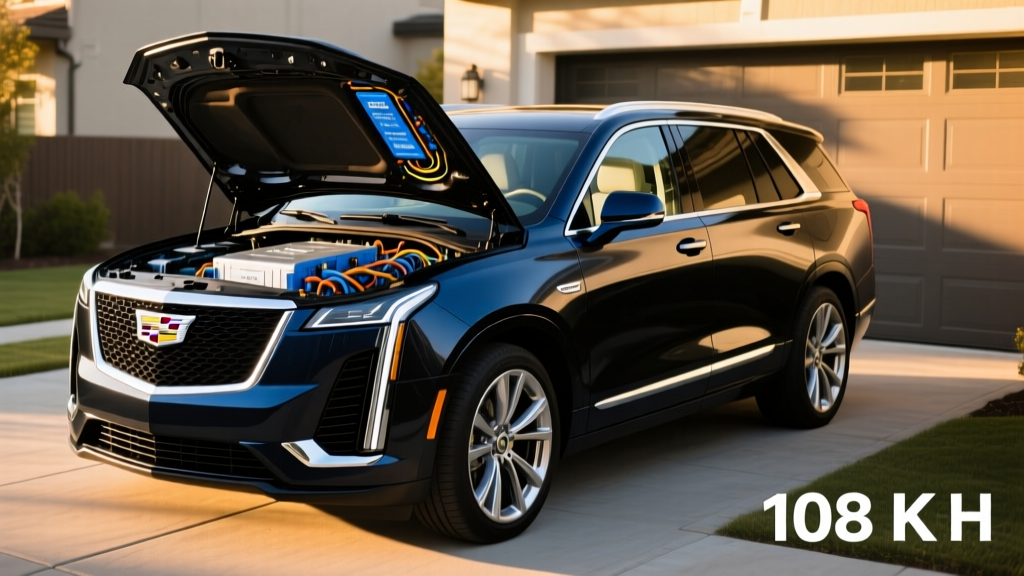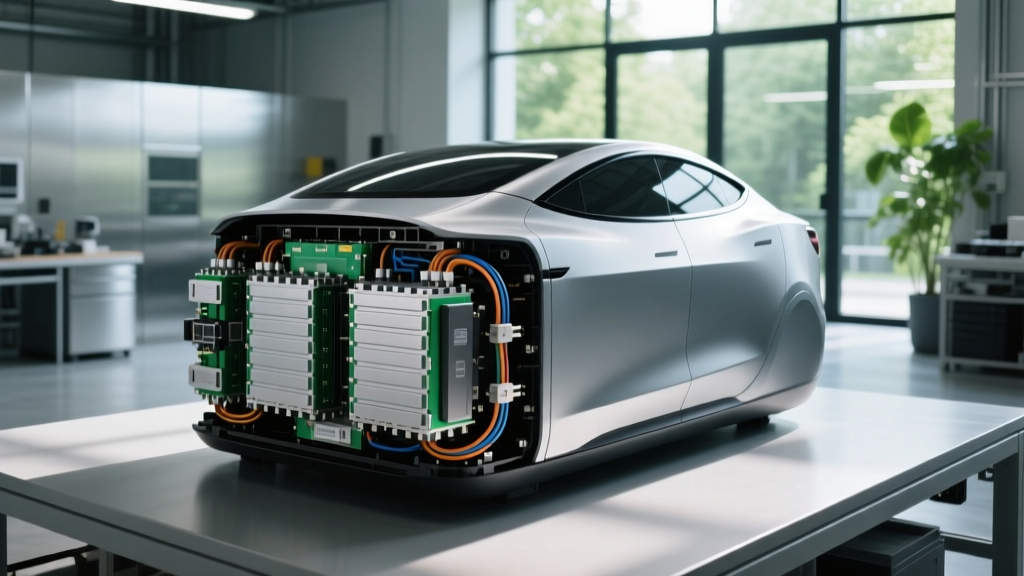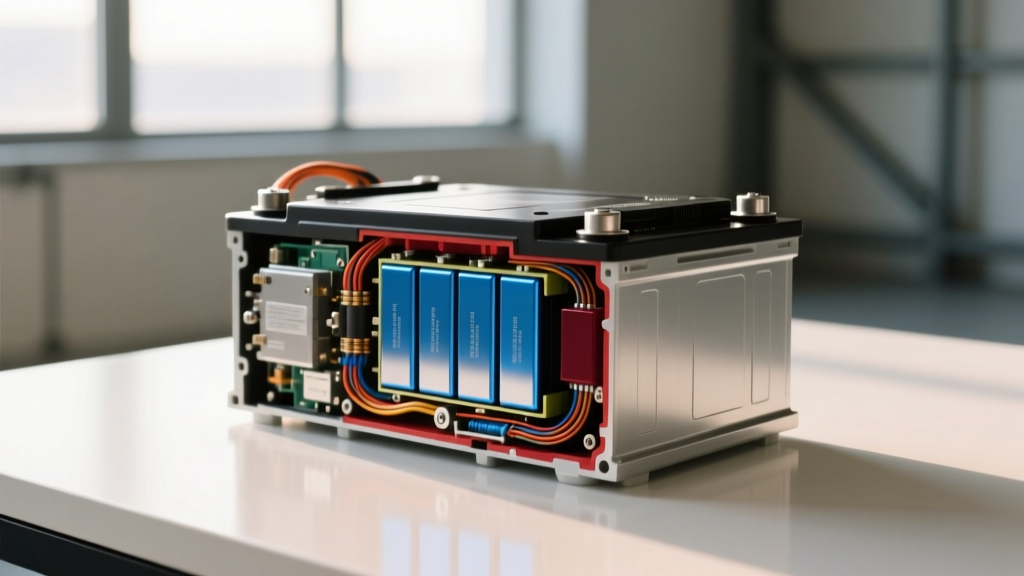
If you're evaluating a used EV — or wondering whether your current electric car's battery will go the distance — the high-voltage traction battery is the single most important (and most expensive) component to understand. Unlike a gas car's engine, which can fail catastrophically and without warning, an EV battery degrades gradually and predictably. That's good news for used-EV shoppers, but only if you know what numbers to look for.
This guide breaks down real-world degradation data, chemistry trade-offs, warranty coverage, replacement costs, and the practical steps you can take to assess and preserve battery health — whether you're buying a used Model 3, a second-hand Ioniq 5, or planning to keep your current EV past 150,000 miles.
How Long Do EV Batteries Actually Last?
The short answer: most EV batteries outlast the cars they're installed in. Data from fleet operators, manufacturer warranty claims, and independent testing shows that modern lithium-ion traction batteries routinely exceed 150,000 miles before reaching the 70% capacity-retention threshold that most warranties define as "end of life."
"End of life" doesn't mean the battery dies — it means the battery holds less than 70% of its original capacity. A 75 kWh pack at 70% health still stores 52.5 kWh, which for many vehicles still delivers 150+ miles of real-world range. The car remains fully drivable; you just charge more often.
Typical Degradation Curve (Real-World Data):
- Year 1 / 15,000 mi: ~2–5% capacity loss (initial formation loss, steepest part of the curve)
- Year 3 / 45,000 mi: ~6–10% total loss
- Year 5 / 75,000 mi: ~8–13% total loss
- Year 8 / 120,000 mi: ~12–18% total loss (warranty threshold period)
- Year 10+ / 150,000+ mi: ~15–25% total loss depending on chemistry and care
Sources: Geotab fleet data (6,300+ EVs), Tesla Impact Reports, Recurrent Auto battery studies.
LFP (lithium iron phosphate) batteries — found in the standard-range Tesla Model 3, Model Y, and several newer models from Ford, Hyundai, and others — tend to degrade more slowly than NMC/NCA packs. Geotab's data shows LFP packs averaging under 10% loss at 100,000 miles, while NMC packs from the same era average 12–15%. The trade-off is lower energy density, which we'll cover below.
LFP vs. NMC/NCA: Which Battery Chemistry Is Better for a Used EV?
Battery chemistry determines energy density, cycle life, cold-weather performance, and cost. When shopping for a used electric car, knowing which chemistry is under the floor helps you predict long-term range retention and charging behavior.
| Factor | LFP (Lithium Iron Phosphate) | NMC / NCA (Nickel-based) |
|---|---|---|
| Energy Density | Lower (~160–180 Wh/kg cell-level) | Higher (~220–300 Wh/kg cell-level) |
| Typical Cycle Life | 3,000–5,000+ cycles to 80% SoH | 1,000–2,500 cycles to 80% SoH |
| Real-World Degradation (100k mi) | ~6–10% loss | ~10–15% loss |
| Cold-Weather Performance | Moderate — range loss ~30–40% below freezing without heat pump | Better — range loss ~20–30% below freezing with preconditioning |
| Can Charge to 100% Daily? | Yes — LFP benefits from periodic 100% SoC for cell balancing | No — daily 80% limit recommended; 100% only for trips |
| Cost (per kWh, pack-level) | ~$90–$110 | ~$120–$150 |
| Common In (2025–2026 Models) | Tesla Model 3/Y RWD, Ford Mustang Mach-E Select, BYD models | Tesla Long Range/Performance, Hyundai Ioniq 5/6, Rivian, most long-range trims |
For used-EV buyers: LFP is the durability winner. If you're buying a 3-year-old Tesla Model 3 RWD with an LFP pack, expect slower degradation and a simpler charging routine (charge to 100% whenever you want). NMC/NCA packs offer more range per pound and better winter performance, but they demand more careful SoC management to maximize lifespan.
What Does the EV Battery Warranty Actually Cover?
Federal law mandates that EV batteries carry a minimum warranty of 8 years / 100,000 miles. California Air Resources Board (CARB) states extend that to 10 years / 150,000 miles. But the details matter — especially when you're buying used and the warranty clock is already ticking.
| Manufacturer | Warranty Period | Capacity Retention Threshold | Transferable to Used Buyer? |
|---|---|---|---|
| Tesla (Model 3/Y LFP) | 8 yr / 100,000 mi | 70% | Yes — automatic |
| Tesla (Model 3/Y Long Range) | 8 yr / 120,000 mi | 70% | Yes — automatic |
| Hyundai / Kia | 10 yr / 100,000 mi | 70% | Partial — 10yr/100k transfers to 2nd owner in some states; verify with dealer |
| Ford (Mach-E, F-150 Lightning) | 8 yr / 100,000 mi | 70% | Yes — automatic |
| Chevrolet (Bolt EUV, Equinox EV) | 8 yr / 100,000 mi | 60% (Bolt) / 70% (newer) | Yes — automatic |
| Rivian | 8 yr / 120,000 mi | 70% | Yes — automatic |
| BMW / VW (ID.4) | 8 yr / 100,000 mi | 70% | Yes — automatic |
Critical detail for used buyers: The warranty covers the battery falling below the threshold — not gradual degradation above it. If your 6-year-old Model Y has 74% capacity, you're above the 70% line and the warranty won't trigger a replacement. You're still covered for 2 more years / ~40,000 miles if it drops further.
Warranty claims also typically exclude damage from accidents, flooding, improper modifications, or use of non-approved charging equipment. Normal degradation from regular use is covered. Always check the specific warranty booklet for the model year you're considering — terms have tightened on some 2025–2026 models.
How Much Does It Cost to Replace an EV Battery?
This is the question that haunts every used-EV buyer. The honest answer: battery replacement is rare before 150,000 miles, and when it is needed, costs have dropped significantly since the early 2020s. But it's still a major expense.
| Vehicle / Battery Size | Chemistry | Replacement Cost (Parts + Labor) | Typical Replacement Trigger |
|---|---|---|---|
| Tesla Model 3 RWD (~60 kWh) | LFP | $8,000–$12,000 | Rare before 200k mi; module-level repair sometimes possible |
| Tesla Model Y Long Range (~82 kWh) | NMC | $12,000–$16,000 | 150k–200k mi if degraded below 70% |
| Hyundai Ioniq 5 (77.4 kWh) | NMC | $10,000–$14,000 | 150k+ mi; module replacement possible from ~$3,000 |
| Ford Mustang Mach-E ER (91 kWh) | NMC | $14,000–$18,000 | 150k+ mi |
| Chevrolet Bolt EV/EUV (65 kWh) | NMC | $6,000–$9,000 (post-recall pricing) | Most recalled packs already replaced |
| Ford F-150 Lightning ER (131 kWh) | NMC | $18,000–$22,000 | Very rare; large packs degrade slowly |
| Rivian R1T / R1S (128–149 kWh) | NMC / LFP (2025+) | $18,000–$25,000 | Rare; limited long-term data |
Key context: Most EVs will never need a full pack replacement. Module-level repairs — replacing individual degraded cell modules within the pack — are increasingly available from independent EV shops for $2,000–$5,000. Companies like Recurrent Auto report that fewer than 2% of EVs in their dataset have required full pack replacements outside of recall campaigns.
For comparison, a gas car's transmission replacement averages $3,000–$7,000, and an engine rebuild can exceed $8,000. The EV battery is more expensive but fails far less frequently and comes with a longer warranty.
Factors That Accelerate (or Preserve) Battery Life
Not all used EV batteries age equally. A 60,000-mile pack that was garage-kept, Level-2 charged, and kept between 20–80% SoC will outperform a 40,000-mile pack that lived in Phoenix heat with daily DC fast charging to 100%.
What Hurts Battery Longevity:
- Frequent DC fast charging: Occasional road-trip use is fine. Daily reliance on 150+ kW DCFC generates sustained heat that accelerates electrolyte decomposition. Expect 2–4% additional degradation over 100k miles vs. Level 2 charging.
- Prolonged high SoC: Sitting at 100% for days or weeks (especially in heat) stresses NMC/NCA cathodes. LFP is more tolerant but still benefits from not sitting at 100% for weeks.
- Extreme heat exposure: Battery temps above 104°F (40°C) for extended periods accelerate degradation. Garage parking in hot climates makes a measurable difference.
- Deep discharge cycles: Regularly driving below 10% SoC stresses the anode. Most EVs have a buffer (the "0%" on the dash isn't truly empty), but repeated deep discharges still add wear.
- Track/high-performance use: Sustained high-C-rate discharge (repeated hard acceleration, track days) generates internal heat.
What Preserves Battery Longevity:
- Level 2 home charging (7–11 kW): Gentle charge rates generate minimal heat. This is the ideal daily charging method.
- 20–80% SoC window (NMC/NCA): The single most impactful habit for nickel-based packs. Most EVs let you set charge limits in the app.
- Preconditioning before fast charging: Warming the battery to optimal temperature (~70–95°F / 20–35°C) before a DCFC session reduces stress and improves charge speed.
- Moderate climate storage: Garage parking in both hot and cold climates reduces thermal cycling stress.
- Regular use: Batteries that are driven regularly and cycled moderately outperform those that sit idle for months.
How to Check Battery Health (State of Health) on a Used EV
Before buying a used electric car — or simply monitoring your own — you need to know the battery's State of Health (SoH). This is expressed as a percentage: 100% SoH means the pack holds its original rated capacity; 85% SoH means it holds 85% of original.
Method 1: Built-in vehicle diagnostics. Some vehicles display SoH or usable capacity directly. Tesla owners can check via the service menu or third-party apps. The Nissan Leaf's dash displays "battery health bars" (12 bars = 100%). Hyundai/Kia models from 2022+ show battery health in the infotainment diagnostics menu.
Method 2: OBD-II scanner with EV support. Devices like the OBDLink SX paired with apps such as EV Battery Health or Leaf Spy (for Nissan) can read the BMS (Battery Management System) directly and report SoH, cell voltage variance, and cycle count. Cost: $40–$120 for the hardware.
Method 3: Third-party battery reports. Services like Recurrent and Avto.pro EV Check provide battery health reports based on telematics data. Some used-EV dealerships now include these with listings.
Method 4: Manual range test. Charge the EV to 100% (for LFP) or the vehicle's displayed max (for NMC at 80% daily limit, calculate proportionally). Note the estimated range. Compare it to the original EPA range for that model year. A 2022 Model 3 Long Range originally rated at 358 miles EPA that now shows 300 miles at 100% has roughly 84% SoH. This method is approximate — temperature, tire pressure, and driving style affect the estimate — but it's free and requires no tools.
What to look for in cell data: Healthy packs show cell voltage variance under 20–30 mV across all modules at rest. Variance above 50 mV suggests one or more weak modules that may need balancing or replacement.
What's Next: Solid-State and Silicon-Anode Batteries
If you're shopping for a used EV now, you may wonder whether to wait for next-generation battery tech. Here's the realistic timeline as of 2026:
Silicon-anode batteries are already entering production. Companies like Sila Nanotechnologies and Group14 supply silicon-dominant anode materials that increase energy density by 20–40% over graphite anodes. The Mercedes G-Class 580e (2025) uses a silicon-anode pack from Group14. Expect broader adoption in 2027–2028 models. For used-EV buyers, this means current NMC packs are already near their energy-density ceiling — don't expect dramatic range improvements in near-term used models.
Solid-state batteries — which replace the liquid electrolyte with a solid ceramic or polymer — promise higher energy density, faster charging, and improved safety. Toyota has announced a 2027–2028 production timeline for a solid-state EV with ~750 km (466 mi) range. Samsung SDI targets 2027. However, initial production will be limited to premium vehicles at high prices. Mass-market solid-state EVs are not expected before 2030–2032.
Bottom line: Current lithium-ion technology (both LFP and NMC) is mature, well-understood, and proven to last 150,000+ miles with proper care. Waiting for solid-state means waiting at least 4–6 years for affordable models. For most buyers, a well-maintained used EV with a current-gen battery is the pragmatic choice today.
Frequently Asked Questions
How long do used electric car batteries last in real-world driving?
Most modern EV batteries (2020+ models) last 150,000–200,000+ miles before dropping below 70% capacity. LFP packs often exceed 200,000 miles with minimal degradation. "Last" here means usable capacity — the battery doesn't suddenly fail; it gradually holds less energy, reducing range.
Is buying a used EV with 80,000+ miles risky?
Not inherently. An 80,000-mile EV with documented Level 2 home charging and moderate SoC habits is often a better battery bet than a 30,000-mile EV that relied on daily DC fast charging in a hot climate. Always check SoH before purchase using the methods above, and verify remaining warranty coverage.
Can I replace just one battery module instead of the whole pack?
Yes, on many vehicles. Hyundai, Kia, BMW, and some Tesla service centers offer module-level replacement for $2,000–$5,000 per module. This is viable when one or two modules degrade faster than the rest. Full-pack replacement is typically only needed for widespread degradation or physical damage.
Does the federal EV tax credit apply to used EVs?
Yes — under IRS §25E, qualified used EVs can receive up to $4,000 (30% of sale price, capped at $4,000). Requirements include: sale price under $25,000, model year at least 2 years older than current year, buyer income under $75,000 (single) / $150,000 (joint), and purchase from a licensed dealer. This is separate from the new-vehicle §30D credit. Always verify current-year rules with a tax professional.
Does fast charging really damage the battery?
Occasional DC fast charging (road trips, 2–4 times per month) causes negligible additional degradation. Daily DCFC use, especially at 150+ kW without preconditioning, can add 2–5% additional capacity loss over 100,000 miles compared to Level 2 charging. Modern BMS systems actively manage charge rates and temperature to minimize harm, but heat remains the primary degradation driver.
LFP vs NMC — which is better for a used EV purchase?
For longevity and low-maintenance ownership: LFP. It degrades slower, tolerates 100% daily charging, and costs less to replace. For maximum range and cold-weather performance: NMC/NCA. If you live in a cold climate and need every mile of range, NMC's better low-temperature performance matters. If you prioritize a battery that will outlast 200,000 miles with minimal fuss, LFP is the stronger pick.