The Next EV Battery Revolution is Here
The electric vehicle industry is standing on the precipice of a technological revolution. For the past decade, lithium-ion (Li-ion) batteries with liquid electrolytes have been the undisputed kings of the EV world. However, as we look at the EV battery technology roadmap for what to expect in the next five years, two heavyweight contenders are stepping into the ring to dethrone traditional Li-ion chemistry. This is not just an incremental update; it is a fundamental shift in how we store and deploy energy in electric vehicles.
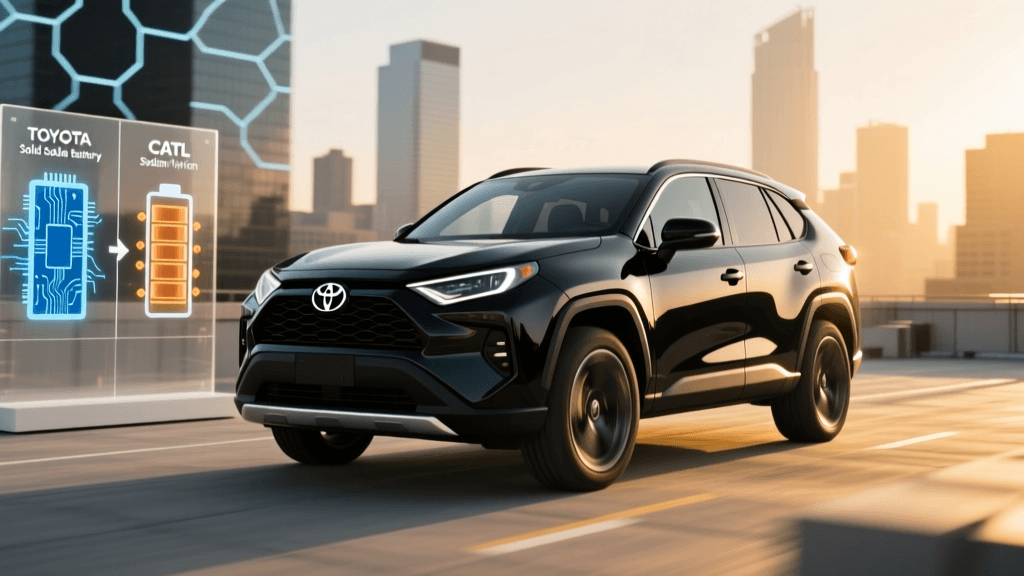
In this head-to-head product showdown, we are pitting the ultimate premium range-extender against the ultimate budget-friendly workhorse: Toyota’s Solid-State Battery (SSB) versus CATL’s Sodium-Ion (Na-ion) Battery. Both technologies are slated for mass commercialization between 2027 and 2029, but they target entirely different segments of the automotive market. Which technology will define your next EV purchase? Let us break down the engineering, the economics, and the five-year rollout timeline.
The Contenders: Solid-State vs. Sodium-Ion
Before we dive into the metrics, it is crucial to understand the fundamental chemistry driving these two products. Solid-state batteries replace the flammable liquid electrolyte found in conventional Li-ion batteries with a solid material (such as ceramics, glass, or sulfides). This allows for the use of a lithium-metal anode, drastically increasing energy storage capacity.
On the other side of the ring, Sodium-Ion batteries swap out expensive and scarce lithium for sodium, one of the most abundant elements on Earth (often harvested from common salt). While Na-ion technology has been around in labs for years, recent breakthroughs by battery giants like CATL and BYD have finally made it viable for automotive applications. According to Argonne National Laboratory's battery chemistry primers, diversifying battery chemistries away from lithium-heavy reliance is critical for the long-term sustainability of the global EV fleet.
Round 1: Energy Density and Range Potential
When it comes to pure energy density—the amount of energy a battery can store relative to its weight—solid-state batteries are the undisputed champions. Current high-end Li-ion packs max out at around 250 to 300 Wh/kg at the cell level. Toyota’s upcoming solid-state architecture is projected to push past 400 Wh/kg, with some prototypes testing even higher.
This massive leap in energy density translates directly to vehicle range. Toyota has officially teased that its first-generation solid-state EVs will achieve a range of 1,000 kilometers (approximately 621 miles) on a single charge, with a stretched version aiming for 1,200 kilometers. For road-trip enthusiasts and luxury sedan buyers, this effectively eliminates range anxiety.
Sodium-ion batteries, conversely, lose this round. Current Na-ion cells hover around 140 to 160 Wh/kg, with next-generation roadmaps pushing toward 200 Wh/kg by 2028. This lower energy density means Na-ion packs will be heavier and bulkier for the same range, making them unsuitable for massive, long-range SUVs. Instead, they are perfectly tailored for compact city cars, light commercial vehicles, and entry-level EVs where a 250-mile range is more than sufficient.
Round 2: Charging Speed and Thermal Stability
Charging speed is where solid-state technology truly flexes its engineering muscles. Because there is no liquid electrolyte to boil or degrade under high heat, solid-state batteries can accept incredibly high charging currents. Toyota claims its SSB architecture will charge from 10% to 80% in just 10 minutes. This is a game-changer that will make EV refueling closely mimic the convenience of a traditional gas station stop.
However, CATL’s Sodium-Ion batteries win the award for thermal stability and extreme weather performance. Na-ion chemistry is remarkably resilient to temperature fluctuations. While traditional Li-ion batteries lose significant range and charging speed in freezing conditions, Sodium-Ion batteries retain up to 90% of their capacity at temperatures as low as -20°C (-4°F). Furthermore, Na-ion cells have a much higher thermal runaway threshold. They can be safely stored and transported at 0 volts and are vastly less prone to catching fire if punctured, reducing the need for heavy, complex liquid cooling systems in the vehicle.
Round 3: Manufacturing Cost and Supply Chain
This is the round where Sodium-Ion delivers a knockout blow to Solid-State. The global supply chain for lithium, cobalt, and nickel is fraught with geopolitical bottlenecks and price volatility. The International Energy Agency's Global EV Outlook 2024 highlights that critical mineral supply chains remain a primary vulnerability for the auto industry. Sodium, however, is infinitely abundant and cheap to source globally.
CATL and other manufacturers project that once Na-ion production reaches gigawatt scale, the cost per kilowatt-hour (kWh) will drop below $50. This will enable the production of highly profitable, sub-$20,000 electric vehicles that can compete directly with internal combustion economy cars.
Solid-state batteries, on the other hand, require entirely new manufacturing processes. The delicate solid electrolytes must be assembled in ultra-dry rooms, and the lithium-metal anodes are notoriously difficult to manufacture without microscopic defects that cause short circuits. Industry analysts expect SSB packs to remain well over $100/kWh for the first several years of production, restricting them to premium, high-end vehicles.
Head-to-Head Comparison Chart
| Metric | Solid-State (Toyota/QuantumScape) | Sodium-Ion (CATL/BYD) |
|---|---|---|
| Energy Density | High (350 - 450+ Wh/kg) | Moderate (140 - 200 Wh/kg) |
| Estimated EV Range | 600+ miles | 150 - 250 miles |
| Fast Charging (10-80%) | ~10 minutes | ~20-30 minutes |
| Cold Weather Retention | Good (Better than Li-ion) | Excellent (90% at -20°C) |
| Safety / Thermal Runaway | Very High (Non-flammable electrolyte) | Extremely High (Inherently stable) |
| Projected Cost (2028) | Premium ($100 - $130/kWh) | Budget ($40 - $60/kWh) |
| Target Vehicle Segment | Luxury, Long-Range SUVs, Sports Cars | City Cars, Fleet, Entry-Level EVs |
The 5-Year Roadmap: When Will You Actually Get Them?
Understanding the timeline is critical for buyers deciding whether to purchase an EV today or wait for the next generation. Based on current U.S. Department of Energy EV battery resources and manufacturer press releases, here is the realistic roadmap for the next five years:
- 2024 - 2025 (The Na-ion Dawn): Sodium-ion batteries are already entering the market in China. Vehicles like the BYD Seagull and various Chery models are utilizing Na-ion packs for ultra-budget city commuting. Expect these models to slowly expand into European and emerging markets.
- 2026 - 2027 (The SSB Pilot Phase): Toyota plans to launch its first limited-production solid-state EV around 2027. These will likely be low-volume, high-priced halo vehicles (possibly a Lexus flagship) designed to prove the technology's viability and work out early manufacturing kinks.
- 2028 (The Tipping Point): CATL and BYD will likely achieve massive economies of scale for Na-ion, making sub-$25,000 EVs a reality in Western markets. Meanwhile, Toyota and Nissan will begin integrating second-generation SSBs into higher-volume premium sedans and SUVs.
- 2029 and Beyond (Market Bifurcation): The market will cleanly split. If you are buying a budget commuter, a fleet vehicle, or a compact crossover, you will be driving a Sodium-Ion EV. If you are buying a luxury grand tourer, a heavy-duty electric truck, or a premium family SUV, you will be paying for Solid-State technology.
Actionable Buyer Advice: What Should You Do?
So, how should this five-year roadmap influence your next automotive purchase? If you are currently in the market for a mid-priced, 300-mile range EV (like a Tesla Model Y or Hyundai Ioniq 5), do not wait. The current generation of Lithium Iron Phosphate (LFP) and Nickel Manganese Cobalt (NMC) batteries are incredibly mature, safe, and benefit from the widest charging infrastructure. The price premiums of early solid-state EVs in 2027 will make today's Li-ion vehicles look like absolute bargains.
However, if you are a high-mileage road warrior who demands 600+ miles of range and 10-minute charging, or if you are a budget-conscious urban commuter looking for a sub-$20,000 city car, the next five years will bring exactly what you need. Keep your current vehicle running, monitor the 2027 solid-state pilot launches, and prepare for a drastically altered EV landscape by the end of the decade.
The Verdict
In the ultimate head-to-head showdown, there is no single winner because Toyota's Solid-State and CATL's Sodium-Ion are not actually fighting for the same customer. Solid-State is the undisputed champion of performance, range, and premium charging speeds, securing the future of high-end electric mobility. Sodium-Ion is the champion of accessibility, safety, and supply chain independence, ensuring that EVs can become truly affordable for the masses. The next five years will not just bring better batteries; they will bring the right battery for every type of driver.