The Fast Charging Dilemma: 800V vs. 400V Architectures
For prospective electric vehicle buyers, few topics induce as much anxiety as battery degradation. Specifically, the fear that frequent use of DC fast charging (DCFC) will permanently cripple an EV's range and resale value. As public charging networks roll out 350kW ultra-fast chargers, the automotive industry has split into two distinct engineering camps to manage the immense heat and electrical stress generated during these high-power sessions. On one side, we have the legacy 400-volt architecture, championed by the industry benchmark, the Tesla Model Y. On the other, the cutting-edge 800-volt architecture, pioneered in the mainstream by the Hyundai Ioniq 5.
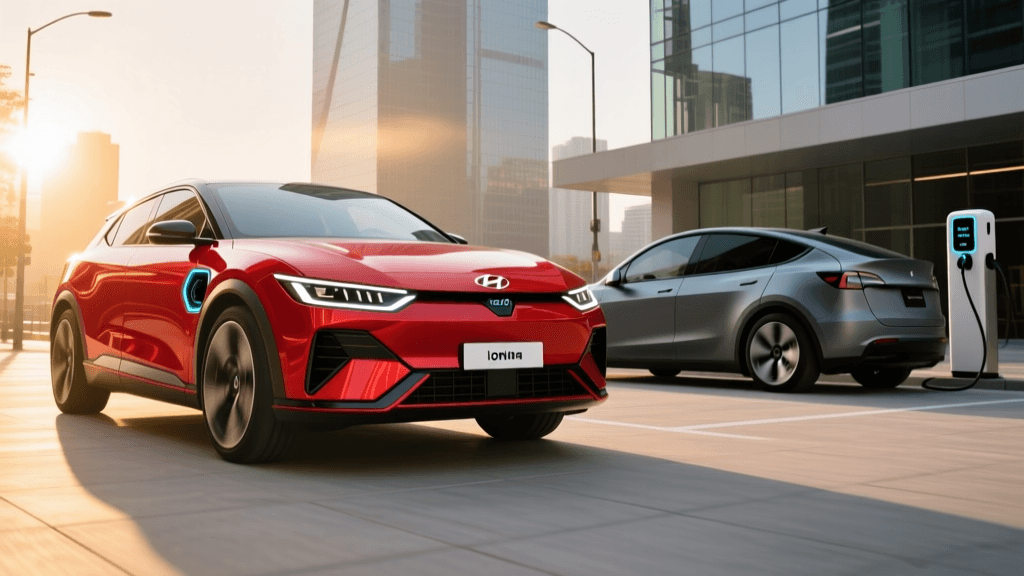
In this head-to-head product showdown, we are putting the Hyundai Ioniq 5 (equipped with its 800V Silicon Carbide e-GMP platform) against the Tesla Model Y (utilizing its highly optimized 400V system and Octovalve thermal management) to answer a critical question: How does fast charging actually affect long-term EV battery degradation, and which architecture handles the abuse better over a 100,000-mile lifespan?
The Physics of Fast Charging: Why Heat is the Enemy
Before diving into the specific vehicles, it is vital to understand the electrochemistry of lithium-ion battery degradation during rapid charging. When you plug into a DC fast charger, you are forcing lithium ions to migrate rapidly from the cathode to the anode. This rapid movement creates internal resistance, which manifests as heat (Joule heating).
If the battery temperature exceeds optimal thresholds (typically around 40°C to 45°C at the cell level), several destructive processes occur:
- Solid Electrolyte Interphase (SEI) Layer Growth: High temperatures accelerate the thickening of the SEI layer on the anode. A thicker SEI layer permanently traps lithium ions, reducing the battery's overall capacity and increasing internal resistance.
- Lithium Plating: If ions arrive at the anode faster than they can intercalate into the graphite structure, metallic lithium plates onto the surface. This not only causes irreversible capacity loss but can also form dendrites that pose a short-circuit risk.
- Cathode Degradation: Extreme heat and high voltages can cause the cathode material (such as NMC or NCA) to degrade, release oxygen, and lose structural integrity.
The key to mitigating these effects lies in thermal management and electrical architecture. This is where our two contenders take vastly different approaches.
Contender 1: Hyundai Ioniq 5 (800V Silicon Carbide Architecture)
The Hyundai Ioniq 5, built on the Electric-Global Modular Platform (E-GMP), utilizes an 800-volt electrical architecture. The physics of power delivery dictate that Power equals Voltage multiplied by Current (P = V x I). By doubling the system voltage compared to a standard 400V system, the Ioniq 5 can achieve the same charging power (e.g., 240 kW) while drawing half the electrical current.
The Thermal Advantage of Lower Amperage
Because resistive heating is proportional to the square of the current (P = I²R), cutting the amperage in half reduces the heat generated within the battery cells, wiring harnesses, and connectors by a factor of four. This means the Ioniq 5 experiences significantly less internal thermal stress during a 350kW charging session. Furthermore, Hyundai employs Silicon Carbide (SiC) MOSFETs in the motor and charging inverters, which operate with higher efficiency and generate less waste heat than traditional silicon IGBTs. The result is a battery pack that stays cooler naturally, requiring less aggressive liquid cooling intervention and reducing the mechanical wear on the thermal management system's compressors and pumps.
Contender 2: Tesla Model Y (400V Architecture & Octovalve)
The Tesla Model Y relies on a traditional 400-volt architecture. To achieve its peak V3 Supercharging speeds of 250 kW, the vehicle must push a massive amount of electrical current through the battery pack. Under the laws of physics, this generates substantial internal heat. However, Tesla compensates for this 400V limitation with what is widely considered the most sophisticated active thermal management system in the industry.
The Octovalve and Predictive Preconditioning
Tesla’s secret weapon is the Octovalve, an integrated thermal management manifold that seamlessly routes heat and cold between the battery pack, the drive motors, and the cabin HVAC system using a highly efficient heat pump. When you navigate to a Supercharger, the Model Y's software predicts your arrival and begins 'preconditioning' the battery. It actively warms the cells to the exact optimal temperature for rapid ion transfer (around 40°C) before you even plug in. This prevents lithium plating that occurs when charging a cold battery. During the actual charge, the Octovalve aggressively liquid-cools the battery, shedding the immense heat generated by the high-amperage 400V DCFC session. Furthermore, Model Y Long Range owners benefit from Panasonic's NCA chemistry, which is highly energy-dense, while Standard Range owners get LFP (Lithium Iron Phosphate) batteries, which are inherently more resistant to thermal degradation and can be charged to 100% regularly without the same SEI growth concerns as NCA/NMC cells.
Head-to-Head Degradation Data Comparison
Below is a structured comparison of how these two architectures handle the rigors of DC fast charging, based on manufacturer specifications, independent telemetry data, and industry averages for their respective battery chemistries.
| Feature / Metric | Hyundai Ioniq 5 (AWD Long Range) | Tesla Model Y (Long Range) |
|---|---|---|
| Electrical Architecture | 800V (Nominal) | 400V (Nominal) |
| Peak DCFC Rate | 238 kW (at 350kW charger) | 250 kW (at V3 Supercharger) |
| Battery Chemistry | NMC (Nickel Manganese Cobalt) | NCA (Nickel Cobalt Aluminum) |
| Thermal Management | Active Liquid Cooling / Heating | Octovalve Heat Pump / Liquid Cooling |
| Preconditioning | Manual or via Route Planning | Automatic via Supercharger Navigation |
| Heat Generation (DCFC) | Low (due to lower amperage) | High (mitigated by aggressive cooling) |
| Est. 100k-Mile Degradation | ~8% to 10% | ~7% to 9% |
Note: Degradation estimates are aggregated from fleet telemetry and owner-reported data for vehicles subjected to frequent DC fast charging.
What the Long-Term Studies Actually Say
Despite the intense heat generated by DC fast charging, real-world data suggests that modern thermal management systems have largely neutralized the historical fears of rapid battery death. A comprehensive study analyzing over 12,500 vehicles by Recurrent Auto's research team on DC fast charging impacts found no statistically significant difference in battery degradation between EVs that fast-charged frequently (more than 90% of their sessions) and those that rarely fast-charged. The study concluded that as long as the vehicle's battery management system (BMS) and liquid cooling are functioning properly, the degradation curves remain nearly identical.
Similarly, the U.S. Department of Energy's Alternative Fuels Data Center (AFDC) notes that modern EV batteries are designed to last the lifetime of the vehicle, typically retaining 70% to 80% of their original capacity well past the 100,000-mile mark, regardless of charging speed, provided extreme states of charge (0% or 100%) are avoided during high-heat scenarios. The EPA's Electric Vehicle Mythbusters guide also explicitly debunks the myth that fast charging inherently destroys batteries, emphasizing that advanced BMS software limits charging speeds if cell temperatures exceed safe thresholds, effectively protecting the battery from user error.
Actionable Tips to Minimize DCFC Degradation
Whether you are driving the 800V Ioniq 5 or the 400V Model Y, how you interact with the vehicle's software plays a massive role in long-term battery health. Follow these actionable guidelines to preserve your battery's lifecycle:
- Always Use Navigation for Charging: In the Tesla Model Y, always enter the Supercharger into the native navigation system. This triggers the preconditioning routine. In the Ioniq 5, ensure your route planning software is linked to the vehicle so it can prepare the battery thermal state before arrival.
- The 20-80% Road Trip Rule: DCFC speeds taper dramatically after 80% State of Charge (SoC). Pushing a charge from 80% to 100% on a fast charger generates disproportionate heat and stress on the anode. Plan your road trips to arrive at chargers around 15-20% SoC and depart at 80%.
- Avoid 'Hot Soaks': If you arrive at a charger after a high-speed summer drive, the battery will already be warm. If possible, park in the shade. More importantly, do not leave the car sitting at 100% SoC in a hot parking lot for hours after a fast charge; the combination of high voltage and high ambient heat accelerates SEI layer growth.
- Never Fast Charge a Freezing Battery: If your EV does not have automatic preconditioning, avoid DC fast charging when the battery is below freezing. The BMS will either block the charge or the energy will go entirely toward heating the pack, and forcing current into a frozen anode guarantees lithium plating.
The Verdict: Which Manages Heat Better?
In this head-to-head showdown, the winner depends on how you define engineering elegance versus brute-force software optimization. The Hyundai Ioniq 5 wins on fundamental physics. Its 800V architecture inherently prevents the massive heat generation associated with high-amperage charging, reducing the mechanical workload on the cooling system and providing a wider, safer thermal margin for the NMC cells. It is the superior hardware solution for the future of ultra-fast charging.
However, the Tesla Model Y wins on software integration and real-world execution. Tesla’s Octovalve and predictive preconditioning are so remarkably effective that they completely mask the thermal disadvantages of the 400V system. The Model Y's ability to dynamically scavenge heat from the drive motors and cabin to perfectly temper the battery means that, in real-world telemetry, its degradation rates are virtually indistinguishable from—and in some LFP configurations, slightly better than—its 800V rivals.
Ultimately, the data is clear: you do not need to fear the DC fast charger. Whether you choose the low-amperage brilliance of the Ioniq 5 or the thermal wizardry of the Model Y, simply let the car's software do its job, keep your daily charging between 20% and 80%, and save the 350kW chargers for the open road.