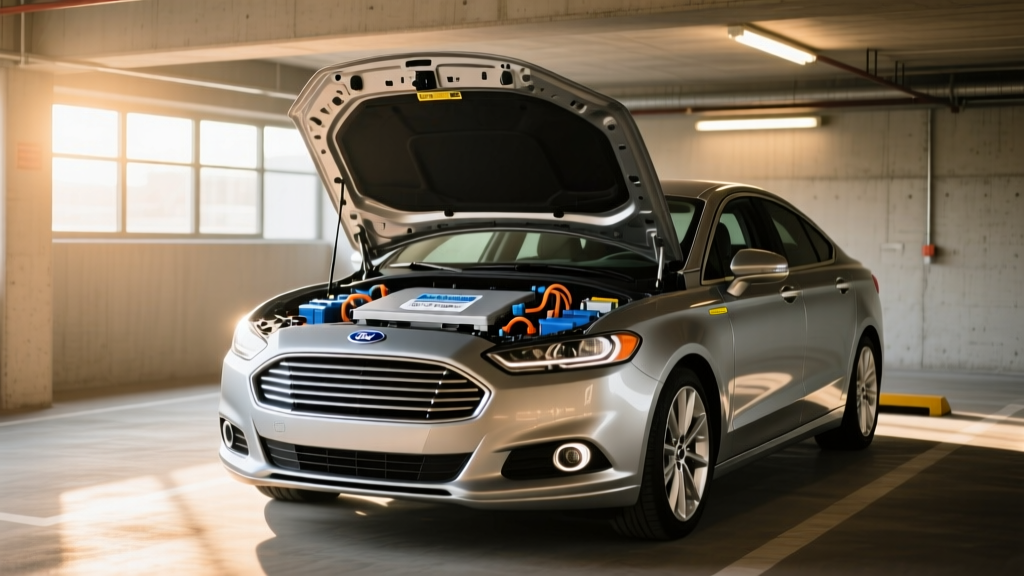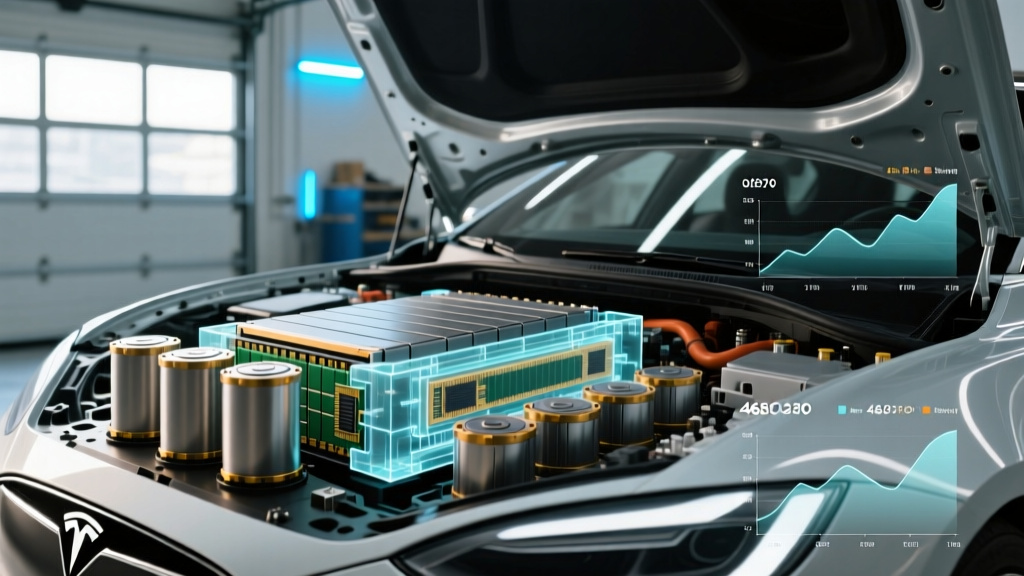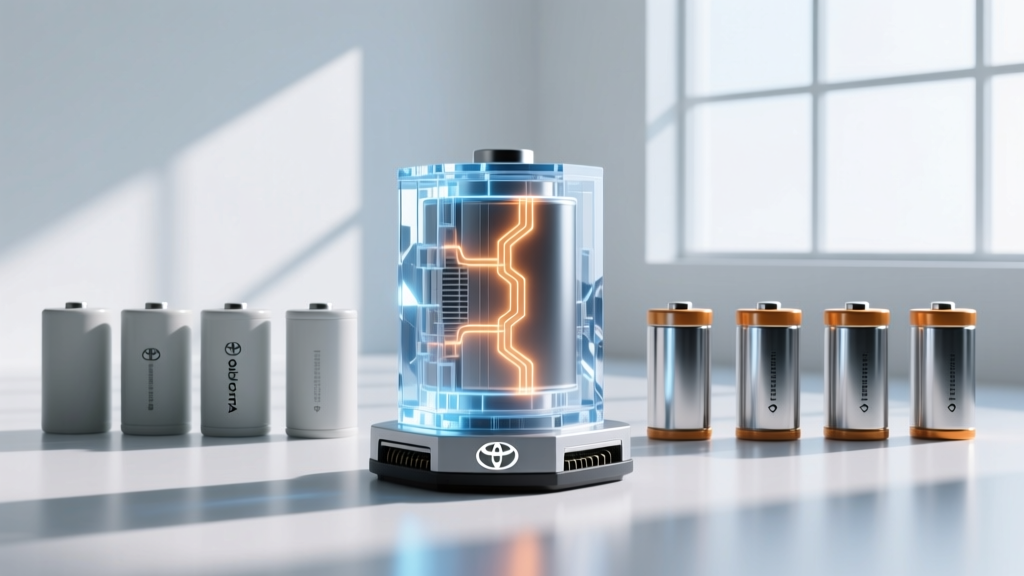
Headlines about the Toyota solid-state battery have circulated for years, promising step-change improvements in range, charging speed, and safety. As of 2026, Toyota has demonstrated prototypes and outlined a phased commercialization plan, but solid-state packs are not yet available in any production vehicle you can buy today. For current EV shoppers and owners, the practical question is simpler: how do today's lithium-ion batteries actually perform over time, what do warranties really cover, and is it worth waiting for next-generation chemistry?
This guide cuts through the hype with hard data on degradation rates, replacement costs, warranty terms, and the chemistry trade-offs (LFP vs NMC/NCA) that define the current EV market — while placing Toyota's solid-state roadmap in realistic context.
Current EV Battery Chemistry: LFP vs NMC/NCA Trade-Offs
Every EV on sale in 2026 uses one of two dominant cathode chemistries: lithium iron phosphate (LFP) or nickel-manganese-cobalt / nickel-cobalt-aluminum (NMC/NCA). The chemistry inside the cell dictates range, longevity, cold-weather behavior, and cost. Understanding the difference is the single most important factor in predicting how your battery will age.
| Attribute | LFP (Lithium Iron Phosphate) | NMC / NCA (Nickel-based) |
|---|---|---|
| Energy Density (cell-level) | ~160–180 Wh/kg | ~230–300 Wh/kg |
| Typical Cycle Life | 3,000–5,000+ cycles to 80% SoH | 1,000–2,000 cycles to 80% SoH |
| Cold-Weather Performance | Reduced; slower charging below 32°F | Better low-temp discharge; heat pump dependent |
| Cost per kWh (pack-level) | ~$90–$110 | ~$120–$150 |
| Thermal Stability / Safety | Excellent; higher thermal runaway threshold | Good; requires robust BMS and cooling |
| State of Charge Recommendation | Can charge to 100% daily; no upper-limit penalty | Best kept 20–80% for daily use; 100% for trips only |
| Notable Applications (2026) | Tesla Model 3/Y RWD, Ford Mustang Mach-E Select, Rivian Standard | Hyundai Ioniq 5/6, Chevy Equinox EV, BMW iX, most long-range trims |
Bottom line: NMC/NCA delivers more range per pound, making it the choice for long-range and performance trims. LFP trades some energy density for dramatically longer cycle life, lower cost, and the convenience of daily 100% charging. For a commuter who charges at home nightly, LFP is increasingly the pragmatic pick. For road-trippers who need 320+ miles of EPA range, NMC still dominates.
How Long Do EV Batteries Actually Last? Degradation Data
The fear that an EV battery will "die" at 100,000 miles is not supported by fleet data. Modern liquid-cooled battery packs with sophisticated battery management systems (BMS) degrade slowly and predictably. The industry standard for end-of-life in automotive use is 70% of original capacity (State of Health, or SoH) — and most packs take well over 150,000 miles to reach that threshold.
Real-World Degradation Benchmarks:
- Tesla fleet data (2025 Impact Report): Model 3/Y packs retain approximately 85% capacity at 150,000 miles, with the degradation curve flattening significantly after the initial 20,000–30,000 miles.
- Geotab fleet study (2024, 10,000+ EVs): Average annual degradation across all chemistries was 1.8% per year, implying ~82% SoH at 10 years for a typical driver covering 12,000 miles/year.
- Recurrent Auto data (2025): LFP-equipped vehicles showed statistically lower degradation rates (~1.2%/year) compared to NMC (~1.9%/year) in matched driving profiles.
- Nissan Leaf (passive air-cooled, older gen): An outlier — early Leafs without active thermal management showed 20–30% loss at 80,000 miles in hot climates, underscoring why liquid cooling is now standard.
Most degradation occurs in the first 10,000–20,000 miles (an initial "formation" loss of 2–5%), after which the curve flattens to roughly 0.5–1.5% per year under normal use. A 2026 Hyundai Ioniq 5 with a 77.4 kWh (usable) NMC pack rated at 305 miles EPA can reasonably expect to deliver ~275–285 EPA-equivalent miles at 100,000 miles, and ~255–265 miles at 150,000 miles.
What Does the Battery Warranty Cover? Terms by Manufacturer
Federal law mandates a minimum 8-year / 100,000-mile warranty on EV battery packs for emissions-related components, and most manufacturers exceed this baseline. The warranty guarantees that the battery will retain a minimum percentage of its original capacity — typically 70%, though some brands now offer stronger terms.
| Manufacturer | Warranty Period | Mileage Cap | Capacity Retention Threshold |
|---|---|---|---|
| Tesla (Model 3/Y NMC Long Range) | 8 years | 120,000 miles | 70% |
| Tesla (Model 3/Y LFP RWD) | 8 years | 100,000 miles | 70% |
| Hyundai / Kia (E-GMP platform) | 10 years | 100,000 miles | 70% |
| General Motors (Ultium-based) | 8 years | 100,000 miles | 70% |
| Ford (Mustang Mach-E, F-150 Lightning) | 8 years | 100,000 miles | 70% |
| Rivian | 8 years | 175,000 miles (Max Pack) | 70% |
| BMW | 8 years | 100,000 miles | 70% |
What triggers a warranty claim? If your battery's State of Health drops below the stated threshold within the warranty window, the manufacturer will repair or replace modules (or the full pack) to bring it back above the threshold. Most warranties also cover defects, manufacturing faults, and failures of the BMS or thermal management system. They do not cover damage from accidents, flooding, or unauthorized modifications.
For the latest federal requirements on battery warranty and emissions component coverage, see the EPA's vehicle emissions guidelines.
EV Battery Replacement Cost: What It Actually Takes
Out-of-warranty battery replacement is the single biggest cost fear among EV buyers. The reality: full pack replacement is rare before 200,000 miles, and when it is needed, modular designs increasingly allow partial replacement (swapping only degraded modules rather than the entire pack).
| Vehicle / Pack Size | Battery Capacity (usable kWh) | Full Pack Replacement Cost | Typical Replacement Timeline |
|---|---|---|---|
| Tesla Model 3 RWD (LFP) | 57.5 kWh | $10,000–$13,000 | 200,000+ mi (if ever) |
| Tesla Model Y Long Range (NMC) | 75 kWh | $13,000–$16,000 | 200,000+ mi (if ever) |
| Hyundai Ioniq 5 (NMC) | 77.4 kWh | $14,000–$18,000 | 180,000–220,000 mi |
| Ford F-150 Lightning Extended Range | 131 kWh | $22,000–$30,000 | 180,000+ mi |
| Chevy Equinox EV (Ultium NMC) | 85 kWh | $14,000–$17,000 | 180,000–220,000 mi |
| Rivian R1T Max Pack | 141 kWh | $25,000–$32,000 | 200,000+ mi |
Context matters: the average age of a scrapped vehicle in the US is approximately 15 years (S&P Global Mobility). At 12,000 miles/year, that's 180,000 miles — right at the point where most EV batteries are still above 75% SoH. For the majority of owners, the battery will outlast the rest of the vehicle. The vehicle will be retired for body corrosion, suspension wear, or electronics obsolescence long before the pack reaches true end-of-life.
When replacement is needed, the trend toward modular packs (GM Ultium, Hyundai E-GMP) means individual module replacement can cost $2,000–$5,000 rather than a full pack swap. Aftermarket and remanufactured packs are also becoming available, reducing costs further.
Toyota Solid-State Battery: Where the Technology Stands in 2026
Toyota has been the most vocal legacy automaker pursuing solid-state battery (SSB) technology for EVs. The company holds the largest portfolio of solid-state battery patents globally and has announced a phased roadmap:
- 2026–2027 (announced): Limited production of EVs with a first-generation solid-state battery, targeting ~750 km (466 miles) of range (WLTP) and 10–80% DC fast charging in approximately 10 minutes. Toyota has referred to this as its "Performance" battery tier.
- 2027–2028 (announced): A "Popularisation" tier aimed at cost parity with current NMC packs, using a bipolar LFP approach and potentially a solid-state variant for mass-market vehicles.
- 2028+ (projected): A next-generation SSB targeting 1,000+ km (621+ miles) WLTP range with further charging-speed improvements.
What this means practically: Solid-state batteries replace the liquid electrolyte in current lithium-ion cells with a solid material (sulfide, oxide, or polymer-based). The theoretical advantages are substantial:
- Higher energy density (potentially 400–500 Wh/kg at cell level vs ~260–300 for current NMC)
- Faster ion transport enabling ultra-rapid charging without lithium plating risk
- Improved thermal stability — no flammable liquid electrolyte
- Longer cycle life due to reduced dendrite formation
The honest caveats:
- Toyota has shifted its SSB timeline multiple times since 2017. Initial targets of 2020, then 2025, have moved to 2027–2028 for meaningful production volume.
- Manufacturing yield and cost remain unsolved at scale. Sulfide-based solid electrolytes are moisture-sensitive, requiring dry-room manufacturing that is expensive and difficult to scale.
- Initial production will be low-volume and likely reserved for premium Lexus models, not affordable mass-market EVs.
- Competitors (Samsung SDI, QuantumScape, Nissan, Honda) are pursuing parallel timelines, meaning Toyota will not have a monopoly on the technology.
Should you wait? If you need an EV in the next 1–3 years, waiting for solid-state is not a practical strategy. Today's liquid-electrolyte batteries already deliver 250–350 miles of real-world range, 15–25 minute fast charging, and 150,000+ mile lifespans with manageable degradation. Solid-state will be a meaningful improvement when it arrives at scale, but it will not make current EVs obsolete — much as fuel injection didn't immediately kill carburetors.
Factors That Accelerate Battery Degradation (and How to Minimize Them)
Battery degradation is not random — it's driven by specific, measurable stressors. Understanding these lets you maximize your pack's lifespan.
Battery Longevity Checklist:
- Avoid sustained high State of Charge: For NMC/NCA packs, daily charging to 80% (not 100%) reduces calendar aging significantly. LFP packs tolerate 100% daily charging without penalty — this is a key ownership advantage.
- Minimize DC fast charging frequency: Occasional road-trip fast charging is fine. Daily reliance on 150+ kW DCFC accelerates degradation by ~0.3–0.5% per year vs Level 2 home charging, per Geotab fleet data. If you can charge at home on Level 2 (7–11 kW), do so for daily use.
- Precondition before fast charging: A cold battery charged at high power suffers lithium plating. Most 2026 EVs automatically precondition the pack when you navigate to a charger; ensure this feature is active.
- Avoid extreme SoC storage: If leaving the vehicle unused for weeks, store at ~50% SoC. Parking at 100% or below 10% for extended periods accelerates calendar degradation.
- Thermal management matters: Liquid-cooled packs (standard on all major 2026 EVs) handle heat far better than passively cooled packs. In extreme heat (100°F+), garage parking or shaded charging reduces thermal stress.
- Don't obsess over regen braking settings: Regen current is well within the battery's charge-acceptance limits. Aggressive regen does not meaningfully accelerate degradation on modern packs.
How to Check and Monitor Your Battery's State of Health
State of Health (SoH) is expressed as a percentage of original capacity. A new battery is 100% SoH; at 70% SoH, the pack holds 70% of its original kWh. Here's how to monitor it:
- In-vehicle displays: Tesla, Hyundai, BMW, and Rivian include SoH or range-calibrated health indicators in the vehicle settings menu. Tesla's service menu (accessible via the software screen) shows estimated battery health.
- OBD-II diagnostic tools: Devices like the OBDLink MX+ paired with apps such as EV Health or LeafSpy (for Nissan) can read the BMS-reported SoH directly. This is the most accurate consumer-accessible method.
- Dealer/service center diagnostic: Any authorized service center can pull a full battery health report. Request this during routine service visits, especially before the warranty mileage threshold.
- Third-party services: Companies like Recurrent Auto offer free battery health reports that compare your pack's degradation curve to a fleet of identical vehicles. This contextualizes whether your degradation is normal or anomalous.
When to be concerned: If your SoH drops more than 3–4% in a single year, or if you notice sudden range losses (rather than gradual decline), schedule a diagnostic. Sudden drops can indicate a failing module or BMS sensor issue, both of which are typically warranty-covered.
The Emerging Battery Landscape: Silicon Anodes, Sodium-Ion, and What's Next
Beyond Toyota's solid-state program, several battery technologies are advancing toward production:
- Silicon-dominant anodes: Replacing graphite anodes with silicon can increase energy density by 20–40%. Companies like Sila Nanotechnologies and Group14 are supplying silicon anode materials to battery manufacturers, with initial automotive applications expected in 2027–2028 model-year vehicles. This is an incremental improvement to existing lithium-ion chemistry, not a full replacement.
- Sodium-ion batteries: CATL and BYD have begun producing sodium-ion cells for entry-level EVs in China. These offer lower energy density (~140–160 Wh/kg) but dramatically lower cost and no dependence on lithium or cobalt. US-market availability is uncertain before 2028–2029 and would likely target fleet/budget segments.
- LMFP (lithium manganese iron phosphate): An evolution of LFP that adds manganese for ~15–20% higher energy density while retaining LFP's safety and cycle-life advantages. Tesla and Ford have signaled interest; production cells are expected in 2027–2028.
None of these technologies invalidate current EV purchases. Battery chemistry improvements are incremental and backward-compatible with existing charging infrastructure. The EV you buy today will remain compatible with the charging network and service ecosystem for its full lifespan.
Frequently Asked Questions
How long do EV batteries last in years and miles?
Based on fleet data from Geotab, Tesla, and Recurrent Auto, modern liquid-cooled EV batteries retain 80–85% of original capacity at 150,000 miles (roughly 12–15 years at average US driving rates). Most packs will remain above 70% SoH — the industry end-of-life threshold — well past 200,000 miles. Full pack failure before 150,000 miles is statistically rare and typically covered under warranty.
How much does an EV battery cost to replace out of warranty?
Full pack replacement costs range from approximately $10,000 for a Tesla Model 3 LFP pack to $25,000–$32,000 for large packs like the Rivian Max Pack or Ford F-150 Lightning Extended Range. However, most replacements involve individual module swaps at $2,000–$5,000. Full pack replacement before 200,000 miles is uncommon; the vehicle is typically retired for other reasons first.
What does the EV battery warranty actually cover?
Federal law requires a minimum 8-year / 100,000-mile battery warranty. Most manufacturers guarantee the pack will retain at least 70% of original capacity within this window. The warranty covers capacity degradation below the threshold, manufacturing defects, BMS failures, and thermal management system faults. It does not cover accident damage, flood damage, or unauthorized modifications. Hyundai/Kia leads the industry with a 10-year / 100,000-mile term.
How do I check my EV battery's State of Health?
Check the vehicle's built-in battery health display (available on most 2026 models), use an OBD-II scanner with an EV-compatible app to read BMS-reported SoH, or request a diagnostic report from your dealer. Third-party services like Recurrent Auto provide free comparative health reports. Monitor SoH annually; flag any single-year drop exceeding 3–4%.
LFP vs NMC — which battery chemistry is better for me?
Choose LFP if you charge at home daily, commute under 200 miles round-trip, want maximum cycle life (3,000–5,000+ cycles), prefer the convenience of 100% daily charging, and live in a moderate climate. Choose NMC/NCA if you need 300+ miles of EPA range, take frequent road trips requiring fast charging, regularly drive in extreme cold, or need maximum towing payload. Neither chemistry is universally "better" — the right choice depends on your driving profile.
Is it worth waiting for Toyota's solid-state battery before buying an EV?
Toyota's solid-state battery is announced for limited production in 2027–2028, likely in a premium Lexus model initially, with meaningful volume and competitive pricing not expected before 2029–2030. Current EVs already deliver strong range, fast charging, and proven longevity. If you need a vehicle in the next 1–3 years, waiting is not practical. If your purchase timeline extends to 2029+ and you want a premium sedan/SUV, monitoring Toyota's progress is reasonable.
Does fast charging damage my EV battery?
Occasional DC fast charging (road trips, 1–2 times per month) causes negligible additional degradation. Daily reliance on 150+ kW DCFC adds approximately 0.3–0.5% extra annual degradation compared to Level 2 home charging, per Geotab fleet analysis. The bigger risk is fast charging a cold battery without preconditioning — always use your vehicle's navigation-to-charger preconditioning feature.
For current EV battery specifications, efficiency ratings, and range data by model, the U.S. Department of Energy's fueleconomy.gov remains the authoritative source. For federal tax credit eligibility related to battery sourcing requirements under IRC §30D, consult the IRS clean vehicle credit page.