Why Toyota's Solid-State Push Matters for Today's EV Buyers
Toyota has invested more than $13 billion in next-generation battery R&D, and its solid-state prototypes promise energy densities approaching 400 Wh/kg — roughly double what current lithium-ion cells deliver. For shoppers researching Toyota batteries solid state timelines, the question isn't whether the technology works in a lab; it's when you can actually buy one, and what to drive in the meantime.
As of 2026, Toyota has begun limited production of solid-state cells for small-batch vehicles in Japan, with broader commercialization targeted for the late 2020s. The bZ4X and upcoming bZ lineup still rely on conventional lithium-ion packs — either NMC (nickel manganese cobalt) or LFP (lithium iron phosphate) depending on trim and market. Understanding what's in today's EV batteries, how long they last, and what solid-state might eventually change is essential before you sign a purchase agreement.
LFP vs NMC Chemistry: What's Actually Inside Modern EV Packs
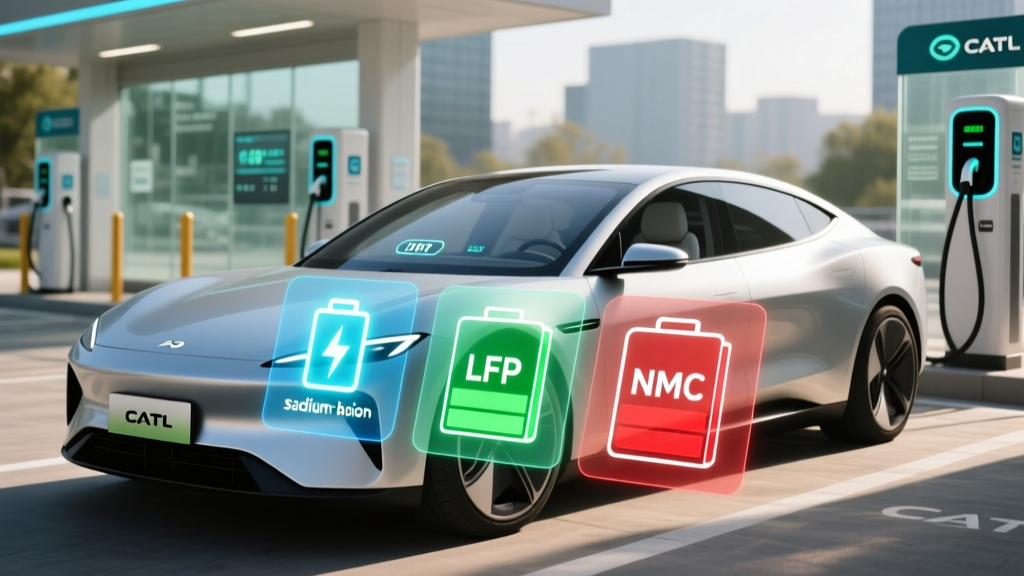
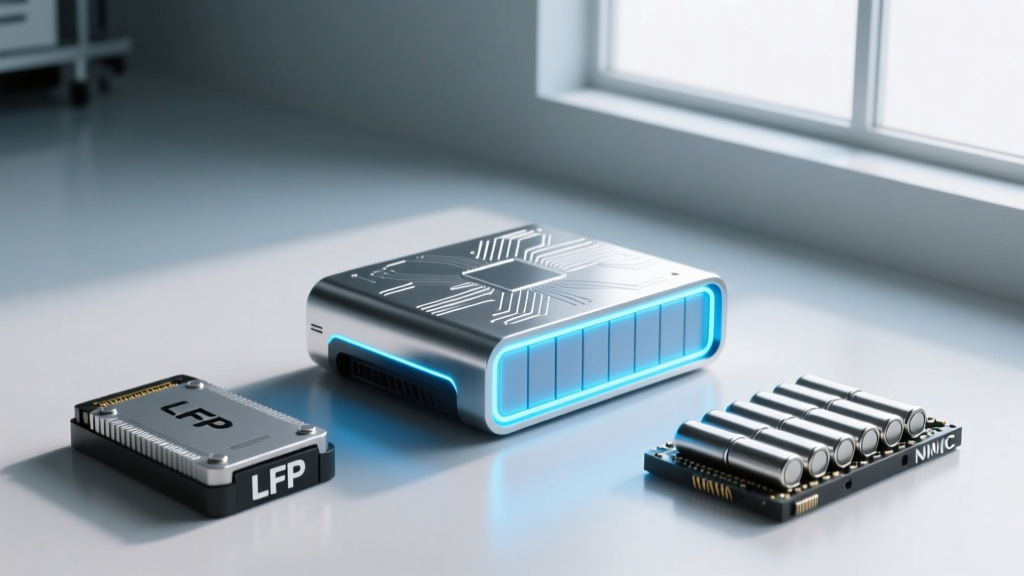
Two chemistries dominate the 2026 EV market. NMC (and the closely related NCA — nickel cobalt aluminum) offers higher energy density, meaning more range in a smaller, lighter pack. LFP trades some energy density for longer cycle life, lower cost, and better thermal stability. Neither is universally "better" — the right choice depends on your driving pattern, climate, and budget.
| Attribute | LFP (Lithium Iron Phosphate) | NMC / NCA |
|---|---|---|
| Energy Density (cell-level) | 160–200 Wh/kg | 250–300 Wh/kg |
| Typical Cycle Life | 3,000–5,000+ cycles | 1,000–2,000 cycles |
| Cold-Weather Performance | Moderate loss; slower charging below freezing | Better low-temp conductivity |
| Thermal Stability | Excellent; higher runaway threshold | Good; requires active thermal management |
| Cost per kWh (2026) | ~$80–$100 | ~$110–$140 |
| Recommended Daily SoC | 100% OK for daily use | 80% preferred for daily; 100% for trips |
| Common In 2026 Models | Tesla Model 3/Y RWD, BYD, base bZ4X trims | Long-range AWD trims, Hyundai Ioniq 5/6, Rivian |
LFP's tolerance for 100% daily charging simplifies ownership: plug in every night without worrying about accelerated degradation. NMC packs deliver roughly 15–25% more range per kilogram of battery, which is why automakers reserve them for long-range and performance trims. If you commute 40 miles round-trip and charge at home, an LFP pack is nearly maintenance-free. If you regularly drive 250+ highway miles or live in sub-zero climates, NMC's energy density and cold-weather edge matter more.
Battery Degradation: Real Data Over Years and Miles
Every lithium-ion pack loses capacity over time — the question is how fast. Data aggregated from fleet telematics, owner surveys, and manufacturer reports shows that most modern EV batteries retain 85–92% of original capacity after five years or 100,000 miles. Catastrophic failure (sudden cell death requiring full replacement) is rare; gradual capacity fade is the norm.
Typical Capacity Retention Curve (NMC and LFP Packs, 2020–2026 Data)
- Year 1 / 15,000 mi: 96–98% SoH — initial "break-in" drop of 2–4%
- Year 3 / 45,000 mi: 92–95% SoH — linear fade of ~1–1.5%/year
- Year 5 / 75,000 mi: 88–92% SoH
- Year 8 / 120,000 mi: 82–90% SoH (LFP tends toward the higher end)
- Year 10 / 150,000 mi: 78–87% SoH — many packs still functional but noticeably reduced range
Sources: Geotab fleet data, Recurrent Auto battery reports, manufacturer warranty filings.
Several factors accelerate fade. Frequent DC fast charging above 150 kW generates heat that stresses cells — owners who fast-charge daily see 1–2% more loss over five years compared to Level 2 home charging. Sustained storage at 100% SoC (especially in hot climates) and repeated deep discharges below 10% also wear cells faster. LFP packs tolerate these abuses better than NMC, but neither chemistry is immune.
Warranty Coverage: What Automakers Actually Guarantee
Federal law mandates a minimum 8-year / 100,000-mile warranty on EV battery packs, and most manufacturers match or exceed that. The warranty covers capacity loss below a stated threshold — typically 70% of original capacity — plus defects in materials and workmanship. It does not cover damage from accidents, flooding, or unauthorized modifications.
| Manufacturer | Duration / Mileage | Capacity Threshold | Chemistry Notes |
|---|---|---|---|
| Toyota (bZ4X) | 8 yr / 100,000 mi | 70% SoH | NMC and LFP trims covered equally |
| Tesla (Model 3/Y) | 8 yr / 100,000–120,000 mi (trim dependent) | 70% SoH | LFP on RWD; NMC on Long Range |
| Hyundai / Kia | 10 yr / 100,000 mi | 70% SoH | NMC standard on Ioniq 5/6, EV6 |
| Ford (Mustang Mach-E) | 8 yr / 100,000 mi | 70% SoH | NMC across trims |
| Rivian (R1T/R1S) | 8 yr / 175,000 mi | 70% SoH | NMC; higher mileage cap for commercial use |
A critical nuance: the warranty threshold means your pack could lose 29% of its capacity and still technically be "within spec." In practice, most packs never approach that level of degradation under normal use. If your battery does fall below the threshold, the manufacturer typically replaces failed modules rather than the entire pack, minimizing downtime.
Replacement Costs: When, Why, and How Much
Full battery replacement is uncommon within the first 10–12 years of ownership, but it's the single biggest "what if" cost EV buyers worry about. Prices have fallen steadily — from over $200 per kWh in 2018 to roughly $120–$150 per kWh for replacement packs in 2026 — but a full swap still represents a significant expense.
| Vehicle / Pack Size | Battery Capacity | Estimated Replacement Cost | Typical Replacement Trigger |
|---|---|---|---|
| Tesla Model 3 RWD (LFP) | 60 kWh | $8,000–$11,000 | Post-warranty capacity below 70%, collision damage |
| Toyota bZ4X | 71.4 kWh | $10,000–$14,000 | Module failure, coolant intrusion |
| Hyundai Ioniq 5 Long Range | 77.4 kWh | $11,000–$15,000 | Post-warranty degradation, cell imbalance |
| Ford F-150 Lightning Extended | 131 kWh | $18,000–$25,000 | Collision, flood damage, extreme degradation |
| Rivian R1T Large Pack | 135 kWh | $20,000–$28,000 | Out-of-warranty failure, off-road damage |
Two points of context: first, most EVs are scrapped or traded before the battery needs replacement — the average EV ownership period in the U.S. is under six years, per iSeeCars data. Second, module-level repairs (replacing 2–4 degraded modules instead of the full pack) cost $2,000–$5,000 and are increasingly common as independent EV shops gain expertise. The fear of a $25,000 surprise bill is real but statistically unlikely within a typical ownership cycle.
Maximizing Battery Health: A Practical Care Checklist
You can't stop degradation entirely, but you can slow it meaningfully. These habits, informed by cell-level testing and fleet data, extend pack life by 2–4 percentage points of SoH over a decade.
- Charge to 80% daily (NMC packs): Set your car's charge limit to 80% for routine use. Charge to 100% only when you need full range for a road trip, and try to depart soon after reaching 100% rather than letting the car sit fully charged overnight.
- LFP owners: 100% is fine: Toyota, Tesla, and BYD all recommend periodic 100% charges for LFP packs to recalibrate the battery management system (BMS). Daily 100% is acceptable.
- Minimize DC fast charging when possible: Use Level 2 (7–11 kW) at home for daily needs. Reserve DC fast charging (50–350 kW) for road trips. The heat generated at high charge rates is the single largest controllable degradation factor.
- Precondition before fast charging: Most 2026 EVs automatically precondition the battery when you navigate to a DC fast charger. If yours doesn't, drive for 15–20 minutes before plugging in to warm the cells — cold batteries charge slower and experience more stress.
- Avoid prolonged storage at extremes: If your car will sit for more than two weeks, leave it at 50–60% SoC. Storage at 100% in 95°F+ heat accelerates calendar degradation; storage below 10% risks cell voltage collapse.
- Use scheduled departure / climate preconditioning: Warming or cooling the cabin while plugged in draws power from the grid, not the battery. This avoids high-current draw from a cold pack at startup.
- Keep cooling systems maintained: EV battery thermal management systems use coolant loops. Follow the manufacturer's coolant replacement interval (typically every 4–5 years) to prevent overheating.
Monitoring State of Health: How to Check Your Battery's SoH
State of Health (SoH) is the percentage of original capacity your battery currently holds. A new pack is 100% SoH; a pack that held 71.4 kWh when new but now holds 64 kWh is at roughly 90% SoH.
Most 2026 EVs surface SoH data through the infotainment system or companion app. Tesla's app shows estimated range at 100% charge, which you can compare to the original EPA figure to approximate SoH. The Toyota bZ4X displays battery health percentage in the settings menu. Third-party tools like OBDeleven, Scan My Tesla, and ABRP's OBD-II integration pull granular cell-voltage and SoH data directly from the BMS for more precise readings.
For a definitive assessment — especially before buying a used EV — request a battery health report from a dealer or certified EV technician. This report logs individual cell voltages, internal resistance, and capacity measurements, revealing imbalances that a simple SoH percentage might hide.
Solid-State Batteries: What Toyota Is Building and When You'll See It
Toyota's solid-state battery program replaces the liquid electrolyte in conventional lithium-ion cells with a solid material (sulfide-based in Toyota's case). This enables lithium-metal anodes, which store roughly twice as many ions per gram as the graphite anodes in today's cells. The result: dramatically higher energy density, faster charging, and reduced fire risk.
Toyota Solid-State Timeline (as of 2026 — announced/estimated, not available for purchase):
- 2026–2027: Limited production of solid-state cells for select hybrid models in Japan. These are small packs (~1–5 kWh) used to validate manufacturing processes.
- 2027–2028: First BEV application in a low-volume Toyota model, targeting 750 km (~465 miles) of range on a pack roughly half the weight of today's equivalent. Production expected under 10,000 units.
- 2029–2030+: Scaled manufacturing for mainstream models. Cost parity with NMC cells remains uncertain; initial pricing will likely be premium-tier only.
Solid-state batteries are not available in any consumer vehicle sold in the U.S. as of 2026. Specs above are based on Toyota's published roadmap and are preliminary.
Other automakers — Nissan, Honda, Samsung SDI, and QuantumScape (backed by Volkswagen) — are pursuing solid-state or semi-solid-state cells with similar timelines. The technology is real and has been demonstrated in prototype vehicles, but manufacturing yield, cost, and scaling remain unsolved challenges. If you're buying an EV in 2026, you're buying lithium-ion. Solid-state is a reason to expect better EVs in the 2030s, not a reason to wait.
Frequently Asked Questions
How long do EV batteries actually last?
Most modern EV batteries retain 82–90% of original capacity at 8 years / 120,000 miles, based on fleet data from Geotab and Recurrent Auto. Many packs remain functional well past 150,000 miles with 78–87% SoH. Catastrophic failure is rare; gradual range loss of 1–2% per year is the norm. With proper care, a battery can outlast the vehicle's body and suspension components.
How much does it cost to replace an EV battery?
Full replacement costs range from $8,000 for a 60 kWh pack (Tesla Model 3 RWD) to $25,000+ for a 131 kWh pack (F-150 Lightning Extended Range), including parts and labor. However, most owners never need a full replacement — module-level repairs cost $2,000–$5,000, and the majority of EVs are traded or retired before the battery fails. Warranty coverage (8 yr / 100,000 mi minimum) protects against premature degradation.
What does the EV battery warranty cover?
Federal law requires a minimum 8-year / 100,000-mile warranty on EV traction batteries. Coverage includes capacity loss below a stated threshold (usually 70% SoH) and defects in materials or workmanship. It does not cover accident damage, flood damage, or modifications. Some manufacturers, like Hyundai and Kia, extend coverage to 10 years / 100,000 miles. Check your specific model's warranty booklet for exact terms.
How do I check and maximize my EV battery health?
Check SoH through your car's infotainment system, companion app, or an OBD-II diagnostic tool. To maximize longevity: charge NMC packs to 80% for daily use (LFP packs can handle 100%), minimize DC fast charging, precondition before fast-charging in cold weather, avoid prolonged storage at 100% or below 10% SoC, and follow coolant maintenance schedules. These habits can preserve an extra 2–4% of SoH over a decade.
LFP vs NMC — which chemistry is better for me?
Choose LFP if you want lower cost, longer cycle life (3,000–5,000+ cycles), simpler charging habits (100% daily is fine), and better thermal safety. Choose NMC if you need maximum range per charge, better cold-weather performance, or a lighter pack for performance driving. Neither is universally superior — LFP suits commuters and budget-conscious buyers; NMC suits road-trippers and cold-climate drivers.
Should I wait for Toyota's solid-state batteries?
Toyota's solid-state batteries remain in limited production as of 2026, with mainstream consumer availability not expected before 2029–2030. If you need an EV now, today's lithium-ion packs (both LFP and NMC) are mature, well-warrantied, and demonstrably long-lasting. Waiting for solid-state means delaying an EV purchase by 3–5+ years with no guarantee of affordable pricing at launch.