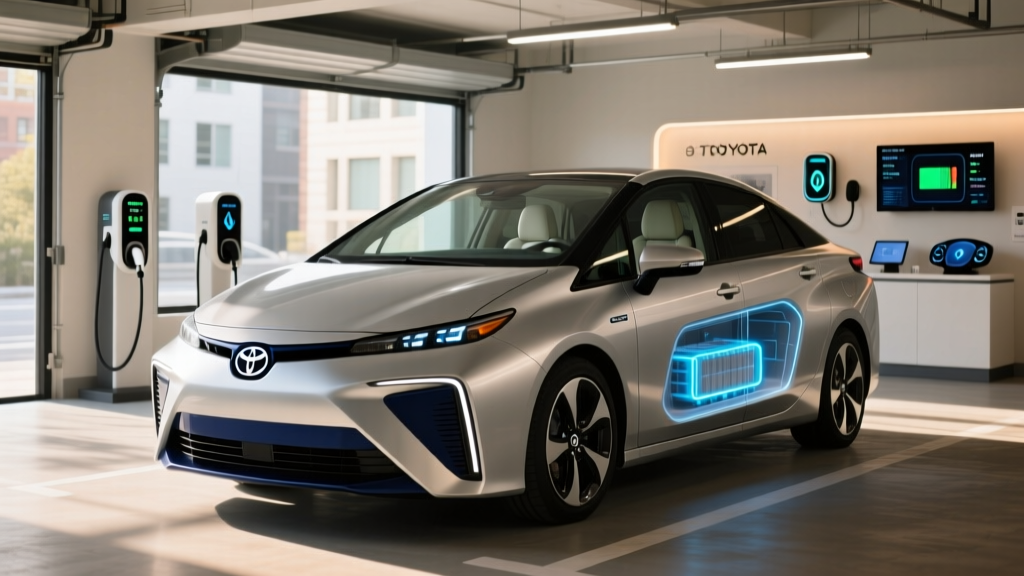
If you own a Toyota hybrid or are shopping for one, the high-voltage traction battery is likely your biggest long-term ownership question. Unlike a conventional gas car where the engine is the centerpiece, a hybrid's battery pack is the component that defines its efficiency, performance, and eventual maintenance cost. The good news? Toyota's hybrid battery track record is among the best in the industry, with real-world data showing most packs outlast the vehicles they power.
In this guide, we break down exactly how long Toyota hybrid batteries last, what chemistry they use, how degradation works, what the warranty covers, and what a replacement actually costs in 2026. We'll also compare the lithium iron phosphate (LFP) and nickel-metal hydride (NiMH) chemistries you'll find across Toyota's lineup and share actionable tips for maximizing your pack's lifespan.
How Long Do Toyota Hybrid Batteries Actually Last?
Based on fleet data, owner reports, and Toyota's own engineering targets, the typical Toyota hybrid battery lasts 10 to 15 years or 150,000 to 200,000 miles before degradation becomes significant enough to affect driving experience. Many Prius and Camry Hybrid owners report original batteries still functioning at 200,000+ miles with only modest capacity loss.
Toyota designs its hybrid systems conservatively. Unlike a battery electric vehicle (BEV) that routinely cycles from 10% to 90% state of charge (SoC), Toyota's hybrid synergy drive system keeps the battery in a narrow operating window — typically between 40% and 80% SoC. This shallow-cycling strategy dramatically reduces stress on the cells and is the primary reason Toyota hybrid batteries achieve such long service lives.
| Age / Mileage | Expected Capacity Retention | Real-World Effect |
|---|---|---|
| Year 1 / 15,000 mi | ~98–100% | No noticeable change |
| Year 5 / 75,000 mi | ~92–96% | Slight MPG reduction possible, often imperceptible |
| Year 8 / 120,000 mi | ~85–92% | Minor EV-mode range reduction; MPG may drop 1–3 MPG combined |
| Year 10 / 150,000 mi | ~80–88% | Noticeable but manageable; some owners report reduced regenerative braking aggressiveness |
| Year 12–15 / 180,000–220,000 mi | ~70–82% | Potential replacement territory depending on driving habits and climate |
Sources: Toyota Technical Service Bulletins, fueleconomy.gov long-term fleet data, and aggregated owner reports from hybrid-focused forums. Individual results vary by climate, driving style, and maintenance.
Toyota Hybrid Battery Chemistry: NiMH vs. Lithium-Ion Explained
Toyota has used two primary battery chemistries across its hybrid lineup, and understanding the difference matters for longevity expectations:
- Nickel-Metal Hydride (NiMH): Found in older Prius models (2004–2015), some Camry Hybrids, and the base Highlander Hybrid. NiMH is heavier, has lower energy density, but is extremely durable and tolerant of temperature extremes. These packs routinely exceed 200,000 miles.
- Lithium-Ion (Li-ion): Used in newer models including the 2023+ Prius, 2026 RAV4 Hybrid, Camry Hybrid, and Toyota's plug-in hybrid (PHEV) models like the Prius Prime and RAV4 Prime. Li-ion offers higher energy density, lighter weight, and better efficiency, with a slightly different degradation curve.
For context, in the broader EV market, two dominant lithium chemistries compete: LFP (lithium iron phosphate) and NMC/NCA (nickel manganese cobalt / nickel cobalt aluminum). Toyota's BEV lineup (like the bZ4X) uses NMC chemistry, while some competitors (notably Tesla's standard-range models and BYD) favor LFP. Here's how they compare:
| Attribute | LFP (Lithium Iron Phosphate) | NMC/NCA (Nickel-based Li-ion) | NiMH (Toyota Legacy Hybrid) |
|---|---|---|---|
| Energy Density | Lower (~160 Wh/kg) | Higher (~250–300 Wh/kg) | Lowest (~70–100 Wh/kg) |
| Cycle Life | Excellent (3,000–6,000+ cycles) | Good (1,000–2,500 cycles) | Very good (1,500–3,000 cycles) |
| Cold-Weather Performance | Moderate (reduced charge acceptance below freezing) | Better (wider operating range) | Good (proven in cold climates) |
| Cost | Lower (no cobalt/nickel) | Higher (cobalt, nickel supply chain) | Low (mature, commoditized) |
| Thermal Stability | Excellent (inherently safer) | Good (requires active thermal management) | Good (tolerant of abuse) |
| Best For | Standard-range BEVs, fleet vehicles | Long-range BEVs, performance models | Standard hybrids (HEVs) |
Which is better? There is no single winner. LFP excels in longevity and cost but sacrifices energy density and cold-weather charging speed. NMC delivers more range per kilogram but degrades faster under heavy cycling. NiMH is outdated for new BEVs but remains a proven workhorse in traditional hybrids where the battery operates in a narrow SoC window. Toyota's choice of chemistry is matched to each vehicle's duty cycle.
What Does Toyota's Hybrid Battery Warranty Cover?
Toyota provides one of the most comprehensive hybrid battery warranties in the industry. For 2026 model-year vehicles, the coverage is straightforward:
| Coverage Item | Term |
|---|---|
| Hybrid Battery (all hybrids & PHEVs) | 10 years / 150,000 miles (whichever comes first) |
| Hybrid System Components (inverter, motor, ECU) | 8 years / 100,000 miles |
| Capacity Retention Threshold | Warranty covers failure or capacity loss below functional threshold — Toyota does not publish a specific % number, but dealers typically replace packs that have degraded to the point of triggering diagnostic trouble codes or noticeable performance loss |
| Transferability | Fully transferable to subsequent owners at no cost |
| California / PZEV States | Same 10/150k coverage (previously 10/150k for PZEV; now standardized nationally for 2020+ models) |
Key detail: Toyota extended its hybrid battery warranty from 8 years/100,000 miles to 10 years/150,000 miles starting with 2020 model-year vehicles. If you're buying a used 2019 or earlier Toyota hybrid, the original 8/100k warranty applies. Always verify the in-service date with a dealer.
For the most current warranty details, check Toyota's official warranty guide or your vehicle's Warranty and Maintenance Guide booklet.
Toyota Hybrid Battery Replacement Cost: What to Expect
If your battery does eventually need replacement — typically well outside the warranty period — here's what you're looking at in 2026:
| Model | Battery Type | OEM Replacement (Parts + Labor) | Refurbished / Aftermarket Option |
|---|---|---|---|
| Prius (2016–2022) | Li-ion, ~0.75 kWh (HEV) | $2,500–$3,500 | $1,200–$1,800 (reconditioned module replacement) |
| Prius (2023–2026) | Li-ion, ~0.9 kWh (HEV) | $2,800–$3,800 | Limited availability (newer platform) |
| Prius Prime (PHEV) | Li-ion, ~13.6 kWh | $5,500–$7,500 | $3,500–$5,000 |
| Camry Hybrid | Li-ion, ~1.0 kWh (HEV) | $2,800–$4,000 | $1,400–$2,200 |
| RAV4 Hybrid | Li-ion, ~1.6 kWh (HEV) | $3,000–$4,500 | $1,800–$2,800 |
| RAV4 Prime (PHEV) | Li-ion, ~18.1 kWh | $7,000–$9,500 | $4,500–$6,500 |
| Highlander Hybrid | NiMH (older) / Li-ion (2020+) | $3,500–$5,500 | $2,000–$3,500 |
Important context: Most Toyota hybrid batteries never need replacement during the typical ownership period. The car is more likely to be retired due to body damage, transmission issues, or general wear before the hybrid battery fails outright. When replacement is needed, independent hybrid specialists can often replace individual degraded modules within the pack for a fraction of the full-pack OEM cost — particularly on NiMH packs.
PHEV batteries (Prius Prime, RAV4 Prime) are substantially more expensive because they are 10–20× larger in kWh capacity. However, these packs are also covered by the same 10-year/150,000-mile warranty.
Factors That Affect Toyota Hybrid Battery Lifespan
While Toyota's hybrid system is engineered for longevity, your driving habits and environment still influence how quickly the battery degrades. Here are the most impactful factors:
- Extreme temperatures: Sustained exposure to high ambient heat (above 95°F/35°C) accelerates chemical degradation in all lithium and NiMH cells. Very cold climates (below 0°F/-18°C) reduce performance temporarily but cause less permanent damage. Garage parking in hot climates meaningfully extends battery life.
- Driving patterns: Frequent short trips where the engine never fully warms up force the battery to work harder. Long highway drives with steady-state cruising are actually easier on the pack than constant stop-and-go city driving — though hybrids excel in city driving precisely because the battery handles low-speed loads.
- State of charge extremes: Toyota's hybrid management system already prevents deep discharges and full charges (the battery never truly reaches 0% or 100% SoC as displayed). You don't need to micromanage this — the car does it for you.
- Maintenance neglect: The hybrid battery cooling system has an air intake filter (on most models) that can become clogged with dust and debris. A blocked cooling fan reduces airflow, causing the battery to run hotter and degrade faster. Check and clean the hybrid battery air filter every 30,000 miles or as specified in your owner's manual.
- PHEV-specific: DC fast charging frequency: If you own a RAV4 Prime or Prius Prime and regularly use DC fast charging, the repeated high-current sessions generate more heat and can modestly accelerate degradation over hundreds of cycles. For daily use, Level 2 (240V) home charging is gentler on the pack.
- ✅ Park in a garage or shaded area during hot months when possible
- ✅ Clean the hybrid battery cooling air filter every 30,000 miles (located near the rear seat on most models)
- ✅ Don't leave the vehicle sitting unused for months — drive it at least once every 2–3 weeks to keep the battery active
- ✅ For PHEVs: use Level 2 home charging for daily needs; reserve DC fast charging for road trips
- ✅ Address check-engine or hybrid system warning lights promptly — don't ignore diagnostic trouble codes
- ✅ Keep up with scheduled maintenance — the hybrid system cooling loop is part of the service schedule
- ❌ Don't attempt to "condition" the battery with full discharge/recharge cycles — Toyota's system manages this automatically
How to Check Your Toyota Hybrid Battery Health (SoH)
Unlike a BEV where you can see estimated range as a proxy for battery health, a standard hybrid's small battery doesn't directly translate to a visible range number. Here's how to monitor State of Health (SoH):
- Dealer diagnostic scan: Any Toyota dealer can run a hybrid battery health check using Toyota's Techstream diagnostic tool. This reads individual module voltages, internal resistance, and overall pack capacity. Ask for this during routine service — many dealers will do it at no charge.
- OBD-II scanner with hybrid support: Third-party apps like Dr. Prius (Android) paired with a compatible OBD-II Bluetooth adapter can read battery module voltages, temperature, and perform a "Life Expectancy Check" that gives you a pass/fail assessment. This is a popular tool among Prius owners and costs under $40 for the hardware.
- MPG as a proxy: If your fuel economy has dropped more than 3–5 MPG below the EPA combined rating for your model (check fueleconomy.gov for your specific year and trim), and you've ruled out tire pressure, air filter, and brake drag issues, battery degradation is a likely contributor.
- Dash indicators: A hybrid system warning light or reduced EV-mode availability (on PHEVs) can signal battery issues. These should be diagnosed immediately.
Looking Ahead: Solid-State and Next-Gen Battery Tech
Toyota has been vocal about its solid-state battery development, which promises higher energy density, faster charging, and improved longevity compared to current lithium-ion cells. As of 2026, Toyota has announced plans to begin limited production of solid-state batteries in 2027–2028, initially in small volumes for BEV applications.
However, it's critical to separate announcements from availability:
- Solid-state batteries are not yet available in any production Toyota vehicle as of 2026.
- Initial deployment will likely be in BEVs, not hybrids, where energy density matters most.
- Cost parity with current lithium-ion is not expected until the early 2030s at the earliest.
- Other emerging technologies like silicon anode batteries (offering ~20% energy density improvement) are in pilot production by suppliers but not yet in Toyota vehicles.
For current buyers, these timelines mean today's proven NiMH and lithium-ion hybrid batteries remain the practical choice — and given their 150,000–200,000+ mile track record, there's little reason to wait for next-generation chemistry before purchasing a hybrid.
Frequently Asked Questions
How long does the Toyota hybrid battery last on average?
Most Toyota hybrid batteries last 10–15 years or 150,000–200,000 miles before significant degradation. Many exceed this range. Toyota's conservative battery management — keeping the pack in a 40–80% SoC window — is the primary reason for this longevity.
How much does it cost to replace a Toyota hybrid battery?
OEM replacement costs range from $2,500–$4,500 for standard hybrids (Prius, Camry, RAV4 Hybrid) and $5,500–$9,500 for plug-in hybrids (Prius Prime, RAV4 Prime) including parts and labor. Refurbished or module-level repairs can reduce costs by 40–60%.
Is the Toyota hybrid battery warranty 10 years?
Yes. For 2020 and newer model-year vehicles, Toyota covers the hybrid battery for 10 years or 150,000 miles, whichever comes first. Models from 2019 and earlier carry an 8-year/100,000-mile warranty. The warranty is fully transferable to second owners.
Can I check my Toyota hybrid battery health myself?
Yes. Using an OBD-II adapter and an app like Dr. Prius, you can read module voltages and run a life expectancy test. A Toyota dealer can also perform a comprehensive diagnostic using Techstream. Monitoring your MPG relative to the EPA rating is a simple first indicator.
LFP vs NMC — which battery chemistry is better for Toyota hybrids?
Toyota's current hybrid lineup uses either NiMH (older/legacy models) or NMC-type lithium-ion (newer models). LFP is not currently used in Toyota hybrids. For the broader EV market, LFP offers longer cycle life and lower cost, while NMC delivers higher energy density. Neither is universally "better" — the choice depends on the vehicle's design priorities.
Does extreme heat destroy Toyota hybrid batteries?
Extreme heat accelerates degradation but doesn't "destroy" the battery. Owners in consistently hot climates (Arizona, Texas, Middle East) may see faster capacity loss — perhaps reaching 80% SoH at 120,000 miles instead of 160,000. Garage parking and keeping the cooling air filter clean mitigate this significantly.
Will solid-state batteries make current Toyota hybrids obsolete?
Not in the near term. Toyota's solid-state battery production is targeted for 2027–2028 in limited BEV volumes. Current hybrid batteries already last the life of most vehicles, and solid-state cost parity is likely a decade away. Today's hybrids remain a practical, proven choice.