What Powers the Toyota bZ4X: Battery Chemistry Explained
The 2026 Toyota bZ4X uses a lithium-ion traction battery rated at 71.4 kWh of usable capacity (72.8 kWh gross). Toyota sources cells from Prime Planet Energy & Solutions (PPES), a joint venture with Panasonic, and the pack uses an NMC (nickel-manganese-cobalt) cathode chemistry. This matters because chemistry dictates everything from range to longevity.
Toyota has not yet adopted LFP (lithium iron phosphate) cells in its US-market EVs, though the automaker has signaled LFP usage in entry-level models sold in China. For US buyers evaluating a Toyota EV battery, the NMC pack in the bZ4X represents the chemistry you'll encounter today.
| Attribute | NMC (bZ4X Current Pack) | LFP (Emerging Toyota Models) |
|---|---|---|
| Energy Density | Higher — more range per kg | Lower — heavier pack for same kWh |
| Cycle Life | ~1,000–1,500 full cycles to 80% SoH | ~3,000–5,000 full cycles to 80% SoH |
| Cold-Weather Performance | Better low-temp conductivity | More range loss below 32°F |
| Cost per kWh | Higher (cobalt/nickel supply chain) | Lower (iron/phosphate abundant) |
| Optimal Daily Charge | 80% recommended for longevity | Can charge to 100% regularly |
| Thermal Stability | Good with active management | Excellent — inherently safer chemistry |
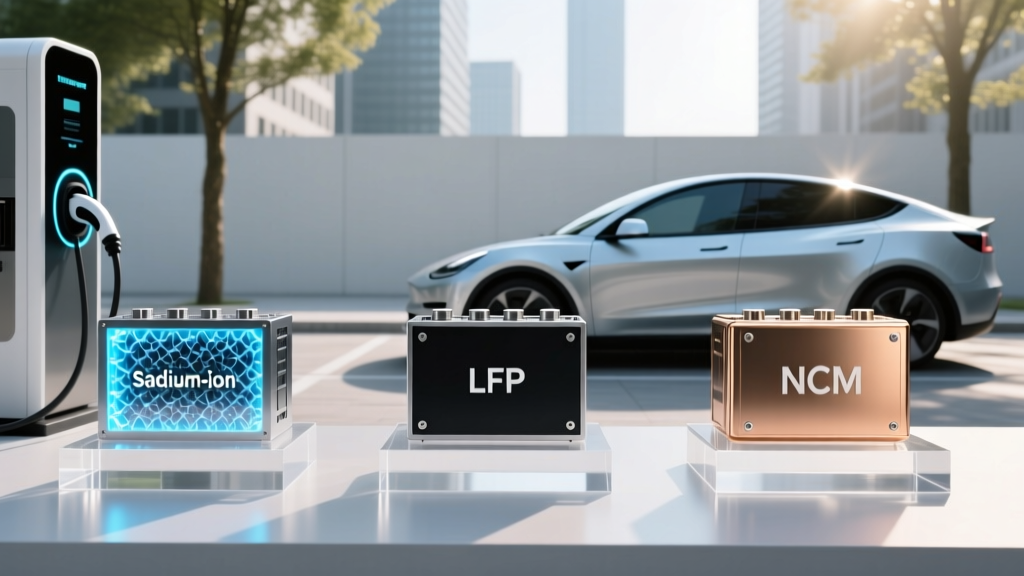
Which is better? For a driver who charges at home nightly and rarely fast-charges, NMC offers superior range in a lighter package. For a high-mileage driver, rideshare operator, or someone in a warm climate who charges to 100% daily, LFP's longer cycle life and tolerance for full charges make it the more durable choice. Toyota is expected to introduce LFP packs in future affordable EVs, but as of the 2026 model year, the bZ4X remains NMC.
How Long Does a Toyota EV Battery Actually Last?
The short answer: almost certainly longer than you'll own the car. Modern EV traction batteries are engineered for 150,000–200,000+ miles before reaching the 70% capacity threshold that triggers warranty coverage. Catastrophic failure is rare; gradual degradation is the norm.
Typical NMC Degradation Curve (Industry Data)
- Year 1 / 15,000 mi: ~2–4% capacity loss (initial formation loss)
- Year 3 / 45,000 mi: ~5–8% total loss
- Year 5 / 75,000 mi: ~8–12% total loss
- Year 8 / 100,000 mi: ~10–15% total loss (warranty threshold: 70% retained)
- Year 10 / 150,000 mi: ~12–18% total loss for well-maintained packs
Sources: Geotab fleet data, Recurrent Auto battery health reports. Individual results vary based on climate, charging habits, and thermal management.
For the bZ4X specifically, a 2024 Recurrent Auto analysis of Toyota and Subaru EV platforms (the bZ4X and Solterra share the same e-TNGA platform and battery) showed capacity retention above 92% at 30,000 miles for most vehicles in their dataset. This is consistent with Toyota's conservative battery management strategy — the bZ4X's 72.8 kWh gross / 71.4 kWh usable split means Toyota buffers roughly 1.4 kWh to protect against deep discharge degradation.
Real-world range impact: The bZ4X carries an EPA-estimated range of up to 252 miles (FWD Limited trim). If the battery degrades 12% over 150,000 miles, effective range drops to roughly 222 miles — still adequate for most daily driving and road trips with DC fast-charging stops.
Toyota's Battery Warranty: What's Covered and What Isn't
Toyota covers the bZ4X high-voltage traction battery under its Hybrid/EV Battery Warranty for 8 years or 100,000 miles, whichever comes first. In states that follow California Air Resources Board (CARB) emissions warranty rules — including California, New York, Massachusetts, and several others — coverage extends to 10 years or 150,000 miles.
| Coverage Item | Standard (All States) | CARB States |
|---|---|---|
| Duration | 8 years / 100,000 mi | 10 years / 150,000 mi |
| Capacity Threshold | Below 70% of original capacity | Below 70% of original capacity |
| Defects in Materials/Workmanship | Full term | Full term |
| Covers | Battery pack, modules, BMS, wiring | Battery pack, modules, BMS, wiring |
| Does NOT Cover | Normal degradation above 70%, damage from accidents, flooding, or unauthorized modifications | Same exclusions apply |
What the 70% threshold means in practice: A brand-new bZ4X with 252 miles of EPA range would need to drop below approximately 176 miles of range (at equivalent efficiency) before Toyota is obligated to repair or replace the battery under warranty. Most owners will never reach this point during the warranty period based on current degradation data.
Separately, the bZ4X's basic vehicle warranty covers 3 years/36,000 miles, and the powertrain warranty covers 5 years/60,000 miles. The battery warranty is the longest coverage Toyota provides on the vehicle. For full warranty details, refer to the Toyota Owner's Warranty Guide.
EV Battery Replacement Cost: Toyota bZ4X and Beyond
If your battery degrades below the warranty threshold outside the coverage period — or suffers damage not covered by warranty — replacement is a real expense. However, it's important to contextualize this cost: the vast majority of EV batteries outlast the vehicle's economic life.
| Model | Battery Size | Estimated Pack Cost | Estimated Installed Cost |
|---|---|---|---|
| Toyota bZ4X | 72.8 kWh (NMC) | $9,000–$13,000 | $11,000–$16,000 |
| Toyota bZ (upcoming, announced) | ~58–74 kWh (est.) | $7,500–$12,000 | $9,500–$15,000 |
| Industry Average (mid-size EV) | 65–80 kWh | $8,000–$14,000 | $10,000–$18,000 |
Battery pack prices have declined from approximately $1,200/kWh in 2010 to roughly $130–$150/kWh at the cell level in 2025, according to BloombergNEF. Installed costs are higher due to labor, dealership markup, and pack-level integration (BMS, cooling plates, structural housing). For a 72.8 kWh bZ4X pack, you're looking at $11,000–$16,000 installed — a significant sum, but one that most owners will never face because:
- Warranty covers the highest-risk period. Manufacturing defects typically surface in the first few years.
- Degradation is gradual, not sudden. A battery at 75% capacity after 150,000 miles is still functional — just with reduced range.
- Module-level repair is increasingly available. Some shops can replace individual degraded modules rather than the entire pack, reducing cost to $2,000–$5,000.
- The car's residual value may be lower than the replacement cost. At 150,000+ miles, many owners choose to trade in rather than invest in a new battery.
What Affects Toyota EV Battery Life — and What You Can Control
Battery degradation isn't random. It's driven by electrochemical stress, and several factors accelerate it:
Battery Care Checklist for Toyota EV Owners
- Limit DC fast charging to road trips. Repeated 150 kW sessions generate heat that accelerates electrolyte breakdown. Weekly Level 2 home charging is gentler on cells.
- Avoid sustained 100% SoC. NMC cells degrade faster when held at full charge. Set your charge limit to 80–90% for daily driving and charge to 100% only before long trips.
- Don't let the battery sit at very low SoC. Prolonged storage below 10% SoC stresses the anode. If storing the bZ4X for weeks, leave it at ~50% SoC.
- Use preconditioning. The bZ4X can precondition its battery when you set a departure time or navigate to a DC fast charger via the Toyota app. A warm battery charges faster and with less degradation.
- Park in shade or a garage in extreme heat. Sustained ambient temperatures above 95°F accelerate calendar degradation, even when the car is parked.
- In cold weather, plug in when parked. The battery thermal management system can maintain optimal temperature using grid power rather than battery energy.
Fast-charging frequency matters more than most owners realize. A Geotab analysis of over 6,000 EVs found that vehicles that DC fast-charged more than three times per month showed roughly double the degradation rate of vehicles that primarily used Level 2 charging over a 48-month period. The bZ4X supports up to 150 kW DC fast charging (10–80% in approximately 30 minutes), but that peak speed should be a road-trip tool, not a daily routine.
How to Check Your Toyota EV Battery Health (SoH)
State of Health (SoH) is the percentage of a battery's original capacity that remains usable. Unlike a phone, EVs don't display a prominent SoH percentage on the dashboard — but there are several ways to monitor it:
Through the Toyota App
The Toyota app provides estimated range and charging status, which indirectly reflects battery health. If your fully charged range gradually drops from 252 to 235 miles over two years, that's roughly a 7% degradation — well within normal expectations.
OBD-II Diagnostic Tools
Third-party OBD-II adapters paired with apps like Car Scanner or ABRP (A Better Routeplanner) can read battery management system (BMS) data, including estimated SoH percentage, cell voltage variance, and battery temperature. This is the most granular data available to consumers without a dealership visit.
Dealership Battery Health Report
Toyota dealerships can run a diagnostic that produces a formal battery health report. Request this during routine service visits, especially as you approach the 8-year/100,000-mile warranty boundary. If SoH is approaching 70%, having documentation from the dealer is essential for a warranty claim.
Manual Range Tracking
The simplest method: track your miles-per-kWh efficiency and full-charge range over time using the trip computer. Log your range at 10,000-mile intervals. Consistent, gradual decline is normal. A sudden drop may indicate a module imbalance or cooling system issue worth investigating.
Solid-State Batteries and Toyota's Next-Gen Plans
Toyota has been one of the most vocal proponents of solid-state battery technology, holding over 1,300 patents in the space. The automaker has announced plans to commercialize solid-state batteries in EVs by the late 2020s, targeting:
- Range: Up to 466 miles (750 km) on a single charge
- Charging: 10–80% in approximately 10 minutes
- Durability: Improved cycle life due to solid electrolyte resistance to dendrite formation
Important context: As of early 2026, no Toyota production vehicle uses solid-state batteries. The technology remains in pre-commercial testing, and Toyota's announced timeline targets limited production in the 2027–2028 window, initially in low volumes and likely at premium price points. Toyota has also mentioned a "bipolar Li-ion" battery using LFP chemistry as a nearer-term cost-reduction step, expected around 2026–2027 in select markets.
For buyers shopping today, the bZ4X's NMC lithium-ion pack is the battery you'll get — and it's a mature, well-understood technology with predictable degradation characteristics. Solid-state is promising but should not factor into current purchase decisions.
Toyota EV Battery FAQ
How long do Toyota EV batteries last in years and miles?
Based on industry degradation data and Toyota's conservative battery management, expect a bZ4X battery to retain 80–88% of its original capacity at 150,000 miles (roughly 10 years of average driving). Most EV batteries outlast the vehicle's practical economic life. Catastrophic failure before 100,000 miles is extremely rare.
How much does it cost to replace a Toyota bZ4X battery?
A full battery pack replacement for the bZ4X is estimated at $11,000–$16,000 installed at a dealership. Module-level repairs, where only degraded cells are replaced, may cost $2,000–$5,000. However, most owners will never need a replacement — the battery is covered for 8 years/100,000 miles (10 years/150,000 miles in CARB states) against capacity loss below 70%.
What does the Toyota EV battery warranty cover?
Toyota's Hybrid/EV Battery Warranty covers defects in materials and workmanship, plus capacity loss below 70% of original capacity, for 8 years/100,000 miles in all states and 10 years/150,000 miles in CARB states. It does not cover damage from accidents, flooding, neglect, or unauthorized modifications. Normal degradation above the 70% threshold is expected and not warrantable.
How do I maximize my Toyota EV battery's lifespan?
Charge primarily on Level 2 at home. Set daily charge limits to 80–90% for NMC chemistry. Use DC fast charging sparingly (road trips, not daily). Precondition the battery before fast charging. Avoid leaving the car at very low or very high SoC for extended periods. Park in shade or a garage in hot climates. Plug in during extreme cold so the thermal management system can maintain battery temperature.
Is LFP better than NMC for a Toyota EV battery?
It depends on your usage. NMC (used in the current bZ4X) offers higher energy density and better cold-weather performance, making it ideal for maximizing range. LFP offers far longer cycle life (3,000–5,000 cycles vs. 1,000–1,500), can be charged to 100% daily without accelerated degradation, and is less expensive — making it better for high-mileage drivers and warm climates. Toyota is expected to adopt LFP in future affordable models, but current US-market EVs use NMC.
Does fast charging damage the bZ4X battery?
Occasional DC fast charging is fine and the bZ4X supports up to 150 kW. However, fleet data from Geotab shows that vehicles fast-charging more than three times per month degrade roughly twice as fast as those using primarily Level 2 charging over four years. The bZ4X's battery preconditioning feature (activated when navigating to a charger) mitigates some of this by warming the pack to an optimal temperature before charging begins.
Will Toyota's solid-state battery be available soon?
Toyota has announced solid-state battery commercialization targeting the 2027–2028 timeframe, with initial limited production. As of 2026, no production Toyota EV uses solid-state cells. The technology promises faster charging and longer range but is not yet available and should not influence current purchasing decisions.