For many Tesla owners, the traction battery is the single most expensive component in the vehicle — and the one surrounded by the most misinformation. Whether you're researching a used Model 3 with 80,000 miles, wondering if a battery swap makes sense for your aging Model S, or simply trying to maximize the lifespan of your current pack, the decision hinges on hard data, not forum rumors.
This guide breaks down Tesla battery chemistry, real-world degradation curves, warranty coverage, replacement economics, and what you can actually do to extend pack life. We'll also address the question many owners eventually face: does a Tesla battery upgrade make financial sense, or is it better to trade in?
Tesla Battery Chemistry: LFP vs. NCA Explained
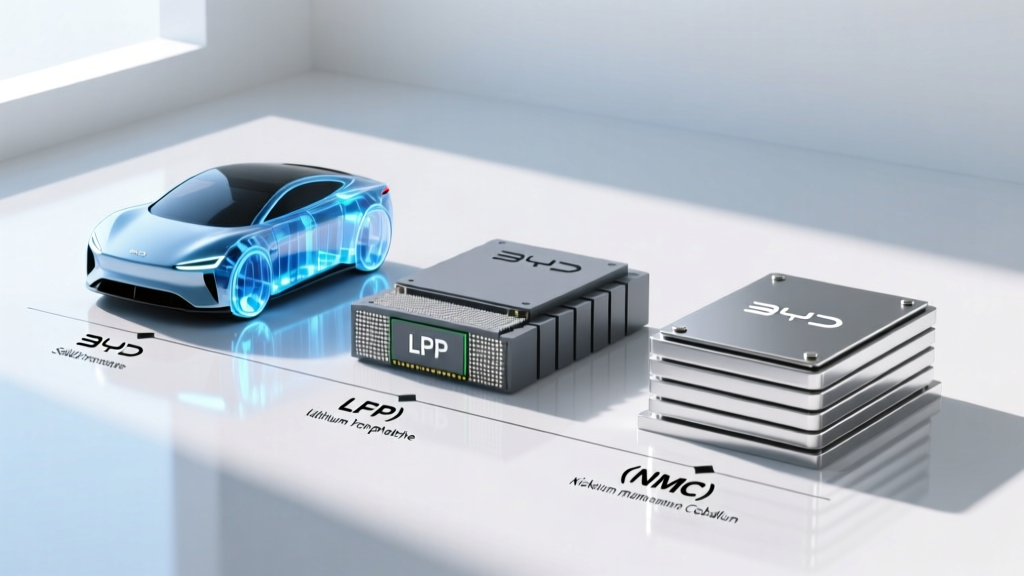
Not all Tesla batteries are the same. Since 2021, Tesla has used two primary cell chemistries across its lineup, and the differences affect range, longevity, charging habits, and even how you should charge daily.
| Attribute | LFP (Lithium Iron Phosphate) | NCA (Nickel Cobalt Aluminum) |
|---|---|---|
| Models using it | Model 3 RWD, Model Y RWD | Model 3 Long Range, Model Y LR/Performance, Model S, Model X, Cybertruck |
| Typical pack size | ~57-60 kWh usable | ~75-100 kWh usable |
| Energy density | Lower (~160 Wh/kg cell-level) | Higher (~260 Wh/kg cell-level) |
| Cycle life | 3,000-5,000+ cycles | 1,000-2,000 cycles |
| Cold-weather performance | More range loss in freezing temps (15-25%) | Better cold performance (10-15% loss) |
| Daily charging recommendation | 100% OK — Tesla recommends weekly 100% calibration | 80-90% daily; 100% only for trips |
| Cost per kWh (replacement) | Lower | Higher |
| Cobalt content | None | Contains cobalt |
The practical takeaway: LFP packs sacrifice some range for dramatically longer cycle life and simpler charging habits. If you own a Model 3 RWD and charge to 100% nightly, your pack will likely outlast the car. NCA packs deliver more range per kilogram but require more careful state-of-charge management for maximum longevity.
How Long Do Tesla Batteries Actually Last?
Tesla publishes degradation data in its annual Impact Report, and third-party fleet studies from sources like fueleconomy.gov and independent Tesla data aggregators confirm the trend: Tesla packs degrade slowly and predictably.
Typical Tesla Battery Degradation Curve (Fleet Data)
- Year 1 / 15,000 miles: ~2-4% capacity loss (initial formation loss)
- Year 3 / 45,000 miles: ~5-8% total loss
- Year 5 / 75,000 miles: ~8-12% total loss
- Year 8 / 120,000 miles: ~10-15% total loss
- Year 10 / 150,000 miles: ~12-18% total loss (varies widely by usage)
Source: Tesla 2025 Impact Report fleet data; aggregated owner-reported data from TeslaFi and Recurrent Auto.
The critical insight is the curve shape: degradation is steepest in the first year, then flattens significantly. Most packs lose 10-15% over 150,000 miles — meaning a Model 3 Long Range originally rated at 341 miles EPA would still hold roughly 290-307 miles after a decade of typical use. That's still more daily range than most drivers need.
Catastrophic battery failure (sudden brick, not gradual degradation) is rare. Tesla's failure rate across its fleet sits well below 1% for packs that haven't been physically damaged or subjected to manufacturing defects covered under warranty.
Tesla Battery Warranty: What's Actually Covered
Tesla's battery and drive unit warranty is one of the strongest in the industry, but the details matter — especially the capacity retention threshold.
| Model | Warranty Period | Mileage Cap | Minimum Capacity Retention |
|---|---|---|---|
| Model 3 RWD (LFP) | 8 years | 100,000 miles | 70% |
| Model 3 Long Range / Performance | 8 years | 120,000 miles | 70% |
| Model Y (all trims) | 8 years | 120,000 miles | 70% |
| Model S / Model X | 8 years | 150,000 miles | 70% |
| Cybertruck | 8 years | 150,000 miles | 70% |
What this means in practice: If your Model 3 Long Range battery drops below 70% of original capacity (roughly 53 kWh from a 75 kWh pack) within 8 years or 120,000 miles — whichever comes first — Tesla will replace or refurbish the pack at no cost. The warranty also covers manufacturing defects and sudden failures.
What's NOT covered: Gradual degradation above the 70% threshold, damage from accidents, flooding, or unauthorized modifications, and damage from using incompatible charging equipment. Tesla has also denied claims where owners modified the battery management system software.
Tesla Battery Replacement Cost: When an Upgrade Makes Sense
Outside warranty coverage, a Tesla battery replacement is a significant expense. Costs vary by model, pack size, and whether you receive a new, remanufactured, or refurbished unit.
| Model | Pack Size | Chemistry | Replacement Cost Range | Typical Replacement Trigger |
|---|---|---|---|---|
| Model 3 RWD | ~60 kWh | LFP | $5,000 - $8,000 | 150,000-200,000+ mi (if at all) |
| Model 3 LR / Performance | ~75 kWh | NCA | $8,000 - $14,000 | 150,000-200,000+ mi |
| Model Y LR / Performance | ~75-82 kWh | NCA | $10,000 - $15,000 | 150,000-200,000+ mi |
| Model S (2020+) | ~100 kWh | NCA | $14,000 - $22,000 | 150,000+ mi or defect |
| Model X (2020+) | ~100 kWh | NCA | $14,000 - $22,000 | 150,000+ mi or defect |
Several factors influence where you land in these ranges:
- New vs. remanufactured: Tesla often installs remanufactured packs for out-of-warranty replacements, which cost 30-40% less than brand-new units. Remanufactured packs are rebuilt with tested modules and typically carry a 4-year/50,000-mile warranty.
- Labor: Battery R&R (remove and replace) takes 3-5 hours at a Tesla Service Center. Labor rates vary regionally but typically add $500-$1,200.
- Diagnostics: Before replacement, Tesla runs a full pack diagnostic. In some cases, individual module replacement (rather than the full pack) can reduce costs to $2,000-$5,000 if only a few modules are degraded.
When does a Tesla battery upgrade make financial sense? Generally, only when: (1) the pack has failed outside warranty on a vehicle you plan to keep 5+ more years, (2) the vehicle's remaining value and utility justify the investment, or (3) you're upgrading a Model S/X where a new pack restores 300+ miles of range on a car that still has premium utility. For a 10-year-old Model 3 with 180,000 miles and a $12,000 resale value, a $10,000 battery swap rarely pencils out — trading in is usually the better play.
What Affects Tesla Battery Lifespan? 5 Key Factors
Degradation isn't random. Five factors account for most of the variance between a Tesla pack that lasts 200,000 miles at 85% capacity and one that hits 70% at 120,000 miles.
1. State of Charge Habits
For NCA packs: avoid sitting at 100% SoC for extended periods. Set your daily charge limit to 80-90%. For LFP packs: Tesla recommends charging to 100% at least weekly to calibrate the BMS — sitting at low SoC is actually worse for LFP chemistry.
2. DC Fast Charging Frequency
Occasional Supercharging (1-2 times per week) has minimal impact on modern Tesla packs thanks to advanced thermal management. However, daily DC fast charging — especially at 250 kW V3/V4 Superchargers — accelerates degradation by ~1-3% over 100,000 miles compared to exclusive Level 2 home charging. The heat generated during high-C-rate charging stresses cell chemistry over time.
3. Extreme Temperature Exposure
Batteries degrade faster when repeatedly exposed to temperatures above 95°F or below 15°F without preconditioning. Tesla's active thermal management system mitigates this significantly, but garage parking in hot climates and using Scheduled Departure (which precondition the pack) in cold climates measurably extends pack life.
4. Depth of Discharge
Regularly draining the pack below 10% SoC stresses cells. Try to keep the pack between 20-80% for NCA chemistry, and 10-100% for LFP. Occasional deep discharges won't cause immediate damage, but habitual 100%-to-5% cycles shorten lifespan.
5. Calendar Aging
Even a Tesla that sits unused degrades. Calendar aging accounts for roughly 1-2% capacity loss per year regardless of mileage. Storing at ~50% SoC in moderate temperatures minimizes this. A garage-kept Model S driven 5,000 miles/year will still lose ~10-12% capacity over 8 years from calendar aging alone.
How to Check Your Tesla's Battery Health (State of Health)
Tesla doesn't display a State of Health (SoH) percentage directly in the vehicle UI the way some competitors do. But there are several reliable methods to assess your pack's condition:
Method 1: Tesla Service Mode (Built-in)
On 2021+ vehicles running recent software, you can access Service Mode by tapping the software version number on the "Software" screen, then entering "service" when prompted. Navigate to the battery health section to see estimated capacity, internal resistance readings, and cell balance data. Tesla has expanded these diagnostics progressively through 2025-2026 OTA updates.
Method 2: Manual Range Tracking
Charge to 100% (or your known max for NCA) and note the displayed range. Compare to the original EPA rating for your model year and trim. A 2023 Model 3 Long Range that originally displayed 341 miles at 100% but now shows 305 miles has experienced roughly 10.5% degradation. Do this test quarterly for trend data.
Method 3: Third-Party Apps (TeslaFi, Tessie, Stats)
Apps like TeslaFi log charge data continuously and calculate SoH estimates by comparing energy added during full charges against the original pack capacity. These are generally accurate within ±2% when calibrated over multiple charge cycles.
Method 4: Tesla Service Center Diagnostic
Request a battery health report during any service visit. Tesla technicians can pull detailed cell-level data including individual module voltage deviation, which reveals if one module is degrading faster than the rest — a potential early failure indicator.
Future Battery Tech: What Tesla Owners Should Watch
Tesla's battery roadmap includes several technologies that could change the upgrade calculus for current owners — but none are available today.
Solid-State Batteries
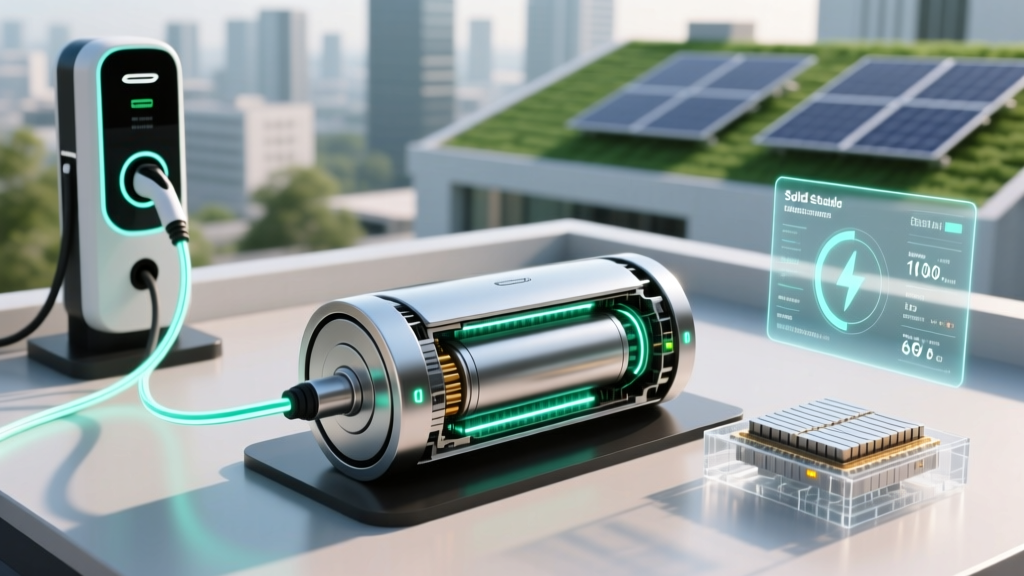
Solid-state cells replace the liquid electrolyte with a solid material, promising higher energy density, faster charging, and reduced fire risk. Multiple manufacturers (Toyota, Samsung SDI, QuantumScape) have announced production timelines targeting 2027-2029 for initial automotive deployment. Tesla has not confirmed a solid-state timeline. Realistic expectation: solid-state packs won't appear in production Teslas before 2029 at the earliest, and initial availability will likely be limited to high-end models.
Silicon Anode Cells
Replacing graphite anodes with silicon can boost energy density by 20-40%. Tesla's 4680 cell program (used in Cybertruck and some Model Y builds) already incorporates silicon-carbon composite anodes. Next-generation full-silicon anodes are in testing but face cycle-life challenges. Expect incremental improvements through 2027-2028 rather than a single breakthrough moment.
Dry Electrode Manufacturing
Tesla's dry electrode process (acquired via Maxwell Technologies) reduces manufacturing cost and energy by eliminating solvent-based coating. This doesn't change pack performance for owners but could make replacement packs cheaper over time. Tesla has been scaling dry electrode production at its Texas and Nevada gigafactories through 2025-2026.
The bottom line for current owners: Don't delay a needed battery replacement waiting for solid-state. The technology timeline is measured in years, not months, and retrofit compatibility with current vehicle platforms is far from guaranteed.
Frequently Asked Questions
Can I upgrade my Tesla to a larger battery pack?
In most cases, no. Tesla's battery packs are vehicle-platform-specific, and the BMS, cooling system, and structural integration are designed for a particular pack size and chemistry. You cannot put a 100 kWh Model S pack into a Model 3. Some older Model S owners (pre-2020) have had success upgrading from 60 kWh to 90/100 kWh packs through Tesla Service, but this option is limited, expensive ($15,000-$20,000+), and availability depends on Tesla's refurbished inventory. For modern vehicles, a "battery upgrade" effectively means a like-for-like replacement.
How much does an EV battery cost to replace across all brands?
Out-of-warranty EV battery replacements range from roughly $5,000 for a small-pack Nissan Leaf to $22,000+ for a large-pack luxury vehicle like a Model S or Mercedes EQS. Tesla's costs sit in the middle-to-upper range due to large pack sizes, but Tesla's degradation rates are among the lowest in the industry, meaning most owners never face this expense.
Does frequent Supercharging ruin my Tesla battery?
"Ruin" is too strong, but exclusive Supercharging does accelerate degradation. Fleet data shows vehicles that Supercharge 90%+ of the time lose approximately 2-4% more capacity over 100,000 miles compared to vehicles charged primarily on Level 2 at home. Modern Tesla thermal management has reduced this penalty significantly versus older packs. If you Supercharge 2-3 times per week and home-charge the rest, the impact is negligible.
LFP vs NCA — which Tesla battery is better?
Neither is universally better; they optimize for different priorities. LFP wins on longevity (3,000-5,000+ cycle life vs. 1,000-2,000 for NCA), cost, and charging simplicity (100% daily OK). NCA wins on energy density (more range in a lighter pack) and cold-weather performance. If you prioritize keeping the car 10+ years and want minimal charging-hassle, LFP is the better fit. If you need maximum range for road trips and live in a cold climate, NCA is preferable.
At what mileage should I expect to replace my Tesla battery?
Most Tesla owners never replace their battery. Fleet data indicates that fewer than 5% of Tesla packs require replacement before 200,000 miles, and the vast majority of those replacements occur under warranty. If your pack does degrade below usable levels, the typical trigger point is 180,000-250,000+ miles — well beyond the mileage at which most owners trade in or sell the vehicle.
Will a replacement Tesla battery have less range than the original?
Under warranty, Tesla guarantees the replacement pack will maintain at least 70% of original capacity — but in practice, most warranty replacements deliver 75-85% capacity (a remanufactured pack with healthy modules). Out-of-warranty new-pack replacements should restore near-original capacity. Remanufactured packs will typically restore 80-90% of original range.
For the latest Tesla warranty terms and specifications, always check Tesla's official warranty page, as terms can shift with model-year updates. For federal tax credit implications if you're considering trading in for a new Tesla, the IRS §30D clean vehicle credit rules apply, with MSRP caps ($55,000 for sedans, $80,000 for SUVs/trucks) and buyer income limits that may affect your eligibility.