The Short Answer: Which Battery Are You Asking About?
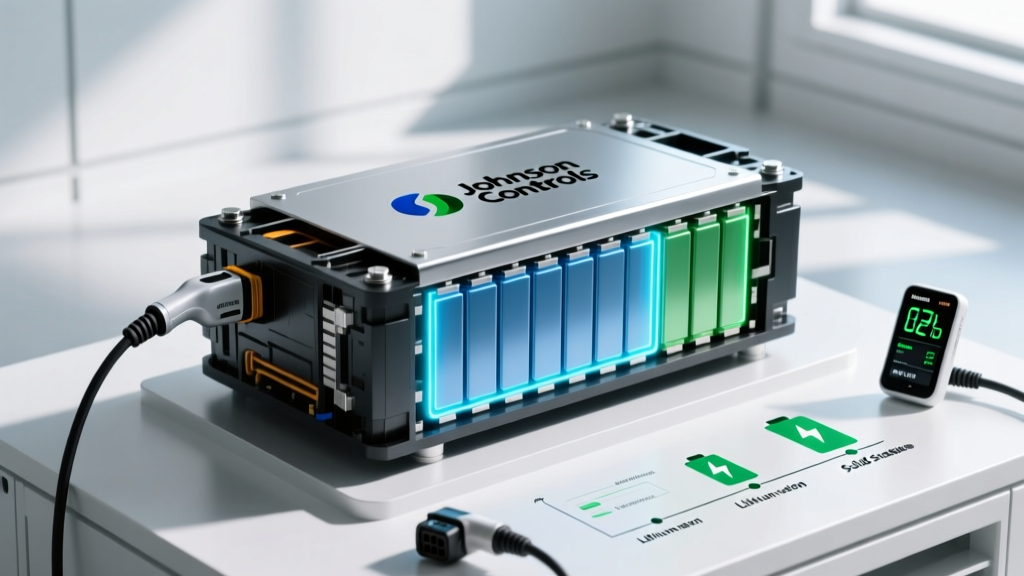
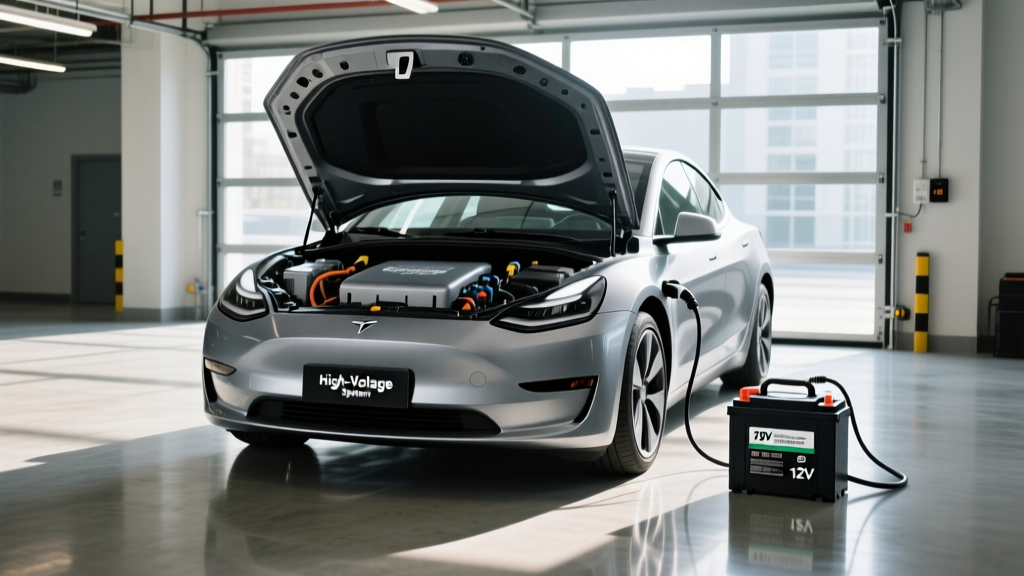
When people search "can you charge the battery in a car," they're usually asking about one of two very different things. In an electric vehicle, there are two separate batteries, and confusing them is the single most common source of EV battery misinformation:
- The high-voltage traction battery (typically 400V–800V, 50–120+ kWh) — this is the large pack that actually propels the car. You charge it by plugging into a Level 1, Level 2, or DC fast charger.
- The 12V auxiliary battery — a small lead-acid or lithium-ion battery that powers the infotainment, lights, door locks, and the contactors that close the circuit to the main pack. It's charged automatically by a DC-DC converter that draws from the traction battery while the car is on or plugged in.
This guide focuses on the traction battery — the one that matters for range, longevity, and replacement cost. If your 12V is dead, that's a separate issue (and yes, the DC-DC converter should keep it topped up, but parasitic drain and cold weather can still kill it). Let's get into what actually determines how long your EV's main battery lasts, what it costs to replace, and whether LFP or NMC chemistry is the better fit for your driving pattern.
How Long Do EV Batteries Last? Real Degradation Data
The fear that an EV battery will "die" at 60,000 miles like a laptop battery is outdated. Modern thermal management systems and conservative buffer strategies have pushed real-world longevity well beyond early-generation packs. But batteries do degrade — the question is how much, and how fast.
Typical Capacity Loss Over Time (Industry Aggregate Data)
Based on fleet data from Recurrent Auto, Geotab, and manufacturer warranty claims across model years 2018–2025:
| Milestone | Average Capacity Retained | Notes |
|---|---|---|
| Year 1 / ~15,000 mi | 96–98% | Initial "break-in" loss; steepest part of the curve |
| Year 3 / ~45,000 mi | 92–95% | Linear, slow degradation phase |
| Year 5 / ~75,000 mi | 88–93% | Most packs well above warranty threshold |
| Year 8 / ~100,000 mi | 84–90% | Approaching warranty boundary; still functional |
| Year 10+ / 150,000+ mi | 80–87% | Many packs outlive the vehicle's economic life |
Sources: Recurrent Auto Battery Research, Geotab EV Battery Degradation Study.
Key takeaway: the degradation curve is non-linear. You lose a few percent in year one as the solid electrolyte interphase (SEI) layer forms, then degradation slows to roughly 1–2% per year under normal use. A 2026 Tesla Model Y with an 82 kWh NMC pack, for example, might deliver 290 miles of real-world range at delivery and roughly 260 miles at year eight — still entirely usable for daily driving.
LFP vs. NMC vs. NCA: Which Chemistry Should You Choose?
Battery chemistry is the single biggest determinant of how your pack ages, how it handles cold, and what it costs. Here's the breakdown for the three chemistries dominating the 2026 EV market:
| Factor | LFP (Lithium Iron Phosphate) | NMC (Nickel Manganese Cobalt) | NCA (Nickel Cobalt Aluminum) |
|---|---|---|---|
| Energy Density | Lower (~160–180 Wh/kg cell-level) | Higher (~220–260 Wh/kg) | Highest (~250–280 Wh/kg) |
| Cycle Life | 3,000–5,000+ cycles | 1,000–2,000 cycles | 800–1,500 cycles |
| Cold-Weather Performance | Weaker; more range loss below 32°F | Better low-temp discharge | Best low-temp performance |
| Cost (per kWh, pack-level) | ~$95–$115 | ~$120–$150 | ~$125–$155 |
| Charging to 100% Daily | Recommended (no calendar aging penalty) | Not recommended (accelerates degradation) | |
| State of Charge Accuracy | Flat voltage curve makes SoC estimation harder | Linear voltage curve; easier estimation | Linear; accurate |
| Common In (2026 Models) | Tesla Model 3 RWD, base Chevy Equinox EV, BYD models | Hyundai Ioniq 5, Ford Mustang Mach-E Extended Range, VW ID.4 | Tesla Model Y Long Range, Model S/X |
Which Is Better for You?
Choose LFP if: You charge at home daily, don't need maximum range, live in a moderate climate, and want maximum cycle life. LFP's ability to sit at 100% SoC without penalty makes it ideal for commuters who plug in every night. The trade-off is ~10–15% less range for a given pack weight, and noticeably worse cold-weather range retention (expect 30–40% loss in sub-freezing temps vs. 20–30% for NMC).
Choose NMC/NCA if: You need maximum range per charge, frequently road-trip, live in a cold climate, or rely on DC fast charging on the go. These chemistries offer higher energy density and better cold performance, but you should keep daily charge limits to 80% to minimize calendar aging.
What Does the Battery Warranty Actually Cover?
Federal law mandates a minimum EV battery warranty of 8 years / 100,000 miles (10 years / 150,000 miles in CARB states like California, New York, and Massachusetts). But the details matter enormously:
| Manufacturer | Warranty Period | Capacity Threshold | Notes |
|---|---|---|---|
| Tesla (Model 3/Y LFP) | 8 yr / 100,000 mi | 70% retention | Standard Range models |
| Tesla (Model 3/Y NCA Long Range) | 8 yr / 120,000 mi | 70% retention | Longer mileage coverage |
| Hyundai / Kia (Ioniq 5, EV6) | 10 yr / 100,000 mi | 70% retention | Among the longest coverage |
| Ford (Mach-E, F-150 Lightning) | 8 yr / 100,000 mi | 70% retention | Covers battery + hybrid/EV components |
| GM (Ultium-based: Equinox, Blazer, Silverado EV) | 8 yr / 100,000 mi | 70% retention (some trims 60%) | Verify trim-specific terms |
| VW (ID.4) | 8 yr / 100,000 mi | 70% retention | CARB states: 10 yr / 150,000 mi |
Always verify current warranty terms on the manufacturer's spec page — terms can change by model year.
The critical fine print: warranty coverage triggers only when your pack falls below the stated threshold (typically 70% of original capacity). A pack at 72% at year 7, 95,000 miles won't qualify for replacement even though you've lost 28% of your range. And warranties generally exclude damage from accidents, flooding, improper charging equipment, or unauthorized modifications.
How Much Does an EV Battery Replacement Cost?
This is the question that generates the most anxiety — and the most misinformation. Let's ground it in actual numbers.
| Vehicle / Pack Size | Battery Capacity | Estimated Replacement Cost (2026) | Context |
|---|---|---|---|
| Tesla Model 3 RWD (LFP) | ~60 kWh | $10,000–$13,000 | Lower cost chemistry; widely available refurbished packs |
| Hyundai Ioniq 5 (NMC) | 77.4 kWh | $14,000–$18,000 | Modular pack allows partial module replacement |
| Ford F-150 Lightning Extended Range | ~131 kWh | $22,000–$30,000 | Largest consumer pack; highest raw cost |
| Chevy Equinox EV (LFP/NMC) | ~85 kWh | $12,000–$16,000 | GM Ultium modular architecture |
| Tesla Model Y Long Range (NCA) | ~82 kWh | $13,000–$17,000 | Refurbished/remanufactured packs increasingly available |
Costs include parts and labor at dealer/authorized service. Independent EV shops may offer 15–25% savings. Refurbished pack availability is growing rapidly.
Here's the critical context that fear-mongering articles omit: the vast majority of EV batteries never need replacement. Data from Recurrent Auto shows that fewer than 1.5% of EVs across major brands have required out-of-warranty battery replacements through 2025. Most packs retain 80%+ capacity at 150,000 miles. The car will likely be totaled in a collision, traded in, or retired for other mechanical reasons before the battery becomes uneconomical.
And when replacement is needed, the rise of modular pack architectures (Hyundai E-GMP, GM Ultium) means a single degraded module can often be swapped for $2,000–$5,000 rather than replacing the entire pack.
Factors That Accelerate (or Slow) Battery Degradation
Battery aging is driven by chemistry, temperature, and how you treat the pack. Here's what the data actually shows:
Habits That Maximize Battery Life
- Keep SoC between 20–80% for daily use (NMC/NCA). LFP owners can charge to 100% daily without penalty.
- Precondition before DC fast charging. A cold battery charges slower and experiences more lithium plating. Most EVs auto-precondition when you navigate to a charger — use the built-in nav for this.
- Minimize repeated DC fast charging above 80% SoC. The charge curve tapers sharply above 80%, and the last 20% generates disproportionate heat. Charge to 80% on road trips unless you need the extra range.
- Park in shade or a garage in summer. Sustained high pack temperatures (above 95°F ambient, pack can reach 110°F+) accelerate calendar aging. A heat pump-equipped EV with active thermal management helps, but parked cars aren't actively cooling the pack.
- Use Level 2 home charging as your primary method. 7–11 kW charging generates far less heat than 150+ kW DC fast charging and is the gentlest on cell chemistry.
- Don't store the car at 100% SoC for extended periods (weeks). If leaving for vacation, set the charge limit to 50–60%.
Factors That Accelerate Degradation
- Frequent DC fast charging (3+ times per week consistently) without preconditioning
- Regularly charging NMC/NCA packs to 100% and letting them sit
- Repeated deep discharges below 10% SoC
- Sustained operation or storage in extreme heat (>100°F ambient for weeks)
- Aftermarket modifications to the BMS or charging system
How to Check Your EV's Battery Health (State of Health)
State of Health (SoH) is the percentage of your battery's current maximum capacity relative to its original capacity. A pack that held 80 kWh when new and now holds 72 kWh is at 90% SoH. Here's how to monitor it:
In-Vehicle Displays
Some manufacturers provide a battery health indicator directly in the infotainment or driver display. Hyundai/Kia include a battery health percentage in the EV menu. Tesla does not surface SoH directly in the car UI, but you can estimate it by comparing your current "100% projected range" (after charging to 100% and letting the BMS recalibrate) against the original EPA range.
Third-Party Tools and OBD-II Readers
Devices like the OBDLink SX/MX+ paired with apps such as EVNotify, Scan My Tesla, or LeafSpy (for Nissan) can read the BMS directly and report SoH, cell voltage variance, and pack temperature. These cost $30–$120 for the hardware plus a free or low-cost app subscription.
Dealer Diagnostics
Any authorized dealer can pull a full battery health report during a service visit. If you're approaching a warranty boundary (say, 7.5 years / 90,000 miles) and suspect your SoH is near the 70% threshold, request this proactively. Some dealers will run it during routine tire rotations at no charge.
Charging-Data Method
If you use a smart Level 2 charger (ChargePoint Home Flex, Emporia, Wallbox), many companion apps track total kWh delivered per session. By comparing the kWh needed to charge from, say, 10% to 90% against the pack's rated usable capacity, you can estimate SoH over time. This method has a ±3% margin of error due to charging losses and BMS buffer accounting.
What's Coming Next: Solid-State and Silicon Anode Batteries
The battery landscape is shifting, but timelines matter. Here's what's realistic as of 2026:
Silicon-dominant anodes (replacing graphite with silicon to boost energy density by 20–40%) are entering limited production. Amprius and Sila Nanotechnologies have begun supplying cells for niche applications, but automotive-scale deployment in consumer EVs is expected in the 2027–2029 timeframe. Early implementations will likely appear in premium models first.
Solid-state batteries (replacing liquid electrolyte with a solid ceramic or polymer separator for improved safety, faster charging, and higher energy density) remain in the prototype and pilot-production stage. Toyota, Samsung SDI, and QuantumScape have all announced targets for limited production, but mass-market availability is not expected before 2029–2031. No currently purchasable EV uses a solid-state pack.
Sodium-ion batteries are emerging as a low-cost alternative for budget EVs and stationary storage, with CATL and BYD leading deployment. These offer lower energy density than LFP but dramatically lower raw material costs. Expect them in sub-$25,000 EV segments by 2027–2028.
The practical advice: don't delay a purchase waiting for solid-state. Today's NMC and LFP packs are mature, well-warrantied, and will outlast most ownership cycles.
Frequently Asked Questions
Can you charge the main EV battery with a regular wall outlet?
Yes, but slowly. A standard 120V household outlet delivers Level 1 charging at roughly 1.2–1.4 kW, adding about 3–5 miles of range per hour. A full charge of an 80 kWh pack from empty would take 55–65 hours. Level 1 is practical for plug-in hybrids with small batteries or as emergency top-up for BEVs, but most EV owners install a 240V Level 2 charger (7–11.5 kW) for 25–45 miles of range per hour.
Does fast charging damage my EV battery?
DC fast charging generates more heat and stress than Level 2 charging, but modern battery management systems actively manage temperature and taper charge rates to protect cells. The data from Geotab and Recurrent shows that vehicles that fast-charge frequently lose roughly 1–3% more capacity over 5 years compared to primarily Level 2-charged vehicles. It's a measurable but modest difference. The bigger risk is fast-charging a cold battery without preconditioning — always navigate to the charger so the car can warm the pack.
My EV shows less range at 100% than it did when new. Is my battery failing?
Not necessarily. The BMS (Battery Management System) continuously recalibrates its range estimate based on recent driving efficiency, temperature, and measured cell capacity. A drop from 310 miles to 285 miles at 100% over two years is normal degradation (~8%). If the drop is sudden or extreme (e.g., 310 to 200 miles in weeks), that warrants a dealer diagnostic to check for a failed module or BMS fault.
Is it better to charge to 80% or 100% every day?
It depends on your battery chemistry. For NMC and NCA packs, daily charging to 80% is optimal — sitting at 100% accelerates calendar aging due to higher cell voltage stress. For LFP packs, manufacturers like Tesla and BYD actually recommend charging to 100% regularly because LFP's flat voltage curve requires periodic full charges for the BMS to accurately track SoC, and LFP chemistry doesn't suffer the same high-SoC degradation penalty.
Will I need to replace my EV battery before I sell the car?
Statistically, no. Fewer than 1.5% of EVs have required out-of-warranty battery replacement through 2025 (source: Recurrent Auto). Most packs retain 80–90% capacity at the 100,000-mile mark. The average American keeps a car for 8.4 years and drives ~14,000 miles per year — putting them at ~118,000 miles at trade-in, well within the battery's functional lifespan.
How do extreme cold temperatures affect battery health long-term?
Cold weather reduces range temporarily (20–40% loss in sub-freezing conditions due to increased internal resistance and cabin heating demands), but it does not cause permanent damage as long as you don't fast-charge a frozen pack. Modern EVs won't allow high-rate DC charging until the pack is warmed above ~32°F. Storing the car in cold weather is actually gentler on the battery than storing it in extreme heat — low temperatures slow calendar aging.