The battery is the single most expensive and consequential component in any electric vehicle. It dictates range, charging speed, long-term value, and even which federal tax credits you can claim. Yet for most buyers, battery chemistry remains a mystery buried beneath marketing claims about "long-range" and "fast-charging."
One development that promises to reshape the battery landscape for American EV buyers is the Tesla lithium refinery in Texas — a facility designed to convert spodumene ore into battery-grade lithium hydroxide on U.S. soil. Whether you drive a Model 3 with a lithium iron phosphate (LFP) pack or a Model Y Long Range with nickel-manganese-cobalt (NMC) cells, understanding what goes into your battery — and what happens to it over 100,000+ miles — is essential to making a smart electrified purchase.
This guide covers the chemistry, the degradation data, the warranty fine print, and the real-world ownership costs that every EV buyer and owner needs to know.
Why Tesla's Texas Lithium Refinery Matters for EV Buyers
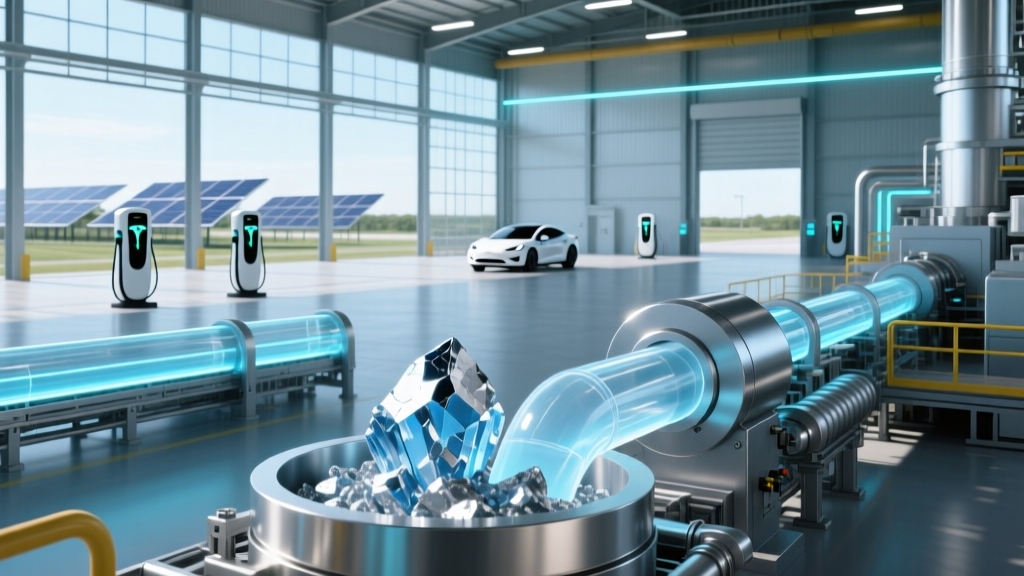
Tesla broke ground on its lithium refining facility in Corpus Christi, Texas, with a stated goal of producing enough battery-grade lithium hydroxide to support roughly one million EVs per year at full capacity. The refinery processes spodumene — a hard-rock lithium ore primarily mined in Australia — into the high-purity lithium hydroxide monohydrate that cathode manufacturers require for NMC and NCA cell production.
Why should a car buyer care? Three reasons:
- Supply chain security. As of 2025, the vast majority of lithium refining happens in China. Domestic refining reduces exposure to trade disruptions and shipping delays that can push up vehicle prices or constrain inventory.
- Tax credit eligibility. Under IRS §30D rules, the federal clean vehicle credit requires an escalating percentage of critical minerals to be sourced from the U.S. or a free-trade-agreement partner. Domestically refined lithium directly helps vehicles qualify for the up-to-$7,500 credit — though buyers must still meet MSRP caps ($55,000 for sedans, $80,000 for SUVs/pickups), household income limits, and final-assembly requirements.
- Potential cost reduction. Tesla's stated aim is to undercut global lithium hydroxide pricing by eliminating trans-Pacific shipping and Chinese refining margins. If achieved, this could moderate battery pack costs — the single largest line item in EV manufacturing — though savings flow through to MSRP gradually and are not guaranteed.
It is worth noting that lithium from this refinery is primarily relevant to NMC and NCA cathodes. LFP batteries — which contain no lithium hydroxide in the cathode itself (the cathode is iron phosphate) but still use lithium in the electrolyte — benefit less directly. Tesla's Standard Range Model 3 and Model Y variants use LFP packs, while Long Range and Performance trims rely on NMC/NCA chemistry.
LFP vs NMC/NCA: The Chemistry Trade-Offs That Define Your EV
Every EV sold in the U.S. today uses one of two dominant lithium-ion cathode chemistries. Your choice between them — often dictated by trim level rather than a standalone option — affects range, charging habits, longevity, and cold-weather performance.
| Attribute | LFP (Lithium Iron Phosphate) | NMC / NCA (Nickel-based) |
|---|---|---|
| Energy density (cell-level) | ~160–180 Wh/kg | ~220–260 Wh/kg |
| Typical pack size | 50–65 kWh | 75–100 kWh |
| Cycle life (to 80% SoH) | 3,000–5,000+ cycles | 1,000–2,000 cycles |
| Cold-weather range loss | Greater (less internal resistance heating); preconditioning critical | Moderate; better low-temp conductivity |
| Recommended daily SoC | 100% (regular full charges improve BMS calibration) | 80% daily; 100% for trips only |
| Cobalt / nickel content | None — uses iron and phosphate | Contains nickel; some formulations contain cobalt |
| Cost per kWh (cell-level, 2025–2026) | ~$70–90 | ~$100–130 |
| Thermal stability | Excellent — less prone to thermal runaway | Good but requires more robust thermal management |
| Common in (2026 models) | Tesla Model 3 RWD, Model Y RWD, Ford Mustang Mach-E SR, BYD models | Tesla Model 3/Y LR, Hyundai Ioniq 5 LR, Rivian R1T, Chevy Silverado EV |
The bottom line: If you prioritize longevity, lower upfront cost, and the simplicity of charging to 100% daily, LFP is the stronger pick — and it's why Tesla has shifted Standard Range production to LFP globally. If you need maximum range per charge (300+ miles EPA) and accept more careful SoC management, NMC/NCA delivers the energy density required. Neither is universally "better"; the right choice depends on your driving pattern.
How Long Do EV Batteries Actually Last?
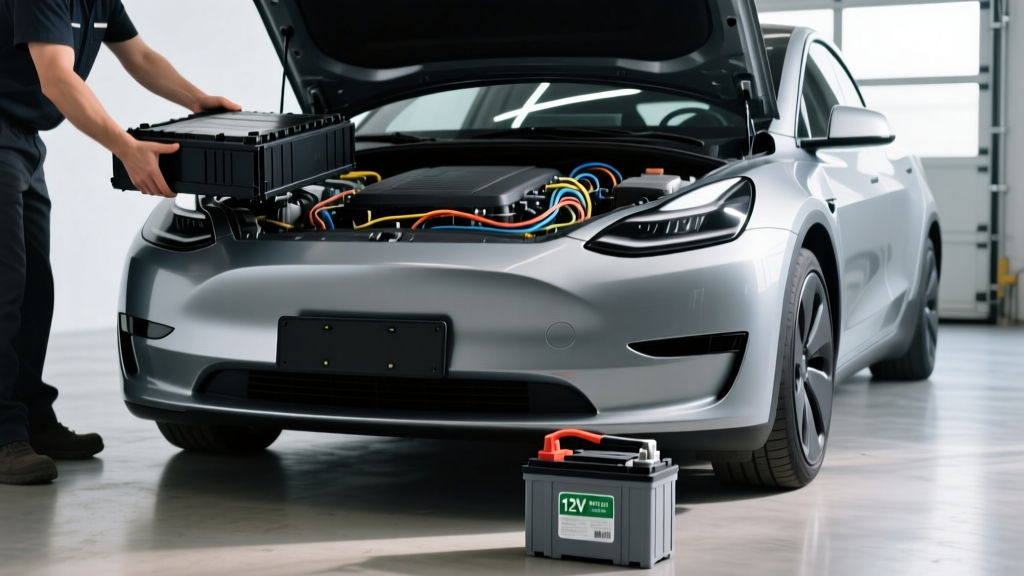
The fear of a $15,000 battery swap at 80,000 miles is the single most persistent myth in EV ownership. Real-world data tells a different story.
Modern lithium-ion packs with active thermal management (liquid cooling and heating) are engineered for 200,000+ miles before reaching the typical warranty threshold of 70% original capacity. Tesla's own 2024 Impact Report noted that Model 3 and Model Y packs retained an average of roughly 85% capacity at 200,000 miles — well above the 70% warranty floor.
Typical degradation trajectory (liquid-cooled packs, average U.S. climate):
- Year 1 / 15,000 miles: 2–5% loss (initial "break-in" degradation as the solid-electrolyte interphase layer stabilizes)
- Year 3 / 45,000 miles: 5–8% total loss
- Year 5 / 75,000 miles: 8–12% total loss
- Year 8 / 120,000 miles: 12–18% total loss
- Year 10+ / 150,000–200,000 miles: 15–25% total loss, depending on charging habits and climate
Source context: Aggregated fleet data reported by Tesla, fueleconomy.gov EV technology overview, and independent analyses from Recurrent Auto (a battery analytics firm tracking 15,000+ EVs). Individual results vary significantly based on DC fast-charging frequency, ambient temperature, and SoC habits.
A 20% capacity loss on a 358-mile EPA Model 3 Long Range still leaves you with ~286 miles of range — more than adequate for the vast majority of daily driving. Most EV batteries will outlast the vehicle's body, interior, and suspension components.
What the Battery Warranty Actually Covers
Federal law mandates a minimum 8-year / 100,000-mile warranty on EV battery packs, but manufacturers differ in capacity-retention thresholds and what triggers a claim.
| Manufacturer | Warranty Period | Capacity Threshold | Notes |
|---|---|---|---|
| Tesla (Model 3/Y RWD — LFP) | 8 yr / 100,000 mi | 70% retention | Covers defects + capacity below threshold |
| Tesla (Model 3/Y LR & Perf.) | 8 yr / 120,000 mi | 70% retention | Longer mileage for NMC packs |
| Hyundai / Kia | 10 yr / 100,000 mi | 70% retention | Among the longest coverage periods |
| Ford (Mach-E, F-150 Lightning) | 8 yr / 100,000 mi | 70% retention | Standard across BEV lineup |
| GM (Ultium platform) | 8 yr / 100,000 mi | 70% retention (estimated) | Varies by model; check owner's manual |
| Rivian | 8 yr / 175,000 mi | 70% retention | Highest mileage threshold in market |
Key warranty fine print: Warranties cover the pack dropping below the stated threshold under normal use. They do not cover damage from accidents, flooding, or unauthorized modifications. Degradation from exclusively using DC fast charging is generally still covered, but manufacturers may scrutinize claims from fleet or rideshare vehicles with extreme charge-cycle counts. Always review the specific warranty booklet for your model year — terms can shift annually.
EV Battery Replacement Cost: What Owners Actually Pay
Out-of-warranty battery replacement is rare but not unheard of — typically triggered by manufacturing defects that manifest late, physical damage, or owners who keep vehicles well past 200,000 miles. Here's the current cost landscape:
| Vehicle / Pack Size | Estimated Replacement Cost (Parts + Labor) | Typical Replacement Trigger |
|---|---|---|
| Tesla Model 3 RWD (50–60 kWh LFP) | $8,000–$12,000 | Rare before 250,000+ mi; physical damage |
| Tesla Model Y LR (~75 kWh NMC) | $12,000–$16,000 | Cell imbalance or module failure post-warranty |
| Hyundai Ioniq 5 (77.4 kWh NMC) | $11,000–$15,000 | Largely theoretical; few out-of-warranty cases |
| Ford F-150 Lightning Ext. Range (131 kWh) | $20,000–$30,000 | Large pack = higher cost; mostly collision-related |
| Chevy Bolt EV (65 kWh NMC) | $9,000–$14,000 | Post-recall replacements; GM covered most under campaign |
Context that matters: These figures are for a full pack replacement. In practice, many issues can be resolved by replacing individual modules (a fraction of the cost) rather than the entire pack. Tesla's structural battery pack design in newer Model Y vehicles makes module-level repair more difficult, potentially pushing repairs toward full-pack swaps. Third-party EV repair shops are increasingly capable of module-level diagnostics and repair, offering costs 40–60% below OEM dealer pricing.
The honest assessment: fewer than 2% of EVs require battery replacement outside of warranty coverage. For the vast majority of owners, the battery will never need replacement during their ownership period.
Five Factors That Accelerate (or Preserve) Battery Life
Degradation is not random — it follows predictable physics. These are the variables you control:
- State of charge habits. For NMC/NCA packs, daily charging to 80% and avoiding extended periods at 100% or below 10% significantly slows degradation. LFP packs are the exception — Tesla and other manufacturers recommend periodic 100% charges to keep the battery management system (BMS) calibrated. Storing any pack at 100% SoC in high heat for weeks is the single worst thing you can do.
- DC fast-charging frequency. Occasional road-trip fast charging is fine. Daily reliance on 150+ kW DC fast charging generates sustained high temperatures that accelerate electrolyte decomposition. Data from Recurrent Auto suggests vehicles that DC-fast-charge more than 90% of the time show 2–4% additional degradation at 100,000 miles compared to primarily Level 2 charging. The IRS §30D credit won't care how you charge, but your battery will.
- Temperature extremes. Lithium-ion cells degrade fastest above 95°F and below 20°F. Active thermal management (standard on Tesla, Hyundai, Ford, Rivian, GM Ultium) mitigates this substantially. If you live in Phoenix or International Falls, preconditioning — warming or cooling the battery before driving and before charging — is non-negotiable for longevity.
- Regenerative braking settings. High regen settings in cold weather can push excessive current into a cold pack. Most modern EVs automatically limit regen when the battery is cold, but allowing the pack to warm up before aggressive driving remains best practice.
- Software updates. Manufacturers periodically release BMS updates that optimize charge algorithms, thermal management, and cell-balancing routines. Keeping your vehicle updated is one of the easiest longevity measures available.
Monitoring Battery Health: How to Check State of Health (SoH)
State of Health (SoH) is the percentage of your battery's original usable capacity that remains available. A new pack starts at 100% SoH; a pack that originally held 75 kWh and now holds 63.75 kWh is at 85% SoH.
OEM tools:
- Tesla: The in-car battery health screen (introduced in 2024 software updates) shows estimated range at 100% SoC, which you can compare to the original EPA rating. Third-party apps like Tessie or TeslaFi provide more granular SoH estimates by analyzing charge-log data over time.
- Hyundai/Kia: The Bluelink/UVO connected services app displays estimated battery condition. The in-cluster diagnostics menu (accessible through hidden service menus) provides more detailed cell-voltage data.
- Ford: FordPass provides battery health notifications, though less granular than Tesla's offering.
Third-party diagnostics: Services like Recurrent Auto (free for owners) connect to your vehicle's telematics and provide ongoing SoH tracking, degradation curves, and comparisons against similar vehicles in their fleet. This is particularly valuable if you're buying a used EV — request a Recurrent report or a dealer-performed battery health check before purchase.
Manual method: Charge to 100%, note the displayed range, and compare to the EPA sticker. A Model 3 Long Range showing 290 miles at 100% when new EPA was 358 miles suggests approximately 81% SoH. This method is approximate — displayed range is affected by recent driving style and temperature — but provides a useful ballpark.
Beyond Lithium-Ion: Solid-State, Silicon Anodes, and What's Realistic
The battery industry is investing heavily in next-generation chemistries. Here's where each technology stands as of 2026 — with honest timelines, not concept-car hype:
Silicon-dominant anodes: Companies like Sila Nanotechnologies and Group14 are shipping silicon-composite anode materials that replace graphite, boosting energy density by 20–40% at the cell level. Early production vehicles incorporating partial silicon anodes are expected by 2027–2028. This is the nearest-term meaningful upgrade, and it will likely debut in premium segments before reaching mainstream models.
Semi-solid-state batteries: Toyota, Samsung SDI, and QuantumScape have demonstrated prototype cells using solid or semi-solid electrolytes that promise higher energy density, faster charging, and improved safety. However, manufacturing scale-up remains the critical bottleneck. Toyota's announced 2027–2028 production timeline is for limited-volume applications, likely in the Lexus lineup. Widespread availability in sub-$50,000 vehicles is realistically a 2030+ proposition.
Sodium-ion batteries: CATL and BYD are producing sodium-ion cells for entry-level EVs in China, trading energy density for dramatically lower material costs and better cold performance. U.S. market availability is uncertain and likely limited to commercial/fleet applications initially.
None of these technologies should factor into a current purchase decision. Today's LFP and NMC packs, properly maintained, will serve reliably for 10–15 years — by which time next-generation replacements will be available, affordable, and backward-compatible through the evolving service network.
Frequently Asked Questions
How long do EV batteries last in years and miles?
Modern liquid-cooled EV battery packs are designed to last 200,000+ miles before reaching 70% of original capacity — the typical warranty threshold. In calendar years, most packs will serve 12–15 years or more in typical consumer use. Fleet data from Tesla, Hyundai, and independent analysts consistently shows average degradation of 1.5–2% per year under normal charging conditions.
How much does an EV battery cost to replace out of warranty?
Full pack replacement ranges from approximately $8,000 for a smaller LFP pack (Tesla Model 3 RWD) to $20,000–$30,000 for a large NMC pack (Ford F-150 Lightning Extended Range). However, module-level repairs can cost 40–60% less, and fewer than 2% of EVs ever need out-of-warranty battery work. Most packs outlive the rest of the vehicle.
What does the federal battery warranty cover?
By federal mandate, EV battery warranties must cover at minimum 8 years / 100,000 miles. Coverage includes manufacturing defects and capacity loss below a stated threshold (typically 70% of original capacity). Some manufacturers, like Hyundai and Rivian, extend this to 10 years or 175,000 miles respectively. Damage from accidents, misuse, or unauthorized modifications is excluded.
LFP vs NMC — which battery chemistry should I choose?
Choose LFP if you want maximum cycle life (3,000–5,000+ cycles), the simplicity of daily 100% charging, lower cost, and cobalt-free sourcing — and you can accept slightly lower range per charge. Choose NMC/NCA if you need 300+ miles of EPA range and don't mind managing SoC (80% daily, 100% for road trips). LFP is increasingly the default for standard-range trims; NMC powers long-range and performance variants.
Does the Tesla Texas lithium refinery affect which vehicles I can buy today?
Not directly in the short term. The refinery's output will primarily supply NMC/NCA cathode production for Tesla's U.S.-built vehicles, potentially strengthening domestic supply chains and supporting §30D tax credit eligibility over time. LFP batteries — used in Standard Range Model 3 and Model Y — benefit less directly since their cathode material is iron phosphate, not lithium-based. The refinery represents a long-term supply-chain investment rather than an immediate change to available vehicles or pricing.
Will solid-state batteries make my current EV obsolete?
No. Solid-state batteries are in limited prototype and early production phases as of 2026, with broad consumer availability realistically a 2030+ timeline. Your current EV's battery will reach the end of its useful life (or the vehicle's) before solid-state packs are widely available and affordable. When replacement time does come, today's LFP and NMC packs will still be in production and fully supported.
Understanding your EV's battery — its chemistry, its degradation curve, its warranty, and the supply chain behind it — transforms it from an anxiety-inducing black box into a well-characterized, predictable component. The data consistently shows that modern EV batteries are more durable than the public assumes, more warrantied than buyers realize, and less likely to need replacement than any major mechanical system in a conventional vehicle. Whether the lithium in your pack was refined in Corpus Christi or Jiangxi, the physics of longevity remain the same: moderate your SoC, precondition in extremes, and let the thermal management system do its job.