Why Everyone Is Searching for a Tesla Solid-State Battery
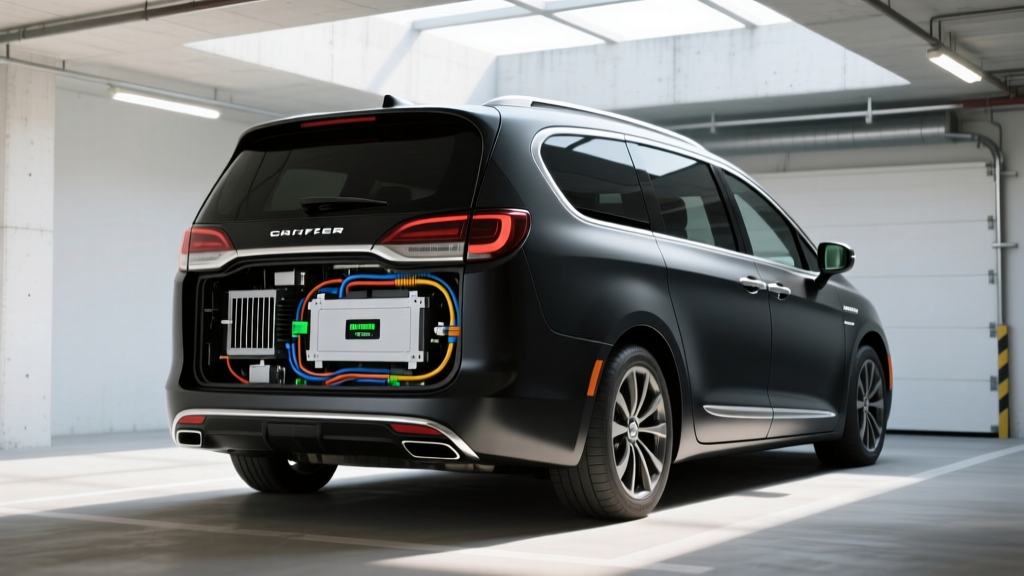
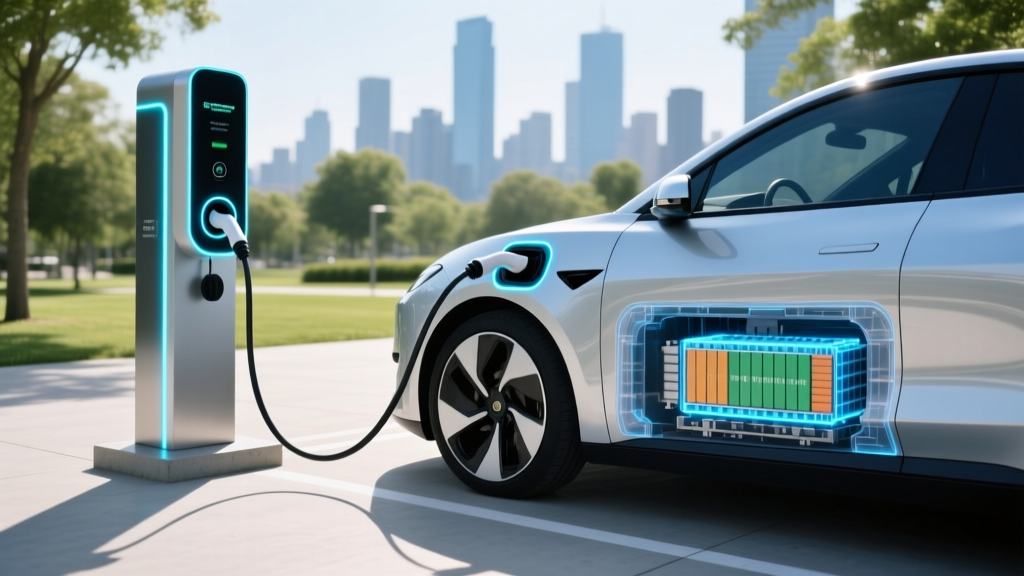
Search interest in a Tesla solid-state battery spikes every time a patent filing surfaces or a supplier hints at a next-gen cell. The promise is real: solid electrolytes could deliver higher energy density, faster charging, and reduced fire risk compared to today's lithium-ion cells with liquid electrolyte. But as of the 2026 model year, no Tesla vehicle ships with a solid-state pack. Every Model 3, Model Y, Model S, Model X, and Cybertruck on the road uses a conventional lithium-ion cell — either nickel-based (NMC/NCA) or lithium iron phosphate (LFP). Understanding what's in your car today, how it degrades, and what solid-state tech realistically timelines out to is far more useful than chasing rumors.
Today's Tesla Battery Chemistries: LFP vs NMC/NCA
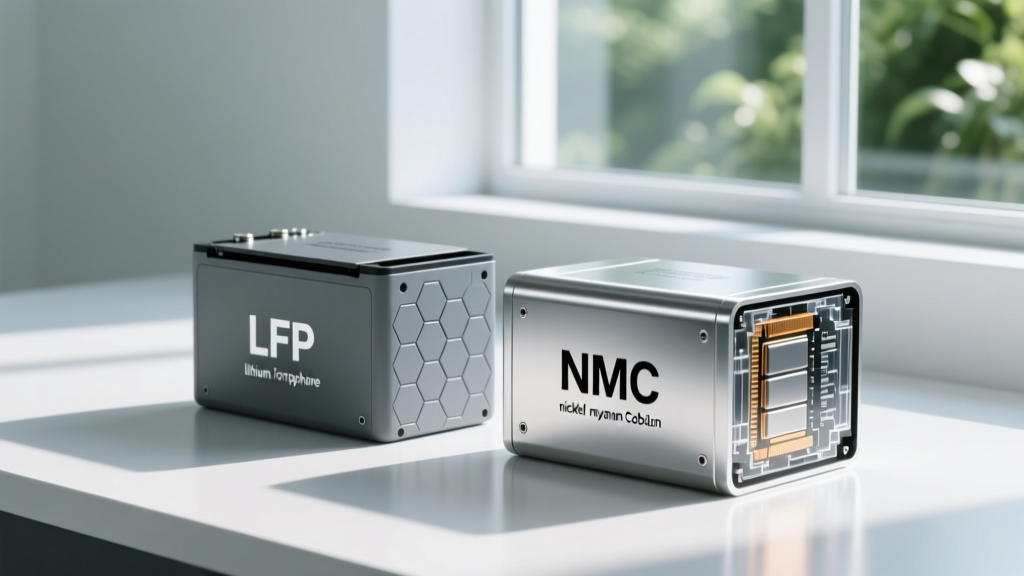
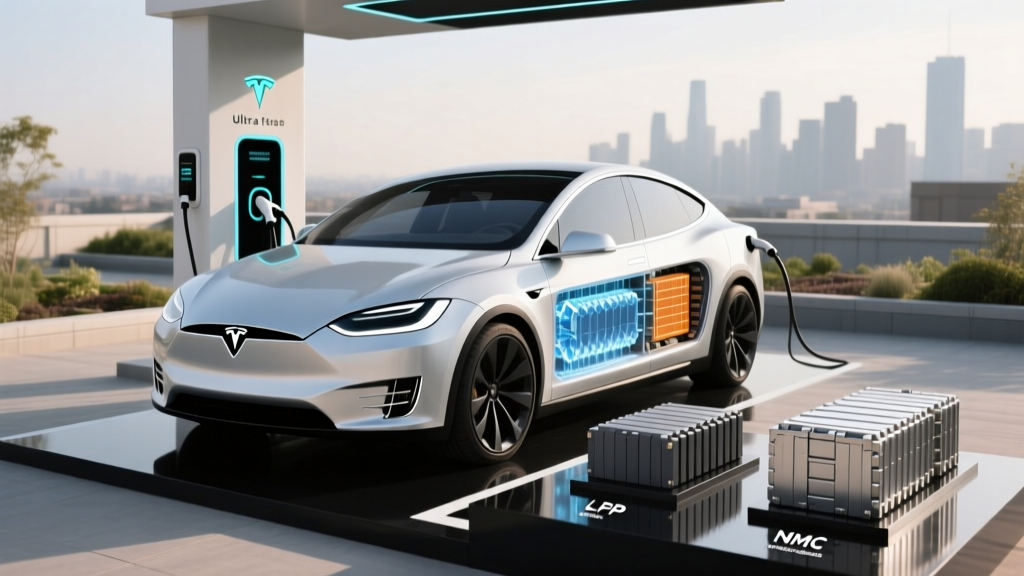
Tesla currently sources two main cell chemistries for its US-market vehicles. The chemistry you get depends on the model and trim, and it materially affects range, charging behavior, longevity, and cold-weather performance.
| Attribute | LFP (LiFePO₄) | NMC / NCA (Nickel-based) |
|---|---|---|
| Energy density | Lower (~160–180 Wh/kg cell-level) | Higher (~230–270 Wh/kg cell-level) |
| Typical Tesla use | Model 3 RWD, Model Y Long Range RWD | Model 3 Long Range/Performance, Model Y LR/AWD, Model S/X, Cybertruck |
| Cycle life | Higher — 3,000+ full cycles to 80% SoH | ~1,000–2,000 full cycles to 80% SoH |
| Cold-weather performance | More range loss below freezing (~30–40%) | Moderate loss (~20–30% below freezing) |
| Recommended daily charge | 100% (Tesla recommends periodic full charges for BMS calibration) | 80% daily; 100% only for trips |
| Cost | Lower — no cobalt or nickel | Higher — commodity-sensitive |
| Thermal stability | Excellent — higher runaway threshold | Good with active thermal management |
The practical upshot: LFP packs sacrifice some range per kWh of battery weight but gain dramatically in cycle life and cost. If you plan to keep a Model 3 RWD for 200,000+ miles, LFP's cycle-life advantage is meaningful. If you need maximum range and AWD performance, nickel-based cells are the current solution.
How Long Do Tesla Batteries Actually Last?
Tesla's 2024 Impact Report (the most recent comprehensive dataset published) showed that Model 3 and Model Y packs retain approximately 85% of original capacity at 200,000 miles. That figure aligns with independent fleet data from high-mileage ride-hail operators and owner-tracked logs on platforms like Teslamate and Tessie.
- Year 1 / 15,000 mi: ~3–5% loss (initial formation loss)
- Year 3 / 45,000 mi: ~7–9% total loss
- Year 5 / 75,000 mi: ~9–12% total loss
- Year 8 / 120,000 mi: ~12–15% total loss
- 200,000 mi: ~14–17% total loss (~83–86% retained)
LFP packs (Model 3 RWD) show a flatter curve: typically 2–3% initial loss, then very gradual linear degradation, with many packs projected to retain 88–92% at 200,000 miles based on cycle-test data from CATL and BYD. Real-world fleet data for LFP Teslas is still maturing since large-scale LFP deployment began around 2022.
Sources: Tesla Impact Report, Recurrent Auto battery degradation studies.
For context, the average US driver covers ~13,500 miles per year (FHWA data). At that rate, hitting 200,000 miles takes roughly 15 years. Most Tesla batteries will outlast the vehicle's economic life.
Tesla Battery Warranty: What's Covered
Tesla's high-voltage traction battery warranty is one of the more straightforward in the industry. It covers defects and excessive capacity loss — defined as falling below a specific retention threshold — for a set period or mileage, whichever comes first.
| Model | Battery Warranty | Minimum Retention | Drive Unit Warranty |
|---|---|---|---|
| Model 3 RWD (LFP) | 8 years / 100,000 mi | 70% | 8 yr / 100,000 mi |
| Model 3 LR / Performance | 8 years / 120,000 mi | 70% | 8 yr / 120,000 mi |
| Model Y (all trims) | 8 years / 120,000 mi | 70% | 8 yr / 120,000 mi |
| Model S / Model X | 8 years / 150,000 mi | 70% | 8 yr / 150,000 mi |
| Cybertruck | 8 years / 120,000 mi | 70% | 8 yr / 120,000 mi |
What the warranty does NOT cover: Normal degradation above the 70% threshold, damage from accidents, flooding, or unauthorized modifications, and range loss due to environmental factors (extreme cold temporarily reducing range is not a defect). The warranty applies to the high-voltage traction battery only — not the 12V auxiliary battery that powers accessories and computers.
EV Battery Replacement Cost: What Tesla Owners Actually Pay
Out-of-warranty battery replacement is the single biggest fear among prospective EV buyers. Here's what the numbers look like in 2026 for Tesla models, based on service-center invoices shared by owners and third-party repair shops:
| Model | Pack Size (usable) | Chemistry | Replacement Cost (parts + labor) |
|---|---|---|---|
| Model 3 RWD | ~57.5 kWh | LFP | $10,000 – $13,000 |
| Model 3 Long Range | ~75 kWh | NMC/NCA | $13,000 – $16,000 |
| Model Y Long Range / AWD | ~75 kWh | NMC/NCA | $13,000 – $17,000 |
| Model S / X | ~95 kWh | NMC/NCA | $18,000 – $22,000 |
| Cybertruck | ~123 kWh | NMC (4680) | $20,000 – $25,000+ |
Critical context: Full pack replacement is rare. Tesla service centers often diagnose and replace individual modules (a pack contains multiple modules) for $2,000–$5,000 when a single module fails. Complete pack swaps under the 8-year warranty are covered at no cost if capacity drops below 70%. The vast majority of Tesla packs never need replacement — fleet data shows failure rates well under 1–2% within the warranty period.
What Kills an EV Battery Faster (And What Doesn't)
Battery degradation is electrochemical — it's driven by temperature, voltage stress, and charge throughput. Here's what the data actually shows:
- Avoid sustained 100% SoC (NMC/NCA): Storing a nickel-based pack at full charge accelerates calendar degradation. Set daily limit to 80% and charge to 100% only before road trips. LFP owners should charge to 100% at least weekly for BMS accuracy.
- Minimize DC fast charging when Level 2 is available: Frequent 250 kW Supercharging sessions generate heat. Data from Recurrent Auto shows a modest but measurable increase in degradation for packs fast-charged >3x/week vs. primarily Level 2 charged packs. Occasional Supercharging is fine — it's the daily pattern that matters.
- Use preconditioning: Tesla's navigation-routed battery preconditioning warms the pack before Supercharger arrival, reducing charge time and cold-stress on cells. Always navigate to a Supercharger rather than just driving there.
- Don't baby it in moderate climates: Packs in temperate regions (60–80°F average) show the lowest degradation. If you live in Phoenix or Minneapolis, use scheduled charging and the Tesla app's climate preconditioning to reduce thermal extremes.
- Don't let it sit at 0%: Deep discharge (true 0%, not the displayed 0% which has a buffer) can cause copper dissolution in the anode. If storing, leave at ~50% SoC.
What doesn't significantly hurt your battery: Regenerative braking (it's just charge current, well within C-rate limits), occasional 100% charges for trips, and highway driving. The thermal management system handles most normal-use scenarios competently.
How to Check Your Tesla Battery's State of Health
Tesla does not display a direct State of Health (SoH) percentage in the vehicle UI. Here are the reliable methods owners use:
Method 1: The Manual Calculation
Charge to 100% (or your known max), note the displayed range, and compare it to the original EPA-rated range for your model. A 2024 Model 3 Long Range AWD rated at 341 miles EPA that shows 305 miles at 100% has roughly ~89% SoH. Note: displayed range is affected by driving style and temperature, so do this test in moderate weather after a full charge cycle.
Method 2: Third-Party Apps
Apps like Tessie and Teslamate (self-hosted) pull data from the Tesla API and calculate SoH by comparing actual energy dispensed during full charges against the pack's known capacity. These are generally more accurate than the dashboard range estimate because they measure kWh, not projected miles.
Method 3: Service Mode (Limited)
Tesla's Service Mode (accessible via the software menu) shows nominal full-pack energy and some cell-level data, but it does not provide a clean SoH percentage. Some owners use the "Nominal Full Pack Energy" reading compared to the factory-rated kWh to estimate health.
Method 4: Tesla Service Center Diagnostic
If you suspect a warranty claim (below 70% retention within 8 years/warranty miles), a service center can run a full diagnostic that provides an official SoH reading for claim purposes.
Solid-State and Next-Gen Batteries: Realistic Timelines
The search for a Tesla solid-state battery reflects genuine excitement about next-generation cell technology. Here's where things stand as of 2026:
Solid-state batteries replace the liquid electrolyte with a solid material (ceramic, sulfide, or polymer), potentially enabling lithium-metal anodes, higher energy density (projected 350–500 Wh/kg at cell level vs. ~270 Wh/kg for today's best NMC), and improved safety. The engineering challenges — interfacial resistance, manufacturing scalability, cost — remain significant.
- Toyota: Announced 2027–2028 target for limited production of solid-state EVs with ~750 km (~466 mi) range. Pilot-line cells exist; mass production is unproven.
- Samsung SDI: Showing prototype all-solid-state cells to automaker partners; targeting 2027 production start.
- QuantumScape: Solid-state cells undergoing durability testing with Volkswagen/PowerCo; no confirmed production vehicle timeline.
- Tesla: No public solid-state program announced. Tesla's near-term cell strategy centers on scaling 4680 production with dry-electrode coating and high-nickel cathodes. A Tesla solid-state battery remains speculative.
Silicon-anode cells (used in limited form by startups like Sila Nanotechnologies with Mercedes-Benz) offer a nearer-term energy-density bump of 10–20% by replacing graphite anodes with silicon-dominant composites. These are entering production in 2025–2026 but are not yet in Tesla vehicles.
Realistic expectation: If solid-state cells reach cost parity and mass production, the earliest plausible Tesla adoption would be the 2028–2030 timeframe, likely debuting in a new platform rather than retrofitting existing models. Current buyers should make decisions based on today's proven LFP and NMC technology, which is mature, well-warrantied, and demonstrably long-lasting.
Frequently Asked Questions
How long do Tesla batteries last in years and miles?
Based on Tesla's fleet data and independent tracking, NMC/NCA packs retain approximately 83–87% capacity at 200,000 miles (roughly 15 years at average US driving rates). LFP packs are projected to retain 88–92% at the same mileage. Complete pack failure within the first 10 years is rare (under 1–2% of packs). Most Tesla batteries will functionally outlast the vehicle's useful economic life.
How much does it cost to replace a Tesla battery?
Full pack replacement ranges from ~$10,000 (Model 3 RWD LFP) to $25,000+ (Cybertruck), including labor. However, full replacements are uncommon — Tesla service centers frequently replace individual modules for $2,000–$5,000. Within the 8-year warranty period, replacement is free if capacity drops below 70%. Most owners will never pay for a battery replacement.
What does the Tesla battery warranty cover?
Tesla covers the high-voltage traction battery for 8 years and 100,000–150,000 miles (depending on model), guaranteeing at least 70% capacity retention. The warranty covers manufacturing defects and excessive degradation. It does not cover the 12V auxiliary battery, damage from accidents or misuse, or temporary range reduction from cold weather.
LFP vs NMC — which Tesla battery chemistry is better?
Neither is universally better; they serve different priorities. Choose LFP if you want maximum cycle life, lower cost, the ability to charge to 100% daily, and you don't need maximum range or AWD — it's ideal for daily commuting in moderate climates. Choose NMC/NCA if you need longer EPA range, AWD, faster acceleration, or you regularly drive in cold weather where LFP's range penalty is more pronounced. For most Model 3 buyers, LFP (RWD) offers the best total-cost-of-ownership; for Model Y AWD and road-trip-heavy drivers, NMC is the practical choice.
Will a Tesla solid-state battery be available soon?
No Tesla vehicle currently offers or has announced a solid-state battery pack. Tesla's current cell strategy focuses on scaling its 4680 cell with dry-electrode manufacturing and high-nickel cathodes. Industry-wide, solid-state batteries are in prototype and pilot stages, with the earliest limited production expected from Toyota and Samsung SDI around 2027–2028. A realistic timeline for a Tesla solid-state pack, if pursued, would be 2028–2030 at the earliest.
How do I maximize my Tesla battery's lifespan?
Set daily charge limits to 80% for NMC/NCA (100% for LFP), use Level 2 home charging as your primary method, enable battery preconditioning when navigating to Superchargers, avoid letting the car sit at very low or very high SoC for extended periods, and use scheduled charging to minimize time spent at peak voltage. These habits, backed by fleet degradation data, can add meaningful capacity retention over a 10+ year ownership period.