Understanding the Tesla Model Y Battery Architecture
When Tesla Model Y owners search for information about the "low voltage battery," they are usually encountering one of two things: a warning message on their touchscreen about the 16V lithium-ion auxiliary battery, or confusion between the car's two distinct electrical systems. The Model Y actually carries two batteries — a high-voltage traction pack (roughly 60–82 kWh depending on trim and model year) that propels the vehicle, and a low-voltage auxiliary battery (approximately 15–16V nominal, replacing the legacy 12V lead-acid unit) that powers the computers, lights, door handles, and safety systems.
This guide covers both systems but focuses primarily on what matters most to your wallet and ownership experience: the high-voltage traction battery's chemistry, degradation behavior, warranty coverage, and replacement economics. We'll also address the low-voltage auxiliary battery since it's a common pain point for Model Y owners.
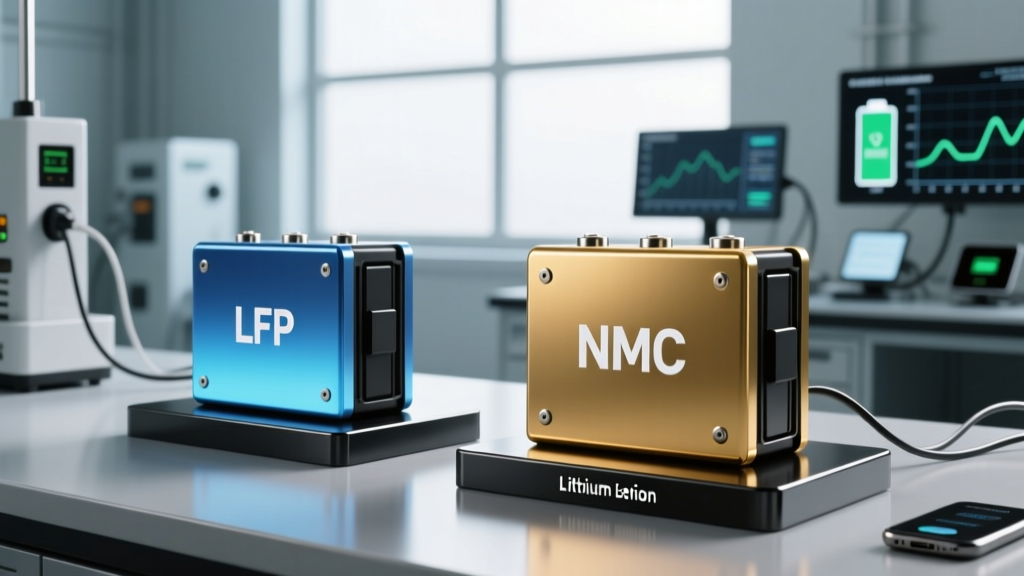
LFP vs NMC/NCA: Which Chemistry Powers Your Model Y?
Tesla offers the Model Y with two distinct battery chemistries depending on trim level and model year, and this choice has real implications for how you should charge, store, and think about long-term ownership.
The Long Range and Performance variants use nickel-based chemistries — historically NCA (nickel-cobalt-aluminum) and more recently NMC (nickel-manganese-cobalt) in various cell formats including the 4680 cylindrical cells produced at Giga Texas. These packs deliver higher energy density, which translates to the 300+ mile EPA range figures buyers expect from premium trims.
The Rear-Wheel Drive (Standard Range) Model Y has been equipped with LFP (lithium iron phosphate) prismatic cells, primarily sourced from CATL. These packs are heavier and slightly lower in energy density, but they offer significant advantages in cycle life, thermal stability, and cost.
| Attribute | LFP (RWD / Standard Range) | NMC/NCA (Long Range / Performance) |
|---|---|---|
| Energy Density | Lower (~160–170 Wh/kg cell-level) | Higher (~230–260 Wh/kg cell-level) |
| Cycle Life | 3,000–5,000+ cycles to 80% SoH | 1,000–2,000 cycles to 80% SoH |
| Recommended Daily Charge | 100% (Tesla recommends periodic full charges) | 80% daily; 100% only for trips |
| Cold-Weather Performance | More range loss in freezing temps (~35–40%) | Moderate range loss (~25–30%) |
| Thermal Stability | Excellent — higher onset temp for thermal runaway | Good — requires more active thermal management |
| Cost per kWh | Lower (~$80–100/kWh at cell level) | Higher (~$110–140/kWh at cell level) |
| EPA Range (2025–2026 Model Y) | ~260–280 miles | ~300–330 miles |
Which is better? Neither is universally superior. LFP is the pragmatic choice for commuters who can charge at home daily and don't need maximum range. Its tolerance for 100% state-of-charge storage means you can keep it fully topped without accelerating degradation. NMC/NCA is better for road-trippers and cold-climate drivers who need every mile of range and better winter efficiency. The trade-off is that you must manage charging habits more carefully — keeping daily SoC at 80% and only charging to 100% when you'll drive immediately.
How Long Do Tesla Model Y Batteries Last? Degradation Data
Battery degradation is the single largest concern among prospective EV buyers, and it's also the most misunderstood. Modern Tesla battery packs degrade far more slowly than early-adopter fears suggested.
According to Tesla's own Impact Report and data aggregated from fleet telemetry, the average Tesla battery retains approximately 92% of its original capacity after 150,000 miles — meaning only about 8% degradation over what is typically 8–10 years of average driving. Tesla reports that their battery packs are designed to outlast the vehicle itself, with projected lifespans of 200,000+ miles for NMC/NCA packs and potentially 300,000+ miles for LFP packs before reaching 70–80% state of health.
Real-world data from owner communities like Teslanomics and Recurrent Auto's fleet studies paint a consistent picture:
- Year 1 / 15,000 miles: ~3–5% loss (initial formation loss)
- Year 3 / 45,000 miles: ~6–8% total loss
- Year 5 / 75,000 miles: ~8–10% total loss
- Year 8 / 120,000 miles: ~10–13% total loss
- Year 10 / 150,000 miles: ~12–15% total loss
LFP packs generally show 2–4% less degradation at equivalent mileage due to superior cycle life.
The degradation curve is not linear. Most loss occurs in the first 20,000–30,000 miles as the battery undergoes initial formation cycles. After that, degradation slows considerably — often less than 1% per year under normal use. This "hockey stick" pattern means a 5-year-old Model Y with 60,000 miles may have nearly the same usable range as a 3-year-old with 40,000 miles.
What Does the Tesla Battery Warranty Cover?
Tesla's battery warranty is one of the strongest in the industry and provides meaningful protection against premature degradation or defect. Here are the specific terms for the Model Y as of the 2025–2026 model year:
| Component | Coverage Period | Mileage Limit | Capacity Retention Threshold |
|---|---|---|---|
| High-Voltage Battery (Long Range / Performance) | 8 years | 120,000 miles | 70% minimum retention |
| High-Voltage Battery (RWD / Standard Range) | 8 years | 100,000 miles | 70% minimum retention |
| Drive Unit(s) | 8 years | 120,000 miles (100k RWD) | Defect / functional failure |
| Low-Voltage (16V) Auxiliary Battery | 4 years | 50,000 miles | Defect / functional failure |
The critical number here is 70% capacity retention. If your Model Y's high-voltage battery degrades below 70% of its original usable capacity within the warranty period, Tesla will replace or refurbish the pack at no cost. In practice, very few owners hit this threshold — fleet data suggests fewer than 1–2% of Tesla batteries require warranty replacement, and those are typically due to manufacturing defects rather than normal degradation.
Source: Tesla New Vehicle Limited Warranty
EV Battery Replacement Cost: What Model Y Owners Should Budget For
Out-of-warranty battery replacement is the nightmare scenario EV skeptics cite most often. The numbers are real, but context matters enormously.
| Component | Pack Size | Estimated Cost (Parts + Labor) | When Typically Needed |
|---|---|---|---|
| High-Voltage Traction Battery (LFP, RWD) | ~60 kWh | $12,000–$16,000 | Rarely; 200,000+ mi projected life |
| High-Voltage Traction Battery (NMC/NCA, LR) | ~75–82 kWh | $14,000–$20,000 | Rarely; 150,000–200,000+ mi projected |
| Low-Voltage (16V) Auxiliary Battery | N/A (~1.5 kWh) | $400–$700 | Every 4–7 years typical lifespan |
The low-voltage auxiliary battery is the replacement item Model Y owners are far more likely to encounter. Tesla switched from 12V lead-acid to a 16V lithium-ion auxiliary battery, which typically lasts 4–7 years. When it fails, you'll see a "12V Battery Needs Replacement" or similar alert on the touchscreen. The car may refuse to shift into Drive. Replacement through Tesla Service runs $400–$700 including the proprietary lithium-ion unit and labor. Some owners have successfully sourced compatible third-party replacements for less, but Tesla's unit includes integrated BMS communication that the car requires.
The high-voltage traction battery, by contrast, is almost never replaced during typical ownership. At $14,000–$20,000 out of warranty, it's a major expense — but the data consistently shows that the vast majority of Tesla packs retain 70%+ capacity well beyond 150,000 miles. Most Model Y vehicles will be retired for collision damage, cosmetic wear, or technological obsolescence long before the traction battery requires replacement.
Factors That Accelerate (or Preserve) Battery Health
Your daily habits have a measurable impact on how quickly the high-voltage pack degrades. Here are the factors ranked by impact, based on battery research and fleet data from Recurrent Auto:
- Daily SoC limit: Set to 80% for NMC/NCA (Long Range/Performance); 100% is fine for LFP (RWD). This single habit has the largest impact on long-term health.
- Avoid prolonged 100% storage: If you charge to 100% for a road trip, drive within a few hours. Don't let the car sit at full charge for days.
- Minimize DC fast charging: Occasional Supercharging is fine, but daily use of 150–250 kW DC fast charging accelerates degradation by an estimated 1–3% over 100,000 miles compared to Level 2 home charging.
- Precondition before fast charging: Use the Tesla app or navigation to a Supercharger to warm the battery. Cold batteries charged at high power suffer lithium plating, a permanent capacity loss mechanism.
- Avoid extreme SoC in extreme heat: In sustained 95°F+ weather, keeping the pack between 20–80% reduces thermal stress. The Model Y's active thermal management helps, but it can't fully eliminate heat-related degradation.
- Don't baby it excessively: Driving the car normally — including using Ludicrous/Acceleration Boost, regen braking, and highway speeds — is well within design parameters. Moderate use doesn't meaningfully accelerate degradation.
How to Check Your Model Y Battery Health (State of Health)
Tesla does not expose a direct State of Health (SoH) percentage in the vehicle UI, but there are several methods to estimate it:
Method 1: Range Comparison at Full Charge
Charge the vehicle to 100% (for LFP) or 90% (for NMC/NCA, then extrapolate) and note the projected range displayed. Compare this to the original EPA-rated range for your specific trim. For example, if your Long Range AWD Model Y originally displayed 330 miles at 100% and now shows 300 miles at the same SoC, your pack has approximately 91% SoH. Note that Tesla's displayed range is an estimate based on recent driving efficiency, not a precise coulomb-counting measurement.
Method 2: Tesla Service Diagnostic
You can request a battery health check through the Tesla app. A remote diagnostic will pull detailed pack data including individual module voltages, internal resistance, and a calculated SoH percentage. This is the most authoritative method available to owners and is free during the warranty period.
Method 3: Third-Party OBD-II Tools
Apps like Tessie, Stats for Tesla, or Scan My Tesla connect to the Model Y's OBD-II port (or via Bluetooth to the vehicle's API) and can display estimated SoH, cell imbalance data, and historical degradation trends. These are useful for tracking changes over time, though they rely on Tesla's internal estimates rather than independent measurement.
Method 4: Full Discharge-Recharge Cycle (Advanced)
The most accurate SoH measurement requires discharging the pack from 100% to near 0% and measuring the total kWh delivered, then comparing to the pack's original rated capacity. This is impractical for most owners and unnecessary unless you suspect a warranty claim. Tesla Service can perform this test if needed.
The Low-Voltage (16V) Auxiliary Battery: What Model Y Owners Need to Know
The low-voltage battery in the Model Y deserves specific attention because it's a more frequent service item than the traction pack and because its failure can strand you even with a full high-voltage battery.
Tesla's 16V lithium-ion auxiliary battery (replacing the older 12V lead-acid in earlier Model Y builds) powers the vehicle's computers, touchscreen, door actuators, lights, and — critically — the contactors that connect the high-voltage pack to the drive system. If the low-voltage battery dies, the contactors cannot close, and the car is effectively bricked until the auxiliary unit is replaced or jump-started via the front tow-point terminals.
Typical lifespan: 4–7 years, depending on climate and usage patterns. Vehicles in hot climates may see shorter life. The car's DC-DC converter continuously charges the auxiliary battery from the traction pack, so it rarely experiences deep discharge — but the small cells still degrade over time.
Warning signs: The Model Y will display a "12V Battery Needs Replacement" or "Low Voltage Battery" alert well before failure, typically giving you weeks or months of warning. Do not ignore this alert — once the battery fails completely, you'll need a tow or a specialized jump-start procedure.
Replacement: Schedule through Tesla Service via the app. The proprietary 16V lithium-ion replacement unit costs approximately $400–$700 installed. Some owners report successful use of compatible aftermarket units, but Tesla's BMS integration makes OEM replacement the safer choice.
Emerging Battery Technology: What's on the Horizon
While today's Model Y batteries are proven technology, the industry is moving toward next-generation chemistries that could shift the calculus on range, cost, and longevity. Here's a realistic assessment of what's coming — and when:
Silicon-dominant anodes: Companies like Sila Nanotechnologies and Group14 are replacing graphite anodes with silicon-based composites, boosting energy density by 20–40%. Tesla has already incorporated small amounts of silicon in its 4680 cells. Expect broader adoption in production vehicles by 2027–2028.
Solid-state batteries: The most-hyped future technology replaces the liquid electrolyte with a solid ceramic or polymer, promising higher energy density, faster charging, and improved safety. Toyota has announced limited production for 2027–2028, but costs remain extremely high. Realistic mass-market availability for vehicles in Tesla's price class is 2030 or later. Solid-state should be viewed as forward-looking and not a reason to delay a current purchase.
Sodium-ion batteries: CATL and other manufacturers are developing sodium-ion cells that eliminate lithium and cobalt entirely. These are cheaper and more abundant but have lower energy density, making them suitable for budget EVs and stationary storage before premium vehicles. Watch for sodium-ion in entry-level EVs around 2027–2029.
None of these technologies are available in production Model Y vehicles today, and none invalidate the strong longevity data behind current LFP and NMC/NCA packs.
Frequently Asked Questions
How long do Tesla Model Y batteries last in real-world use?
Fleet data shows that Model Y traction batteries typically retain 85–92% of original capacity at 150,000 miles. At average US driving rates of ~13,500 miles per year, that's 11+ years before reaching even 15% degradation. LFP packs in RWD models are projected to last 200,000–300,000+ miles before reaching 70–80% SoH. Most Model Y vehicles will reach end-of-life for other reasons before the traction battery needs replacement.
How much does it cost to replace a Tesla Model Y battery?
The high-voltage traction battery costs approximately $12,000–$20,000 to replace out of warranty, depending on pack size and chemistry. However, warranty replacement is free if capacity drops below 70% within 8 years/100,000–120,000 miles, and fewer than 2% of Tesla batteries require warranty replacement. The low-voltage (16V) auxiliary battery costs $400–$700 to replace and is needed every 4–7 years.
What does the Tesla Model Y battery warranty actually cover?
Tesla covers the high-voltage battery for 8 years and 100,000 miles (RWD) or 120,000 miles (Long Range/Performance) against defects and capacity loss below 70% of original capacity. The drive unit is covered for the same period. The low-voltage auxiliary battery is covered for 4 years/50,000 miles. The warranty is transferable to subsequent owners.
How do I check my Tesla Model Y battery health?
The simplest method is to charge to a known SoC (100% for LFP, 90% for NMC/NCA) and compare the displayed range to the original EPA figure. For a more precise reading, request a remote diagnostic through the Tesla app — Tesla Service can pull detailed SoH data including cell-level voltage balance and internal resistance. Third-party apps like Tessie or Scan My Tesla also provide SoH estimates via the vehicle's API.
Is LFP or NMC better for the Tesla Model Y?
It depends on your use case. LFP (used in RWD/Standard Range) offers superior cycle life, tolerance for daily 100% charging, and lower cost — ideal for commuters with home charging. NMC/NCA (used in Long Range/Performance) delivers higher energy density and better cold-weather range — ideal for road-trippers and cold-climate drivers. Neither chemistry is "better" in absolute terms; the right choice depends on your driving patterns and charging access.
Does frequent Supercharging damage the Model Y battery?
Occasional Supercharging has minimal impact, but daily DC fast charging at 150–250 kW can accelerate degradation by an estimated 1–3% over 100,000 miles compared to Level 2 home charging. The bigger risk is fast-charging a cold battery without preconditioning, which can cause lithium plating — a permanent, irreversible capacity loss. Always navigate to a Supercharger (which triggers automatic preconditioning) or use the app to precondition before fast charging in cold weather.
Why is my Model Y showing a low voltage battery warning?
This alert refers to the 16V auxiliary battery, not the main traction pack. It means the small lithium-ion battery that powers the car's computers and contactors is degrading and needs replacement within weeks or months. Schedule service through the Tesla app promptly. If the auxiliary battery fails completely, the car cannot engage the high-voltage system and will need to be towed or jump-started via the front terminals.
Sources: Tesla Vehicle Warranty, U.S. DOE / fueleconomy.gov EV Technology, Recurrent Auto Battery Longevity Research.