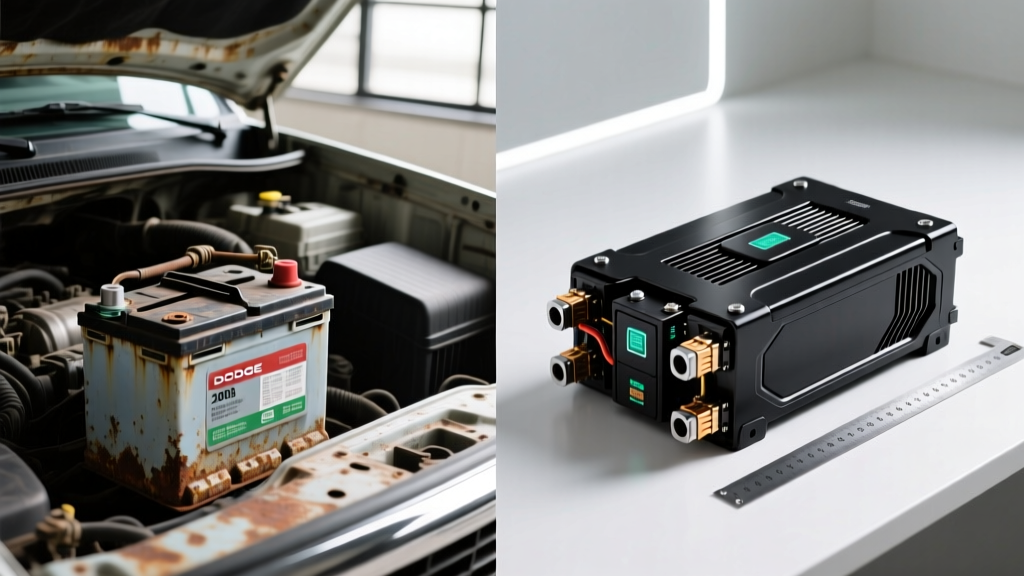
Whether you're cross-shopping a new Tesla Model Y, a Hyundai Ioniq 5, or researching a used EV like an older model that might have originally been cross-shopped against a 08 Cadillac CTS battery replacement scenario (a common 12V lead-acid comparison point for shoppers transitioning from ICE vehicles), understanding high-voltage EV traction batteries is the single most important homework you can do before buying electric.
This guide breaks down EV battery chemistry, real-world degradation data from hundreds of thousands of miles of fleet and owner testing, warranty coverage specifics, replacement cost ranges by vehicle class, and exactly what you can do to maximize your pack's lifespan. We'll also cover emerging solid-state and silicon-anode tech — and why you shouldn't delay a purchase waiting for it.
EV Battery Chemistry: LFP vs NMC vs NCA
Modern EVs use one of three dominant lithium-ion chemistries for their high-voltage traction battery (not to be confused with the small 12V auxiliary battery that powers accessories):
- LFP (Lithium Iron Phosphate): Used in Tesla Model 3/Y Standard Range, Ford Mustang Mach-E Select (2024+), and many Chinese-market EVs. Lower energy density but exceptional cycle life and thermal stability.
- NMC (Nickel Manganese Cobalt): Found in most long-range EVs — Hyundai Ioniq 5, BMW i4, VW ID.4, Rivian R1T. Higher energy density, moderate cycle life.
- NCA (Nickel Cobalt Aluminum): Primarily Tesla Long Range and Performance models. Highest energy density, slightly lower thermal margin than LFP.
| Attribute | LFP | NMC | NCA |
|---|---|---|---|
| Energy Density (Wh/kg) | 160–180 | 220–260 | 240–270 |
| Typical Cycle Life | 3,000–6,000 | 1,000–2,000 | 1,000–1,500 |
| Cold-Weather Range Loss | ~30–40% at 20°F | ~25–35% at 20°F | ~25–35% at 20°F |
| Thermal Runaway Risk | Very Low | Moderate | Moderate |
| Recommended Daily SoC | 100% OK | 80% ideal | 80% ideal |
| Cost per kWh (2026) | ~$80–100 | ~$110–140 | ~$115–145 |
| Example Vehicles (2026) | Tesla Model 3 RWD, BYD Seal, Ford Mach-E Select | Hyundai Ioniq 5, BMW i4 eDrive40, VW ID.4 Pro | Tesla Model Y LR, Lucid Air Grand Touring |
The bottom line: If you want maximum longevity and can accept slightly less range, LFP is the durability champion. If you need 300+ miles of EPA range and fast highway charging, NMC or NCA packs deliver the energy density required. Both will typically outlast the vehicle's useful life with proper care.
How Long Do EV Batteries Actually Last?
Based on data from Geotab's analysis of over 10,000 EVs, Tesla fleet data, and owner-reported State of Health (SoH) measurements, here's what real-world degradation looks like:
Typical EV Battery Degradation Curve (Average across NMC/NCA packs):
- Year 1 / 15,000 miles: 2–5% capacity loss (initial "break-in" drop)
- Year 3 / 45,000 miles: 6–9% total loss
- Year 5 / 75,000 miles: 9–12% total loss
- Year 8 / 120,000 miles: 12–18% total loss
- Year 10+ / 150,000+ miles: 15–25% total loss (many packs still functional)
LFP packs typically show 2–4% less degradation at equivalent mileage due to superior cycle life. Tesla's 2025 Impact Report noted that Model 3/Y batteries retained an average of 85% capacity after 200,000 miles.
Real-world context: A 2026 Hyundai Ioniq 5 Long Range with a 77.4 kWh (usable) NMC pack rated at 305 miles EPA would realistically deliver roughly 255–275 miles after 5 years / 75,000 miles of mixed use. That's still plenty for daily driving and road trips with DC fast-charging stops.
Battery Warranty Terms: What's Actually Covered
Federal law mandates a minimum 8-year / 100,000-mile warranty on EV battery packs (10 years / 150,000 miles in CARB states like California, New York, and Massachusetts). But the capacity retention threshold — the SoH percentage below which the manufacturer must repair or replace the pack — varies by brand:
| Manufacturer | Warranty Term | Capacity Threshold | Chemistry |
|---|---|---|---|
| Tesla (Model 3/Y RWD) | 8 yr / 100,000 mi | 70% | LFP |
| Tesla (Model 3/Y LR/Perf) | 8 yr / 120,000 mi | 70% | NCA |
| Hyundai / Kia | 10 yr / 100,000 mi | 70% | NMC |
| Ford (Mach-E, F-150 Lightning) | 8 yr / 100,000 mi | 70% | NMC / LFP |
| BMW (i4, iX) | 8 yr / 100,000 mi | 70% | NMC |
| Volkswagen (ID.4) | 8 yr / 100,000 mi | 70% | NMC |
| Rivian (R1T, R1S) | 8 yr / 175,000 mi | 70% | NMC |
| GM (Ultium-based) | 8 yr / 100,000 mi | 70% | NMC |
Critical nuance: The warranty covers defects and abnormal degradation below the threshold — not gradual, normal capacity loss. If your 5-year-old Ioniq 5 shows 85% SoH, that's normal wear and not a warranty claim. If it drops to 68% at 60,000 miles, Hyundai replaces or repairs the pack at no cost.
EV Battery Replacement Costs: When and How Much
Here's the data point that eases most buyer anxiety: the vast majority of EV batteries never need replacement during the vehicle's ownership life. Out-of-warranty replacements are rare and typically occur only after 200,000+ miles or due to physical damage (collision, flood).
| Vehicle Class | Battery Size (kWh) | Replacement Cost Range | When Typically Needed |
|---|---|---|---|
| Compact EV (Chevy Bolt, Nissan Leaf) | 40–65 kWh | $5,000–$9,000 | 200,000+ mi or damage |
| Midsize Sedan/CUV (Model 3, Ioniq 5) | 60–82 kWh | $8,000–$14,000 | 200,000+ mi or damage |
| Large SUV/Truck (F-150 Lightning, Rivian R1T) | 98–135 kWh | $14,000–$22,000 | 200,000+ mi or damage |
| Luxury (Lucid Air, Mercedes EQS) | 90–118 kWh | $16,000–$25,000 | 200,000+ mi or damage |
Cost trend: Battery pack prices have fallen from ~$1,200/kWh in 2010 to roughly $100–140/kWh in 2026 (source: BloombergNEF). By the time most current EVs need a replacement pack (if ever), costs will likely be 30–50% lower than today. Module-level repair (replacing individual degraded cells or modules rather than the entire pack) is increasingly common and can cost $2,000–$5,000.
Factors That Accelerate Battery Degradation
EV batteries degrade from two mechanisms: calendar aging (time, regardless of use) and cycle aging (charge/discharge wear). These habits accelerate both:
Top Degradation Accelerators to Avoid:
- Frequent DC fast charging above 150 kW: Occasional road-trip use is fine; daily 350 kW charging generates sustained heat that accelerates cell wear. Level 2 home charging (7–11 kW) is ideal for daily use.
- Regularly charging to 100% (NMC/NCA): Sustained high SoC stresses cathode chemistry. Set your charge limit to 80% for daily driving; use 100% only before long trips. LFP packs tolerate 100% daily charging without significant penalty.
- Letting SoC sit below 10% for days: Deep discharge damages anode structure. Plug in when you hit 15–20%.
- Extreme heat exposure: Parking in 100°F+ sun for weeks without thermal management active (most EVs manage this automatically, but unplugged vehicles in Phoenix summers are at risk).
- Aggressive driving in cold weather: High-power discharge on a cold pack (below 40°F) without preconditioning causes lithium plating. Always precondition before hard acceleration in winter.
Best Practices for Longevity:
- Charge to 80% daily (NMC/NCA) or 100% (LFP) using Level 2 home charging
- Use DC fast charging for road trips, not daily commuting
- Enable battery preconditioning when navigating to a charger (Tesla, Hyundai, Ford all offer this)
- Keep SoC between 20–80% for storage longer than a week
- Use your EV's scheduled charging feature to finish charging right before departure (minimizes time at high SoC)
How to Check Your EV's Battery State of Health (SoH)
State of Health is the percentage of original capacity your battery currently holds. A new pack is 100% SoH; a pack that held 77.4 kWh when new and now holds 68 kWh is at ~88% SoH.
Methods to check SoH:
- In-vehicle diagnostics: Tesla displays battery health in the service menu (Settings → Service → Battery Health). Hyundai/Kia shows SoH in the EV menu on the infotainment screen. BMW and Mercedes include SoH in the iDrive/MBUX EV status screens.
- OBD-II dongle + app: Devices like the OBDLink MX+ ($120) paired with apps like LeafSpy (Nissan Leaf), Scan My Tesla, or ABRP (A Better Route Planner) can read battery SoH, cell voltage variance, and pack temperature in real time.
- Dealer diagnostic report: Any authorized service center can pull a full battery health report. Request this during a pre-purchase inspection on a used EV — it's the single most important data point.
- Charging math (DIY method): Charge from 10% to 90% on a known-accurate Level 2 charger (e.g., a ChargePoint Home Flex displaying kWh delivered). If the charger reports 62 kWh delivered for an 80% swing on a 77.4 kWh pack, your current capacity is roughly 62 / 0.80 = 77.5 kWh, or ~100% SoH. Adjust for charging losses (~5%).
Emerging Battery Tech: Solid-State and Silicon Anodes
Solid-state batteries replace the liquid electrolyte with a solid ceramic or polymer, promising 30–50% higher energy density, faster charging (potentially 10–80% in under 10 minutes), and reduced fire risk. Toyota has announced a 2027–2028 production timeline for solid-state EVs with 750 km (466 mi) range. Samsung SDI and QuantumScape are targeting 2028–2030 for volume production.
Silicon anode batteries (from companies like Sila Nanotechnologies and Group14) replace graphite anodes with silicon, boosting energy density 20–40%. These are closer to market — Mercedes' G-Class 580 EQ (2025) uses a silicon-anode pack from Sila, and broader adoption is expected by 2027–2028.
Realistic timeline: Neither technology is available in volume-production EVs as of 2026. Expect solid-state to debut in limited luxury models in 2028–2030, with mainstream adoption not until 2032+. Do not delay an EV purchase waiting for solid-state — current NMC and LFP packs already deliver 250,000+ mile lifespans with proper care.
EV Battery FAQ
How long do EV batteries last in years and miles?
Most modern EV batteries (2020+) last 15–20 years or 200,000–300,000 miles before degrading to 70–80% of original capacity. Data from Tesla's 2025 Impact Report shows Model 3/Y packs retaining ~85% capacity at 200,000 miles. Many early Nissan Leafs (2011–2015) are still on their original packs at 150,000+ miles, albeit with 20–30% range loss.
How much does an EV battery cost to replace in 2026?
Replacement costs range from $5,000–$9,000 for compact EVs (Chevy Bolt, Nissan Leaf) to $14,000–$22,000 for large trucks/SUVs (F-150 Lightning, Rivian R1T). Midsize vehicles like the Tesla Model 3 or Hyundai Ioniq 5 fall in the $8,000–$14,000 range including labor. Module-level repairs (replacing individual degraded sections) can cost $2,000–$5,000. Costs are declining ~8–12% annually.
What does the EV battery warranty actually cover?
Federal law requires 8 years / 100,000 miles minimum (10 years / 150,000 miles in CARB states). The warranty covers defects and degradation below a specified capacity threshold — typically 70% of original capacity. If your battery drops below 70% SoH within the warranty period, the manufacturer repairs or replaces it at no cost. Normal gradual degradation (e.g., 85% SoH at 5 years) is not covered.
How do I check and maximize my EV battery health?
Check SoH via your vehicle's built-in diagnostics screen, an OBD-II dongle with an EV-specific app (LeafSpy, Scan My Tesla), or a dealer diagnostic report. To maximize longevity: use Level 2 home charging for daily use, limit DC fast charging to road trips, set charge limits to 80% for NMC/NCA (100% is fine for LFP), avoid letting SoC drop below 15%, and always precondition the battery before fast charging or hard driving in cold weather.
LFP vs NMC: Which battery chemistry is better?
Neither is universally "better" — it depends on your priorities. Choose LFP if you want maximum cycle life (3,000–6,000 cycles vs 1,000–2,000), can charge to 100% daily without penalty, prioritize thermal safety, and can accept slightly less range (LFP packs are heavier for the same kWh). Choose NMC if you need 300+ miles of EPA range, want faster DC charging speeds, or live in a cold climate where LFP's greater cold-weather range loss (30–40% vs 25–35% at 20°F) matters. Both chemistries will outlast the vehicle with proper care.
Is it safe to buy a used EV with 100,000+ miles?
Yes, if you verify the battery's State of Health. A used Tesla Model 3 Long Range at 100,000 miles with 88% SoH still has ~260 miles of real-world range and likely 100,000+ miles of useful life remaining. Always get a battery health report (dealer or OBD-II scan) before purchase. Avoid used EVs with SoH below 80% unless the price reflects imminent battery work.
Does fast charging damage my EV battery?
Occasional DC fast charging (road trips, 2–3 times per month) causes negligible additional wear on modern packs with active thermal management. Daily 350 kW charging without preconditioning can accelerate degradation by 1–3% per year compared to Level 2 charging. The heat generated during high-power charging is the primary wear mechanism — this is why preconditioning (warming the battery to optimal temperature before charging) is critical.
Sources: fueleconomy.gov (EPA range and efficiency data), IRS §30D Clean Vehicle Credit rules, Geotab EV Battery Health Study, manufacturer spec sheets and warranty documentation.