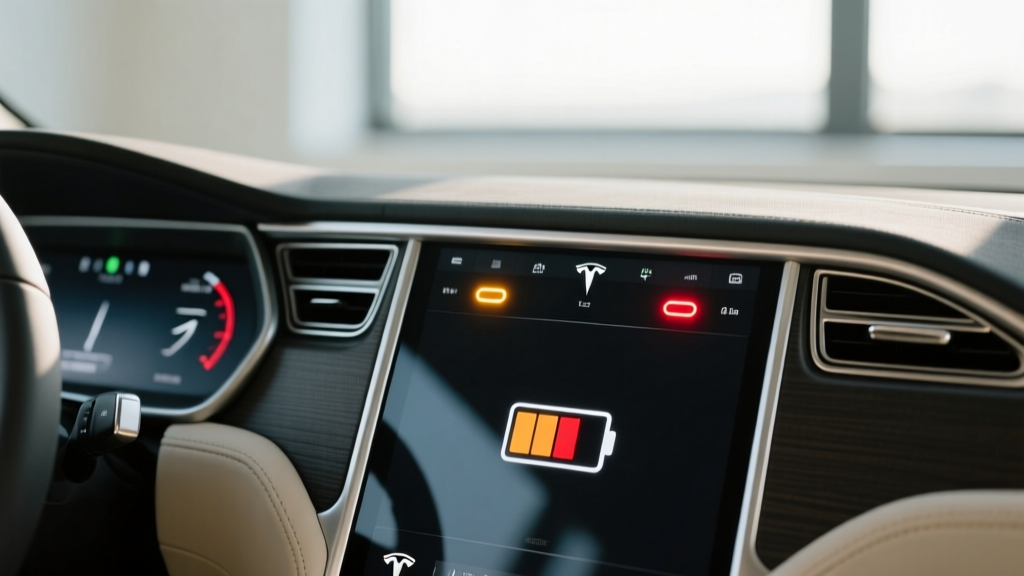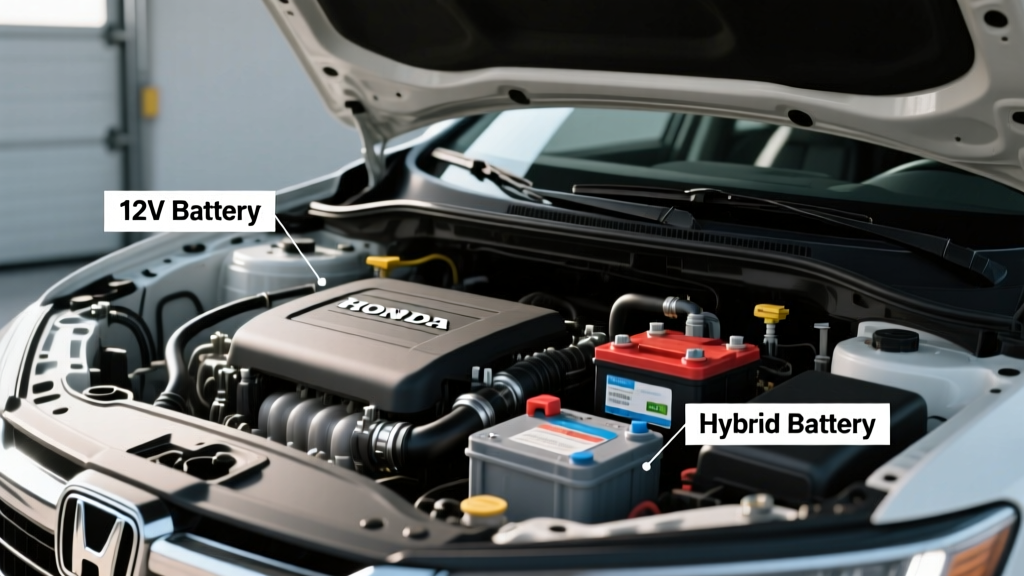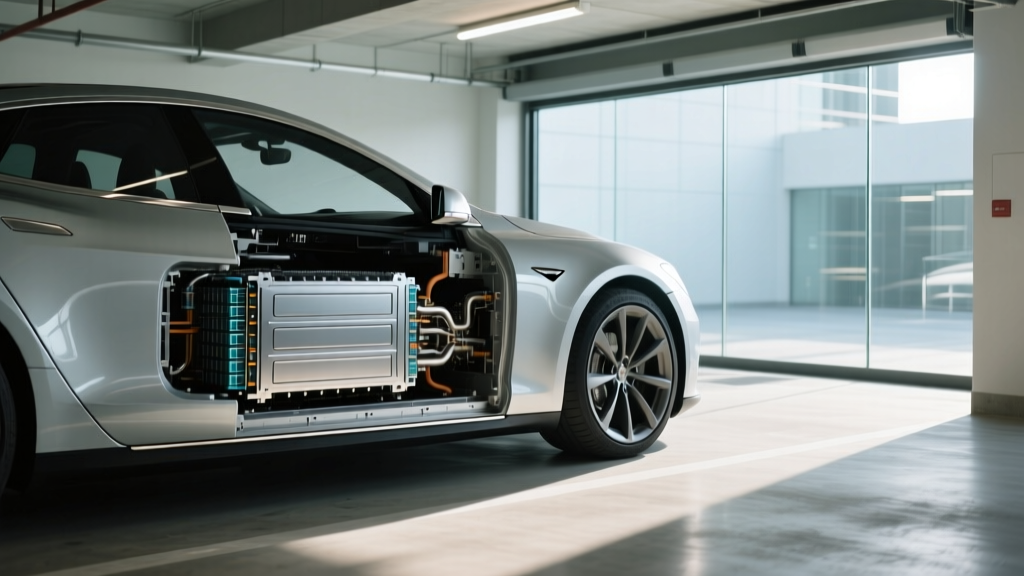
A used 2013 Tesla Model S might sell for $12,000 to $18,000 in today's market. A brand-new replacement battery pack for that same car? Between $15,000 and $22,000 installed. That's the uncomfortable math behind the reality that Tesla Model S battery replacement costs can exceed the car's value — particularly for early-build vehicles that are now aging out of their original battery warranties.
But before you let that headline trigger panic, the full picture is considerably more nuanced. The vast majority of Tesla Model S sedans will never need a full battery replacement. Tesla's own impact reports and independent fleet data show that Model S battery packs degrade slowly — retaining roughly 85–90% of original capacity after 200,000 miles. When replacements are needed, they're overwhelmingly covered under warranty during the first eight years or 150,000 miles.
This guide dissects the real numbers: degradation curves, chemistry differences, warranty fine print, out-of-pocket replacement costs by model year, and the daily habits that determine whether your pack lasts 150,000 miles or 400,000. Whether you own a 2026 Model S Long Range or are eyeing a discounted 2016 model, these are the figures that matter.
EV Battery Chemistry: LFP vs. NMC vs. NCA Explained
The Tesla Model S has never used LFP (lithium iron phosphate) chemistry — that's reserved for the rear-wheel-drive Model 3 and Model Y Standard Range variants. Every Model S built, from 2012 to the current 2026 Long Range and Plaid, uses nickel-based chemistry: NCA (nickel-cobalt-aluminum) in most packs, with NMC (nickel-manganese-cobalt) in certain supply-chain years.
Understanding why Tesla chose nickel-based chemistry for the S matters when evaluating longevity, cost, and replacement economics.
| Attribute | NCA / NMC (Model S) | LFP (Model 3/Y RWD) |
|---|---|---|
| Energy density | ~250–270 Wh/kg (higher) | ~160–180 Wh/kg (lower) |
| Typical cycle life | 1,000–2,000 full cycles | 3,000–5,000+ full cycles |
| Cold-weather performance | Better energy delivery below 32°F | Greater range loss in freezing temps |
| Cost per kWh (cell level) | ~$110–$130 | ~$80–$100 |
| Recommended charge habit | Daily limit 80–90%; 100% for trips | Can charge to 100% daily |
| Used in Model S? | Yes — all model years | No |
The trade-off is straightforward: NCA/NMC delivers the energy density needed to push a 4,500-lb luxury sedan past 400 miles of EPA range (the 2026 Model S Long Range achieves 402 miles EPA from its ~100 kWh pack). But that chemistry degrades slightly faster than LFP over time and is more sensitive to sustained high state-of-charge. It's also more expensive to replace — a key reason Model S battery swap costs run higher than Model 3 Standard Range replacements.
How Long Do Tesla Model S Batteries Actually Last?
"Battery life" in an EV doesn't mean a hard failure like a dead laptop battery. It means gradual capacity loss — the slow reduction in how many kWh the pack can store compared to day one. An EV battery is considered at "end of life" in automotive terms when it drops below 70–80% of original capacity, though it will still drive the car; it just won't go as far.
Real-World Degradation Data
Tesla's 2024 Impact Report (the latest published fleet data) indicates that Model S and Model X battery packs retain approximately 88% of original capacity at 150,000 miles and roughly 85% at 200,000 miles. Independent data from fleet analytics firm Recurrent Auto corroborates this, showing median Model S range retention at 90–92% after three years and 50,000 miles.
Here's what a typical degradation curve looks like for a Model S with NCA chemistry:
| Mileage | Approximate Capacity Retained | Effective Range (from 402-mi EPA baseline) |
|---|---|---|
| 0 (new) | 100% | ~402 mi |
| 25,000 mi | 95–97% | ~382–390 mi |
| 50,000 mi | 92–95% | ~370–382 mi |
| 100,000 mi | 88–92% | ~354–370 mi |
| 150,000 mi | 85–90% | ~342–362 mi |
| 200,000 mi | 82–87% | ~330–350 mi |
| 300,000 mi | 78–83% | ~314–334 mi |
Two things to notice. First, degradation is not linear — the steepest loss happens in the first 10,000–20,000 miles (typically 2–4%), then the curve flattens considerably. Second, even at 200,000 miles, a well-maintained Model S pack still delivers over 330 miles of real-world range. That's more than most new gas cars get on a full tank.
The critical caveat: these are fleet medians. Individual results vary based on charging habits, climate exposure, and whether the car was frequently DC fast-charged at maximum rates. A Model S that lived in Phoenix and Supercharged daily at 250 kW will degrade faster than one garage-parked in Seattle and charged to 80% on Level 2 overnight.
Tesla Model S Battery Warranty: What's Covered and What's Not
Tesla's high-voltage battery warranty is among the most straightforward in the industry, but the details matter — especially if you're buying used and need to know whether coverage still applies.
| Model / Configuration | Warranty Duration | Mileage Limit | Minimum Capacity Retention |
|---|---|---|---|
| Model S Long Range (2021–2026) | 8 years | 150,000 miles | 70% |
| Model S Plaid (2022–2026) | 8 years | 150,000 miles | 70% |
| Model S (pre-2021 / older) | 8 years | 150,000 miles (unlimited on some 2012–2015) | 70% |
If your battery drops below 70% of its original usable capacity within the warranty window, Tesla will replace or refurbish the pack at no cost to you. The replacement pack will have at least the same net capacity as the original did at the point of failure — Tesla does not guarantee a brand-new pack, but refurbished units are tested to meet original specifications.
What voids the warranty: Salvage titles, unauthorized modifications to the high-voltage system, flood or fire damage, and using non-Tesla-approved charging equipment that causes electrical damage. Simply using third-party DC fast chargers (Electrify America, EVgo) does not void the warranty.
For buyers of used Model S sedans: the battery warranty is tied to the VIN and transfers automatically to subsequent owners. A 2019 Model S with 62,000 miles still has battery warranty coverage through 2027 or 150,000 miles, whichever comes first. Always verify warranty status through Tesla's service portal or a pre-purchase inspection.
Out-of-Warranty Replacement Costs: When the Math Turns Ugly
This is where the headline becomes reality. If your Model S battery fails after the warranty expires — or if you bought a salvage-title car with no warranty protection — you're paying out of pocket.
| Model S Generation | Battery Size | Replacement Cost (Parts + Labor) | Typical Used Car Value (2026) |
|---|---|---|---|
| 2012–2015 (60/85/90 kWh) | 60–90 kWh | $14,000–$22,000 | $10,000–$20,000 |
| 2016–2020 (100 kWh) | 100 kWh | $16,000–$24,000 | $22,000–$38,000 |
| 2021–2026 (structural pack) | ~100 kWh | $18,000–$28,000 | $55,000–$85,000+ |
For the 2012–2015 cohort, the numbers are stark: a $15,000–$22,000 battery replacement on a car worth $12,000–$18,000 means the repair bill can equal or exceed the vehicle's market value. Insurance companies will total a car under these conditions. This is the exact scenario behind the keyword that brought you here.
Why are costs this high? The battery pack is the single most expensive component in any EV — typically 25–40% of the original vehicle MSRP. The Model S uses a large, high-capacity pack (85–100 kWh depending on year) with thousands of cylindrical cells (18650 in early models, 2170 in later ones, 4680 in the newest structural packs). Labor adds $1,500–$3,500 depending on service center rates and whether related components (coolant lines, high-voltage cabling, battery management system modules) also need service.
Important context: Catastrophic battery failure — a pack that simply stops working — is rare. The far more common scenario is gradual degradation that reduces range but leaves the car fully drivable. Most owners of 2013–2016 Model S sedans are not facing sudden $20,000 bills; they're driving cars with 85% battery health and 250+ miles of remaining range. The replacement-cost-exceeds-value scenario primarily affects owners who want to restore a degraded older car to like-new range, not those whose cars have become undrivable.
What Kills an EV Battery Faster: 5 Degradation Accelerators
Lithium-ion batteries degrade through chemical mechanisms — primarily the growth of a solid electrolyte interphase (SEI) layer on the anode, lithium plating at low temperatures, and cathode material breakdown at high voltages. You can't stop these processes, but you can slow them dramatically.
Here are the five factors that accelerate degradation the most, ranked by impact based on published battery research and fleet data:
- 1. Sustained high state of charge (above 90%). Storing an NCA/NMC battery at 100% for days or weeks accelerates cathode degradation. Tesla recommends setting the daily charge limit to 80–90% and only charging to 100% immediately before long trips. This single habit may be the most impactful thing you can do for pack longevity.
- 2. Frequent DC fast charging at maximum rates. Supercharging at 250 kW generates significant heat inside the cells. While Tesla's thermal management system actively cools the pack during fast charging, owners who Supercharge daily (e.g., rideshare drivers or high-mileage commuters without home charging) will see measurably faster degradation than those who primarily use Level 2 at home. Fleet data suggests a 1–3% additional capacity loss over 100,000 miles for heavy Supercharger users vs. Level 2-only charging.
- 3. Extreme heat exposure. Battery chemistry degrades faster at elevated temperatures. A Model S regularly parked outdoors in 100°F+ climates (Arizona, Texas, Middle East) without garage shelter will lose capacity faster than one in temperate zones. Tesla's active thermal management mitigates this, but it can't fully eliminate the physics.
- 4. Deep discharges to near 0%. Routinely driving the battery down to single-digit percentages stresses the cells and can trigger protective voltage cutoffs that strain the BMS. Tesla's buffer (the car won't let you truly reach 0% at the cell level) provides some protection, but regularly arriving at destinations with under 5% remaining isn't ideal for long-term health.
- 5. Extended storage at extreme SoC. Leaving a Model S at 100% or near 0% for weeks without driving — say, during an extended vacation — accelerates degradation. The optimal storage SoC is around 50%, which Tesla's own owner's manual recommends for vehicles that won't be driven for extended periods.
How to Check Your Model S Battery Health (State of Health)
Unlike a gas car's engine, where you can't easily quantify internal wear without a teardown, EV batteries provide measurable health data. Here are the methods available to Model S owners:
Tesla Service Mode (in-car): On 2021+ Model S vehicles with the refreshed interior, you can access Service Mode through the touchscreen (tap the car icon → Software → hold the model name for 3 seconds → enter "service" when prompted). Within Service Mode, the Health Test function runs a brief diagnostic that reports the battery's current usable capacity in kWh compared to its original capacity. This gives you a direct State of Health (SoH) percentage. Note: Tesla has periodically restricted Service Mode access via software updates, so availability varies by software version.
Third-party OBD-II tools: Devices like the OBDLink MX+ paired with apps such as Scan My Tesla can read the battery management system's reported nominal full-pack energy (in kWh) and compare it to the pack's original rated capacity. This method works on most Model S vehicles from 2012 onward and requires a $50–$120 adapter plus a free or low-cost app.
Tesla Service Center diagnostic: If you're evaluating a used Model S, you can request a battery health report from a Tesla Service Center as part of a pre-purchase inspection (typically $100–$200). This provides the most authoritative SoH reading and flags any individual cell-module imbalances that might indicate future issues.
The manual method: Charge to 100% and note the rated range displayed. Compare it to the EPA-rated range when new. A 2026 Model S Long Range showing 402 miles at 100% is at ~100% SoH; one showing 360 miles is at roughly 89–90%. This method is approximate (the displayed range estimate can fluctuate based on recent driving patterns) but gives a reasonable ballpark.
Emerging Battery Tech: Solid-State, Silicon Anodes, and What's Realistic
If you're researching replacement costs, you've likely encountered headlines about next-generation batteries that promise longer life, faster charging, and lower cost. Here's where these technologies actually stand as of 2026:
Solid-state batteries: These replace the liquid electrolyte with a solid material, potentially doubling cycle life and improving safety (no flammable electrolyte). Toyota, Samsung SDI, and QuantumScape have all announced solid-state production targets. However, no solid-state battery is currently in any production vehicle sold in the US. Toyota's announced timeline points to limited production in 2027–2028, with meaningful volume unlikely before 2030. For current Model S owners, solid-state is not a near-term replacement option.
Silicon-dominant anodes: Companies like Sila Nanotechnologies and Group14 are producing silicon-composite anode materials that increase energy density by 10–20% over graphite anodes. These are beginning to appear in limited production (Mercedes-Benz's G-Class 580e uses a silicon-anode pack from Group14), but widespread adoption across Tesla's lineup remains a 2027+ prospect at earliest.
LFP expansion: LFP chemistry is improving in energy density (CATL's second-generation LFP cells approach 200 Wh/kg) and may eventually be viable for larger vehicles like the Model S. If Tesla ever offers an LFP Model S variant, it would likely carry a lower replacement cost and longer cycle life — though at the expense of some range and cold-weather performance.
The practical takeaway: if your Model S needs a battery replacement in 2026 or 2027, you'll be getting a current-generation NCA/NMC pack. Next-gen chemistries are real and progressing, but they won't change the economics of your repair decision this year.
The Decision Framework: Repair, Replace, or Retire?
If you own an older Model S facing an out-of-warranty battery issue, here's how to think through the economics:
Repair (module-level) if: The diagnostic shows one or two degraded cell modules rather than pack-wide failure. Tesla Service Centers and independent EV shops can replace individual modules for $2,000–$5,000, restoring much of the lost capacity at a fraction of a full-pack cost. This is viable when the remaining modules are healthy and balanced.
Replace the full pack if: The car is a 2016+ model still worth $25,000+, you plan to keep it for several more years, and the replacement restores enough range to make daily driving practical. A $18,000–$24,000 investment in a car worth $30,000–$38,000 is economically rational if it buys you another 5–7 years and 100,000+ miles.
Retire or sell the car if: The vehicle is a 2012–2015 model, the replacement quote exceeds the car's market value, and you don't have sentimental or specific-use reasons to keep it. A salvage-title or heavily degraded early Model S with a $20,000 battery bill is, in pure economic terms, a write-off. Selling it to an EV recycler or parting it out may recover $3,000–$6,000 from the motors, electronics, and interior components.
Frequently Asked Questions
How long do Tesla Model S batteries last in years and miles?
Based on fleet data, most Model S battery packs retain 85–90% of original capacity at 200,000 miles. In terms of years, a pack driven 12,000–15,000 miles annually should provide reliable service for 15–20 years before reaching the 70% capacity threshold that most consider "end of life" for automotive use. Many 2012–2014 Model S vehicles are still on their original packs at 10–14 years old.
How much does a Tesla Model S battery replacement cost in 2026?
Out-of-warranty full-pack replacement costs range from $14,000 to $28,000 depending on model year, pack size (60–100 kWh), and whether the car uses the older 18650-cell pack or the newer structural 4680 pack. Labor adds $1,500–$3,500. For 2012–2015 models, this can equal or exceed the car's resale value. Module-level repairs are significantly cheaper at $2,000–$5,000.
What does the Tesla battery warranty cover?
Tesla warrants the Model S high-voltage battery for 8 years or 150,000 miles (whichever comes first), guaranteeing a minimum of 70% capacity retention. If the pack drops below 70% within that window, Tesla replaces or refurbishes it at no cost. The warranty covers defects and abnormal degradation but does not cover damage from accidents, floods, unauthorized modifications, or salvage-title vehicles. The warranty transfers to subsequent owners automatically.
How can I check my Model S battery's State of Health?
Options include Tesla's in-car Service Mode Health Test (2021+ models), third-party OBD-II adapters like OBDLink MX+ with the Scan My Tesla app (works on most model years), a paid diagnostic at a Tesla Service Center ($100–$200), or the simple method of charging to 100% and comparing the displayed rated range to the original EPA figure.
Does frequent Supercharging damage the Model S battery?
DC fast charging at 250 kW generates more heat than Level 2 charging, which slightly accelerates degradation. Fleet data suggests heavy Supercharger users (daily fast charging) may see 1–3% additional capacity loss over 100,000 miles compared to Level 2-only charging. Tesla's thermal management system actively cools the pack during fast charging, which significantly mitigates the effect. Occasional Supercharging for road trips has negligible impact on long-term battery health.
LFP vs. NMC/NCA — which battery chemistry is better?
Neither is universally better; they serve different priorities. NMC/NCA offers higher energy density (more range in a lighter pack) and better cold-weather performance — essential for the Model S's 400+ mile range target. LFP offers longer cycle life (3,000–5,000+ cycles vs. 1,000–2,000), lower cost, and the ability to charge to 100% daily without degradation concerns — but is heavier and loses more range in freezing temperatures. For a luxury sedan prioritizing range, NCA/NMC is the correct engineering choice today.
Can I upgrade an older Model S to a newer, larger battery?
In some cases, yes. Tesla has historically offered upgrade paths — for example, swapping a degraded 85 kWh pack in a 2013–2015 Model S for a refurbished 90 kWh or 100 kWh pack, depending on compatibility. Availability depends on Tesla's current refurbished pack inventory and the specific vehicle configuration. Contact a Tesla Service Center for a quote; upgrade pricing typically falls in the same $15,000–$22,000 range as a like-for-like replacement.
The bottom line for Model S owners and prospective buyers: battery replacement cost exceeding vehicle value is a real phenomenon — but it's concentrated in the earliest model years (2012–2015) and primarily affects owners who want to restore a degraded car rather than those whose cars have become undrivable. For the vast majority of Model S sedans on the road, the battery will outlast the car's useful life, or will be replaced under warranty before the owner ever sees a bill. The best insurance against a costly replacement is simple: charge to 80% daily, minimize unnecessary DC fast charging, and avoid letting the car sit at extreme states of charge.