Tesla Model 3 Long Range Battery Capacity: The Numbers That Matter
The 2026 Tesla Model 3 Long Range AWD packs a usable battery capacity of approximately 79 kWh (gross ~82 kWh), utilizing a nickel-manganese-cobalt (NMC) lithium-ion chemistry supplied primarily by LG Energy Solution. This pack delivers an EPA-estimated 341 miles of range and 132 MPGe combined, making it one of the most energy-dense mid-size sedan batteries on the market.
EPA sticker: 341 miles. Real-world highway driving at 70–75 mph typically yields 280–310 miles. In sub-freezing temperatures, expect a 20–30% reduction, dropping effective range to roughly 230–270 miles. The Model 3's heat pump mitigates some cold-weather loss compared to resistive-heating EVs, but physics still wins.
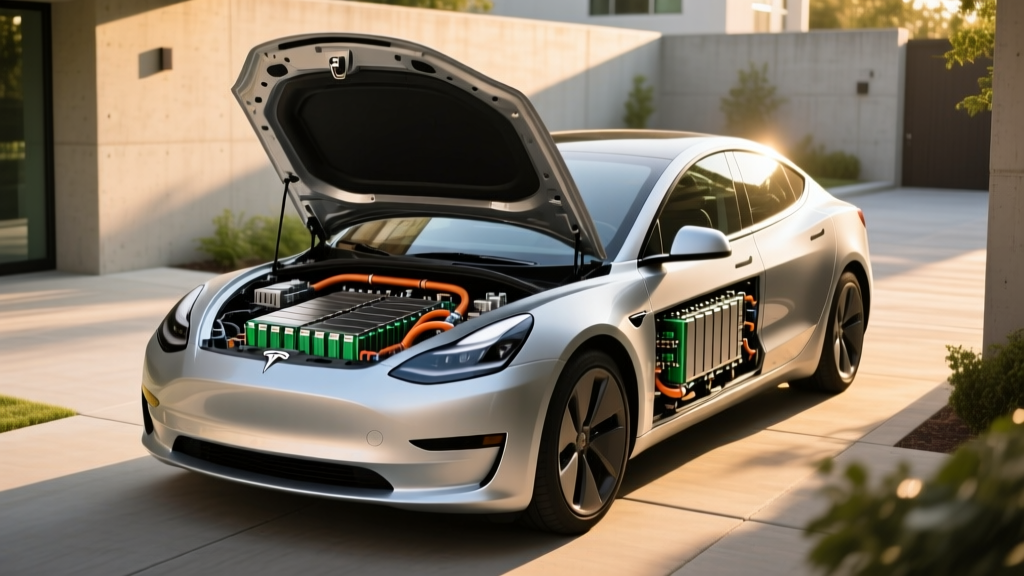
Understanding what sits beneath the floor pan of the Model 3 Long Range requires looking past the sticker range into chemistry, degradation curves, warranty coverage, and the actual cost of ownership over a decade or more. This guide covers every battery-critical data point a current or prospective owner needs.
| Spec | Value |
|---|---|
| Usable Battery Capacity | ~79 kWh (NMC) |
| EPA Range | 341 miles |
| EPA Efficiency | 132 MPGe (25 kWh/100 mi) |
| Peak DC Fast Charge Rate | 250 kW |
| 10–80% DC Fast Charge Time | ~25–27 minutes |
| Level 2 Charge Rate (11.5 kW onboard) | ~44 miles/hour |
| 0–60 mph | 4.2 seconds |
| Horsepower | 346 hp (dual motor) |
| Base MSRP | $47,740 (before incentives) |
| Battery Warranty | 8 years / 120,000 miles, ≥70% retention |
For context on the pricing, the Model 3 Long Range may qualify for the federal §30D tax credit of up to $7,500 — but eligibility hinges on IRS battery-sourcing and critical-mineral requirements, buyer income caps, and the $55,000 sedan MSRP cap. Always verify current-year rules before purchase, as sourcing requirements tighten annually.
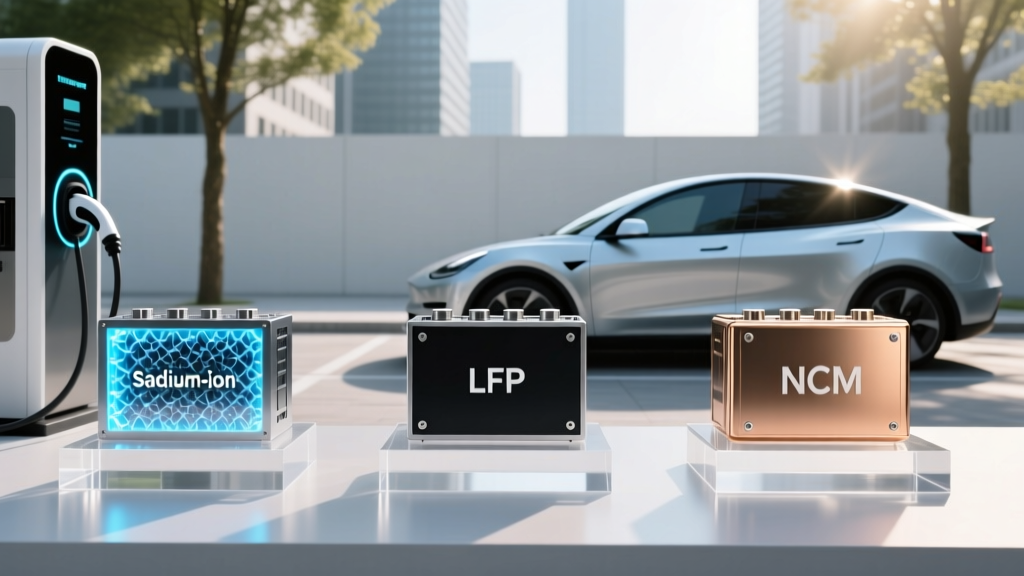
LFP vs. NMC: Which Chemistry Powers the Model 3 Long Range — and Why It Matters
Tesla uses two distinct battery chemistries across the Model 3 lineup, and understanding the difference is essential for making the right purchase decision:
- Model 3 Rear-Wheel Drive (Standard Range): Uses LFP (lithium iron phosphate) chemistry, supplied primarily by CATL.
- Model 3 Long Range AWD: Uses NMC (nickel-manganese-cobalt) chemistry, supplied by LG Energy Solution and Panasonic.
The choice isn't arbitrary — each chemistry offers distinct engineering trade-offs:
| Factor | LFP (Standard Range) | NMC (Long Range) |
|---|---|---|
| Energy Density | Lower (~160 Wh/kg cell) — heavier pack for same range | Higher (~250–270 Wh/kg cell) — more range in lighter pack |
| Cycle Life | 3,000–5,000+ cycles — significantly longer | 1,500–2,500 cycles — shorter but still ample for vehicle life |
| Cold-Weather Performance | Greater range loss in freezing temps; slower charging when cold | Better low-temp efficiency; faster cold-weather charging |
| Cost per kWh | ~$80–100/kWh (cell level) — cheaper to produce | ~$120–140/kWh (cell level) — more expensive |
| Recommended Daily SoC | 100% — Tesla recommends regular full charges | 80% for daily use; 100% only for trips |
| Thermal Stability | Superior — less prone to thermal runaway | Good, but requires more active thermal management |
| Cobalt Content | Zero cobalt — less supply-chain concern | Contains cobalt and nickel — higher material cost volatility |
The bottom line: NMC's higher energy density is why the Long Range achieves 341 EPA miles in a sedan form factor. LFP simply can't pack that much energy into the same physical space — yet. If you prioritize maximum longevity and lower cost over peak range, the LFP-equipped Standard Range model is worth serious consideration.
How Long Do EV Batteries Last? Degradation Data for the Model 3
Battery degradation — the gradual, irreversible loss of capacity over time and charge cycles — is the single most common concern among EV shoppers. The good news: modern NMC packs like the one in the Model 3 Long Range degrade far more slowly than early-generation EV batteries.
Here's what real-world degradation data tells us about the Model 3 Long Range's NMC pack:
- Year 1 / ~15,000 miles: 2–4% capacity loss (initial formation loss)
- Year 3 / ~45,000 miles: 5–8% total loss
- Year 5 / ~75,000 miles: 8–12% total loss
- Year 8 / ~120,000 miles: 10–15% total loss (warranty threshold is 30%)
- Year 10+ / ~150,000+ miles: 12–18% total loss for well-maintained packs
Sources: Recurrent Auto fleet data, Tesla Impact Reports, and owner-reported datasets aggregated by EV analytics platforms.
A critical nuance: degradation is not linear. Most NMC packs experience a steeper initial drop in the first 10,000–20,000 miles (formation cycle loss), then settle into a much slower, nearly linear decline for the remainder of their life. Many Model 3 Long Range owners report retaining 88–92% of original capacity at the 100,000-mile mark — meaning an originally 341-mile EPA range translates to roughly 300–310 miles of effective range at that point.
According to fueleconomy.gov, modern lithium-ion EV batteries are engineered to last the functional life of the vehicle. Complete battery failure before 150,000 miles is statistically rare for liquid-cooled packs like Tesla's.
What Does the Tesla Battery Warranty Actually Cover?
Tesla's battery warranty for the Model 3 Long Range is one of the more straightforward in the industry, but the details matter:
| Coverage | Term | Threshold |
|---|---|---|
| High-Voltage Battery | 8 years or 120,000 miles (whichever comes first) | Minimum 70% capacity retention |
| Drive Unit(s) | 8 years or 120,000 miles | Functional failure |
| What's Covered | Defects in materials/workmanship; capacity falling below 70% of original | |
| What's NOT Covered | Damage from accidents, misuse, flooding, unauthorized modifications, or aftermarket charging equipment causing harm | |
The 70% retention threshold is key. For a 79 kWh usable pack, 70% means approximately 55.3 kWh of usable capacity — still enough for roughly 235–240 EPA-equivalent miles. Most packs never approach this threshold under normal use. The warranty effectively serves as a floor guarantee, not a prediction of typical end-of-warranty health.
Tesla covers the diagnostic assessment and, if the battery falls below threshold, will replace or refurbish the pack to meet the 70% minimum. Replacement packs may be new or remanufactured units with equivalent or better capacity.
EV Battery Replacement Cost: What Model 3 Owners Should Budget For
If your battery degrades beyond the warranty threshold — or if it suffers physical damage in an accident — replacement costs are significant but declining:
| Vehicle / Pack Size | Battery Cost (Parts) | Labor & Programming | Total Estimated Range |
| Tesla Model 3 Standard Range (~60 kWh LFP) | $7,000–$9,000 | $2,000–$3,500 | $9,000–$12,500 |
| Tesla Model 3 Long Range (~79 kWh NMC) | $10,000–$14,000 | $2,500–$4,000 | $12,500–$18,000 |
| Tesla Model Y Long Range (~81 kWh NMC) | $11,000–$15,000 | $2,500–$4,000 | $13,500–$19,000 |
| Large SUV / Truck Packs (100+ kWh) | $15,000–$22,000 | $3,000–$5,000 | $18,000–$27,000 |
Important context: the vast majority of EV owners will never need a full battery replacement. Data from Recurrent Auto and other fleet-analytics firms shows that fewer than 2% of modern liquid-cooled EV batteries require replacement outside of collision damage. The pack typically outlasts other major vehicle components — suspension, interior, infotainment — and often the car itself.
Cell-level pricing continues to fall. NMC cells that cost ~$180/kWh in 2020 have declined to approximately $110–130/kWh in 2026, and pack-level costs (including the structural housing, cooling system, and BMS) have followed suit. If you do face an out-of-warranty replacement in the 2030s, expect costs to be meaningfully lower than today's figures.
Factors That Accelerate (or Slow) Battery Degradation
Not all miles are created equal when it comes to battery health. The following factors have measurable impacts on how quickly your Model 3 Long Range's NMC pack loses capacity:
Charging Habits — The Biggest Lever You Control
NMC chemistry is sensitive to sustained high and low states of charge. Tesla's own recommendation is clear: set your daily charge limit to 80% and only charge to 100% when preparing for a long trip. Consistently charging to 100% and letting the car sit at full SoC accelerates electrolyte decomposition and cathode degradation.
DC Fast-Charging Frequency
Occasional Supercharging (250 kW peak on the Model 3 Long Range) has minimal impact on battery health. However, daily DC fast-charging — particularly in hot climates without adequate preconditioning — adds cumulative stress. The battery management system (BMS) limits peak charge rate as the pack warms and tapers above 80% SoC to protect the cells, but exclusive reliance on DCFC will show measurably higher degradation over 100,000+ miles compared to predominantly Level 2 home charging.
Extreme Temperatures
Both hot and cold extremes affect battery longevity, but heat is the more damaging long-term factor. Sustained exposure to ambient temperatures above 95°F (35°C) — especially at high SoC — accelerates degradation. Tesla's liquid-cooling system actively manages pack temperature, but parking in shade or a garage in hot climates provides additional protection. Cold temperatures primarily reduce range temporarily rather than causing permanent damage.
Depth of Discharge
Running the battery to very low SoC (below 10%) frequently stresses NMC cells. The "20–80% rule" — keeping the pack in the middle of its charge range for daily use — minimizes mechanical stress on the cathode and anode structures.
- Set daily charge limit to 80%; use 100% only for road trips
- Plug in regularly — don't let SoC sit below 10% for extended periods
- Prefer Level 2 home charging for daily use; use DCFC for road trips
- Enable scheduled departure with preconditioning to optimize charge timing and battery temperature
- In hot climates, park in shade or garage when possible; avoid leaving car at 100% SoC in heat
- Keep Sentry Mode usage moderate — it draws continuous power and generates pack-level heat cycles
- Install software updates promptly — Tesla regularly refines BMS algorithms for longevity
How to Check and Monitor Battery Health (State of Health)
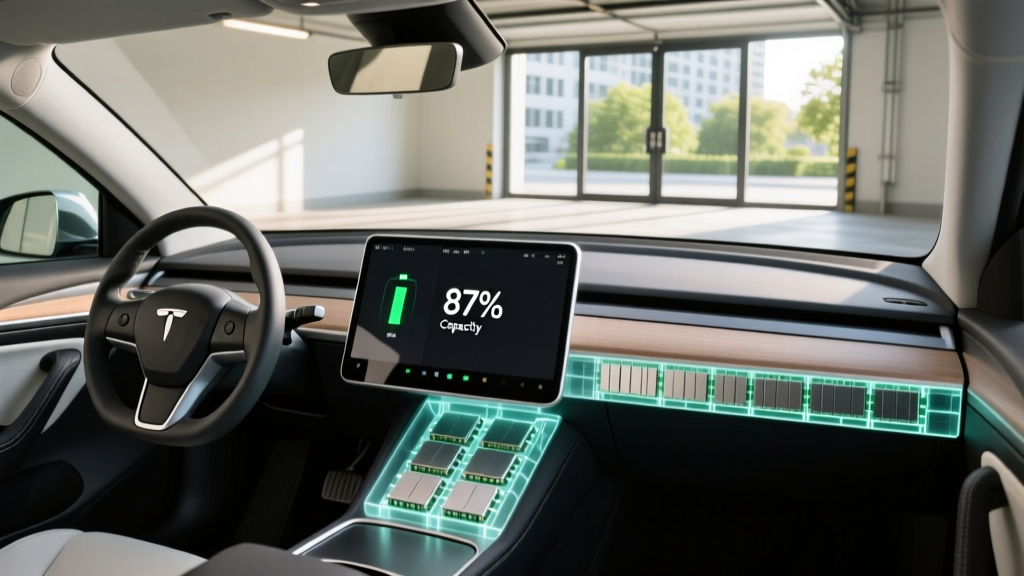
Tesla doesn't expose a direct State of Health (SoH) percentage in the vehicle's touchscreen the way some competitors do. But several methods allow owners to track their battery's condition:
Method 1: Range Comparison at Full Charge
Periodically charge to 100% (before a trip) and note the displayed range. Compare this to the original EPA-rated 341 miles. If your 100% charge displays 310 miles, your approximate SoH is 310/341 = ~91%. This isn't perfectly precise — displayed range is influenced by recent driving patterns and temperature — but it provides a reliable trend indicator over time.
Method 2: Tesla Service Mode (DIY)
The Model 3 includes a hidden Service Mode accessible through the software menu (tap and hold the model name for ~5 seconds, enter "service" as the access code). Within Service Mode, the "High Voltage Battery" section shows the nominal full-pack capacity in kWh. Comparing this to the original ~79 kWh usable gives a more accurate SoH reading than the range display alone.
Method 3: Third-Party Apps
Apps like Tessie, Stats for Tesla, and Teslamate (for the technically inclined) log detailed battery data via the Tesla API, including estimated SoH, energy in/out, and degradation trends over time. These tools provide the most granular longitudinal view of your pack's health.
Method 4: Official Tesla Service Diagnostic
If you suspect your battery is approaching the 70% warranty threshold, a Tesla Service Center can run a full diagnostic and provide an official capacity report. This is the definitive assessment for warranty claims.
The Future of EV Batteries: Solid-State and Silicon Anodes on the Horizon
While the Model 3 Long Range's NMC pack represents current production technology, the battery industry is advancing rapidly. Two developments deserve attention — with realistic timelines:
Silicon-Dominant Anodes
Replacing graphite anodes with silicon can increase cell energy density by 20–40%. Companies like Sila Nanotechnologies and Group14 are already in early commercial production. Expect silicon-enhanced anodes to appear in mainstream EV cells by 2027–2029, offering either more range in the same pack size or the same range in a lighter, cheaper pack.
Solid-State Batteries
Solid-state batteries replace the liquid electrolyte with a solid ceramic, polymer, or sulfide conductor, promising higher energy density, faster charging, and improved safety. Toyota, Samsung SDI, and QuantumScape are leading development, but mass production at automotive scale remains the primary bottleneck. Realistic timelines for solid-state batteries in high-volume, affordable EVs point to 2029–2032 at the earliest. They will not affect your current or near-term Model 3 purchase decision.
According to NHTSA and industry analysts, current-generation liquid-electrolyte lithium-ion batteries — when properly managed — are already sufficient to outlast the typical ownership period of a passenger vehicle.
Frequently Asked Questions
How long do EV batteries last in years and miles?
Modern liquid-cooled NMC packs like the one in the Tesla Model 3 Long Range are designed to last 15–20 years or 200,000+ miles before reaching 70% of original capacity. Fleet data shows most Model 3 packs retain 85–92% capacity at 100,000 miles. Complete battery failure is rare — fewer than 2% of modern EV packs require replacement outside of accident damage.
How much does it cost to replace a Tesla Model 3 Long Range battery?
An out-of-warranty replacement for the ~79 kWh NMC pack in the Model 3 Long Range currently ranges from approximately $12,500 to $18,000 including parts and labor. This cost is expected to decline as cell pricing continues to fall. However, the vast majority of owners will never need a replacement — the pack typically outlasts the vehicle.
What does the Tesla battery warranty cover?
The Model 3 Long Range battery warranty covers 8 years or 120,000 miles (whichever comes first) against defects and capacity loss below 70% of original. If the pack falls below this threshold, Tesla will repair or replace it to meet the minimum. The warranty does not cover damage from accidents, misuse, flooding, or unauthorized modifications.
How do I maximize the battery health of my Model 3 Long Range?
Set your daily charge limit to 80%, prefer Level 2 home charging over daily DC fast-charging, avoid leaving the car at 100% SoC for extended periods, park in shade in hot climates, and keep Tesla's software updated for the latest BMS optimizations. Following the 20–80% daily rule is the single most impactful habit for NMC longevity.
LFP vs. NMC — which is better for the Model 3?
Neither is universally better — they serve different priorities. NMC (Long Range) offers higher energy density and better cold-weather performance, making it ideal for drivers who need maximum range. LFP (Standard Range) offers longer cycle life, lower cost, and the convenience of regular 100% charging, making it ideal for daily commuters with home charging who don't need 340+ miles. For the Model 3 specifically, choose NMC if range is your top priority, and LFP if longevity and cost matter more.
Does frequent Supercharging damage the battery?
Occasional Supercharging has negligible impact on battery health. However, exclusive reliance on DC fast-charging (250 kW) for every charge cycle, particularly in hot climates, will accelerate degradation measurably over 100,000+ miles compared to predominantly Level 2 charging. Tesla's BMS actively manages charge rates and thermal conditions to mitigate this, but physics favors slower, cooler charging for long-term health.
Can I check my Tesla battery health myself?
Yes. The most accessible method is comparing your 100%-charge displayed range to the original 341 EPA miles. For a more precise reading, access Service Mode on the touchscreen to view the nominal full-pack capacity in kWh. Third-party apps like Tessie or Teslamate provide the most detailed longitudinal SoH tracking via the Tesla API.
For the most current EPA range and efficiency data, always cross-reference with fueleconomy.gov. Battery technology, pricing, and warranty terms evolve — verify specifics with Tesla directly before making a purchase decision.