Why Tesla Model 3 Battery Pack Weight Matters to Buyers
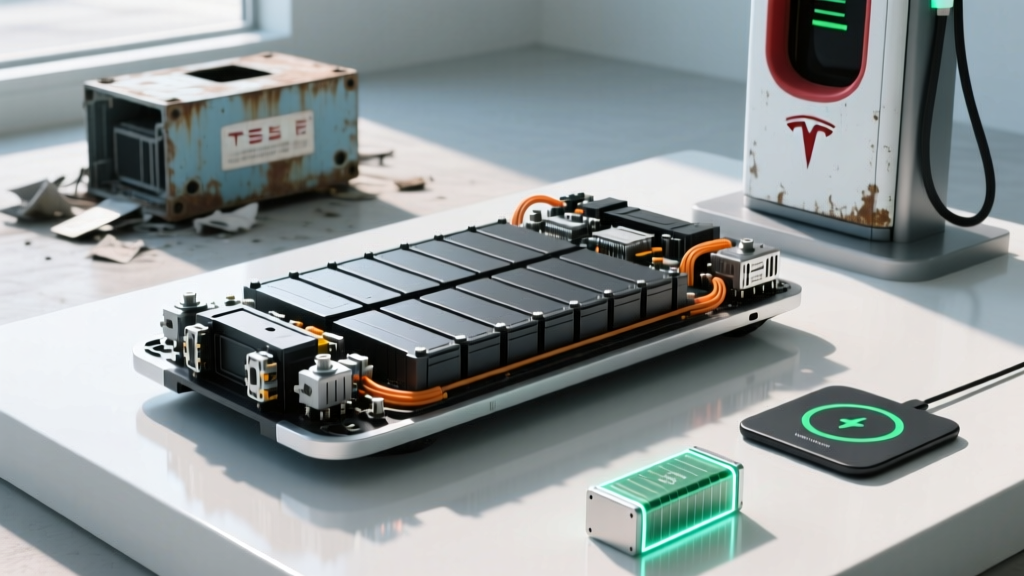
When shoppers search for Tesla Model 3 battery pack weight, they're usually trying to answer a deeper question: how does the pack size, chemistry, and mass affect range, efficiency, handling, and long-term ownership cost? The battery is the single heaviest and most expensive component in any EV, and the Model 3 is no exception. Depending on trim and model year, the high-voltage traction battery accounts for roughly 25–30% of the vehicle's curb weight.
Understanding pack weight also helps contextualize efficiency (measured in Wh/mile or MPGe), tire wear, braking distances, and even how the car behaves on a winding road. Below, we break down every dimension of the Model 3 battery — from physical mass to chemistry, degradation curves, warranty coverage, and what replacement actually costs in 2026.
Tesla Model 3 Battery Pack Weight by Trim
The current-generation Model 3 (refreshed for 2024 and carried into 2026) is offered in three primary trims in the U.S. market, each with a different battery pack size and chemistry. Here's how the numbers stack up:
| Trim | Battery Chemistry | Usable Capacity (kWh) | Est. Pack Weight (lbs) | EPA Range | Curb Weight (lbs) |
|---|---|---|---|---|---|
| Model 3 RWD (Base) | LFP (CATL) | ~57.5 kWh | ~950–1,000 | 272 mi | 3,862 |
| Model 3 Long Range AWD | NMC (Panasonic/LG) | ~75 kWh | ~1,050–1,100 | 341 mi | 4,034 |
| Model 3 Performance | NMC (Panasonic) | ~75 kWh | ~1,050–1,100 | 315 mi | 4,065 |
Sources: EPA fueleconomy.gov, Tesla specifications. Pack weight figures are estimated from teardown data and industry analyses; Tesla does not publish official pack weights.
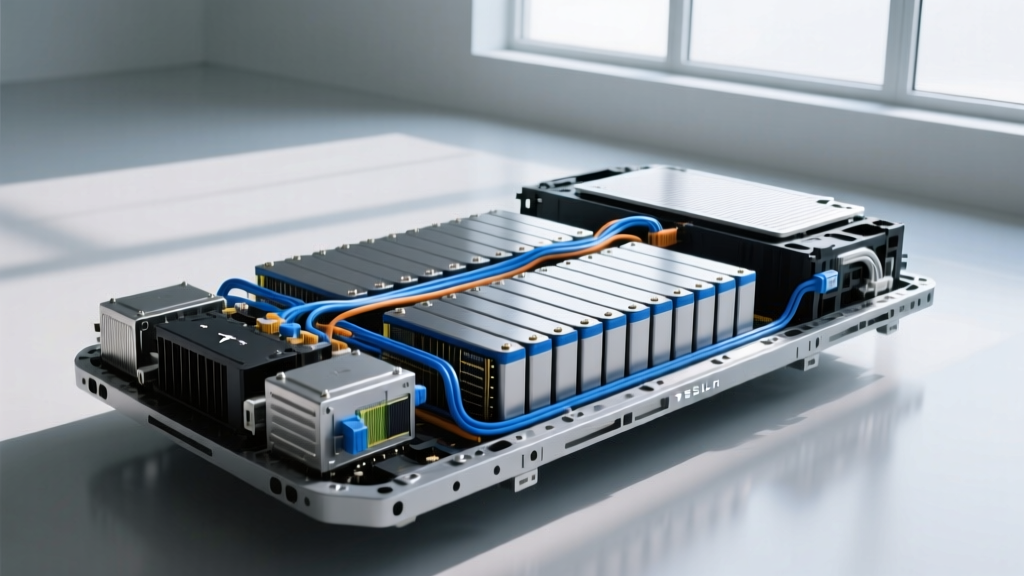
The base RWD model uses a lighter lithium iron phosphate (LFP) pack despite lower energy density per cell, because the total kWh is smaller. The Long Range and Performance trims carry heavier nickel-manganese-cobalt (NMC) packs to deliver more range and power. In all trims, the pack is mounted low in the chassis as a structural element, giving the Model 3 a very low center of gravity — a key reason it handles well despite its weight.
LFP vs NMC Chemistry: Which Does the Model 3 Use and Why?
Tesla uses two distinct cell chemistries across the Model 3 lineup, and the choice has significant implications for ownership:
| Attribute | LFP (Lithium Iron Phosphate) | NMC (Nickel Manganese Cobalt) |
|---|---|---|
| Energy Density | Lower (~160 Wh/kg cell-level) | Higher (~220–260 Wh/kg cell-level) |
| Cycle Life | Excellent (3,000–5,000+ cycles) | Good (1,500–2,500 cycles) |
| Recommended SoC | 100% daily OK | 80% daily; 100% for trips only |
| Cold-Weather Performance | Weaker (more range loss below freezing) | Better (less cold-weather penalty) |
| Cost per kWh | Lower (no cobalt/nickel) | Higher (commodity-linked metals) |
| Thermal Stability | Superior (less prone to thermal runaway) | Good (requires robust BMS) |
| Used in Model 3 Trims | RWD (base) | Long Range, Performance |
Bottom line: If you charge at home nightly and mostly drive in moderate climates, the LFP pack in the base RWD is arguably the better long-term ownership bet — you can charge to 100% daily without accelerating degradation. If you need maximum range, frequent road-trip DC fast charging, or regularly drive in sub-freezing conditions, the NMC pack in the Long Range or Performance trim is the stronger choice.
How Long Do Tesla Model 3 Batteries Last?
This is the question behind every battery-related search. Based on fleet data, owner reports, and Tesla's own impact reports, here's what the numbers show:
Typical Model 3 Battery Degradation Curve (NMC Long Range):
- Year 1 / 15,000 mi: ~3–5% capacity loss (initial "break-in" drop)
- Year 3 / 45,000 mi: ~7–9% total loss
- Year 5 / 75,000 mi: ~9–12% total loss
- Year 8 / 120,000 mi: ~12–15% total loss
- 200,000+ mi: Many packs still above 80% State of Health (SoH)
Data synthesized from Tesla Impact Reports, Recurrent Auto fleet studies, and owner community tracking. Individual results vary with charging habits and climate.
LFP packs in the base RWD model tend to degrade even more slowly. Because LFP chemistry tolerates 100% state of charge without the same stress that NMC experiences, many LFP owners see less than 5% loss over 60,000 miles. The key insight: most Model 3 batteries will outlast the car's economic life. Catastrophic failure (sudden death) is extremely rare; gradual capacity loss is the norm.
What Does the Tesla Battery Warranty Cover?
Tesla's battery and drive unit warranty is one of the more straightforward in the industry, though the coverage threshold varies by trim:
| Trim | Warranty Duration | Mileage Limit | Minimum Capacity Retention |
|---|---|---|---|
| RWD (Base / LFP) | 8 years | 100,000 miles | 70% |
| Long Range AWD | 8 years | 120,000 miles | 70% |
| Performance | 8 years | 120,000 miles | 70% |
The warranty covers defects in materials and workmanship, plus capacity loss below 70% of original. It does not cover damage from accidents, flooding, improper modifications, or using the vehicle as a stationary power source beyond Tesla's approved features. If your pack drops below 70% SoH within the warranty window, Tesla will repair or replace it to bring it back above the threshold — not necessarily to 100%.
Tesla Model 3 Battery Replacement Cost: What to Expect
Out-of-warranty battery replacement is the nightmare scenario EV skeptics point to. Here's the reality for the Model 3:
| Scenario | Parts Cost | Labor | Total Estimate |
|---|---|---|---|
| RWD LFP pack (remanufactured) | $8,000–$10,000 | $1,500–$2,500 | $9,500–$12,500 |
| Long Range / Performance NMC pack (remanufactured) | $12,000–$15,000 | $1,500–$2,500 | $13,500–$17,500 |
| New OEM pack (if available) | $15,000–$20,000 | $1,500–$2,500 | $16,500–$22,500 |
Context that matters: Full pack replacement is uncommon. Most degradation-related issues within warranty are resolved with module-level repairs or software recalibration. Tesla has also increasingly used remanufactured packs for out-of-warranty replacements, which are significantly cheaper than new units. The vast majority of Model 3 owners will never need a full pack replacement — fleet data from Recurrent Auto shows fewer than 1.5% of EV batteries are replaced for capacity reasons within the first 10 years.
Factors That Affect Model 3 Battery Life
Not all miles are created equal when it comes to battery wear. These factors have the most measurable impact on long-term State of Health:
Battery Care Best Practices for Model 3 Owners
- State of Charge habits: For NMC (Long Range/Performance), set daily charge limit to 80%. Charge to 100% only before road trips and drive soon after. LFP owners can (and should) charge to 100% regularly — Tesla recommends at least weekly 100% charges for accurate BMS calibration.
- DC fast charging frequency: Occasional Supercharging is fine. Daily DC fast charging accelerates degradation by ~1–2% extra over 5 years compared to Level 2 home charging, per fleet studies. The Model 3's thermal management system mitigates much of this, but heat is the enemy of lithium-ion cells.
- Extreme temperatures: Sustained exposure to ambient temperatures above 95°F accelerates chemical aging. In very cold climates, the battery isn't damaged by cold itself, but charging a frozen pack without preconditioning can cause lithium plating. Always use scheduled departure/preconditioning in winter.
- Deep discharge avoidance: Don't let the pack sit at 0% or near-zero for extended periods. Store the car at 50–60% SoC if it won't be driven for weeks.
- Regen braking settings: Standard regen mode doesn't harm the battery. Tesla's BMS manages charge acceptance during regen to prevent overvoltage stress.
How to Check and Monitor Your Model 3 Battery Health
Tesla doesn't display a simple "battery health percentage" in the car's interface, which frustrates many owners. Here are the methods available:
Method 1: Tesla App Energy Graph
The Tesla mobile app shows energy consumption data and a projected range at 100% charge. Comparing your current 100% projected range to the original EPA figure gives a rough SoH estimate. For example, if your Long Range originally showed 341 miles at 100% and now shows 310, that's roughly 91% SoH.
Method 2: Third-Party OBD-II Tools
Devices like the OBDLink MX+ paired with apps such as Scan My Tesla or TeslaFi can read the BMS-reported nominal full-pack capacity in kWh. Dividing current nominal capacity by original rated capacity gives a more precise SoH figure. This is the method most enthusiast owners rely on.
Method 3: Tesla Service Diagnostic
You can request a battery health test through Tesla Service (via the app). A technician will run a diagnostic and report the pack's SoH. This is the most authoritative method, particularly useful before buying a used Model 3 or if you suspect a warranty claim.
Method 4: Recurrent or Fleet Data Platforms
Services like Recurrent allow you to connect your vehicle and track degradation over time, benchmarked against a fleet of identical vehicles. This gives you context: is your pack degrading normally, or is it an outlier?
What's Next: Solid-State and Silicon Anode Batteries
The battery industry is actively developing next-generation chemistries, but it's critical to separate announcements from production reality:
Solid-state batteries promise higher energy density (potentially 400+ Wh/kg at the cell level), faster charging, and improved safety by replacing the liquid electrolyte with a solid material. Companies like Toyota, QuantumScape, and Samsung SDI have demonstrated prototypes, but mass production for consumer EVs remains in the 2028–2030+ window. No production EV sold in 2026 uses a true solid-state pack.
Silicon anode technology is closer to market. By replacing graphite anodes with silicon-dominant composites, cells can achieve 10–20% more energy density. Tesla's 4680 cells already incorporate some silicon in the anode, and suppliers like Sila Nanotechnologies are scaling production. Expect incremental improvements in Model 3 packs over the next 2–3 model years rather than a dramatic leap.
Sodium-ion batteries are emerging as a low-cost alternative for base-trim EVs. CATL and BYD are already producing sodium-ion cells in China. These are heavier and lower in energy density than LFP, but significantly cheaper. They could appear in future base-trim Tesla models, though nothing has been announced for the U.S. market as of 2026.
For current buyers: today's LFP and NMC packs are mature, well-understood technologies with proven track records. Waiting for solid-state is not a practical purchase strategy — the timeline remains uncertain and early-production costs will be premium.
Frequently Asked Questions
How heavy is the Tesla Model 3 battery pack?
The Model 3 battery pack weighs approximately 950–1,000 lbs for the RWD (LFP) trim and 1,050–1,100 lbs for the Long Range and Performance (NMC) trims. These are estimates based on teardown data; Tesla does not publish official pack weights.
How long do Tesla Model 3 batteries last in real-world use?
Most Model 3 batteries retain 85–90% of original capacity at 100,000 miles and 80–88% at 150,000 miles. With proper care, reaching 200,000+ miles with the original pack above 75% SoH is common. LFP packs tend to degrade even more slowly than NMC.
How much does it cost to replace a Tesla Model 3 battery?
Out-of-warranty replacement costs range from roughly $9,500–$12,500 for the RWD LFP pack to $13,500–$17,500 for the Long Range/Performance NMC pack, including labor. Remanufactured packs are the most common replacement option. Full replacements are rare — fewer than 1.5% of EV batteries are replaced within 10 years.
What does the Tesla battery warranty cover?
Tesla covers the battery for 8 years / 100,000 miles (RWD) or 8 years / 120,000 miles (Long Range, Performance), guaranteeing at least 70% capacity retention. If the pack falls below 70% SoH within that window, Tesla will repair or replace it to meet the threshold.
Is LFP or NMC better for the Tesla Model 3?
It depends on your use case. LFP (base RWD) offers longer cycle life, lower cost, and the ability to charge to 100% daily — ideal for home-charging commuters in moderate climates. NMC (Long Range/Performance) delivers higher energy density, more range, and better cold-weather performance — better for road trippers and cold-climate drivers.
Does frequent Supercharging damage the Model 3 battery?
Occasional Supercharging has minimal impact. Daily DC fast charging over many years can add 1–2% extra degradation compared to home Level 2 charging, but Tesla's active thermal management system significantly limits this effect. For most owners, the convenience outweighs the marginal wear.
Can I check my Model 3 battery health myself?
Yes. Compare your 100% projected range in the Tesla app to the original EPA rating for a rough estimate. For a precise reading, use an OBD-II adapter with a Tesla-compatible app to read BMS nominal capacity, or request a diagnostic through Tesla Service.
Will solid-state batteries make the current Model 3 obsolete?
Not in the near term. Solid-state batteries are not expected in mass-market consumer EVs before 2028–2030 at the earliest, and early adoption will likely be limited to premium vehicles. Current LFP and NMC Model 3 packs are proven, durable, and will remain competitive for years.