If you've ever wondered where the raw materials inside a Tesla battery actually come from, you're not alone. The question where does Tesla get its lithium sits at the intersection of geopolitics, chemistry, and long-term EV ownership economics. The answer in 2026 is more diversified than it was even two years ago — and understanding it helps you make smarter decisions about which Tesla model to buy, how to care for its battery, and what to expect over a decade of ownership.
This guide traces Tesla's lithium supply chain, breaks down the two battery chemistries Tesla uses (LFP and NMC/NCA), provides real degradation data, and gives you a practical framework for maximizing battery lifespan. Whether you're eyeing a Model 3 Standard Range or a Cybertruck, the battery is the single most expensive component in the vehicle — here's everything you need to know.
Tesla's Lithium Supply Chain: Where It Comes From in 2026
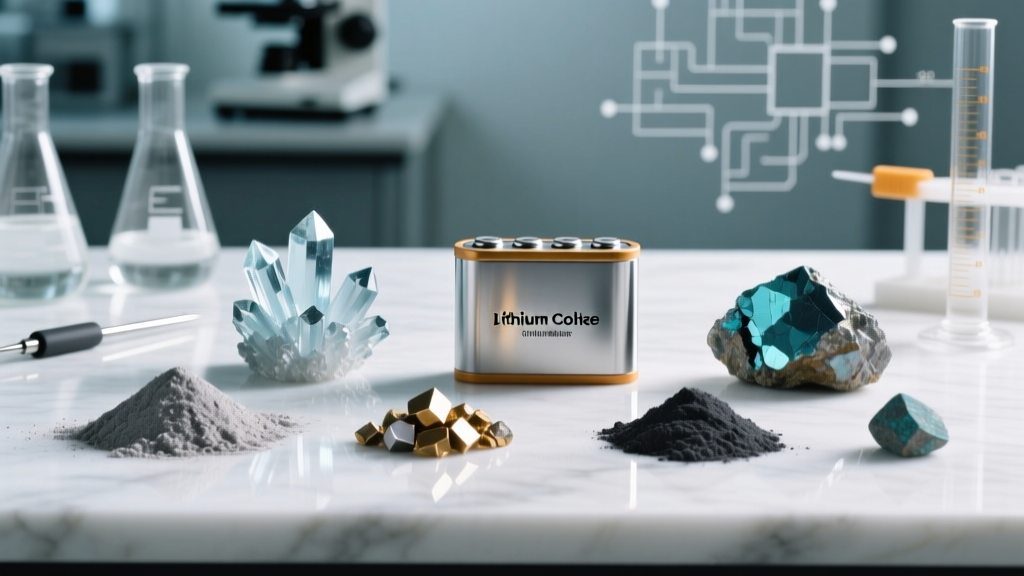
Tesla sources lithium from multiple suppliers across several continents, a strategy designed to reduce dependency on any single region and to comply with the IRS §30D critical minerals requirements for federal tax credit eligibility. Here's how the supply chain breaks down:
- Australia: Tesla's primary hard-rock lithium (spodumene) supply comes from Australian mines, primarily through contracts with Liontown Resources and agreements with processors like Ganfeng Lithia. Australia remains the world's largest lithium producer by volume.
- Chile: Lithium brine extraction from Chile's Atacama Desert, sourced through agreements with SQM and Albemarle, provides a significant share of Tesla's lithium hydroxide and carbonate.
- China: Despite geopolitical tensions, refined lithium compounds processed in China still enter Tesla's supply chain — particularly for LFP (lithium iron phosphate) cells manufactured by CATL and used in Standard Range vehicles.
- North America: Tesla has invested in domestic refining capacity. Its agreement with Piedmont Lithium (North Carolina/Tennessee) and Albemarle's Nevada-based operations aim to onshore more of the supply chain. Tesla also began receiving material from its own lithium refining facility in Corpus Christi, Texas, which started partial operations in 2025.
- Canada: Tesla has signed offtake agreements with Canadian spodumene producers as Quebec and Ontario projects ramp up production.
The critical distinction for buyers: the source of lithium affects your tax credit eligibility. Under current §30D rules, a qualifying vehicle must have a percentage of critical minerals sourced from the U.S. or a free-trade-agreement country. Vehicles using CATL-sourced LFP cells from China may not qualify for the full $7,500 credit — always verify current eligibility on the fueleconomy.gov tax credit tracker before purchasing.
LFP vs NMC/NCA: Tesla's Two Battery Chemistries Explained
Tesla uses two distinct battery chemistries across its lineup, and the choice directly affects range, longevity, charging behavior, and cost. Understanding which chemistry is in your Tesla (or the one you're considering) is essential.
| Attribute | LFP (Lithium Iron Phosphate) | NMC/NCA (Nickel Manganese Cobalt / Nickel Cobalt Aluminum) |
|---|---|---|
| Used In (Tesla) | Model 3/Y Standard Range (RWD) | Model 3/Y Long Range & Performance, Model S/X, Cybertruck |
| Energy Density | Lower (~160 Wh/kg cell-level) | Higher (~250–300 Wh/kg cell-level) |
| Typical Pack Size | ~57–60 kWh usable | ~75–100 kWh usable |
| Cycle Life | 3,000–5,000+ cycles | 1,000–2,000 cycles |
| Cold-Weather Performance | More range loss in cold (~30–40% reduction below 32°F) | Better cold performance (~20–30% reduction below 32°F) |
| Recommended SoC | Can and should be charged to 100% regularly | Best kept at 80% daily; 100% only for trips |
| Cost | Lower — no cobalt or nickel | Higher — nickel and cobalt are expensive |
| Thermal Stability | Excellent — very low thermal runaway risk | Good — requires more active thermal management |
| Primary Supplier | CATL (China), BYD | Panasonic (2170/4680 cells), LG Energy Solution |
Which Chemistry Is Better?
Neither is universally better — it depends on your use case:
- Choose LFP if: You commute daily, can charge to 100% without stress, want maximum cycle life, and don't frequently drive in extreme cold. The Model 3 RWD with LFP is arguably the best value-per-mile vehicle Tesla sells.
- Choose NMC/NCA if: You need maximum range (300+ miles EPA), regularly take long road trips, live in a cold climate, or want the fastest acceleration. The energy density advantage translates directly to more range per charge.
How Long Do Tesla Batteries Last? Real Degradation Data
The short answer: far longer than most buyers fear. Tesla's 2025 Impact Report and third-party fleet data show that the average Tesla battery retains approximately 85–90% of its original capacity after 150,000 miles. Most batteries will outlast the vehicle they're installed in.
Typical Tesla Battery Degradation Curve (Fleet Data):
- Year 1 / 15,000 mi: ~2–4% capacity loss (initial break-in degradation)
- Year 3 / 45,000 mi: ~5–8% total loss
- Year 5 / 75,000 mi: ~7–10% total loss
- Year 8 / 120,000 mi: ~10–15% total loss
- Year 10+ / 150,000+ mi: ~12–18% total loss (NMC); ~8–12% (LFP)
Sources: Tesla Impact Report, Recurrent Auto fleet data. Individual results vary based on charging habits, climate, and Supercharger frequency.
The key insight: degradation is non-linear. Most capacity loss occurs in the first 20,000–30,000 miles, after which the curve flattens significantly. LFP cells degrade more slowly than NMC/NCA, which is one reason Tesla's Standard Range vehicles may hold up better over very high mileage.
Tesla Battery Warranty: What's Covered and for How Long
Tesla's battery and drive unit warranty is among the strongest in the industry, but the specifics vary by model and trim:
| Model / Trim | Warranty Duration | Mileage Limit | Minimum Capacity Retention |
|---|---|---|---|
| Model 3 RWD (LFP) | 8 years | 100,000 miles | 70% |
| Model 3 Long Range / Performance | 8 years | 120,000 miles | 70% |
| Model Y (all trims) | 8 years | 120,000 miles | 70% |
| Model S / Model X | 8 years | 150,000 miles | 70% |
| Cybertruck | 8 years | 120,000 miles | 70% |
What this means practically: If your battery drops below 70% of its original capacity within the warranty period (whichever comes first — years or miles), Tesla will repair or replace it at no cost. The warranty covers manufacturing defects and abnormal degradation, but not damage from accidents, flooding, or improper modifications.
Importantly, the warranty threshold of 70% is conservative. Given the degradation data above, the vast majority of Tesla owners will never need to make a warranty claim — most packs retain well above 80% capacity even at the 8-year mark.
How Much Does a Tesla Battery Replacement Cost?
If you're outside the warranty window and face a battery failure, replacement costs are significant but have been declining. Here's what to expect in 2026:
| Model | Battery Pack Size | Estimated Replacement Cost (Parts + Labor) | When Typically Needed |
|---|---|---|---|
| Model 3 RWD (LFP) | ~57–60 kWh | $10,000–$13,000 | Rarely before 200,000+ mi |
| Model 3/Y Long Range | ~75–82 kWh | $13,000–$16,000 | Rarely before 200,000+ mi |
| Model S / Model X | ~90–100 kWh | $16,000–$22,000 | Some older packs at 150,000+ mi |
| Cybertruck | ~100+ kWh (4680) | $15,000–$20,000 | Insufficient long-term data |
Context that matters: Battery replacement at full cost is rare. Most Tesla batteries will deliver 200,000–300,000+ miles before capacity drops to a level where replacement becomes worth considering. For the average driver covering 12,000–15,000 miles per year, that's 15–20+ years of service. By that point, most owners have moved on to a newer vehicle. The fear of a $20,000 battery bill at year five is not supported by fleet data.
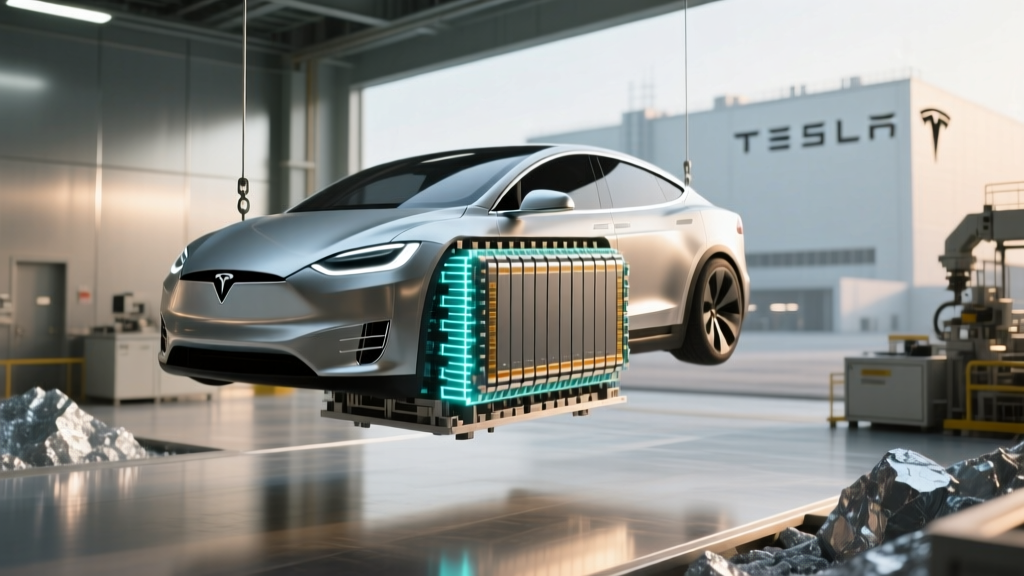
Also worth noting: Tesla's 4680 structural battery pack (used in some Model Y variants and Cybertruck) is designed for easier module-level servicing, which could reduce future replacement costs compared to older pack designs.
Maximizing Battery Life: What Actually Works
Battery longevity isn't just about chemistry — your daily habits have a measurable impact. Here's a practical, data-backed checklist:
- Set charge limits correctly: NMC/NCA owners should set daily charge to 80% and only charge to 100% when departing on a trip. LFP owners should charge to 100% at least once per week to allow the BMS to calibrate cell balancing.
- Minimize DC fast charging when possible: Supercharging is convenient, but frequent use (multiple times per week) accelerates degradation by ~1–3% over the battery's life compared to primarily Level 2 home charging. Use Superchargers for road trips; rely on Level 2 for daily needs.
- Avoid extreme SoC storage: Never leave the car sitting at 100% or below 10% for extended periods (days or weeks). If storing for a vacation, set charge to 50%.
- Precondition before Supercharging: Use the car's built-in navigation to route to a Supercharger — this triggers battery preconditioning, which warms the pack for faster charging and reduces stress on the cells. Arriving at a Supercharger with a cold pack forces slower charging and generates more heat.
- Use scheduled charging: Set your Tesla to charge during off-peak hours and finish shortly before you leave. This minimizes time spent sitting at high SoC.
- Don't baby it excessively: Modern Tesla BMS (Battery Management Systems) are sophisticated. Occasional 100% charges, Supercharger use, and cold-weather driving won't destroy your battery. The goal is good habits, not anxiety.
How to Check Your Tesla's Battery Health (State of Health)
Tesla doesn't display a simple "battery health percentage" in the vehicle UI the way some competitors do, but there are several ways to monitor State of Health (SoH):
- Tesla app range estimate: Compare your current estimated range at 100% charge to the original EPA-rated range. A Model 3 Long Range originally rated at 358 miles that now shows 322 miles at 100% has approximately 90% SoH. (Note: the displayed range uses a fixed consumption factor, not real-time driving data.)
- Energy screen trip data: Monitor your average Wh/mi over several fill-ups. A gradual increase in consumption can indicate degradation, though driving style and tire condition also affect this.
- Third-party apps: Tools like Tessie, TeslaFi, and Stats log charging data and can estimate SoH more precisely by comparing energy added during charges to expected pack capacity.
- Service mode diagnostic: Tesla service centers can run a full battery health diagnostic that provides cell-level voltage data and a precise SoH reading. Request this during any service visit if you have concerns.
Emerging Battery Technology: What's Coming Next
Tesla is actively developing and scaling next-generation battery technology, though buyers should be clear about timelines:
- 4680 cells (current/near-term): Tesla's larger-format cylindrical cell, already in production for Cybertruck and some Model Y vehicles. Benefits include lower manufacturing cost, higher energy density, and a structural pack design that reduces vehicle weight. Full-scale production across all models is expected to ramp through 2026–2027.
- Dry electrode manufacturing: A production technique Tesla has been developing that eliminates solvents from the electrode coating process, reducing cost and factory footprint. Partially implemented in 4680 production; full implementation is a multi-year effort.
- Silicon-dominant anodes: Replacing graphite anodes with silicon could increase energy density by 20–40%. Multiple companies (Sila Nanotechnologies, Group14) are supplying early silicon anode materials, but cost and cycle-life challenges remain. Realistic timeline: limited production vehicles by 2028–2030.
- Solid-state batteries: The industry's long-term goal — replacing liquid electrolyte with a solid conductor for higher energy density, faster charging, and improved safety. Toyota, Samsung SDI, and QuantumScape are leading development, but no automaker has announced a production-ready solid-state EV for the U.S. market before 2029 at the earliest. Tesla has not publicly committed to solid-state and continues investing in liquid-electrolyte lithium-ion improvements.
The practical takeaway: If you're buying a Tesla today, you're getting mature, proven lithium-ion technology with a demonstrated track record. Future chemistries will improve on cost and energy density, but current batteries are already lasting 200,000+ miles with minimal degradation.
Frequently Asked Questions
Does Tesla mine its own lithium?
Not directly, but Tesla has moved aggressively into lithium refining. Its facility in Corpus Christi, Texas processes spodumene concentrate into battery-grade lithium hydroxide. Tesla also holds offtake agreements with multiple mining companies and has staked claims in Nevada. The strategy is to control more of the refining step rather than operate mines directly.
Will my Tesla battery need to be replaced?
Statistically, it's unlikely during typical ownership. Fleet data from Recurrent Auto and Tesla's own reports show most packs retain above 80% capacity at 150,000 miles. A full replacement is typically only needed if the battery suffers physical damage, a manufacturing defect (covered by warranty), or extreme degradation well past 200,000 miles.
Is it bad to Supercharge my Tesla every day?
"Bad" is too strong, but it's not optimal. Data shows vehicles that primarily use DC fast charging experience 1–3% more capacity loss over 100,000 miles compared to those using Level 2 home charging. If daily Supercharging is your only option, it won't destroy your battery — but home Level 2 charging at 7–11 kW is gentler and cheaper.
Does cold weather permanently damage the battery?
No. Cold weather causes temporary range loss (20–40% depending on chemistry and severity) because the battery is less efficient at low temperatures and energy is diverted to cabin/pack heating. This is reversible — range recovers when temperatures rise. The BMS actively manages thermal conditions to prevent damage. However, charging a frozen battery without preconditioning can cause lithium plating, so always let the car precondition before fast-charging in cold weather.
Can I check if my Tesla qualifies for the federal tax credit?
Yes. Under current IRS §30D rules, eligibility depends on MSRP caps ($55,000 for sedans, $80,000 for SUVs/trucks), buyer income limits ($150,000 single / $300,000 joint AGI), and critical mineral/battery component sourcing requirements. Because Tesla sources from both FTA and non-FTA countries depending on the model and production batch, credit eligibility can vary. Always check the latest status on fueleconomy.gov and consult a tax professional before relying on the credit in your purchase decision.
LFP vs NMC — which Tesla battery lasts longer?
LFP cells have a significantly higher cycle life (3,000–5,000+ cycles vs 1,000–2,000 for NMC), meaning the LFP pack can be charged and discharged more times before meaningful degradation. In practice, this translates to potentially 300,000+ miles of service for LFP vs 200,000+ for NMC. However, NMC offers higher energy density (more range in a smaller pack) and better cold-weather performance, so the trade-off is longevity vs range and climate capability.