Why Tesla's Lithium Mine Matters for EV Buyers
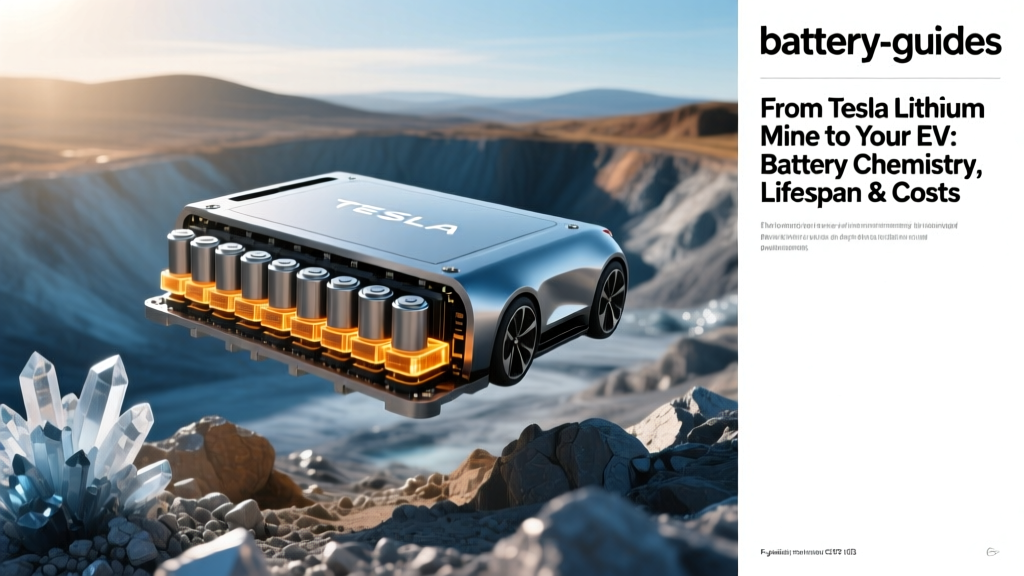
When Tesla broke ground on its lithium refinery in Corpus Christi, Texas, the move signaled a shift that affects every EV shopper: vertical integration of the battery supply chain. The tesla lithium mine and refining operation — more accurately a spodumene-to-lithium-hydroxide conversion facility — aims to secure domestic lithium supply for Tesla's battery cells, reduce reliance on Chinese refining, and potentially lower cell costs over time. But what does this mean for the battery sitting under your EV's floor?
The short answer: it matters less than the chemistry inside the cell. Whether lithium comes from Nevada clay, Australian spodumene, or Tesla's Texas refinery, the real ownership experience is dictated by whether your pack uses LFP (lithium iron phosphate) or NMC/NCA (nickel manganese cobalt / nickel cobalt aluminum) chemistry. This guide breaks down exactly what each chemistry delivers in range, longevity, cold-weather performance, and replacement cost — with real data, not marketing claims.
LFP vs NMC/NCA: The Chemistry That Defines Your Ownership Experience
Modern EV batteries aren't one-size-fits-all. The two dominant lithium-ion chemistries in 2026 passenger EVs have fundamentally different trade-offs. Here's how they stack up across the metrics that matter to owners:
| Attribute | LFP (Lithium Iron Phosphate) | NMC / NCA (Nickel-based) |
|---|---|---|
| Energy Density (cell-level) | ~160–180 Wh/kg | ~230–280 Wh/kg |
| Typical EPA Range (midsize sedan/SUV) | 250–310 mi | 300–400+ mi |
| Cycle Life (to 80% capacity) | 3,000–5,000+ cycles | 1,000–2,000 cycles |
| Cold-Weather Range Loss (~20°F) | ~25–35% reduction | ~20–30% reduction |
| Fast-Charging Tolerance | Higher (less degradation) | Moderate (heat-sensitive) |
| Recommended Daily SoC | 100% (regular full charges OK) | 80–90% daily; 100% for trips |
| Cobalt / Nickel Content | None (iron + phosphate) | Significant (supply-chain/ethical concerns) |
| Cell Cost (2026 est.) | ~$80–100/kWh | ~$110–140/kWh |
| Common Vehicles (2026) | Tesla Model 3/Y RWD, Ford Mustang Mach-E Select (LFP option), BYD Seal | Tesla Model 3/Y Long Range, Hyundai Ioniq 5/6, Rivian R1T/R1S, GM Ultium platforms |
Which Chemistry Is Better?
Neither is universally better — the right choice depends on your driving pattern:
- Choose LFP if: You commute daily under 60 miles, charge at home nightly, want maximum cycle life, and don't need 350+ mile road-trip range. LFP's tolerance for daily 100% charging and frequent DC fast charging makes it lower-maintenance for urban/suburban owners.
- Choose NMC/NCA if: You regularly drive 200+ miles between charges, live in a cold climate where every mile of range counts, or need maximum towing range. The higher energy density gives you more miles per kWh of battery weight.
Tesla's Texas lithium refinery primarily supplies lithium hydroxide for NMC-type cells used in Long Range and Performance trims, while LFP cells in Standard Range/RWD models are largely sourced from CATL in China — though domestic LFP production is ramping up. The tesla lithium mine initiative is ultimately about securing supply for the higher-margin, higher-energy-density packs where nickel-based chemistry dominates.
How Long Do EV Batteries Actually Last?
The fear that EV batteries need replacing every few years is not supported by fleet data. Here's what real-world degradation looks like, drawn from aggregated owner reports and manufacturer testing:
| Milestone | Typical Capacity Retained (NMC) | Typical Capacity Retained (LFP) | Data Source |
|---|---|---|---|
| 50,000 miles / ~3 years | 93–96% | 96–98% | Tesla 2025 Impact Report; Recurrent Auto fleet data |
| 100,000 miles / ~6 years | 88–93% | 93–96% | Recurrent Auto; Consumer Reports EV survey |
| 150,000 miles / ~10 years | 83–88% | 90–94% | Tesla fleet data; independent long-term tests |
| 200,000 miles / ~13 years | 78–85% | 87–92% | High-mileage fleet extrapolations |
A few critical context points:
- Most EV batteries outlive the vehicle. The average US car is scrapped around 150,000–180,000 miles (per IIHS data on vehicle age at scrappage). An NMC pack at 150k miles still retains ~85% capacity — enough for daily driving even with the original EPA range reduced by ~45 miles on a 300-mile vehicle.
- Degradation is not linear. Most capacity loss occurs in the first 20,000–30,000 miles (the "break-in" phase), then the curve flattens significantly. A 2024 Tesla Model Y owner might see 4% loss in year one, then 1% per year thereafter.
- LFP's flatter degradation curve means the gap between LFP and NMC widens over time — a 10-year-old LFP pack may retain 5–8% more capacity than an equivalent NMC pack.
What the Battery Warranty Actually Covers
Federal law mandates a minimum 8-year/100,000-mile warranty on EV battery packs (per fueleconomy.gov emissions-component rules that extend to battery packs). Most manufacturers exceed this baseline. Here's how major 2026 warranties compare:
| Manufacturer (2026 Models) | Warranty Period | Capacity Retention Threshold | Notes |
|---|---|---|---|
| Tesla (Model 3/Y RWD — LFP) | 8 yr / 100,000 mi | 70% | Covers defects + degradation below threshold |
| Tesla (Model 3/Y LR/Perf — NMC) | 8 yr / 120,000 mi | 70% | Longer mileage on Long Range packs |
| Hyundai / Kia (Ioniq 5/6, EV6) | 10 yr / 100,000 mi | 70% | Among the longest coverage periods |
| GM (Ultium: Equinox EV, Blazer EV, Silverado EV) | 8 yr / 100,000 mi | 70% | Modular pack allows partial replacement |
| Ford (Mustang Mach-E, F-150 Lightning) | 8 yr / 100,000 mi | 70% | Transferable to second owner |
| Rivian (R1T / R1S) | 8 yr / 175,000 mi | 70% | Highest mileage threshold in segment |
What triggers a warranty claim? If your battery's State of Health (SoH) drops below the stated threshold (typically 70% of original capacity) within the warranty window, the manufacturer will repair or replace the pack — or individual modules, depending on pack architecture — at no cost. In practice, very few owners hit this threshold within the warranty period. The 70% floor is conservative; most packs at 100k miles sit well above it.
EV Battery Replacement Cost: What Owners Actually Pay
Out-of-warranty battery replacement is the number-one fear among prospective EV buyers. Let's put real numbers to it:
| Vehicle / Pack Size | Chemistry | Replacement Cost Range (2026) | When Typically Needed |
|---|---|---|---|
| Tesla Model 3 RWD (~60 kWh) | LFP | $8,000–$12,000 | Rarely before 200k+ miles |
| Tesla Model Y Long Range (~82 kWh) | NMC | $12,000–$16,000 | Rarely before 180k+ miles |
| Hyundai Ioniq 5 (~77.4 kWh) | NMC | $11,000–$15,000 | Rarely before 180k+ miles |
| Ford F-150 Lightning Extended (~131 kWh) | NMC | $18,000–$25,000 | Rarely before 150k+ miles |
| Chevrolet Equinox EV (~85 kWh) | NMC (Ultium) | $10,000–$14,000 (modular repair lower) | Module-level repair may cost $2,000–$5,000 |
Key context that fear-mongering headlines omit:
- Most EV batteries never need replacement. With typical degradation of 1–2% per year after the break-in period, a pack retains usable capacity well past 200,000 miles. The car's body, suspension, or electronics often fail first.
- Cell costs are falling. Pack-level costs dropped from ~$200/kWh in 2020 to roughly $100–130/kWh in 2026 (per BloombergNEF data). A replacement pack in 2032 will likely cost 20–30% less than today's prices.
- Modular architectures reduce cost. GM's Ultium and some other platforms allow replacing individual modules rather than the entire pack — a single module replacement might run $2,000–$5,000 instead of a full-pack swap.
- The used-EV market prices in battery risk. A 2022 Model 3 with 80,000 miles trades at a discount partly reflecting residual battery uncertainty — but the actual degradation data shows these packs typically retain 90%+ capacity.
What Kills an EV Battery Early — and How to Prevent It
Not all miles are equal. These factors accelerate degradation, and understanding them lets you protect your pack's longevity:
Battery Care Checklist: Maximize Your Pack's Life
- Avoid sustained 100% SoC (NMC only): For NMC/NCA packs, set your daily charge limit to 80–90%. Reserve 100% for road trips where you'll drive off within hours. LFP packs are fine at 100% daily — Tesla actually recommends periodic full charges for LFP to recalibrate the BMS.
- Minimize DC fast charging when possible: Occasional DCFC (1–2x per week) shows negligible impact in fleet data. Daily DCFC at 150+ kW can add ~2–4% extra degradation over 100k miles vs. Level 2 home charging. If you rely on public charging, prioritize 50–150 kW chargers over 350 kW stalls when time permits.
- Precondition before fast charging: Tesla, Hyundai, and most modern EVs automatically precondition the battery when you navigate to a DC fast charger. This warms the cells to optimal temperature (~95–105°F), reducing lithium plating risk and enabling faster charge acceptance. Never skip preconditioning in cold weather.
- Avoid extreme heat soak: Parking in direct sun in 110°F+ climates for extended periods at high SoC accelerates calendar degradation. If possible, park in shade or a garage, and avoid leaving the car at 100% SoC for days in hot weather.
- Don't baby the battery too much: Modern BMS (Battery Management Systems) are sophisticated. Active thermal management, buffer zones (you can't actually charge to true 100% or discharge to true 0%), and cell balancing protect the pack. Drive your EV normally — the engineering handles the rest.
- Use scheduled charging: Set your EV to finish charging right before you leave. This minimizes time spent sitting at high SoC, which is when calendar degradation is fastest.
How to Check Your EV Battery's State of Health (SoH)
Knowing your battery's current capacity relative to its original spec helps you plan, maximize resale value, and catch warranty-eligible degradation early. Here's how to monitor SoH across major platforms:
- Tesla: The in-car service menu (hold the model name on the "Software" screen for ~3 seconds, then enter "service" mode) displays a battery health test. Alternatively, third-party apps like Tessie or TeslaFi pull SoH data via the vehicle API. Tesla service centers can run a formal health report.
- Hyundai / Kia: The infotainment system's EV diagnostics page shows estimated battery health. Dealers can run a detailed SoH report using the GDS (Global Diagnostic System) tool.
- GM (Ultium vehicles): The myChevrolet / myCadillac app displays battery health metrics. OnStar diagnostics can generate a battery report.
- Ford: FordPass app shows estimated range relative to original — a proxy for SoH. Dealers can pull detailed cell-level data.
- Universal method: Fully charge to 100%, note the displayed range, and compare to the original EPA range (adjusted for your typical conditions). If a 310-mile EPA vehicle consistently shows 230 miles at full charge in mild weather, that suggests ~74% SoH — approaching warranty territory.
Check SoH every 6–12 months, and always before purchasing a used EV. A documented SoH report from a dealer or verified app adds significant resale confidence.
What's Next: Solid-State, Silicon Anodes, and Tesla's Lithium Strategy
The tesla lithium mine and refinery investment is partly about today's NMC cells — and partly about positioning for next-generation chemistries that still require lithium, just in different forms:
Solid-State Batteries (Announced / Not Yet in Production Vehicles)
Solid-state cells replace the liquid electrolyte with a solid ceramic, polymer, or sulfide material. Promised benefits include 30–50% higher energy density, faster charging (potentially 10–80% in under 10 minutes), and improved safety (no flammable electrolyte). Toyota has announced a solid-state EV for 2027–2028 with ~470 miles of range. Samsung SDI and QuantumScape are targeting similar timelines. Reality check: Manufacturing yield, cost, and scale remain unsolved. Expect solid-state to appear first in premium/low-volume vehicles around 2028–2030, with mainstream adoption not before 2032.
Silicon Anode Technology
Replacing graphite anodes with silicon can boost energy density by 20–40%. Companies like Sila Nanotechnologies and Group14 are supplying silicon-dominant anode materials to battery makers. GM's next-gen Ultium cells (expected ~2028) may incorporate silicon anodes. This is nearer-term than full solid-state and could meaningfully extend range without changing pack size.
Tesla's 4680 Cell and Dry Electrode Process
Tesla's 4680 cylindrical cell — now in production for Model Y and Cybertruck — uses a dry electrode coating process that reduces energy consumption during manufacturing and enables thicker electrodes for higher energy density. The Texas lithium refinery feeds directly into this supply chain, securing lithium hydroxide for domestic 4680 cell production. As of 2026, 4680 cells offer modest energy-density gains over the prior 2170 cells, with further improvements expected through 2028.
Bottom line on future tech: None of these technologies are available in production EVs you can buy today. If you're shopping now, make your decision based on current LFP and NMC chemistry — both of which deliver excellent longevity with proper care.
EV Battery FAQ: Quick Answers to Common Questions
How long do EV batteries last in years and miles?
Based on fleet data from Tesla, Recurrent Auto, and Consumer Reports, most modern EV battery packs retain 83–96% capacity at 150,000 miles (roughly 10 years of average driving). LFP packs trend toward the higher end of that range. Very few packs require replacement before 200,000 miles.
How much does it cost to replace an EV battery out of warranty?
Full-pack replacement costs range from ~$8,000 for a 60 kWh LFP pack (Tesla Model 3 RWD) to ~$25,000 for a 131 kWh NMC pack (F-150 Lightning Extended Range). However, modular architectures like GM's Ultium allow partial repairs for $2,000–$5,000. Most packs never need replacement within the vehicle's usable life.
What does the EV battery warranty cover?
Federal law requires a minimum 8-year/100,000-mile warranty covering defects and capacity loss below a threshold (typically 70% of original capacity). Hyundai/Kia extend this to 10 years. The warranty covers the cost of diagnosis, parts, and labor if your pack falls below the threshold within the coverage window.
Is LFP better than NMC for daily commuting?
For daily commuting under 60 miles with home charging, LFP is arguably the better choice. It tolerates daily 100% charges, handles frequent DC fast charging with less degradation, and delivers 3,000–5,000+ charge cycles to 80% capacity. The trade-off is ~15–25% less energy density, meaning shorter maximum range per charge.
Does DC fast charging damage the battery?
Occasional DC fast charging (1–3 times per week) has minimal impact — fleet data shows roughly 1–2% additional degradation over 100,000 miles vs. exclusive Level 2 charging. Daily 350 kW charging in hot climates without preconditioning can accelerate wear. The key is to use preconditioning, avoid charging above 80% unless needed, and rely on Level 2 home charging for daily needs.
Does Tesla's lithium mine affect my battery's quality or cost?
Tesla's Texas lithium refinery secures domestic supply and may reduce cell costs over time, but it does not change battery chemistry or quality. The lithium hydroxide produced there feeds into NMC-type cells for Long Range and Performance models. LFP cells in RWD/Standard Range models are sourced separately. For the buyer, the practical impact is potential long-term price stability rather than a change in battery performance.
Can I check my EV battery health myself?
Yes. Tesla owners can access SoH data through the service menu or third-party apps. Hyundai/Kia, GM, and Ford provide battery health data through their respective apps or dealer diagnostic tools. The simplest universal method: charge to 100%, compare displayed range to the original EPA rating, and track the trend over time.