Why Are EV Batteries Not Allowed on Airplanes?
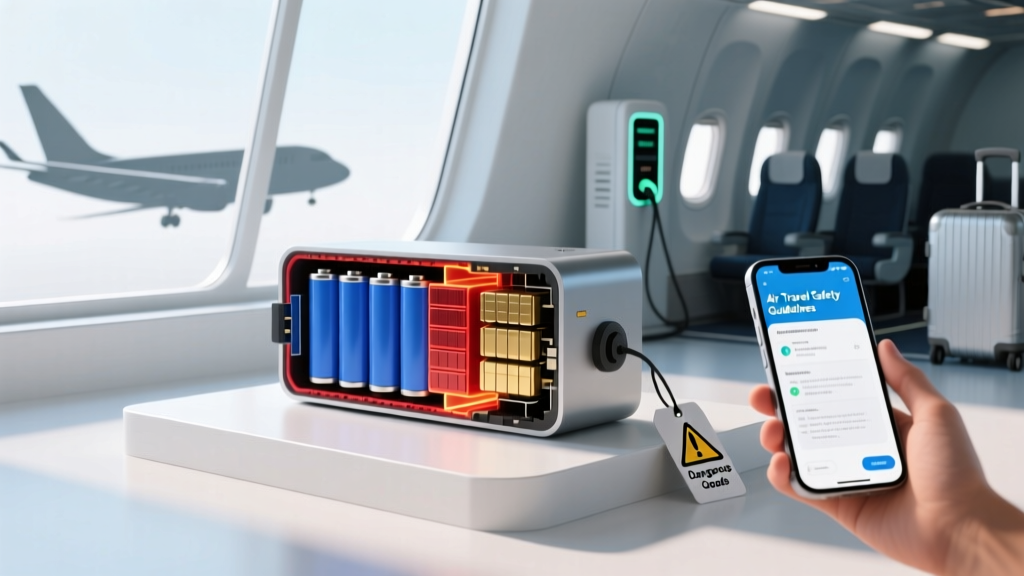
If you've ever tried to ship a replacement EV battery pack or wondered why airlines refuse large lithium-ion cells in cargo, you've encountered a real regulatory wall. The FAA and IATA restrict lithium-ion batteries above 100 watt-hours (Wh) in passenger aircraft cargo holds, and EV traction packs — which typically store between 50,000 and 130,000 Wh (50–130 kWh) — are categorically banned from passenger flights. Even dedicated cargo aircraft impose strict limits, requiring specialized packaging, state-of-charge restrictions, and hazardous-material declarations.
The reason is not arbitrary bureaucracy. It's chemistry. Lithium-ion cells store enormous energy density, and when they fail, they fail through a mechanism called thermal runaway — a self-accelerating chain reaction that generates its own oxygen and cannot be extinguished by standard aircraft fire-suppression systems. At cruising altitude, a single cell failure can cascade through a battery module in minutes, and the halon-based fire suppression in aircraft cargo compartments is not designed to contain a multi-kilowatt-hour lithium fire.
This guide breaks down why EV batteries pose unique risks in aviation, how different chemistries (LFP vs. NMC/NCA) change the safety profile, and what EV owners need to know about battery health, longevity, and replacement — whether you're flying or driving.
The Chemistry Behind the Ban: Why Lithium-Ion Cells Are Different
A lithium-ion cell stores energy by shuttling lithium ions between a graphite anode and a metal-oxide cathode through a liquid electrolyte. That electrolyte is typically an organic solvent — essentially a flammable hydrocarbon. When a cell is damaged, overheated, overcharged, or experiences an internal short circuit, the electrolyte can ignite. Worse, the cathode materials in high-energy-density cells (like NMC and NCA) release oxygen as they decompose at elevated temperatures. This means a lithium-ion fire does not need external oxygen to sustain itself — it generates its own oxidizer.
An EV battery pack contains hundreds to thousands of these cells packed tightly together. A Tesla Model Y Long Range, for example, uses a structural battery pack with thousands of 4680-format cells storing roughly 75 kWh of usable energy. If one cell enters thermal runaway, the heat can propagate to adjacent cells in a cascade — a phenomenon researchers call propagation failure. In an aircraft cargo hold, this cascade is catastrophic because:
- Fire suppression systems (halon) do not cool cells below their thermal-runaway threshold
- The fire self-generates oxygen from cathode decomposition
- Smoke and toxic gases (hydrogen fluoride, carbon monoxide) compromise the cabin
- Structural damage to the airframe can occur within minutes
The FAA has tested lithium-ion battery fires in cargo compartments and concluded that "the current cargo fire suppression systems cannot safely suppress a lithium battery fire" (FAA Lithium Battery Safety). This finding directly led to the ban on bulk lithium-ion shipments on passenger aircraft.
LFP vs. NMC/NCA: Chemistry Trade-Offs and Safety Profiles
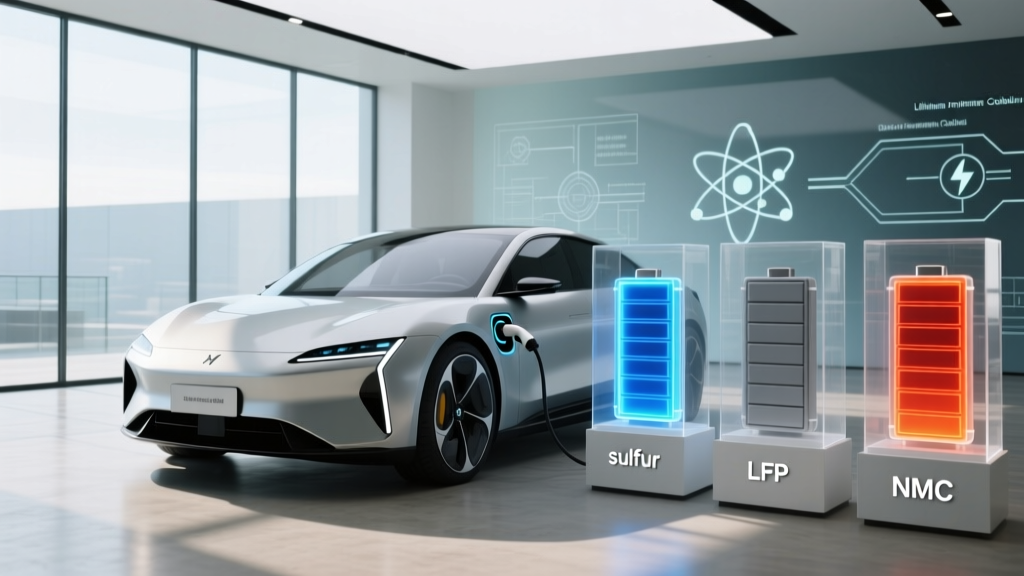
Not all lithium-ion chemistries carry the same risk. The cathode material determines energy density, cycle life, cost, cold-weather performance, and critically, thermal stability.
| Attribute | LFP (Lithium Iron Phosphate) | NMC (Nickel Manganese Cobalt) | NCA (Nickel Cobalt Aluminum) |
|---|---|---|---|
| Energy Density | ~160–180 Wh/kg (lower) | ~220–260 Wh/kg (higher) | ~250–270 Wh/kg (highest) |
| Thermal Runaway Onset | ~270°C (much higher threshold) | ~210°C | ~150–175°C (lowest threshold) |
| Oxygen Release at Decomposition | None (phosphate is stable) | Yes (moderate) | Yes (significant) |
| Cycle Life | 3,000–5,000+ cycles | 1,000–2,000 cycles | 800–1,500 cycles |
| Cold-Weather Performance | Weaker (slower charge acceptance below 0°C) | Better (wider operating range) | Better |
| Cost per kWh | Lower (no cobalt or nickel) | Higher (cobalt/nickel commodity-linked) | Higher |
| Common in 2026 Models | Tesla Model 3/Y RWD, Ford Mustang Mach-E Select, Rivian Standard | Hyundai Ioniq 5, Kia EV6, BMW iX | Tesla Model S/X, Lucid Air |
LFP's superior thermal stability is a major reason why it's gaining market share, particularly in standard-range trims where the lower energy density is acceptable. An LFP cell must reach roughly 270°C before it begins to decompose, compared to about 150–175°C for NCA. This does not make LFP batteries safe for air cargo — they still contain flammable electrolyte and store massive energy — but the risk profile is meaningfully lower.
For EV buyers, the practical trade-off is straightforward: LFP gives you longer cycle life, lower cost, and better thermal safety, but sacrifices some range per kilogram and charges slower in cold weather. NMC/NCA gives you more range and better cold performance but at higher cost and with a narrower thermal margin.
How Long Do EV Batteries Last? Degradation Data
One of the most persistent EV myths is that batteries need frequent replacement. Real-world fleet data tells a different story: modern EV batteries are designed to outlast the vehicle's first two ownership cycles.
Typical Degradation Curve (NMC, liquid-cooled pack):
- Year 1: 2–4% capacity loss (initial formation loss)
- Years 2–5: ~1–2% per year (linear, slow)
- Years 6–10: ~0.5–1% per year (plateau phase)
- Expected capacity at 150,000 miles / 10 years: ~85–90% of original
LFP packs (Tesla Model 3 RWD fleet data):
- Slower initial degradation: ~1–2% in year 1
- More linear curve: ~0.5–1% per year thereafter
- Expected capacity at 200,000 miles: ~88–93% of original
Geotab's longitudinal fleet study of over 10,000 EVs found an average annual degradation rate of approximately 2.3% across all chemistries and model years, with newer vehicles (2022+) showing rates closer to 1.5% per year thanks to improved thermal management and cell chemistry. Tesla's own impact report claims the Model 3/Y battery retains approximately 85% capacity at 150,000 miles.
The key insight: degradation is not linear. Most capacity loss occurs in the first 12–24 months as the solid electrolyte interphase (SEI) layer forms on the anode. After that, the curve flattens significantly. A battery that has lost 5% in two years is not on track to lose 25% in ten years.
What Does the Battery Warranty Cover?
Federal law (EPA emissions warranty requirements) effectively mandates that EV battery packs carry a minimum warranty of 8 years / 100,000 miles in most states, and 10 years / 150,000 miles in CARB states (California, New York, Massachusetts, and others). Most manufacturers exceed the minimum.
| Manufacturer | Warranty Period | Mileage Limit | Capacity Retention Threshold |
|---|---|---|---|
| Tesla (Model 3/Y Long Range) | 8 years | 120,000 miles | 70% |
| Tesla (Model 3/Y RWD — LFP) | 8 years | 100,000 miles | 70% |
| Hyundai / Kia (Ioniq 5, EV6) | 10 years | 100,000 miles | 70% |
| Ford (Mustang Mach-E) | 8 years | 100,000 miles | 70% |
| Rivian (R1T, R1S) | 8 years | 175,000 miles | 70% |
| BMW (iX, i4) | 8 years | 100,000 miles | 70% |
The critical detail is the capacity retention threshold. Most warranties guarantee the battery will retain at least 70% of its original usable capacity during the warranty period. If your 75 kWh pack drops below 52.5 kWh of usable capacity within 8 years or 100,000 miles, the manufacturer must repair or replace it. In practice, very few packs hit this threshold under normal use — the degradation data above shows most packs retain 85%+ at the warranty boundary.
How Much Does an EV Battery Cost to Replace?
Out-of-warranty battery replacement is expensive, but it is rarely needed. The vast majority of EV batteries outlive the vehicle's economic life. When replacement is necessary — usually due to physical damage, manufacturing defect just outside warranty, or extreme high-mileage use — costs vary significantly by pack size and chemistry.
| Vehicle (2025–2026) | Battery Capacity | Chemistry | Estimated Replacement Cost (Parts + Labor) |
|---|---|---|---|
| Tesla Model 3 RWD | ~57 kWh | LFP | $12,000–$16,000 |
| Tesla Model Y Long Range | ~75 kWh | NMC | $16,000–$22,000 |
| Hyundai Ioniq 5 (Long Range) | ~77.4 kWh | NMC | $18,000–$25,000 |
| Ford F-150 Lightning (Extended) | ~131 kWh | NMC | $28,000–$38,000 |
| Chevrolet Equinox EV | ~85 kWh | NMC | $20,000–$27,000 |
These figures include the battery pack, labor for removal and installation, coolant refill, and calibration. They do not include ancillary components (onboard charger, BMS, wiring harness) unless those are damaged.
Context matters: the average age of a scrapped passenger vehicle in the US is roughly 15 years. At 1.5% annual degradation, a 15-year-old EV battery would still retain approximately 75–80% capacity. Catastrophic failure (not gradual degradation) is the scenario that forces early replacement, and it is statistically rare — estimated at well under 1% of vehicles over the warranty period.
Factors That Accelerate Battery Degradation
While modern battery management systems (BMS) protect against the most damaging conditions, owner habits do influence long-term capacity retention. Here's what the data shows:
High-Impact Factors (measurable degradation acceleration):
- Frequent DC fast charging to 100%: Sustained high-voltage states stress NMC/NCA cathodes. Occasional fast charging is fine; daily 150–250 kW sessions to full SoC accelerate loss by an estimated 0.5–1% per year versus Level 2 charging.
- Prolonged storage at 100% SoC: Leaving an NMC/NCA vehicle at full charge for weeks (e.g., at an airport parking lot) accelerates electrolyte oxidation. LFP is more tolerant of high SoC storage.
- Extreme heat exposure: Ambient temperatures above 35°C (95°F) combined with high SoC significantly accelerate degradation. Garage parking in hot climates matters.
- Charging LFP below 0°C (32°F): LFP cells are susceptible to lithium plating when charged at freezing temperatures. Most BMS systems throttle charge rate to prevent this, but preconditioning is essential.
Lower-Impact Factors (marginal effect):
- Occasional DC fast charging: 1–2 sessions per week on a well-managed pack shows negligible additional degradation vs. L2-only charging in most studies.
- Driving style: Aggressive acceleration draws high current but for short durations; regenerative braking recaptures energy. Net effect on degradation is small.
- Partial cycling (20–80% SoC): This remains the optimal window for NMC/NCA, but the benefit over 10–90% is roughly 1–2% additional retention over 10 years — measurable but not dramatic.
How to Check and Maximize Battery Health (State of Health)
State of Health (SoH) is the percentage of a battery's original usable capacity that remains available. A new 75 kWh pack at 95% SoH delivers approximately 71.25 kWh usable. Monitoring SoH helps you track degradation and plan for long-distance trips where range matters.
How to check SoH:
- Tesla: The infotainment Service menu (accessible via a hidden tap sequence on newer software) displays estimated capacity. Third-party apps like Tessie or TeslaFi log capacity estimates from charge sessions.
- Hyundai/Kia: The EV-specific menu in the infotainment system shows battery health percentage on 2024+ models. OBD-II dongles paired with apps like Car Scanner can read BMS-reported SoH.
- Universal method: Charge to 100% on a known-accurate Level 2 charger, record the kWh delivered (from the charger display or app), and compare to the pack's original usable capacity. Account for charging losses (~5–8% for Level 2 AC). This gives a rough SoH estimate.
- Dealer diagnostic: Any authorized service center can pull a full BMS health report showing individual cell voltages, internal resistance, and capacity estimates.
Best practices for maximizing SoH:
- For NMC/NCA: set daily charge limit to 80%; use 100% only for trips requiring full range
- For LFP: Tesla recommends periodic 100% charges to recalibrate the BMS — LFP's flat voltage curve makes SoC estimation less accurate without full-charge calibration
- Precondition the battery before DC fast charging (most vehicles do this automatically when a charger is set as the navigation destination)
- Avoid leaving the vehicle at very low SoC (below 10%) for extended periods
- In hot climates, park in shade or a garage when possible
Emerging Battery Technologies: What's Next
Several next-generation battery technologies are in development, but none are commercially available in production EVs as of 2026. Here is a realistic assessment:
- Toyota's solid-state battery: Announced for limited production in 2027–2028, targeting 750+ km (466+ mile) range and 10-minute fast charging. Solid-state replaces the liquid electrolyte with a solid material, eliminating flammability risk and potentially enabling lithium-metal anodes for higher energy density. Timeline has slipped multiple times; treat with skepticism until vehicles are in customer hands.
- Silicon-dominant anodes (Sila Nanotechnologies, Group14): Replacing graphite with silicon can increase anode capacity by 20–40%. Limited deployment in some 2025–2026 models as a blend (5–10% silicon content). Full silicon anodes face cycle-life challenges from volumetric expansion during charging.
- Sodium-ion batteries: CATL and BYD have begun deploying sodium-ion cells in Chinese-market micro-EVs. Lower energy density (~120–140 Wh/kg) but dramatically lower cost, no critical minerals, and excellent cold performance. Unlikely to appear in US-market long-range vehicles but viable for urban runabouts and stationary storage.
- Lithium-sulfur: Theoretical energy density exceeds 500 Wh/kg, but cycle life remains below 200 cycles in lab settings. At least 5–7 years from production viability.
None of these technologies change the aviation safety equation in the near term. Even solid-state batteries, while non-flammable, store comparable energy and would still face air-cargo restrictions due to the total energy content of an EV-scale pack.
Frequently Asked Questions
Can I bring an EV battery on a plane as checked luggage?
No. The FAA prohibits lithium-ion batteries above 100 Wh in checked luggage on passenger aircraft. A single EV battery module may contain several kWh, and a full pack contains 50–130 kWh — orders of magnitude above the limit. Even spare 12V lithium auxiliary batteries must be carried in the cabin with terminals protected.
Can EV batteries be shipped by air cargo?
Only on dedicated cargo aircraft, under strict IATA Dangerous Goods regulations (Section II of Packing Instruction 965–967). The battery must be at a state of charge below 30%, packaged in UN-certified containers, and accompanied by full hazmat documentation. Even then, many carriers refuse lithium-ion cargo above 35 kg per package. Most EV battery logistics use ground freight or ocean shipping.
Why are small lithium batteries (phones, laptops) allowed but EV batteries are not?
A phone battery is roughly 10–15 Wh. A laptop is 50–100 Wh. An EV pack is 50,000–130,000 Wh. The energy content difference is 1,000x to 10,000x. A single phone battery entering thermal runaway produces a small, containable fire. An EV pack cascade produces a multi-kilowatt event that no aircraft fire-suppression system can manage. The risk scales non-linearly with energy content.
Will solid-state batteries be allowed on airplanes?
Not at EV-pack scale. Even though solid-state electrolytes are non-flammable, the total stored energy (75–130 kWh) represents a hazard if short-circuited or physically damaged. Aviation authorities regulate based on energy content and failure consequences, not just flammability. Expect the same cargo restrictions to apply.
How long do EV batteries last before replacement?
Most modern EV batteries retain 85–90% capacity at 150,000 miles / 10 years. Catastrophic failure requiring replacement is statistically rare (well under 1% during the warranty period). The battery will likely outlast the vehicle's economic life. Warranty coverage (8–10 years, 100,000–175,000 miles, 70% capacity threshold) provides a strong safety net.
LFP vs NMC — which battery chemistry should I choose?
Choose LFP if: you want the longest cycle life, lowest cost, best thermal safety, and you mostly drive in moderate climates with access to home Level 2 charging. Choose NMC/NCA if: you need maximum range, frequently drive in cold weather, rely on DC fast charging, or need the longest single-charge trips. For most daily-driving use cases, LFP is the pragmatic choice in 2026.