Tesla's lithium ion battery lineup in 2026 spans two distinct chemistries — lithium iron phosphate (LFP) and nickel-based (NMC/NCA) — each engineered for different ownership priorities. Whether you're evaluating a Model 3 RWD with an LFP pack or a Model S Plaid with high-density NCA cells, understanding the chemistry inside your traction battery directly impacts how you charge, how far you drive in winter, and how much capacity you'll retain at 150,000 miles.
This guide breaks down Tesla's current battery architectures with hard data on degradation curves, warranty thresholds, replacement economics, and the daily habits that meaningfully extend pack life.
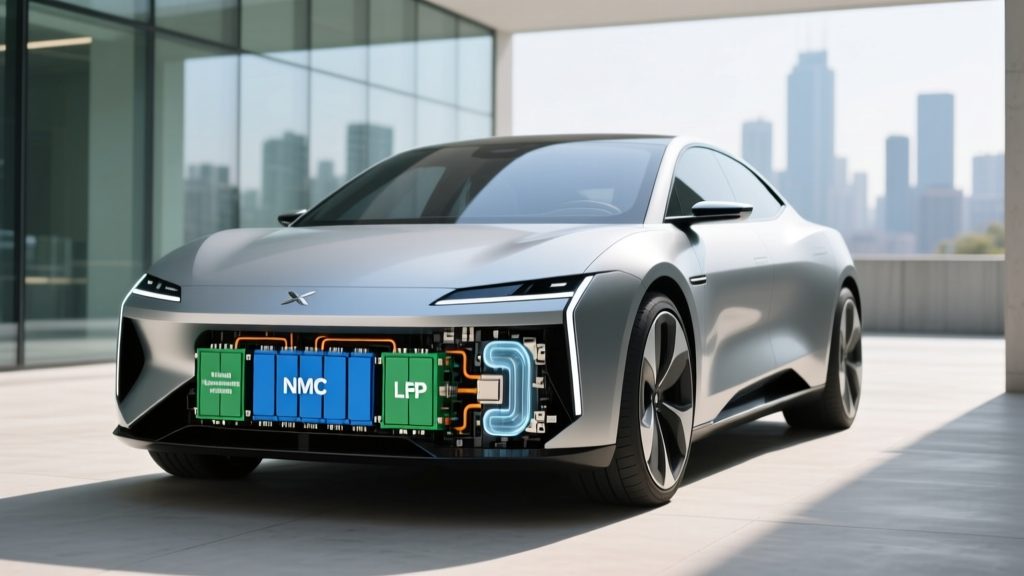
Tesla's Two Battery Chemistries: LFP vs NMC/NCA Explained
Every Tesla sold in 2026 uses one of two lithium ion cathode chemistries in its high-voltage traction battery (not to be confused with the 12V/16V auxiliary battery that powers electronics):
- LFP (Lithium Iron Phosphate): Used in the Model 3 Rear-Wheel Drive and Model Y Long Range RWD. CATL-supplied prismatic cells with a nominal pack capacity of approximately 60 kWh (usable ~57.5 kWh).
- NMC/NCA (Nickel Manganese Cobalt / Nickel Cobalt Aluminum): Used in Model 3 Long Range AWD, Model Y Long Range AWD, Model S, Model X, and Cybertruck. Panasonic and LG Energy Solution supply cylindrical 2170 and 4680 cells with pack capacities ranging from ~75 kWh to ~100 kWh usable.
| Attribute | LFP (Model 3 RWD / Model Y RWD) | NMC/NCA (Long Range / Performance / S/X) |
|---|---|---|
| Cathode Chemistry | Lithium Iron Phosphate (LiFePO4) | Nickel Manganese Cobalt / Nickel Cobalt Aluminum |
| Typical Usable Capacity | ~57.5 kWh | ~75–100 kWh |
| Energy Density (cell-level) | ~160–180 Wh/kg | ~250–300 Wh/kg |
| Cycle Life (to 80% SoH) | ~3,000–5,000 cycles | ~1,000–2,000 cycles |
| Cold-Weather Range Loss | Higher (~30–40% at 20°F) | Moderate (~20–30% at 20°F) |
| Recommended Daily Charge Limit | 100% (Tesla recommends weekly 100%) | 80% daily; 100% for trips only |
| Cobalt Content | None | Present (sourcing affects §30D credit) |
| Relative Cell Cost | Lower | Higher |
| Models Equipped (2026) | Model 3 RWD, Model Y Long Range RWD | Model 3 LR AWD, Model Y LR AWD, Model S, Model X, Cybertruck |
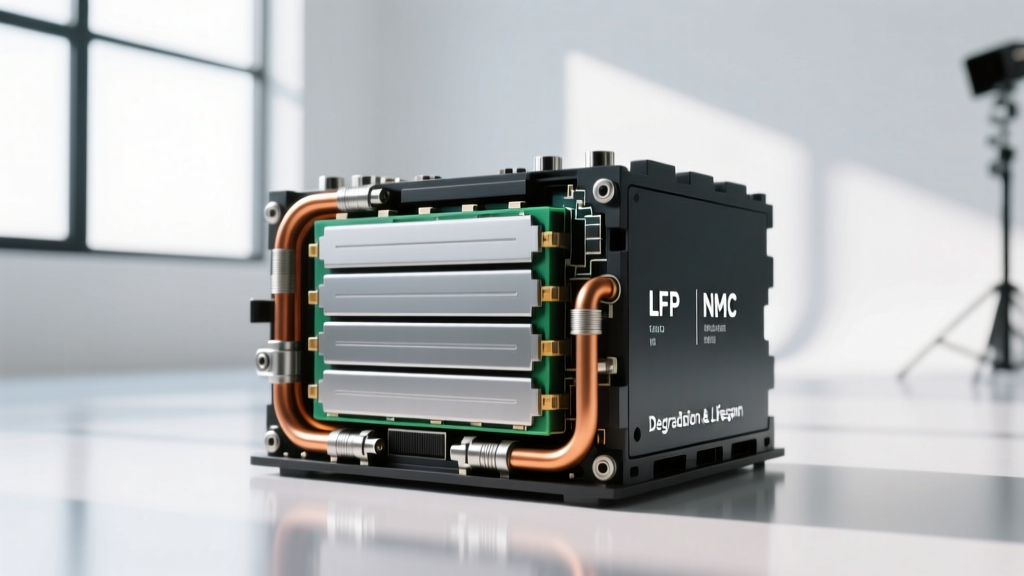
LFP vs NMC — Which Is Better and Why?
Neither chemistry is universally superior — the answer depends on your driving pattern:
Choose LFP if you prioritize longevity, lower upfront cost, and can charge to 100% regularly (which LFP actually needs for accurate BMS calibration). LFP's higher cycle life means a Model 3 RWD battery could theoretically endure 1 million+ miles of charge-discharge cycles before hitting 80% capacity. The trade-off: lower energy density means less range per charge, and LFP loses more range in freezing temperatures because the chemistry has higher internal resistance in cold conditions.
Choose NMC/NCA if you need maximum range (330+ miles EPA on the Model 3 Long Range), faster DC charging throughput (Model 3 LR peaks around 250 kW vs. ~170 kW on the RWD LFP), better cold-climate efficiency, or the performance envelope of a Model S Plaid. You'll accept a somewhat shorter cycle life and the discipline of an 80% daily charge limit to minimize degradation.
Real-World Degradation: What the Data Shows
Tesla's 2025 Impact Report and independent fleet data from sources like Tesla's own published figures indicate the following average degradation trajectory for Tesla lithium ion packs:
| Odometer | Average Capacity Retained | Typical Range Loss (Model 3 LR, EPA 341 mi baseline) |
|---|---|---|
| 0–25,000 miles | ~96–98% | ~7–14 miles |
| 50,000 miles | ~93–95% | ~17–24 miles |
| 100,000 miles | ~89–92% | ~27–37 miles |
| 150,000 miles | ~86–90% | ~34–48 miles |
| 200,000 miles | ~83–88% | ~41–58 miles |
Key observations from this data:
- The steepest degradation occurs in the first 20,000–30,000 miles — typically 2–4% loss — as the solid electrolyte interphase (SEI) layer stabilizes on the anode.
- After that initial drop, degradation slows significantly, averaging roughly 1% per 25,000–30,000 miles for NMC/NCA packs.
- LFP packs show even slower mid-life degradation, with some fleet vehicles retaining 95%+ capacity at 100,000 miles, though cold-climate LFP owners report slightly higher loss rates.
- Calendar aging matters too: a 5-year-old Tesla with only 40,000 miles may show similar degradation to a 2-year-old car with 80,000 miles. Time and average state of charge both contribute.
Tesla's Battery Warranty: What's Covered and for How Long
Tesla's new-vehicle limited battery warranty guarantees that the high-voltage traction battery will retain a minimum percentage of its original capacity over a defined period or mileage — whichever comes first. Here are the 2026 warranty terms by model:
| Model | Battery Warranty Period | Mileage Limit | Minimum Capacity Retention |
|---|---|---|---|
| Model 3 RWD (LFP) | 8 years | 100,000 miles | 70% |
| Model 3 Long Range / Performance | 8 years | 120,000 miles | 70% |
| Model Y (all trims) | 8 years | 120,000 miles | 70% |
| Model S / Model X | 8 years | 150,000 miles | 70% |
| Cybertruck | 8 years | 150,000 miles | 70% |
What the warranty covers: If your battery drops below 70% of its original usable capacity within the warranty period, Tesla will repair or replace the pack at no cost to restore capacity to at least 70%. The warranty also covers manufacturing defects and complete failures.
What it does not cover: Normal degradation above the 70% threshold, damage from accidents, flooding, or unauthorized modifications, and range reduction from software-limited charging habits. Tesla can pull telemetry data from the vehicle to verify whether warranty conditions are met.
Battery Replacement Costs: When and How Much
Out-of-warranty Tesla lithium ion battery replacement is rare — the vast majority of Tesla packs outlast the vehicle's useful economic life. But for owners of high-mileage vehicles or those buying used Teslas outside the warranty window, here are the approximate 2026 replacement costs based on service-center data and third-party EV repair shops:
| Model / Pack | Battery Size | Estimated Replacement Cost (Parts + Labor) | Typical Replacement Trigger |
|---|---|---|---|
| Model 3 RWD (LFP, CATL) | ~60 kWh | $10,000–$13,000 | Rare before 250k+ miles |
| Model 3/Y Long Range (NMC, 2170) | ~75–82 kWh | $13,000–$16,000 | Rare before 200k+ miles |
| Model S/X (NCA, Panasonic) | ~90–100 kWh | $18,000–$22,000 | Some at 150k–200k miles (older packs) |
| Cybertruck (4680 structural pack) | ~123 kWh | $20,000–$25,000 (est.) | Insufficient long-term data |
Important context: These figures represent full pack replacement. In practice, Tesla service centers increasingly perform module-level repairs — replacing only the degraded or failed modules within the pack — for $3,000–$7,000 depending on the number of modules affected. Early Model S vehicles (2012–2015) with 85 kWh packs saw the highest replacement rates, often around 150,000–180,000 miles. Current-generation 2170 and LFP packs show markedly better longevity.
For most buyers, the battery will never need replacement during their ownership. The average American drives ~14,000 miles per year; at that rate, reaching 200,000 miles takes over 14 years — well beyond typical ownership duration.
Factors That Accelerate (or Preserve) Battery Life
Tesla's battery management system (BMS) handles significant thermal and voltage protection automatically, but owner habits still meaningfully influence long-term degradation. Here's what the data shows:
Habits That Accelerate Degradation
- Consistent 100% SoC on NMC/NCA packs: Storing a nickel-based battery at full charge increases cathode stress and electrolyte oxidation. Tesla's own charge-limit recommendation of 80% daily exists for this reason.
- Frequent DC fast charging in extreme heat: While Tesla's Supercharger network preconditions the battery to optimize charge temperature, repeated 250 kW sessions in 100°F+ ambient heat still impose thermal stress. Expect marginally higher degradation if you Supercharge daily in Phoenix or Las Vegas summers.
- Deep discharge cycles (below 10% SoC): Regularly running the battery to near-zero increases anode copper dissolution risk. Try to keep the pack above 15% for daily use.
- Prolonged storage at high SoC: Leaving an NMC/NCA Tesla parked at 90–100% for weeks (vacation, travel) accelerates calendar aging. Store at 50% for extended parking.
Habits That Preserve Battery Health
- Set charge limit to 80% for NMC/NCA; 100% for LFP — the Tesla app makes this a one-tap setting.
- Charge to 100% on LFP packs at least once per week — Tesla explicitly recommends this for accurate BMS state-of-charge calibration.
- Use scheduled charging and scheduled departure — preconditioning the battery before driving reduces cold-start stress and improves regen efficiency.
- Plug in when possible in extreme cold — shore power keeps the thermal management system active without draining the pack.
- Keep the vehicle in a garage or shaded area when possible during summer months to reduce passive thermal load.
- Avoid leaving the car at very low SoC (<10%) for extended periods — charge promptly after reaching low state of charge.
How to Check and Monitor Your Tesla's Battery Health
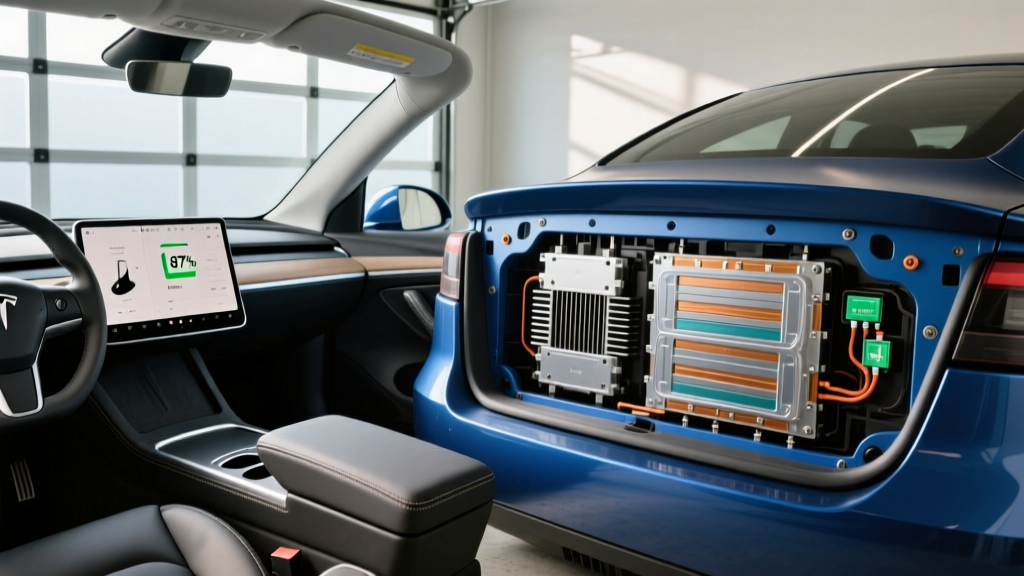
Tesla does not expose a direct "State of Health" (SoH) percentage in the vehicle's touchscreen or app the way some competitors do. However, owners have several methods to assess battery condition:
Method 1: Range vs. Odometer Tracking
The simplest approach: note your displayed range at 100% charge (or 80% for NMC/NCA, then extrapolate) and compare it to the original EPA-rated range. A Model 3 Long Range that showed 341 miles at 100% when new but now shows 315 miles at 100% has roughly 92% SoH. Track this monthly — a spreadsheet or the third-party app Teslamate (self-hosted) can automate the logging.
Method 2: Tesla Service Mode
Owners can access a limited diagnostics screen by holding the model badge on the "Software" screen for ~3 seconds, entering "service" as the access code. The resulting Service Mode displays nominal full-pack capacity in kWh, which you can compare against the original spec. Note: Tesla has restricted some Service Mode features in recent OTA updates.
Method 3: Third-Party OBD-II Tools
Devices like the OBDLink MX+ paired with apps such as Scan My Tesla can read real-time BMS data including nominal full-pack energy, pack voltage, cell imbalance (voltage delta between brick groups), and charge/discharge cycle count. A cell imbalance exceeding 25–30 mV at rest may indicate a module issue worth investigating at a service center.
Method 4: Pre-Purchase Inspection (Used Teslas)
If you're buying a used Tesla, request a battery health report from a Tesla Service Center (some locations provide this for ~$50–$100). Alternatively, third-party EV inspection services like Recurrent Auto offer battery health certificates based on telemetry analysis.
Looking Ahead: Solid-State and Silicon-Anode Batteries
The next frontier in EV battery technology includes solid-state electrolytes (replacing the liquid electrolyte with a solid ceramic or polymer) and silicon-dominant anodes (replacing graphite to boost energy density). Here's where these technologies stand as of 2026:
- Solid-state batteries: Toyota has announced limited production of solid-state-equipped vehicles for 2027–2028, targeting 450+ mile range and 10-minute DC fast charging. Tesla has not announced a solid-state timeline. Industry consensus from analysts at BloombergNEF and BatteryIQ places broad commercialization at 2029–2032 for cost-competitive volumes. Current solid-state prototypes face challenges with manufacturing scale, interfacial resistance, and cost per kWh.
- Silicon-anode cells: Tesla's 4680 cells already incorporate a silicon component in the anode (alongside graphite). Companies like Sila Nanotechnologies and Group14 are scaling silicon-anode materials, with incremental energy-density improvements of 10–20% expected through 2028. These are evolutionary improvements within existing lithium ion architecture, not a replacement for it.
- Sodium-ion batteries: CATL has begun limited deployment of sodium-ion packs in Chinese-market vehicles. Tesla has not announced sodium-ion adoption for US models. Sodium-ion offers lower cost and better cold performance but significantly lower energy density (~120–140 Wh/kg), limiting its use to entry-level, shorter-range vehicles.
None of these technologies are available in any Tesla sold today. Current lithium ion LFP and NMC/NCA packs remain the standard through at least 2028–2029 based on Tesla's announced gigafactory capacity plans.
Tesla Battery FAQ
How long do Tesla lithium ion batteries last?
Based on fleet data, most Tesla NMC/NCA packs retain 85–90% of original capacity at 200,000 miles, and LFP packs often retain 90%+ at the same mileage. In practical terms, a Tesla battery should outlast 15–20 years of average driving (14,000 miles/year) before degradation becomes functionally limiting. Complete pack failure before 200,000 miles is statistically uncommon in current-generation vehicles.
How much does it cost to replace a Tesla battery?
Full pack replacement ranges from approximately $10,000 for a Model 3 RWD LFP pack to $22,000+ for a Model S/X NCA pack, including labor. Module-level repairs cost $3,000–$7,000. Under warranty, replacement is free if capacity drops below 70% within 8 years / 100,000–150,000 miles (varies by model). Most owners never need a replacement.
Does frequent Supercharging damage the battery?
DC fast charging generates more heat than Level 2 charging, and heat accelerates degradation — but Tesla's BMS actively manages charge temperature through the liquid thermal management system. Data from high-mileage Tesla fleets (including taxis and rideshare vehicles that Supercharge daily) shows only marginally higher degradation — typically 2–4% more loss at 150,000 miles compared to predominantly Level 2-charged vehicles. The impact is real but modest.
Should I charge my Tesla to 100% every day?
For LFP packs (Model 3 RWD, Model Y Long Range RWD): yes, Tesla recommends charging to 100% at least weekly for accurate BMS calibration. For NMC/NCA packs (Long Range AWD, Performance, Model S/X): no — set the daily limit to 80% and charge to 100% only before longer trips. This distinction is chemistry-specific and matters for long-term health.
Does cold weather permanently damage the battery?
No. Cold temperatures temporarily reduce range (20–40% loss at 20°F depending on chemistry and trip length) due to increased internal resistance and energy diverted to cabin/battery heating. This range loss is fully recovered when temperatures normalize. Permanent damage occurs only if the battery is charged at high rates while below freezing without preconditioning — Tesla's BMS prevents this by restricting charge power until the pack reaches a safe temperature.
Can I check my Tesla battery health myself?
Yes, though Tesla doesn't provide a direct SoH percentage. You can track displayed range at full charge versus original EPA range, use Service Mode to read nominal pack capacity in kWh, or use third-party OBD-II tools like Scan My Tesla for detailed BMS data. For used-vehicle purchases, a Tesla Service Center battery health report provides the most authoritative assessment.
Is LFP safer than NMC?
LFP chemistry is inherently more thermally stable — its onset temperature for thermal runaway is approximately 518°F (270°C) versus roughly 410°F (210°C) for NMC. This means LFP cells are more resistant to fire propagation in the event of a severe crash or internal short circuit. Both chemistries in Tesla vehicles are protected by the structural pack design, firewalls, and BMS monitoring, and both have strong safety records per NHTSA data.