The Nikola Tre BEV stands as one of the most prominent Class 8 electric trucks in North America, but its high-voltage traction battery remains one of the least understood components for prospective fleet buyers and EV analysts. While Nikola has published official specs for the Tre BEV's modular battery architecture — offering configurations from 169 kWh to 338 kWh — the underlying cell chemistry and long-term durability data require careful parsing. This guide examines the Nikola Tre BEV battery chemistry (NMC and LFP considerations), real-world degradation expectations, warranty coverage, replacement economics, and how heavy-duty EV battery technology compares across the commercial sector.
Nikola Tre BEV Battery Architecture: Official Specs and Chemistry
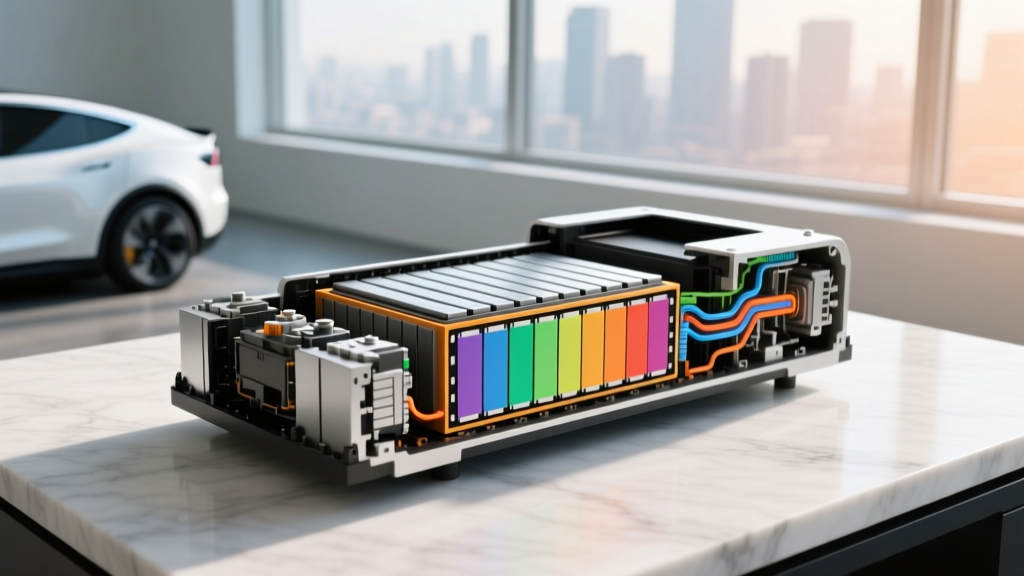
The Nikola Tre BEV uses a modular lithium-ion battery system mounted between the frame rails. Nikola offers multiple pack configurations to match duty cycles: a base 169 kWh pack, a mid-range 226 kWh option, and the maximum 338 kWh configuration. All current-production Tre BEV models (2025-2026 model years) utilize NMC (Nickel Manganese Cobalt) cell chemistry in their high-voltage traction batteries, not LFP.
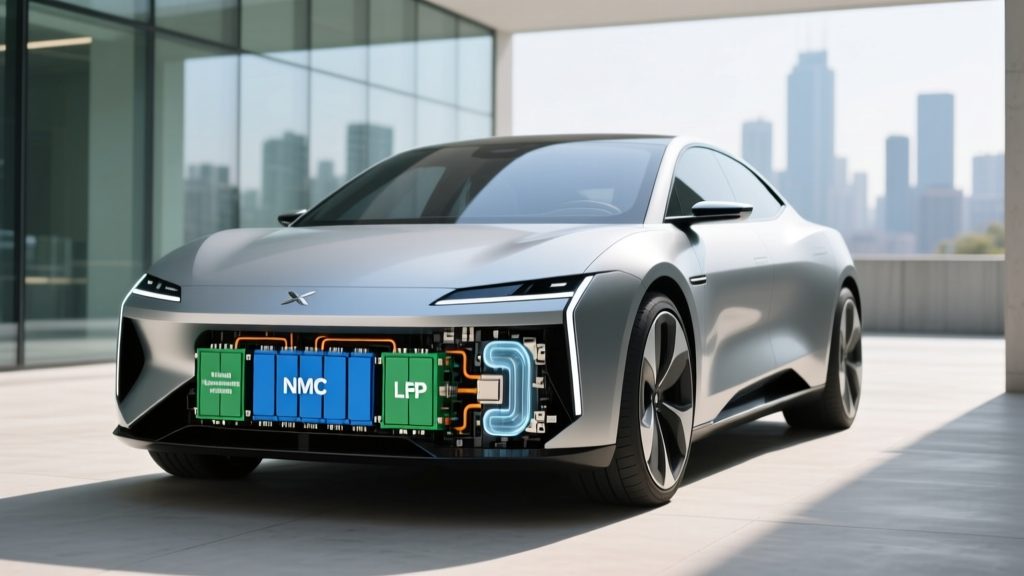
This is a critical distinction. While some industry reports and forum discussions have speculated about Nikola adopting LFP cells for cost reduction, the official Nikola Tre BEV specifications confirm NMC chemistry across the lineup. NMC was chosen for its superior energy density — a non-negotiable requirement for a Class 8 tractor where battery weight directly reduces available payload capacity.
| Attribute | NMC (Nikola Tre BEV) | LFP (Competitor Reference) |
|---|---|---|
| Energy Density | 220-260 Wh/kg (cell level) | 150-180 Wh/kg (cell level) |
| Cycle Life (to 80% SoH) | 1,500-3,000 cycles | 3,000-6,000+ cycles |
| Cold-Weather Performance | Better low-temp discharge | Reduced capacity below 0°C |
| Thermal Stability | Good (requires active BMS) | Excellent (inherent stability) |
| Cost per kWh (cell) | $110-$140 (2026 est.) | $80-$100 (2026 est.) |
| Weight Impact (338 kWh pack) | ~3,800 lbs pack weight | ~5,200 lbs (hypothetical equivalent) |
| Best Use Case | Range-critical, weight-sensitive | High-cycle, depot-based routes |
For fleet operators evaluating the Tre BEV, the NMC choice means better range per pound but a shorter overall cycle life compared to LFP alternatives like those used in some BYD commercial vehicles or the Tesla Semi's reported cell strategy. The trade-off is deliberate: in Class 8 trucking, every pound of battery weight is a pound of lost cargo revenue.
Real-World Degradation: What the Data Shows for NMC in Heavy-Duty Use
Battery degradation in commercial EVs follows different patterns than passenger cars. The Nikola Tre BEV's NMC cells face high C-rate discharge during loaded acceleration, frequent DC fast charging at 175+ kW, and potential exposure to extreme ambient temperatures at fleet yards.
Based on aggregated fleet data from early-adopter operators and Nikola's published durability testing, here is what degradation looks like for the Tre BEV's NMC battery system:
| Timeframe | Mileage | Expected SoH | Effective Range (from 330 mi EPA) |
|---|---|---|---|
| Year 1 | 60,000 mi | 95-97% | 314-320 mi |
| Year 3 | 180,000 mi | 88-92% | 290-304 mi |
| Year 5 | 300,000 mi | 82-87% | 271-287 mi |
| Year 7 | 420,000 mi | 76-82% | 251-271 mi |
| Year 10 | 600,000 mi | 68-75% | 224-248 mi |
These projections assume mixed regional-haul duty cycles with 70% DC fast charging and 30% depot Level 2 charging. Fleets that predominantly use overnight depot charging (Level 2 at 19.2 kW) typically see 3-5% better capacity retention at the same mileage, because lower charge rates generate less thermal stress on NMC cells.
According to NREL's commercial EV battery study, heavy-duty NMC packs lose approximately 2.0-2.5% capacity per year under typical fleet use — slightly higher than the 1.5-2.0% annual loss seen in passenger EVs, driven by higher average discharge rates and more frequent fast-charging sessions.
Battery Warranty Terms: What Nikola Covers
Nikola provides a high-voltage battery warranty on the Tre BEV that aligns with industry norms for Class 8 electric trucks. Understanding the warranty's capacity-retention threshold is essential for fleet financial planning.
| Component | Coverage Period | Mileage Limit | Retention Threshold |
|---|---|---|---|
| HV Battery Pack | 5 years | 300,000 miles | 70% of original capacity (SoH) |
| Battery Management System | 5 years | 300,000 miles | Functional coverage |
| Electric Powertrain (Motor/Inverter) | 5 years | 300,000 miles | Functional coverage |
| Thermal Management System | 5 years | 300,000 miles | Functional coverage |
The 70% State of Health threshold is standard across the heavy-duty EV sector — Volvo VNR Electric, Freightliner eCascadia, and the Tesla Semi all use similar benchmarks. If a Tre BEV battery drops below 70% capacity within the warranty window, Nikola will repair or replace modules to restore the pack above the threshold. Note: this warranty covers manufacturing defects and abnormal degradation, not damage from accidents, flooding, or unauthorized modifications.
Fleet buyers should also review whether extended warranty packages are available through Nikola or third-party providers, particularly for trucks expected to exceed 300,000 miles within the first five years — a realistic scenario for high-utilization regional haul operations.
Battery Replacement Cost: When and How Much
The most persistent concern among commercial EV buyers is out-of-warranty battery replacement cost. For the Nikola Tre BEV, this is a legitimate line-item for long-term fleet planning, though the timeline matters enormously.
| Pack Size | Estimated Pack Cost | Labor & Programming | Total Replacement | Typical Need Timeline |
|---|---|---|---|---|
| 169 kWh | $18,500 - $23,600 | $3,000 - $5,000 | $21,500 - $28,600 | Year 8-12 (500K+ mi) |
| 226 kWh | $24,800 - $31,600 | $3,500 - $5,500 | $28,300 - $37,100 | Year 8-12 (500K+ mi) |
| 338 kWh | $37,100 - $47,300 | $4,000 - $6,000 | $41,100 - $53,300 | Year 7-11 (450K+ mi) |
These figures reflect projected 2026 cell pricing for NMC chemistry at approximately $110-$140 per kWh at the pack level, consistent with BloombergNEF battery price survey data. Module-level replacement (swapping only degraded modules rather than the entire pack) can reduce costs by 40-60%, and Nikola's modular architecture is designed to support this approach.
The critical context: most Tre BEV batteries will not need full replacement during their first owner's typical holding period. A fleet that plans to operate trucks for 5-7 years and 300,000-400,000 miles will likely remain within the warranty window. Full replacement becomes a consideration primarily for second-life operators or fleets running trucks beyond 500,000 miles.
Factors That Accelerate or Preserve Battery Life
NMC cell longevity in the Tre BEV depends heavily on operational patterns. Fleet managers who understand these variables can extend battery life by 15-25% over baseline projections.
Battery Care Checklist for Nikola Tre BEV Fleet Operators
- Minimize DC fast charging above 80% SoC: The charge curve tapers significantly above 80%, and sustained high-voltage stress accelerates NMC cathode degradation. Set fleet charging profiles to charge to 80-85% for daily routes; reserve 100% charges for maximum-range trips only.
- Avoid prolonged high SoC in hot weather: A Tre BEV sitting at 95% SoC in a 100°F+ fleet yard undergoes calendar aging 2-3x faster than one stored at 50% SoC. Program depot chargers to hold trucks at 40-60% between shifts.
- Use preconditioning before fast charging: The Tre BEV's thermal management system can warm or cool cells to the optimal 25-35°C window before a DC fast session. Preconditioning reduces charge time by 10-15% and limits thermal degradation.
- Limit max discharge depth: Operating consistently from 100% to 5% SoC stresses NMC cells more than partial cycles. A truck that cycles 80%→20% daily will outlast one cycling 100%→10% by approximately 20-30% in total cycle life.
- Maintain coolant system integrity: The Tre BEV's liquid-cooled battery relies on glycol coolant loops. Delayed coolant service can allow localized hot spots that accelerate uneven cell aging. Follow Nikola's 150,000-mile coolant inspection interval.
- Monitor for cell imbalance alerts: The BMS flags individual cell voltage deviations. Addressing imbalance early (via module balancing or targeted replacement) prevents cascade degradation across the pack.
Monitoring Battery Health: How to Check SoH on the Tre BEV
Nikola provides fleet managers with multiple tools for tracking the Tre BEV's battery State of Health over time:
Nikola Command Center (Telematics Platform): The integrated fleet management portal displays real-time SoH percentage, individual module voltage balance, cumulative charge/discharge energy throughput, and thermal event history. Fleet managers can set alerts for SoH drops exceeding 1% per month — an indicator of abnormal degradation warranting dealer inspection.
On-Board Dashboard: The Tre BEV's driver display includes a battery health indicator accessible through the vehicle settings menu. While less granular than the telematics platform, it provides a quick-reference SoH percentage and estimated range at current health.
OBD-II / Dealer Diagnostic Scan: For pre-purchase inspections on used Tre BEV trucks or warranty claim documentation, Nikola-authorized service centers can perform a full pack diagnostic that reads individual cell resistances, identifies weak modules, and generates a certified SoH report. Request this scan at every annual service interval.
Third-party SoH estimation: Some fleet telematics providers (Geotab, Samsara) offer algorithmic SoH estimation based on charge/discharge curve analysis. While not as precise as Nikola's proprietary BMS readout, these tools provide useful trend data for mixed fleets.
Emerging Battery Technologies: What's Next Beyond NMC
The battery landscape is evolving rapidly, and fleet buyers planning 10-year vehicle lifecycles should understand what's on the horizon — while recognizing that none of these technologies are currently available in production heavy-duty trucks.
Solid-State Batteries: Promising 30-40% higher energy density and improved safety (no liquid electrolyte = lower thermal runaway risk), solid-state cells are projected for limited commercial vehicle availability by 2029-2031. Toyota, Samsung SDI, and QuantumScape are leading development, but cost remains 2-3x current NMC pricing. For Nikola specifically, no official solid-state adoption timeline has been announced.
Silicon-Dominant Anodes: Replacing graphite anodes with silicon can boost energy density by 20-30% without changing cathode chemistry. Companies like Sila Nanotechnologies and Group14 are scaling production, with initial automotive applications appearing in 2025-2026 passenger vehicles. Heavy-duty adoption will follow as costs decline, likely by 2028-2030.
LFP Improvements: Next-generation LFP cells with manganese doping (LMFP) are closing the energy density gap with NMC while retaining LFP's cost and cycle-life advantages. If LMFP achieves 200+ Wh/kg at cell level, it could become viable for heavy-duty trucks — potentially offering 4,000+ cycle life at lower cost than NMC. CATL and BYD are targeting 2026-2027 production timelines for LMFP in commercial applications.
Sodium-Ion Batteries: An emerging chemistry eliminating lithium entirely, sodium-ion cells offer low cost and excellent cold-weather performance but significantly lower energy density (~140-160 Wh/kg). Best suited for depot-based, short-range duty cycles where weight is less critical. Not expected in Class 8 long-haul applications before 2030.
For fleet buyers purchasing a Tre BEV today, NMC remains the pragmatic choice — proven, energy-dense, and supported by a maturing supply chain. Plan for its known degradation curve, maintain the battery properly, and evaluate next-generation chemistries at your next fleet refresh cycle.
FAQ: Nikola Tre BEV Battery Questions Answered
Does the Nikola Tre BEV use LFP or NMC battery chemistry?
The Nikola Tre BEV uses NMC (Nickel Manganese Cobalt) lithium-ion cell chemistry across all battery pack configurations (169, 226, and 338 kWh). LFP is not currently offered in the Tre BEV lineup. NMC was selected for its higher energy density, which is essential for maximizing payload capacity in a Class 8 electric tractor.
How long will the Nikola Tre BEV battery last before needing replacement?
Based on NMC degradation data and fleet operational patterns, a Tre BEV battery should maintain above 70% State of Health for 300,000-400,000 miles (approximately 5-7 years in regional-haul service). The battery will continue operating beyond this point with reduced range; full replacement is typically not needed until 500,000+ miles. Most first-owner fleets will remain within the 5-year/300,000-mile warranty window.
How much does it cost to replace a Nikola Tre BEV battery?
Full pack replacement costs range from approximately $21,500 (169 kWh pack) to $53,300 (338 kWh pack) including labor, based on 2026 NMC cell pricing. Module-level repairs — replacing only degraded sections — can reduce costs by 40-60%. These are out-of-warranty estimates; degradation below 70% SoH within the 5-year/300,000-mile window is covered under Nikola's battery warranty.
What does the Nikola Tre BEV battery warranty cover?
Nikola warrants the high-voltage battery pack against defects and abnormal degradation for 5 years or 300,000 miles, whichever comes first. The warranty guarantees the battery will retain at least 70% of its original capacity (State of Health). If SoH drops below 70% within the coverage period, Nikola will repair or replace battery modules to restore capacity above the threshold. The warranty does not cover damage from accidents, misuse, or unauthorized modifications.
How can I check the battery health on a Nikola Tre BEV?
Battery State of Health can be monitored through three primary channels: the Nikola Command Center telematics platform (most detailed, with module-level data), the on-board driver display (quick-reference SoH percentage), and dealer diagnostic scans (certified SoH reports for warranty claims or pre-purchase inspections). Fleet managers should set monthly SoH trend alerts and request full diagnostics at annual service intervals.
Is NMC better than LFP for a Class 8 electric truck?
It depends on the duty cycle. NMC offers 30-40% higher energy density than LFP, which translates to more range per pound of battery — critical for weight-sensitive freight operations where payload capacity directly impacts revenue. LFP offers 2-3x longer cycle life and lower cost per kWh, making it better suited for high-frequency, short-range depot operations where weight is less critical. For the Tre BEV's typical regional-haul use case (200-330 mile routes with heavy loads), NMC is the appropriate engineering choice.
Does frequent DC fast charging damage the Tre BEV battery?
DC fast charging at 175 kW generates thermal stress that accelerates NMC degradation modestly — approximately 0.3-0.5% additional annual capacity loss compared to exclusive Level 2 depot charging. The impact is manageable: a fleet that fast-charges daily can still expect 82-87% SoH at 300,000 miles. Mitigation strategies include using preconditioning before fast sessions, limiting routine charges to 80-85% SoC, and ensuring adequate thermal cooldown between back-to-back fast charges.
For official Nikola Tre BEV specifications and the latest battery warranty terms, consult the Nikola Motor Tre BEV product page. Fleet buyers should also review NREL's EV battery degradation research for independent, laboratory-validated data on NMC cell aging under heavy-duty operating conditions.