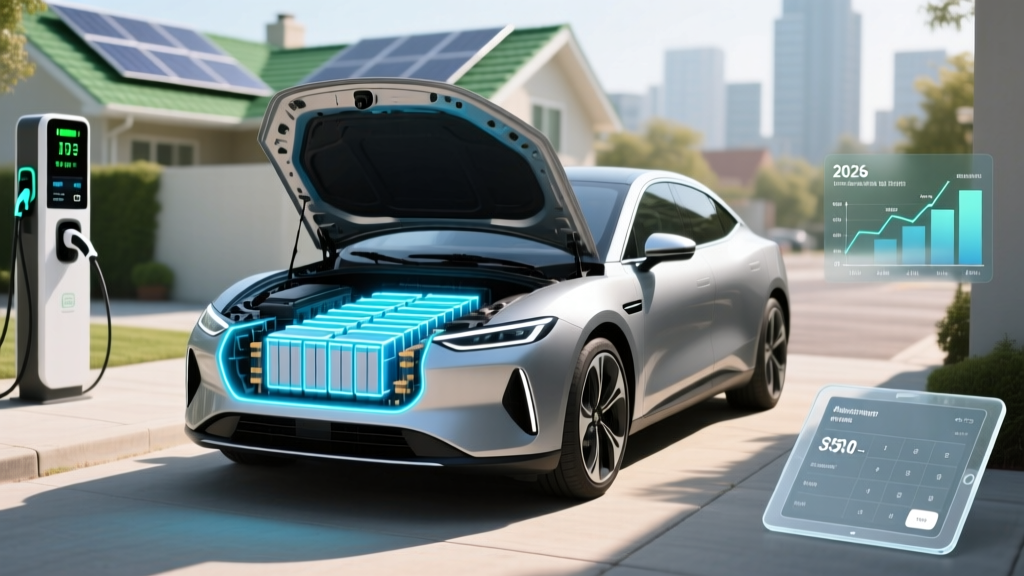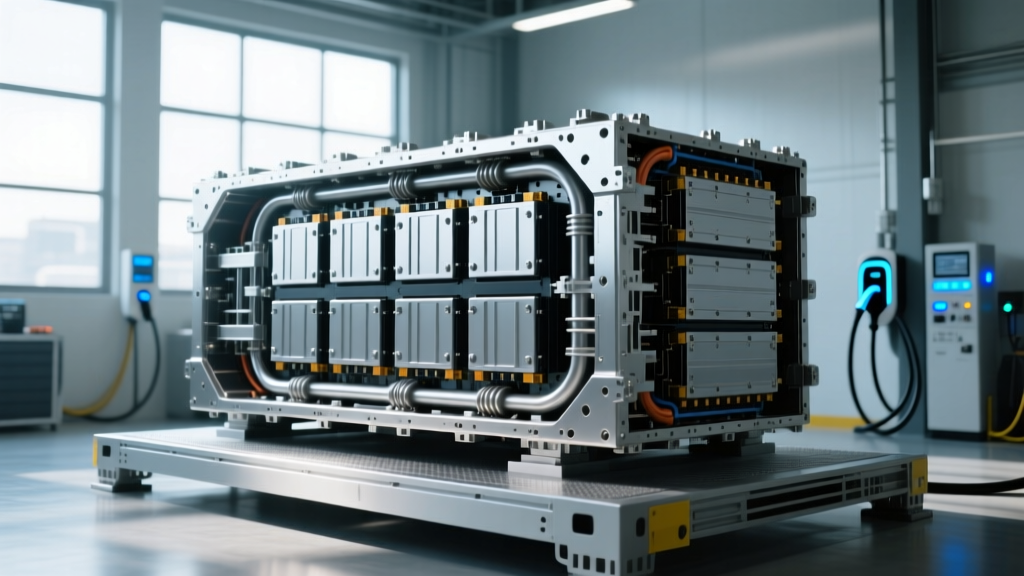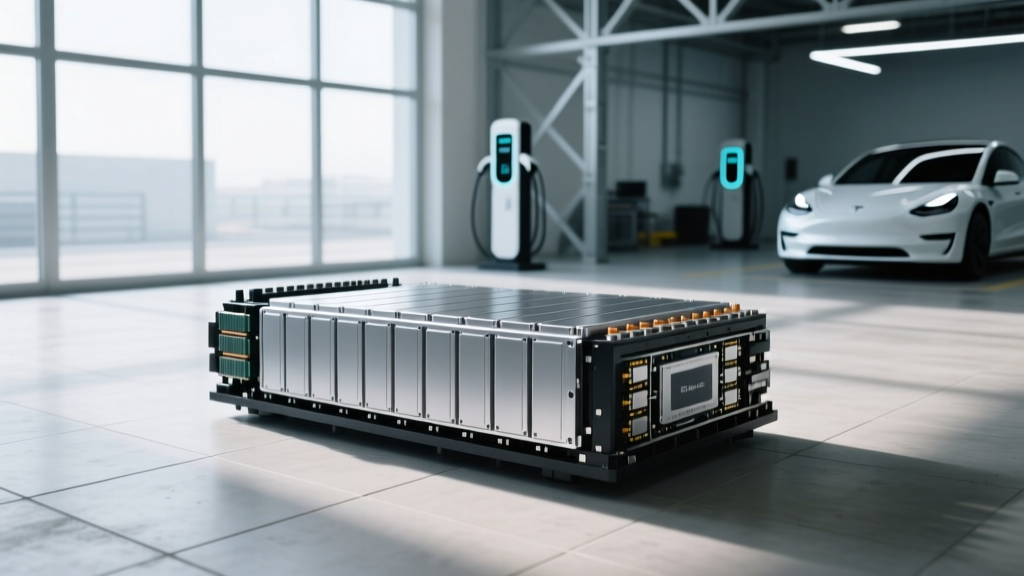
If you've shopped for a Tesla Model 3 or Model Y in the last few years, you've likely encountered the term "Tesla LFP battery" on the window sticker or spec sheet. LFP — lithium iron phosphate — now powers the majority of Tesla's Standard Range and Rear-Wheel Drive vehicles sold in North America. It's a fundamentally different chemistry than the nickel-based NMC/NCA packs found in Long Range and Performance variants, and it demands a different ownership approach.
This guide breaks down exactly what an LFP pack is, how it degrades over real-world miles, what Tesla's warranty actually covers, what a replacement costs in 2026, and how to maximize the life of whichever chemistry is under your floor.
What Is an LFP Battery and Why Does Tesla Use It?
LFP stands for lithium iron phosphate (LiFePO₄). Unlike NMC (nickel manganese cobalt) or NCA (nickel cobalt aluminum) chemistries, LFP cathodes contain no nickel or cobalt. That makes them cheaper to produce, less dependent on volatile supply chains, and inherently more thermally stable. Tesla began sourcing LFP cells primarily from CATL in China and introduced them into the Model 3 Standard Range Plus in late 2021 for the North American market. By 2026, LFP powers the Model 3 Rear-Wheel Drive, Model Y Rear-Wheel Drive, and select base trims globally.
The trade-off is energy density. LFP cells store roughly 15–20% less energy per kilogram than modern high-nickel NMC cells. That's why LFP Teslas carry slightly smaller usable battery packs (around 57–60 kWh) and deliver EPA ranges in the 272–330 mile band, compared to 340+ miles for Long Range NMC variants. For most daily drivers, that range is more than adequate — and the longevity benefits are substantial.
| Attribute | LFP (LiFePO₄) | NMC / NCA |
|---|---|---|
| Energy Density | ~160–180 Wh/kg (cell level) | ~230–260 Wh/kg (cell level) |
| Typical Cycle Life | 3,000–5,000+ cycles to 80% SoH | 1,500–2,500 cycles to 80% SoH |
| Thermal Stability | Excellent — higher runaway threshold (~270°C) | Good — lower runaway threshold (~210°C) |
| Cold-Weather Performance | Moderate loss; slower charge acceptance below freezing | Better low-temp charge/discharge |
| Recommended Daily SoC | 100% (Tesla recommends periodic full charges for BMS calibration) | 80% daily; 100% only for trips |
| Cost per kWh (cell) | Lower (~$80–$100/kWh in 2025–2026) | Higher (~$110–$140/kWh) |
| Cobalt/Nickel Content | None | Significant |
LFP vs NMC — Which Is Better and Why?
Neither chemistry is universally "better." The right choice depends on your driving pattern.
Choose LFP if: You mostly drive under 200 miles per day, charge at home regularly, plan to own the car for 8+ years, and want the longest possible cycle life. LFP's ability to tolerate regular 100% charges without accelerated degradation is a major ownership advantage for daily commuters. A 2024 study published in the Journal of Power Sources found LFP cells retaining over 90% capacity after 3,000 full cycles — equivalent to roughly 800,000 miles in a Model 3 RWD.
Choose NMC/NCA if: You frequently road-trip and need maximum EPA range (340+ miles), you live in a very cold climate where every mile of range matters in winter, or you need the performance of a dual-motor Long Range or Plaid variant (which are only offered with NMC/NCA packs).
How Long Do Tesla LFP Batteries Last? Real Degradation Data
Battery degradation is measured as a percentage loss of original usable capacity over time and miles. All lithium-ion packs lose some capacity — the question is how fast.
Observed LFP Degradation Curve (Tesla Model 3/Y RWD):
- Year 1 / ~15,000 mi: ~2–4% capacity loss (initial formation loss, typical for all Li-ion)
- Year 3 / ~45,000 mi: ~5–7% total loss
- Year 5 / ~75,000 mi: ~7–10% total loss
- Year 8 / ~120,000 mi: ~10–14% total loss (still well above warranty threshold)
For comparison, NMC/NCA Tesla packs tend to show slightly higher early degradation (~3–5% in year one) but then flatten similarly. Fleet data aggregated by Recurrent Auto across thousands of vehicles confirms that the average Tesla battery retains roughly 88–92% of original capacity at 100,000 miles, with LFP packs trending toward the higher end of that band.
To put this in perspective: a Model 3 RWD with an EPA range of 272 miles that has degraded 10% after 75,000 miles still delivers roughly 245 EPA-equivalent miles. In real-world highway driving at 70 mph in moderate weather, expect about 210–225 miles from that same pack — still plenty for most daily needs and road trips with one Supercharger stop.
Tesla Battery Warranty: What's Covered and for How Long
Tesla's battery warranty is one of the more straightforward in the industry, but the details matter — especially the capacity retention threshold.
| Model / Trim | Warranty Period | Mileage Limit | Minimum Capacity Retention |
|---|---|---|---|
| Model 3 RWD (LFP) | 8 years | 100,000 miles | 70% |
| Model Y RWD (LFP) | 8 years | 100,000 miles | 70% |
| Model 3 Long Range / Performance (NMC/NCA) | 8 years | 120,000 miles | 70% |
| Model Y LR / Perf (NMC/NCA) | 8 years | 120,000 miles | 70% |
| Model S / Model X | 8 years | 150,000 miles | 70% |
The warranty covers replacement or repair if the battery falls below 70% of its original usable capacity within the stated period or mileage — whichever comes first. It also covers manufacturing defects. It does not cover damage from accidents, flooding, or unauthorized modifications. Tesla will replace the pack with one that has at least the minimum retention capacity — not necessarily a brand-new pack.
According to Tesla's official warranty documentation, the warranty is transferable to subsequent owners, which supports resale value.
How Much Does a Tesla Battery Replacement Cost?
This is the question that generates the most anxiety — and the most misinformation. Let's anchor the numbers in reality.
| Model | Battery Size (Usable) | Chemistry | Estimated Replacement Cost (Parts + Labor) |
|---|---|---|---|
| Model 3 RWD | ~57–60 kWh | LFP | $12,000–$16,000 |
| Model 3 Long Range | ~75–82 kWh | NMC/NCA | $16,000–$22,000 |
| Model Y RWD | ~57–60 kWh | LFP | $12,000–$16,000 |
| Model Y Long Range | ~75–82 kWh | NMC/NCA | $16,000–$22,000 |
| Model S / X | ~95–100 kWh | NMC/NCA | $20,000–$28,000 |
These are out-of-warranty estimates based on Tesla service center invoices reported by owners and third-party EV repair shops through 2025–2026. Costs have been declining as cell prices drop — LFP cell pricing fell below $90/kWh at the pack level in 2025, per BloombergNEF data.
When is replacement actually needed? The honest answer: rarely during the car's useful life. The vast majority of Tesla batteries outlast the vehicle's body, interior, and suspension components. Out-of-warranty replacements are overwhelmingly due to physical damage (collision, flood) rather than degradation. A well-maintained LFP pack should comfortably exceed 300,000 miles before dropping below 70% capacity.
Factors That Affect Your Tesla LFP Battery's Lifespan
While LFP chemistry is inherently durable, your habits still influence how quickly the pack degrades. Here's what matters most, ranked by impact:
- State of Charge habits: Unlike NMC, Tesla explicitly recommends charging LFP packs to 100% at least once per week. This isn't just acceptable — it's required for the Battery Management System (BMS) to accurately calibrate range estimates. Between those full charges, plugging in whenever convenient is fine.
- DC fast-charging frequency: Occasional Supercharging is perfectly fine. However, daily use of 250 kW V3 Superchargers as your primary charge method will accelerate degradation slightly compared to Level 2 home charging. Tesla's thermal management system actively cools the pack during DC charging, which mitigates much of the heat stress. Aim for 80%+ of your charging on Level 2 (7–11.5 kW) for optimal longevity.
- Extreme temperature exposure: Sustained operation or storage in temperatures above 100°F (38°C) accelerates calendar aging. In very cold weather (below 20°F / -7°C), LFP packs experience greater range loss (~25–35%) compared to NMC packs (~20–30%) and accept regenerative braking and DC charge rates more slowly until the pack warms. Always use Tesla's preconditioning feature — navigate to a Supercharger in the car's navigation, and the car will warm the battery to optimize charge speed.
- Deep discharge avoidance: Don't regularly let the pack sit at 0% or near-zero for extended periods. If you must store the car, Tesla recommends leaving it plugged in with the charge limit set to 50% for long-term storage.
- Software updates: Keep your Tesla updated. Tesla periodically refines BMS algorithms via over-the-air updates that can improve charge accuracy and thermal management.
How to Check and Monitor Your Tesla's Battery Health (SoH)
Tesla doesn't display a direct "State of Health" percentage in the vehicle UI the way some competitors do. But you have several methods to assess your pack's condition:
1. In-car range estimate method: Charge to 100% and note the displayed rated range. Compare it to the EPA-rated range for your specific model when new (e.g., 272 miles for a 2025 Model 3 RWD). A car showing 252 miles at 100% has approximately 7.4% degradation. Note: Tesla's displayed range is based on a fixed energy-per-mile constant, not a dynamic calculation, so this is a reasonably reliable proxy.
2. Tesla Service Mode (if available): Some model years allow owners to access Service Mode through the software menu, which displays nominal full-pack energy (kWh) — comparing this to the original spec gives a direct capacity measurement.
3. Third-party apps: Apps like Tessie, Teslamate (self-hosted), and Stats (iOS) can track your charge sessions over time and calculate degradation curves by logging energy added vs. SoC change. This is the most data-rich method for engaged owners.
4. Tesla Service diagnostic: If you suspect abnormal degradation, you can request a battery health check through the Tesla app. Service centers can pull detailed cell-level voltage data and internal resistance measurements that aren't accessible to owners.
Beyond LFP: What's Next in Battery Technology?
The battery landscape is evolving rapidly, but it's critical to separate announced research from production-ready technology.
Solid-state batteries: Companies like QuantumScape and Toyota have demonstrated solid-state prototypes with higher energy density and faster charging. However, as of early 2026, no solid-state pack is in mass production for consumer vehicles at scale. Toyota has announced a limited 2027–2028 production timeline for its first solid-state EV, but volumes will be small and pricing premium. Widespread solid-state adoption in mainstream vehicles like Tesla is realistically a 2030+ prospect.
Silicon-dominant anodes: Companies including Sila Nanotechnologies and Group14 are working to replace graphite anodes with silicon, which can store significantly more lithium ions. This improves energy density without changing the cathode chemistry — meaning future LFP cells could gain 10–20% more capacity. Some silicon-blend anodes are already in limited production (e.g., in the Mercedes G-Class EV), but cost and cycle-life challenges remain for mass-market adoption.
Sodium-ion batteries: CATL and BYD have begun producing sodium-ion cells for low-cost, lower-range vehicles in China. Sodium-ion offers even lower cost and better cold performance than LFP but with substantially lower energy density. It's unlikely to appear in US-market Teslas in the near term but could power budget EVs globally.
According to the U.S. Department of Energy, average lithium-ion battery pack costs fell to approximately $115/kWh in 2024 and continue trending downward, driven partly by LFP adoption. This cost decline is the primary reason Tesla's LFP-equipped vehicles are among the most affordable EVs on the market.
Frequently Asked Questions
How long do Tesla LFP batteries last in years and miles?
Based on current degradation data, a Tesla LFP battery should retain above 85% of its original capacity at 150,000 miles and above 70% well past 300,000 miles. In calendar years, most LFP packs will outlast 15+ years of average driving (12,000–15,000 miles/year) before reaching the warranty threshold. The battery is very likely to outlive the rest of the vehicle.
Should I charge my Tesla LFP battery to 100% every day?
Tesla officially recommends charging LFP vehicles to 100% at least once per week for BMS calibration. You can safely leave it plugged in at 100% overnight regularly without the accelerated degradation concerns that apply to NMC packs. Many LFP owners set their daily charge limit to 100% and experience minimal long-term degradation. Follow Tesla's in-app guidance for your specific model year.
Does frequent Supercharging damage the LFP battery?
Occasional Supercharging (a few times per week or less) has a negligible effect on LFP battery life. Daily exclusive Supercharging will accelerate degradation slightly compared to Level 2 home charging due to sustained high-current heat, but Tesla's active thermal management system significantly mitigates this. For the best longevity, use Level 2 home charging as your primary method and Supercharge for road trips or when needed.
What does the Tesla battery warranty actually cover?
Tesla's warranty covers battery replacement or repair if the pack drops below 70% of its original usable capacity within 8 years or 100,000 miles (120,000 miles for Long Range models). It also covers manufacturing defects. It does not cover damage from accidents, misuse, flooding, or unauthorized modifications. The warranty is transferable to subsequent owners.
Is LFP safer than NMC in a crash or thermal event?
LFP chemistry has a higher thermal runaway onset temperature (~270°C vs ~210°C for NMC) and does not release oxygen during decomposition, making it inherently more resistant to thermal propagation. In practical terms, both chemistries in Tesla's structural pack design have excellent safety records. NHTSA and IIHS crash-test ratings apply equally to LFP and NMC variants of the same model.
Can I swap from an LFP battery to an NMC battery in my Tesla?
No. Tesla does not offer chemistry swaps. The battery pack, structural design, BMS calibration, and software are all configured for the specific chemistry your vehicle was built with. If a warranty replacement is needed, Tesla will replace it with the same chemistry.
How does cold weather affect the Tesla LFP battery?
LFP packs experience somewhat greater range loss in cold weather compared to NMC — expect 25–35% range reduction in sustained sub-freezing temperatures, versus 20–30% for NMC. LFP also accepts DC fast charge and regenerative braking power more slowly when cold. Always precondition the battery by setting a Supercharger as your navigation destination before charging, and use the Tesla app to precondition the cabin and battery while plugged in before departure.
Sources: Tesla New Vehicle Limited Warranty (tesla.com), EPA Fuel Economy (fueleconomy.gov), Recurrent Auto battery degradation research, BloombergNEF battery price survey, U.S. Department of Energy.