If you own a Tesla — or are seriously considering one — the high-voltage traction battery is the single most expensive and consequential component in the vehicle. It determines your range, your charging speed, your long-term ownership cost, and ultimately the car's resale value. Yet Tesla uses multiple battery chemistries across its lineup, each with distinct trade-offs that most buyers never fully understand.
This guide breaks down exactly what's inside Tesla battery packs in 2026, how they degrade over time, what the warranty actually covers, and what you can do to maximize longevity. We'll use real fleet data, not marketing claims.
What Batteries Are in Tesla Cars Today?
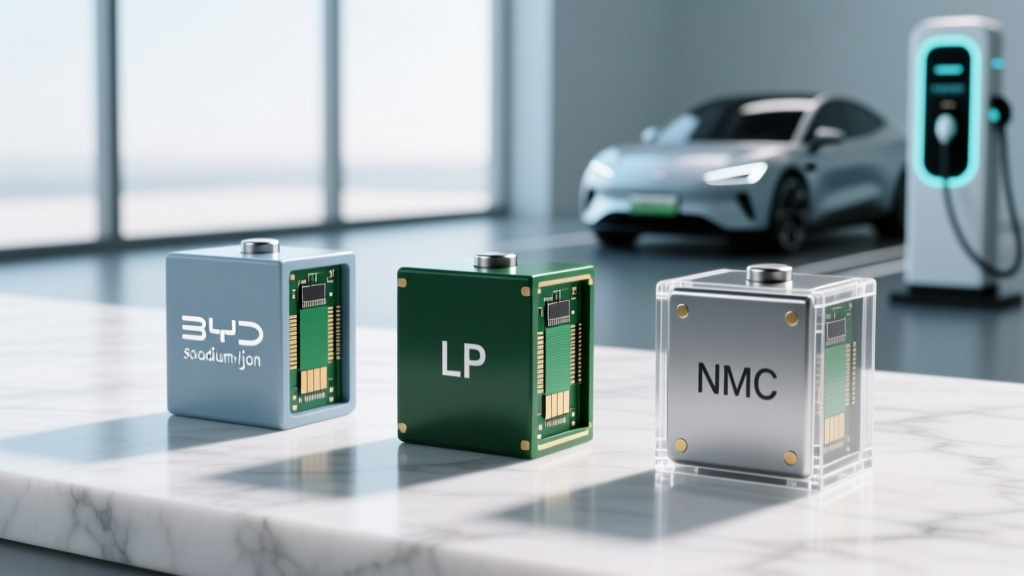
Tesla doesn't use a single battery type across its fleet. Depending on the model, trim, and model year, your Tesla contains one of two primary lithium-ion chemistries:
- Nickel Manganese Cobalt (NMC) — used in Long Range and Performance variants where maximum energy density and range are priorities.
- Lithium Iron Phosphate (LFP) — used in Standard Range / Rear-Wheel Drive variants where cost efficiency and cycle life matter more than peak range.
Tesla previously used Nickel Cobalt Aluminum (NCA) cells supplied by Panasonic in earlier Model S and Model X vehicles, but has largely transitioned to NMC for newer Long Range packs. The chemistry choice directly affects your EPA range, charging behavior, cold-weather performance, and how you should manage daily state of charge.
| Attribute | LFP (Lithium Iron Phosphate) | NMC (Nickel Manganese Cobalt) |
|---|---|---|
| Used In | Model 3 RWD, Model Y RWD | Model 3 LR, Model Y LR, Model S, Model X, Cybertruck |
| Energy Density | Lower (~160 Wh/kg cell-level) | Higher (~230–260 Wh/kg cell-level) |
| EPA Range Examples | Model 3 RWD: 272 mi | Model 3 Long Range: 363 mi |
| Cycle Life | Higher (3,000–5,000+ cycles) | Moderate (1,500–2,500 cycles) |
| Cold-Weather Performance | More range loss in freezing temps (~30–40% reduction) | Better cold performance (~20–30% reduction) |
| Daily Charge Recommendation | 100% OK for daily use | 80% recommended daily; 100% for trips only |
| Cost | Lower (no cobalt or nickel) | Higher (cobalt/nickel commodity exposure) |
| Thermal Stability | Excellent (inherently safer chemistry) | Good (managed via thermal system) |
The practical takeaway: if you bought a Model 3 or Model Y Rear-Wheel Drive, you almost certainly have an LFP pack. Tesla's in-app charging screen will recommend charging to 100% regularly. If you have a Long Range or Performance variant with NMC, Tesla recommends setting your daily charge limit to 80% and only charging to 100% when you need the full range for a road trip.
How Long Do Tesla Batteries Last?
This is the question every prospective EV buyer asks, and the answer is more reassuring than the anxiety suggests. According to Tesla's own 2024 Impact Report (the most recent comprehensive fleet data published), Tesla vehicles showed approximately 12% average battery degradation after 200,000 miles — meaning the average pack still retained roughly 88% of its original capacity at that mileage.
Let's put that in perspective:
Tesla Battery Degradation: Real Fleet Data Points
| Mileage | Average Capacity Retained | Effective Range (Model 3 LR, EPA 363 mi base) |
|---|---|---|
| New | 100% | 363 mi |
| 50,000 mi | ~95% | ~345 mi |
| 100,000 mi | ~92% | ~334 mi |
| 150,000 mi | ~90% | ~327 mi |
| 200,000 mi | ~88% | ~319 mi |
Source: Tesla Impact Report fleet data; individual results vary based on charging habits, climate, and usage patterns.
Most Tesla batteries outlast the vehicle itself. The average American car is on the road for about 12 years and ~150,000 miles before being scrapped. At that mileage, a Tesla battery typically still holds 88–92% of its original capacity — far from the "dead battery" scenario that dominates online fear threads.
However, degradation isn't perfectly linear. You'll typically see a steeper drop in the first 20,000–30,000 miles (roughly 3–5%) as the battery's solid electrolyte interface (SEI) layer stabilizes, followed by a long, slow decline. This pattern is consistent across both LFP and NMC chemistries, though LFP packs tend to show slightly less long-term fade due to their superior cycle life.
Tesla Battery Warranty: What's Actually Covered
Tesla's battery warranty is one of the stronger guarantees in the EV industry, but the details matter. Here's what's covered by model:
| Model | Warranty Period | Mileage Limit | Minimum Capacity Retention |
|---|---|---|---|
| Model 3 RWD (LFP) | 8 years | 100,000 miles | 70% |
| Model 3 Long Range / Performance | 8 years | 120,000 miles | 70% |
| Model Y RWD / Long Range / Performance | 8 years | 120,000 miles | 70% |
| Model S | 8 years | 150,000 miles | 70% |
| Model X | 8 years | 150,000 miles | 70% |
| Cybertruck | 8 years | 120,000 miles | 70% |
The key threshold is 70% capacity retention. If your battery drops below 70% of its original capacity within the warranty period (whichever limit — years or miles — comes first), Tesla will repair or replace the pack at no cost to you. In practice, very few Tesla owners have triggered this warranty claim because degradation rarely approaches 30% loss within these timeframes under normal use.
Important caveats: the warranty does not cover damage from accidents, flooding, or improper modifications. It also doesn't cover normal capacity loss above the 70% threshold — if your battery is at 75% after 8 years, that's considered normal wear. For full warranty details, always refer to the Tesla New Vehicle Limited Warranty documentation.
How Much Does a Tesla Battery Replacement Cost?
This is where context is critical. The vast majority of Tesla owners will never need a battery replacement — the pack is designed to last the life of the vehicle. But if you're buying a high-mileage used Tesla out of warranty, or if an uncommon failure occurs, here's what you're looking at:
| Model | Battery Size (Usable kWh) | Chemistry | Estimated Replacement Cost |
|---|---|---|---|
| Model 3 RWD | ~57 kWh | LFP | $7,000 – $10,000 |
| Model 3 Long Range | ~75 kWh | NMC | $12,000 – $16,000 |
| Model Y Long Range | ~75 kWh | NMC | $12,000 – $16,000 |
| Model S (2023+) | ~95 kWh | NMC | $15,000 – $22,000 |
| Model X (2023+) | ~95 kWh | NMC | $15,000 – $22,000 |
| Cybertruck | ~123 kWh | NMC | $18,000 – $25,000 |
Costs include parts and labor at Tesla Service Centers. Third-party EV repair shops may offer lower pricing. These are out-of-warranty estimates and can vary by region.
For comparison, a complete engine and transmission replacement on a comparable luxury ICE vehicle can run $8,000–$15,000+. The difference is that engine failures in gas cars are more common at high mileage than Tesla battery failures. According to fleet data compiled by Recurrent Auto, fewer than 1.5% of EVs in their study required battery replacement outside of recall campaigns.
What Affects Tesla Battery Life the Most?
Battery degradation isn't just about mileage — it's about how you use and charge the pack. Here are the factors with the most measurable impact, ranked by significance:
1. State of Charge Habits
For NMC batteries, routinely charging to 100% and letting the car sit at full charge accelerates degradation. Tesla's recommendation of 80% daily for NMC is based on real electrochemistry: lithium-ion cells experience more stress at the top and bottom of their charge range. For LFP batteries, the chemistry is more tolerant of high SoC, which is why Tesla recommends regular 100% charges (this also helps the BMS recalibrate since LFP has a very flat voltage curve).
2. DC Fast Charging Frequency
Occasional Supercharging on road trips has minimal impact. But if you rely exclusively on DC fast charging (150–250 kW) for daily charging, studies show an additional 1–3% degradation over 100,000 miles compared to primarily Level 2 home charging. The heat generated during high-rate charging is the primary culprit. Tesla's battery management system (BMS) actively manages thermal conditions, but physics still applies.
3. Extreme Temperatures
Batteries degrade faster when repeatedly exposed to high ambient temperatures (above 95°F/35°C) while at high state of charge. Cold temperatures don't cause permanent degradation but do temporarily reduce range by 20–40% in freezing conditions. Tesla's heat pump and thermal management system mitigate this, but garage parking in extreme climates measurably helps longevity.
4. Depth of Discharge
Regularly draining the battery to very low states (below 10%) stresses the cells. For NMC, the sweet spot is roughly 20–80% daily. For LFP, 0–100% is more acceptable, but letting any EV sit at 0% for extended periods is harmful.
Tesla Battery Care Checklist
- NMC owners: Set daily charge limit to 80%; charge to 100% only before road trips and drive soon after reaching full.
- LFP owners: Charge to 100% at least once per week for BMS calibration; daily 100% is fine.
- Use Level 2 home charging as your primary method; reserve DC fast charging for road trips.
- Avoid letting the battery sit below 10% or above 90% for more than a few hours in hot weather.
- In winter, use Scheduled Departure to precondition the battery while plugged in — this warms the cells and improves both range and charging speed.
- If storing the vehicle for more than two weeks, leave it plugged in with charge limit set to 50%.
- Keep Tesla app notifications enabled for battery and charging alerts.
How to Check Your Tesla's Battery Health
Tesla doesn't provide a direct "State of Health" (SoH) percentage in the vehicle's interface the way some competitors do. But there are reliable methods to assess your battery's condition:
Method 1: The Range Calculation
Charge your Tesla to 100% (for LFP) or note the projected range at your typical charge limit, then compare the displayed range to the original EPA rating. If your Model 3 Long Range originally showed 363 miles at 100% and now shows 335 miles, that's roughly 92% retention. Note: Tesla's displayed range is based on a fixed efficiency calculation, not real-time conditions, so it's a reasonable proxy for SoH.
Method 2: Third-Party Apps
Apps like Tessie, TeslaFi, and Stats (for iOS) log charging sessions and estimate SoH by tracking how many kWh go into the battery from known SoC percentages. Over several charge cycles, these apps build a reliable degradation curve. Many Tesla owners find this more accurate than the in-car range display.
Method 3: Tesla Service Diagnostic
If you're buying a used Tesla or want a definitive reading, a Tesla Service Center can run a battery health diagnostic that provides a precise capacity measurement. This is typically included in a pre-purchase inspection (~$150–$200) or can be requested during a service visit.
What's Next: Solid-State and Silicon Anode Batteries
Looking forward, two battery technologies could eventually change the equation for Tesla and the broader EV market:
Solid-state batteries replace the liquid electrolyte with a solid material, promising higher energy density (potentially 400+ Wh/kg at the cell level), faster charging, and improved safety. Companies like Toyota, Samsung SDI, and QuantumScape have announced prototype milestones, but as of 2026, no solid-state pack is in mass production for any consumer vehicle. Realistic timelines for commercial availability in a Tesla or comparable EV remain 2029–2032 for limited production, with cost-competitive volume production likely not until the mid-2030s.
Silicon anode technology — which replaces graphite anodes with silicon to increase lithium-ion storage capacity — is closer to reality. Tesla's supplier Panasonic and companies like Sila Nanotechnologies have been integrating incremental silicon content into anodes for several years. Tesla's 4680 cells already use a higher silicon content than earlier 2170 cells. Expect continued 5–10% energy density improvements per cell generation rather than a sudden breakthrough.
For current buyers: these emerging technologies are not a reason to delay a purchase. Today's lithium-ion batteries already last the life of the vehicle for most owners, and waiting for solid-state means waiting at minimum 3–5 more years for limited availability at premium pricing.
Frequently Asked Questions
How long do Tesla batteries last in years and miles?
Based on Tesla's fleet data, the average battery retains approximately 88% of its original capacity after 200,000 miles. In terms of years, most Tesla batteries will function well beyond 15 years of typical driving (12,000–15,000 miles/year) before degradation becomes meaningfully noticeable. The battery is designed to outlast the rest of the vehicle.
How much does it cost to replace a Tesla battery?
Out-of-warranty replacement costs range from approximately $7,000 for a Model 3 RWD (LFP, ~57 kWh) to $25,000 for a Cybertruck (~123 kWh). Most owners never need a replacement — fleet data shows fewer than 1.5% of EV batteries require replacement outside of warranty or recall campaigns.
What does the Tesla battery warranty cover?
Tesla warrants the battery pack for 8 years with mileage limits varying by model (100,000 miles for Model 3 RWD; 120,000 miles for Model 3 LR/Y; 150,000 miles for Model S/X). If capacity drops below 70% within the warranty period, Tesla will repair or replace the battery at no cost. The warranty does not cover accident damage, modifications, or normal degradation above the 70% threshold.
Is LFP or NMC better for a Tesla?
Neither is universally "better" — it depends on your priorities. LFP offers longer cycle life, lower cost, better thermal safety, and the convenience of daily 100% charging, but with lower energy density and worse cold-weather range. NMC delivers higher range per charge and better cold performance, but requires 80% daily charge limits and has a shorter cycle life. For most daily commuters, LFP is the practical choice. For frequent road-trippers or cold-climate drivers, NMC Long Range is worth the premium.
Does frequent Supercharging damage the battery?
Occasional Supercharging on road trips has negligible impact on battery health. However, relying exclusively on DC fast charging (150–250 kW) for daily charging can add 1–3% extra degradation over 100,000 miles compared to Level 2 home charging. Tesla's thermal management system limits this effect, but Level 2 charging remains gentler on the cells for routine use.
How do I maximize my Tesla battery's lifespan?
For NMC packs: charge to 80% daily, avoid prolonged storage at 100% or below 10%, use Level 2 home charging as your primary method, and precondition in cold weather. For LFP packs: charge to 100% at least weekly for BMS calibration. For all Teslas: avoid leaving the car unplugged at very low SoC for extended periods, and use Scheduled Departure to precondition while plugged in.
For the most current EPA range and efficiency data across Tesla models, refer to fueleconomy.gov. For federal tax credit eligibility on new Tesla purchases, consult the IRS Clean Vehicle Credit page, as §30D requirements including MSRP caps, income limits, and battery sourcing rules are subject to change.