Tesla Battery Types: LFP vs NMC/NCA Chemistry Explained
Tesla uses two primary lithium-ion battery chemistries across its 2026 lineup: lithium iron phosphate (LFP) and nickel-based chemistries (NMC/NCA). The chemistry inside your Tesla's high-voltage traction battery pack dictates not just how far you can drive on a charge, but how the battery ages, how it handles cold weather, and even how you should charge it daily. Understanding these Tesla battery types is the single most important technical decision in your ownership experience — more consequential than wheel size or paint color.
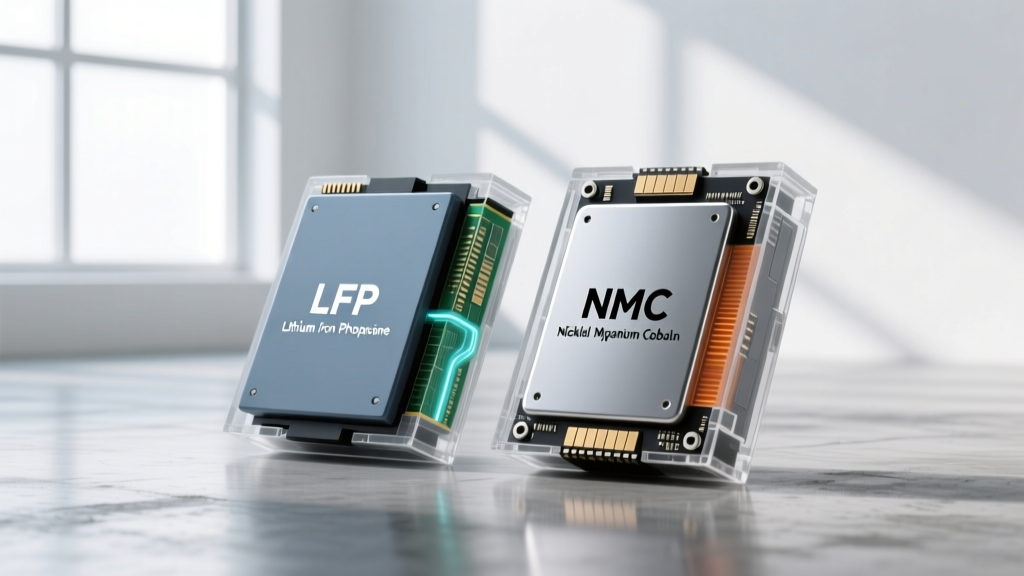
LFP (lithium iron phosphate) cells power the standard-range Model 3 and Model Y rear-wheel-drive variants. NMC (nickel manganese cobalt) and NCA (nickel cobalt aluminum) cells are reserved for Long Range and Performance trims, as well as the Model S, Model X, and Cybertruck. The split isn't arbitrary — it reflects a fundamental engineering trade-off between energy density and longevity.
| Attribute | LFP (Standard Range) | NMC/NCA (Long Range / Performance) |
|---|---|---|
| Models equipped | Model 3 RWD, Model Y RWD | Model 3 LR/Perf, Model Y LR/Perf, Model S, Model X, Cybertruck |
| Usable capacity (typical) | ~57–60 kWh | ~75–100 kWh |
| Energy density | Lower (~160 Wh/kg cell-level) | Higher (~250–270 Wh/kg cell-level) |
| EPA range (typical) | 272–320 mi | 330–402 mi |
| Cycle life (to 80% SoH) | ~3,000–5,000 cycles | ~1,000–2,000 cycles |
| Daily charge recommendation | 100% (charge fully, regularly) | 80% daily; 100% only for trips |
| Cold-weather range loss | Higher (~30–40% at 20°F) | Moderate (~20–30% at 20°F) |
| DC fast-charge peak rate | ~170 kW | ~250 kW |
| Cost per kWh (pack-level) | Lower (~$100–120/kWh) | Higher (~$130–160/kWh) |
| Cobalt content | None | Present (reduced in newer cells) |
The key takeaway: LFP trades range for cycle life and cost. If you commute 40 miles daily and charge at home, a Standard Range LFP Model 3 will likely outlast the car itself. If you road-trip frequently or need maximum range, Long Range NMC/NCA is the right call — but you'll manage charge habits more carefully.
How Long Do Tesla Batteries Last? Real Degradation Data
The question every prospective EV buyer asks — and the one most prone to misinformation — is battery lifespan. Tesla's own 2024 Impact Report (the most recent with granular fleet data) showed that Model 3 and Model Y battery packs retain approximately 85% of their original capacity after 200,000 miles. That's a 15% loss over roughly 15–20 years of average driving (13,500 miles/year per FHWA data).
But averages obscure the curve. Lithium-ion degradation follows a hockey-stick pattern: a steeper initial drop in the first 20,000–30,000 miles (typically 3–5% loss as the solid electrolyte interphase stabilizes), followed by a long, slow linear decline. Most Tesla owners report the following trajectory based on fleet telemetry aggregations from Tessie and Recurrent Auto:
- Year 1 / 15,000 mi: ~3–5% capacity loss (initial SEI formation)
- Year 3 / 45,000 mi: ~6–8% total loss
- Year 5 / 75,000 mi: ~8–10% total loss
- Year 8 / 120,000 mi: ~10–14% total loss
- Year 10 / 150,000 mi: ~12–17% total loss
- 200,000 mi: ~15–20% total loss (fleet average)
Sources: Recurrent Auto battery degradation study, Tesla Impact Report, Tessie fleet data.
LFP packs show a flatter degradation curve — their chemistry resists calendar aging better than NMC when held at high states of charge, which is precisely why Tesla recommends charging LFP vehicles to 100% at least once per week. NMC/NCA packs, by contrast, degrade faster when routinely held above 80% SoC, making daily charge limits critical for longevity.
It's worth noting: a battery at 80% State of Health (SoH) isn't "dead." It still functions — you've simply lost 20% of your original range. A Model 3 Long Range that started at 341 miles EPA would still deliver roughly 273 miles at 80% SoH — enough for nearly all daily driving. Catastrophic battery failure (sudden, total loss) is exceedingly rare in Tesla's fleet, affecting well under 1% of vehicles according to aggregated owner data.
Tesla Battery Warranty: What's Covered and for How Long
Tesla's battery and drive unit warranty is one of the most straightforward in the EV industry. It covers defects and excessive capacity degradation — defined as retention below 70% of original capacity — for 8 years, with mileage limits that vary by model:
| Model | Warranty Period | Mileage Limit | Minimum Capacity Retention |
|---|---|---|---|
| Model 3 RWD (LFP) | 8 years | 100,000 miles | 70% |
| Model 3 Long Range / Performance | 8 years | 120,000 miles | 70% |
| Model Y RWD (LFP) | 8 years | 100,000 miles | 70% |
| Model Y Long Range / Performance | 8 years | 120,000 miles | 70% |
| Model S | 8 years | 150,000 miles | 70% |
| Model X | 8 years | 150,000 miles | 70% |
| Cybertruck | 8 years | 120,000 miles | 70% |
If your battery drops below 70% capacity within the warranty window, Tesla will replace or refurbish the pack to bring it back to at least 70% — at no cost to you. In practice, warranty claims for degradation are uncommon. According to Recurrent's analysis, fewer than 1.5% of Tesla vehicles have required battery replacement under warranty for degradation.
The warranty does not cover damage from accidents, flooding, fire, or modifications. It also doesn't cover the 12V auxiliary battery (a separate, smaller battery that powers electronics and has its own shorter lifespan — typically 3–5 years).
Tesla Battery Replacement Cost: When and How Much
For the small percentage of owners who need a replacement outside warranty — or who plan to keep their Tesla past 200,000 miles — costs have declined significantly but remain a major line item. Pricing varies by model, pack size, and whether you receive a new or remanufactured unit:
| Model / Pack | Battery Size | Remanufactured Pack | New Pack (approx.) |
|---|---|---|---|
| Model 3 RWD (LFP) | ~57–60 kWh | $8,000–$10,000 | $12,000–$14,000 |
| Model 3/Y Long Range | ~75–82 kWh | $10,000–$13,000 | $14,000–$18,000 |
| Model S / X | ~90–100 kWh | $13,000–$16,000 | $18,000–$22,000 |
| Cybertruck | ~123 kWh | $15,000–$18,000 | $20,000–$25,000 |
These figures include the pack and labor at a Tesla Service Center. Third-party EV battery specialists like Electrified Garage or Gruber Motors sometimes offer lower pricing, particularly for remanufactured packs. Labor typically accounts for $1,500–$2,500 of the total.
Context matters here: the average age of a scrapped vehicle in the US is roughly 16 years (S&P Global Mobility). Most Tesla battery packs — particularly LFP — will retain 75–85% capacity at that age, meaning the battery will likely outlast the rest of the vehicle. Replacement is a real cost to budget for, but it's not the imminent crisis that legacy auto marketing sometimes implies.
Factors That Affect Tesla Battery Life
Battery degradation isn't purely a function of time or mileage. How you use and charge your Tesla has a measurable impact on long-term State of Health. The three biggest factors, ranked by impact:
1. State of Charge Habits
This is the single most impactful variable you control. Lithium-ion cells experience the most stress at the extremes — below 10% and above 90% SoC. For NMC/NCA packs, Tesla recommends a daily charge limit of 80% and reserving 100% charges for road trips. LFP packs are the exception: Tesla explicitly recommends charging to 100% at least once per week to maintain cell-balancing accuracy.
Data from Recurrent Auto shows that NMC vehicles routinely charged to 100% and left sitting degrade roughly 2–3% faster over 5 years compared to those kept at 80%. It's not catastrophic, but it compounds.
2. DC Fast-Charging Frequency
Supercharging is convenient, but frequent use of high-power DC fast charging (150–250 kW) generates sustained heat that accelerates electrolyte decomposition. Tesla's battery management system (BMS) actively manages thermal conditions during Supercharging — preconditioning the pack when you navigate to a Supercharger is a key feature — but the physics of pushing electrons into cells at 250 kW creates unavoidable stress.
Owners who Supercharge more than 80% of the time show roughly 1–2% additional degradation at the 100,000-mile mark compared to those who primarily use Level 2 home charging, according to fleet analyses. The takeaway: Supercharge when you need to, but make Level 2 your daily routine.
3. Extreme Temperature Exposure
Batteries prefer the same temperatures humans do — roughly 60–80°F. Sustained exposure to ambient temperatures above 95°F or below 10°F accelerates calendar aging. Tesla's thermal management system actively heats and cools the pack, but it can only do so much when the car is parked for extended periods in extreme conditions.
Cold weather also causes temporary range loss — not degradation, but reduced efficiency. At 20°F, expect a 20–40% reduction in range depending on chemistry (LFP is more affected), cabin heating load, and whether you precondition. This range returns as temperatures rise.
Battery Care Checklist: Maximize Your Tesla's Battery Life
- NMC/NCA owners: Set daily charge limit to 80%. Charge to 100% only before long trips and depart promptly after reaching full.
- LFP owners: Charge to 100% at least once per week. Don't baby the charge limit — LFP needs full charges for accurate SoC estimation and cell balancing.
- Minimize DC fast charging when Level 2 home charging is available. Use Superchargers for road trips, not daily top-offs.
- Precondition before Supercharging — navigate to the Supercharger in the Tesla app or nav to let the BMS warm or cool the pack for optimal charge speed and reduced stress.
- Avoid prolonged storage below 20% or above 80% SoC. If storing for weeks, set to ~50% and plug in to let the car manage.
- Park in shade or a garage during summer. In extreme cold, plug in when parked so the car can maintain pack temperature from grid power rather than battery.
- Keep Sentry Mode usage moderate — it draws continuous power and causes micro-cycling if unplugged for extended periods.
How to Check Tesla Battery Health (State of Health)
Tesla doesn't display a battery health percentage directly in the vehicle's UI — a frequent frustration for owners and used-car buyers. But there are several reliable methods to assess your pack's State of Health:
In-car method: Compare your displayed range at 100% charge (for NMC, temporarily charge to 100% for this test) against the original EPA-rated range. If your Model 3 Long Range originally rated 341 miles and now shows 305 miles at 100%, your SoH is approximately 89%. Note that displayed range is influenced by recent driving efficiency, so this is an estimate, not a lab measurement.
Tesla app: Some owners see a battery health estimate in the app under vehicle details, though this feature isn't consistently available across all models and regions.
Third-party apps: Services like Tessie, Stats (iOS), and TeslaFi log detailed charging and range data over time, plotting degradation curves from actual charge sessions. These tools calculate SoH by comparing energy added during a known charge session (e.g., 10% to 80%) against the pack's original usable capacity.
OBD-II diagnostic tools: Devices like the OBDLink MX+ paired with apps such as Scan My Tesla can read the BMS-reported nominal full-pack capacity (in kWh) directly. This is the most accurate consumer-accessible method. Compare the BMS-reported figure to the pack's original usable capacity for a precise SoH percentage.
Emerging Battery Technology: What's Next for Tesla
Tesla's battery roadmap extends beyond today's LFP and NMC chemistries. Several technologies are in development or early production that could reshape the landscape — but realistic timelines matter more than press-release promises.
4680 structural cells: Tesla's larger-diameter 4680 cells (currently used in some Model Y vehicles built at Giga Texas and all Cybertrucks) offer manufacturing cost advantages and a structural pack design that reduces weight. The dry-electrode manufacturing process Tesla has been refining could further cut costs. Energy density improvements over 2170 cells are modest so far — roughly 5–10% at the pack level — but manufacturing throughput is the primary goal.
Silicon-dominant anodes: Replacing graphite anodes with silicon can theoretically boost energy density by 20–40%. Tesla has explored silicon anode technology, but silicon swells significantly during charge cycles, causing mechanical degradation. Companies like Sila Nanotechnologies and Group14 are working on silicon-composite solutions, but commercial viability at automotive scale remains 3–5 years away at minimum.
Solid-state batteries: The most hyped technology in EV batteries replaces the liquid electrolyte with a solid conductor, promising higher energy density, faster charging, and improved safety. Toyota, Samsung SDI, and QuantumScape have all announced solid-state programs. However, no automaker has achieved mass production at automotive scale as of 2026. Realistic volume production timelines remain 2029–2032. Tesla has not publicly committed to solid-state and continues investing heavily in liquid-electrolyte lithium-ion optimization.
Sodium-ion batteries: CATL has begun producing sodium-ion cells for smaller, lower-cost EVs in China. Tesla has not announced sodium-ion adoption, but the chemistry — which uses abundant sodium instead of lithium — could eventually appear in entry-level models. Energy density is 20–30% lower than LFP, limiting it to shorter-range applications.
The honest assessment: incremental improvements to existing lithium-ion chemistries — better cathode formulations, dry-electrode manufacturing, structural packs — will deliver the most meaningful cost and range gains through the end of the decade. Next-generation chemistries are real but remain pre-commercial for passenger vehicles.
LFP vs NMC: Which Tesla Battery Type Is Right for You?
The choice between LFP and NMC/NCA isn't about which chemistry is objectively "better" — it's about which aligns with your driving pattern:
Choose LFP (Standard Range) if:
- Your daily commute is under 60 miles round-trip
- You charge primarily at home with Level 2
- You prioritize long-term battery longevity and lower replacement cost
- You live in a mild climate (LFP's cold-weather disadvantage is less relevant)
- You want a lower purchase price and simpler charge management (charge to 100% freely)
Choose NMC/NCA (Long Range / Performance) if:
- You regularly drive 200+ miles in a single day or take frequent road trips
- You need maximum range to offset limited home charging access
- You live in a cold climate where NMC's better low-temperature efficiency matters
- You want the fastest DC charging speeds (250 kW peak vs ~170 kW for LFP)
- You value performance (Long Range and Performance trims are only available with NMC/NCA)
For most US drivers — whose average daily mileage is 37 miles according to FHWA data — the LFP Standard Range Model 3 or Model Y is the rational choice. You'll save $5,000–$8,000 on purchase price, gain a battery that will likely outlast the car, and simplify your charging routine. Reserve NMC/NCA for situations where range, performance, or cold-weather efficiency genuinely matter.
Frequently Asked Questions
How long do Tesla batteries last in years and miles?
Based on fleet data from Recurrent Auto and Tesla's own reporting, most Tesla battery packs retain 80–85% capacity at 200,000 miles. At average US driving rates (13,500 miles/year), that's roughly 15 years. LFP packs tend to last longer in terms of cycle life — potentially 3,000–5,000 full cycles — which translates to well over 200,000 miles before reaching 80% SoH.
How much does it cost to replace a Tesla battery?
Out-of-warranty Tesla battery replacement costs range from approximately $8,000 for a remanufactured Model 3 RWD (LFP) pack to $25,000 for a new Cybertruck pack. Most replacements fall in the $10,000–$18,000 range including labor. However, the vast majority of Tesla owners never need a replacement — fleet data shows fewer than 1.5% require one, and most of those are covered under the 8-year warranty.
What does the Tesla battery warranty cover?
Tesla's battery warranty covers defects and capacity degradation below 70% for 8 years. Mileage limits are 100,000 miles (Standard Range models), 120,000 miles (Long Range/Performance Model 3/Y, Cybertruck), and 150,000 miles (Model S/X). If your battery falls below the 70% threshold within those limits, Tesla replaces or refurbishes it at no charge. The warranty does not cover accident damage, flooding, or the 12V auxiliary battery.
How do I check my Tesla battery health?
The most accurate consumer method is using an OBD-II adapter (like OBDLink MX+) with Scan My Tesla to read the BMS-reported nominal full-pack capacity in kWh. Alternatively, charge to 100% and compare displayed range to the original EPA rating, or use third-party apps like Tessie or TeslaFi that track degradation over time from charging data. Tesla does not display a SoH percentage in the vehicle UI.
Is LFP or NMC better for Tesla batteries?
Neither is universally better — they serve different needs. LFP offers longer cycle life (3,000–5,000 vs 1,000–2,000 cycles), lower cost, no cobalt, and simpler charge management (100% daily charging recommended). NMC/NCA provides higher energy density (more range in the same pack size), better cold-weather performance, and faster DC charging (250 kW vs ~170 kW). For daily commuting under 60 miles, LFP is typically the smarter choice. For road trips, cold climates, or performance needs, NMC/NCA is preferable.
Does frequent Supercharging damage the battery?
"Damage" is too strong, but frequent DC fast charging does accelerate degradation slightly. Fleet data shows owners who Supercharge more than 80% of the time experience roughly 1–2% additional capacity loss at 100,000 miles compared to Level 2-primary charging. Tesla's BMS actively manages pack temperature during Supercharging — especially when you navigate to a Supercharger to trigger preconditioning — which mitigates much of the thermal stress. Supercharge when needed; make Level 2 your daily habit.
Should I worry about my Tesla battery in extreme cold?
Cold weather causes temporary range loss (20–40% at 20°F, worse for LFP) but does not cause permanent degradation as long as the pack isn't charged while frozen. Tesla's BMS prevents charging at dangerous temperatures. To minimize cold-weather impact: precondition the car while plugged in, use seat heaters instead of cabin heat when possible, and park in a garage. Your range returns fully as temperatures rise.