If you've browsed Tesla's configurator or read the spec sheet on a new Model 3 or Model Y, you've likely noticed something that confuses many first-time EV buyers: the battery chemistry changes depending on which trim you choose. Tesla doesn't use just one type of lithium-ion cell — it uses two fundamentally different chemistries across its lineup, and the choice has real implications for range, charging habits, longevity, and cost.
As of the 2026 model year, Tesla equips its rear-wheel-drive (Standard Range) vehicles with lithium iron phosphate (LFP) battery packs, while its Long Range and Performance variants use nickel-based chemistries (NMC/NCA). Understanding the difference isn't academic — it dictates how you should charge, how the pack ages, and what real-world range you'll actually see.
Tesla's Two Battery Chemistries: LFP vs NMC/NCA Explained
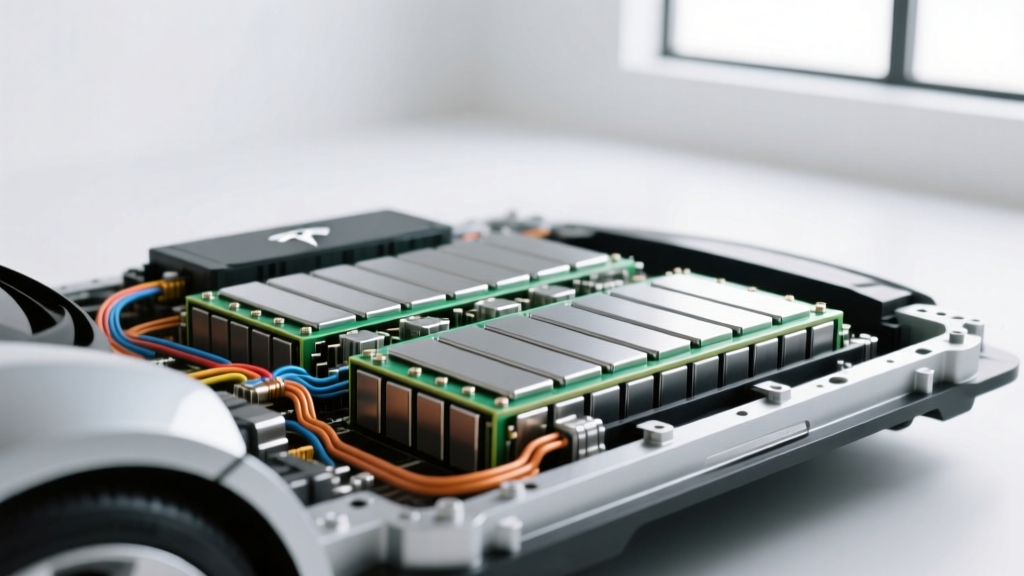
Every Tesla sold today uses a lithium-ion traction battery (not to be confused with the 12V or 16V auxiliary battery that powers the car's electronics). But the cathode chemistry inside those cells varies:
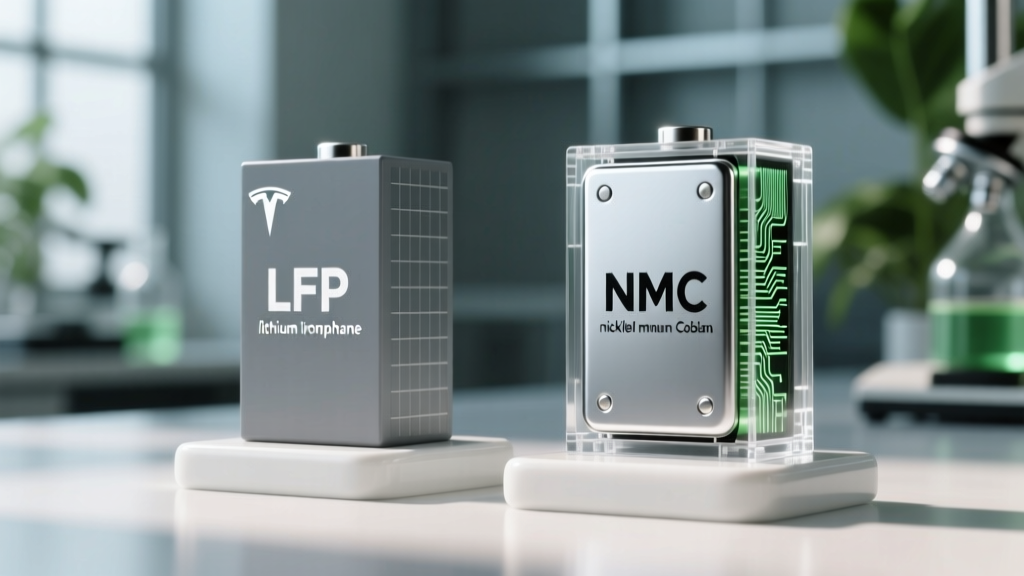
- LFP (Lithium Iron Phosphate): Used in Model 3 RWD, Model Y RWD, and base configurations. The cathode contains iron and phosphate — no nickel or cobalt.
- NMC (Nickel Manganese Cobalt) / NCA (Nickel Cobalt Aluminum): Used in Long Range and Performance trims of Model 3, Model Y, Model S, and Model X. The cathode relies on nickel for higher energy density.
Tesla sources cells from multiple suppliers — primarily CATL (LFP prismatic cells), Panasonic (NCA/NMC cylindrical 4680 and 2170 cells), LG Energy Solution (NMC), and BYD (LFP in some markets). The cell format also varies: cylindrical 4680 cells in newer Austin-built vehicles and prismatic cells in LFP packs.
| Attribute | LFP (Iron Phosphate) | NMC / NCA (Nickel-Based) |
|---|---|---|
| Energy Density | Lower (~160-180 Wh/kg cell-level) | Higher (~230-260 Wh/kg cell-level) |
| Typical Tesla Use | Model 3 RWD, Model Y RWD | Long Range, Performance, Model S/X |
| Cycle Life | 3,000-5,000+ full cycles | 1,500-2,500 full cycles |
| Cold-Weather Performance | More range loss in freezing temps (15-30% reduction) | Better cold performance (10-20% reduction) |
| Recommended Daily Charge | 100% OK — Tesla recommends periodic 100% charges for BMS calibration | 80-90% daily; 100% only for trips |
| Cost per kWh | Lower (~$80-100/kWh pack-level) | Higher (~$120-150/kWh pack-level) |
| Thermal Stability | Excellent — less prone to thermal runaway | Good but requires more active thermal management |
| Cobalt Content | None | Some (decreasing in newer formulations) |
Which Tesla Models Get Which Battery in 2026?
Here's how Tesla's current U.S. lineup maps to battery chemistry and usable capacity, based on Tesla's official battery documentation and EPA filings:
| Model / Trim | Chemistry | Usable Capacity (kWh) | EPA Range | Real-World Highway Range* |
|---|---|---|---|---|
| Model 3 RWD | LFP | ~57.5 kWh | 272 mi | ~220-240 mi |
| Model 3 Long Range AWD | NMC/NCA | ~75 kWh | 341 mi | ~280-300 mi |
| Model 3 Performance | NMC/NCA | ~75 kWh | 315 mi | ~255-275 mi |
| Model Y RWD | LFP | ~57.5 kWh | 260 mi | ~210-230 mi |
| Model Y Long Range AWD | NMC/NCA | ~75 kWh | 320 mi | ~265-285 mi |
| Model S LR / Plaid | NMC/NCA | ~95 kWh | 359-402 mi | ~290-340 mi |
| Model X LR / Plaid | NMC/NCA | ~95 kWh | 326-348 mi | ~270-300 mi |
*Real-world highway range assumes 70-75 mph sustained speeds in moderate temperatures. Cold weather (below 32°F) can reduce these figures an additional 15-30%, especially for LFP packs.
LFP vs NMC: Which Is Better for Your Driving Habits?
Neither chemistry is universally "better" — the right choice depends on how you drive, where you live, and how you charge.
Choose LFP (Model 3/Y RWD) if:
- You charge primarily at home and can charge to 100% regularly
- Your daily commute is under 60 miles round-trip
- You want maximum cycle life and plan to keep the car 8+ years
- You live in a moderate or warm climate
- Lower purchase price is a priority
Choose NMC/NCA (Long Range / Performance) if:
- You regularly take road trips exceeding 200 miles
- You live in a cold-weather climate and need better winter range
- You need AWD for snow or performance driving
- You want maximum EPA range to minimize charging stops
- You're comfortable charging to 80-90% daily and saving 100% for trips
A critical practical difference: LFP batteries tolerate 100% State of Charge (SoC) far better than NMC. Tesla actually recommends LFP owners charge to 100% at least weekly to keep the Battery Management System (BMS) calibrated. With NMC, routinely charging to 100% accelerates degradation — Tesla's infotainment system will default your daily charge limit to 80% on these vehicles.
How Long Do Tesla Batteries Actually Last? Degradation Data
The fear of a dead battery pack is the single biggest hesitation for prospective EV buyers. The data, however, tells a reassuring story — most Tesla battery packs will outlast the vehicle itself.
Tesla's own Impact Report has shown that Model 3/Y battery packs retain approximately 85-88% of original capacity after 150,000 miles. Independent data aggregators like Recurrent Auto, which tracks thousands of Tesla vehicles in real-world conditions, report similar findings:
Typical Tesla Battery Degradation Curve (NMC/NCA packs):
- Year 1 / 15,000 mi: ~3-5% loss (initial formation loss — steepest part of the curve)
- Year 3 / 45,000 mi: ~6-9% total loss
- Year 5 / 75,000 mi: ~8-12% total loss
- Year 8 / 120,000 mi: ~10-15% total loss
- Year 10+ / 150,000+ mi: ~12-18% total loss (curve flattens significantly)
LFP packs generally show even less degradation over the same mileage, with many owners reporting 90%+ capacity retention at 100,000 miles. LFP's superior cycle life (3,000-5,000+ cycles vs. 1,500-2,500 for NMC) means the chemistry is inherently more durable over repeated charge-discharge cycles.
The degradation curve is not linear. Most capacity loss occurs in the first 20,000-30,000 miles as the battery undergoes initial formation cycles. After that, the rate slows considerably — a phenomenon called "knee flattening." A pack that has lost 8% at 40,000 miles will not necessarily lose another 8% by 80,000 miles.
Tesla Battery Warranty: What's Covered and for How Long?
Tesla's battery and drive unit warranty is one of the strongest in the EV industry, and it varies by model and chemistry:
| Model | Warranty Period | Mileage Limit | Minimum Capacity Retention |
|---|---|---|---|
| Model 3 RWD (LFP) | 8 years | 100,000 miles | 70% |
| Model 3 LR / Performance (NMC) | 8 years | 120,000 miles | 70% |
| Model Y RWD (LFP) | 8 years | 100,000 miles | 70% |
| Model Y LR / Performance (NMC) | 8 years | 120,000 miles | 70% |
| Model S / Model X | 8 years | 150,000 miles | 70% |
The warranty guarantees that the battery will retain at least 70% of its original capacity for the stated period or mileage (whichever comes first). If it falls below that threshold, Tesla will replace or refurbish the pack at no cost. This warranty transfers to subsequent owners, which supports resale value.
Important caveat: the warranty covers capacity degradation below the threshold and manufacturing defects. It does not cover damage from accidents, flooding, or modifications. Normal gradual degradation above 70% is considered expected wear.
EV Battery Replacement Cost: What Tesla Owners Actually Pay
Here's the question that generates the most anxiety — and the most misinformation. Let's ground it in real numbers.
| Model | Battery Size | Estimated Pack Cost | Labor | Total Range |
|---|---|---|---|---|
| Model 3 RWD (LFP) | ~57.5 kWh | $8,000-$11,000 | $1,500-$2,500 | $9,500-$13,500 |
| Model 3 LR / Perf (NMC) | ~75 kWh | $12,000-$16,000 | $1,500-$2,500 | $13,500-$18,500 |
| Model Y LR (NMC) | ~75 kWh | $12,000-$16,000 | $1,500-$2,500 | $13,500-$18,500 |
| Model S / X (NMC) | ~95 kWh | $16,000-$22,000 | $2,000-$3,500 | $18,000-$25,500 |
These are out-of-warranty, full-pack replacement estimates based on service center reports and third-party EV repair data. The reality is that full battery replacements are rare. According to data from fueleconomy.gov and independent EV service networks, fewer than 2-3% of Tesla vehicles have required a traction battery replacement, and the vast majority of those were covered under warranty due to manufacturing defects — not end-of-life degradation.
When replacements are needed out of warranty, it's typically on vehicles with 200,000+ miles or those that have experienced physical damage. Tesla also increasingly offers module-level repairs — replacing individual battery modules rather than the entire pack — which can reduce costs to $3,000-$7,000 depending on the number of modules replaced.
How to Check and Maximize Your Tesla's Battery Health
Tesla doesn't expose a direct State of Health (SoH) percentage in the vehicle's UI the way some competitors do. But there are several reliable ways to monitor your pack's condition:
Monitoring Battery Health:
- Tesla App / Service Mode: On newer software versions, Tesla's Service Mode (accessible via the software menu) displays battery health data including nominal full-pack capacity in kWh.
- Range at 100% SoC: Charge to 100% and note the displayed range. Compare it to the original EPA figure — a 272-mile Model 3 RWD showing 245 miles at 100% has roughly 10% degradation.
- Third-party apps: Tools like Tessie, TeslaFi, or Teslamate log detailed battery data over time, tracking capacity trends and providing SoH estimates.
- OBD-II dongles: Devices like the OBDLink MX+ paired with apps like Scan My Tesla can read real-time pack voltage, capacity, and cell balance data.
Maximizing Battery Longevity:
- NMC owners: Set daily charge limit to 80-90%. Reserve 100% charges for road trips and precondition before fast charging.
- LFP owners: Charge to 100% at least once weekly for BMS calibration. Daily 100% charging is fine.
- Minimize DC fast charging when possible — frequent 250 kW Supercharging sessions generate more heat stress than Level 2 home charging. Occasional Supercharging is fine; daily Supercharging accelerates wear.
- Avoid extreme SoC storage: Don't leave the car sitting at 100% or below 10% for extended periods. If storing for weeks, leave it at ~50%.
- Use preconditioning: Enable " precondition battery" in navigation when heading to a Supercharger. This warms the pack to optimal charging temperature, reducing stress and improving charge speed.
- Minimize exposure to extreme heat: Park in shade or garages when possible in hot climates. Sustained pack temperatures above 104°F (40°C) accelerate degradation.
What's Next? Solid-State and Silicon-Anode Batteries
The battery landscape is evolving rapidly, but it's important to separate announced research from commercially available technology:
Solid-state batteries replace the liquid electrolyte with a solid material, promising higher energy density (potentially 400+ Wh/kg), faster charging, and improved safety. Companies like Toyota, QuantumScape, and Samsung SDI have demonstrated prototypes, but no automaker has mass-produced a solid-state EV as of early 2026. Realistic volume-production timelines remain 2028-2030, with initial deployment likely in limited, premium applications.
Silicon-anode batteries — which replace graphite anodes with silicon to increase capacity — are closer to market. Tesla's 4680 cells already incorporate some silicon in the anode, and companies like Sila Nanotechnologies and Group14 are scaling production. Expect incremental silicon-anode adoption across the industry through 2026-2028, yielding 5-15% energy density improvements rather than step-change breakthroughs.
For today's buyers, current LFP and NMC chemistries are mature, well-proven, and backed by extensive real-world data. Waiting for next-generation battery tech is a choice, but the packs available now are already designed to last the life of the vehicle.
Frequently Asked Questions
How long do Tesla batteries last in years and miles?
Based on aggregated fleet data, most Tesla NMC/NCA packs retain 85-88% capacity at 150,000 miles, and LFP packs often retain 90%+ at 100,000 miles. In practical terms, a Tesla battery should last 15-20 years or 200,000+ miles before degrading to a point where range meaningfully impacts daily use. The vast majority of packs outlast the vehicle's useful life.
How much does it cost to replace a Tesla battery?
Out-of-warranty full pack replacements range from approximately $9,500 (Model 3 RWD LFP) to $25,500 (Model S/X). However, fewer than 2-3% of Teslas have ever required a traction battery replacement, and most of those were covered under the 8-year warranty. Module-level repairs, when available, can reduce costs to $3,000-$7,000.
What does Tesla's battery warranty cover?
Tesla warrants its battery packs for 8 years / 100,000-150,000 miles (depending on model) with a guaranteed minimum of 70% capacity retention. The warranty covers manufacturing defects and degradation below the threshold. It transfers to subsequent owners. It does not cover accident damage, misuse, or normal degradation above 70%.
How do I check my Tesla's battery State of Health?
Check the displayed range at 100% charge and compare it to the original EPA rating. For more granular data, use Tesla's Service Mode (on compatible software versions), third-party logging apps like Tessie or TeslaFi, or an OBD-II reader with Tesla-compatible software. These tools track nominal pack capacity in kWh over time.
Is LFP better than NMC for a Tesla?
It depends on your priorities. LFP offers longer cycle life (3,000-5,000+ cycles vs. 1,500-2,500), lower cost, no cobalt, and tolerance for daily 100% charging. NMC provides higher energy density (more range in the same pack size), better cold-weather performance, and faster charging speeds. If you prioritize longevity and value, LFP is excellent. If you need maximum range and cold-climate capability, NMC is the better fit.
Does frequent Supercharging damage a Tesla battery?
Occasional DC fast charging has minimal impact. However, daily Supercharging at 250 kW generates sustained heat that can accelerate degradation over time. Tesla's battery preconditioning feature mitigates some of this by warming the pack optimally before charging. For daily use, Level 2 home charging (7-11.5 kW) is gentler on the pack. Data shows that vehicles charged primarily on Level 2 show 1-3% less degradation over 100,000 miles compared to those frequently DC fast-charged.
Does cold weather permanently damage an LFP battery?
No. Cold weather temporarily reduces range (15-30% in freezing temperatures for LFP) due to increased internal resistance and energy used for cabin/pack heating, but this is fully reversible when temperatures rise. Cold does not cause permanent degradation unless you charge at high rates with a frozen pack — Tesla's software prevents this by limiting charge speed until the battery warms up via preconditioning.
Sources: Tesla Battery Information, U.S. EPA fueleconomy.gov, Tesla Impact Report. Battery cost estimates based on industry service data and may vary by location and model year. Always consult Tesla directly for warranty specifics on your vehicle.