Tesla Battery Sizes by Model: The Quick Numbers
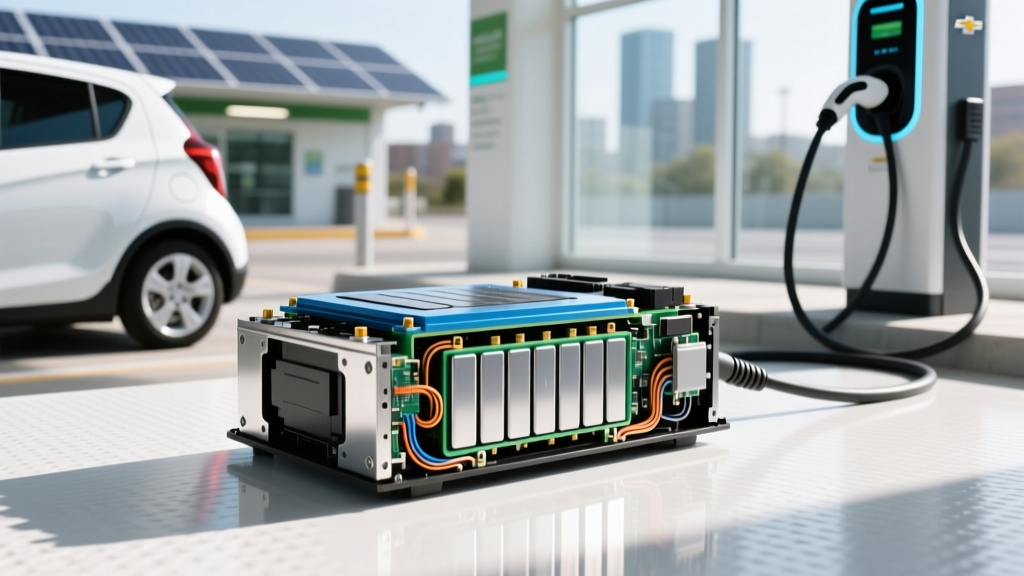
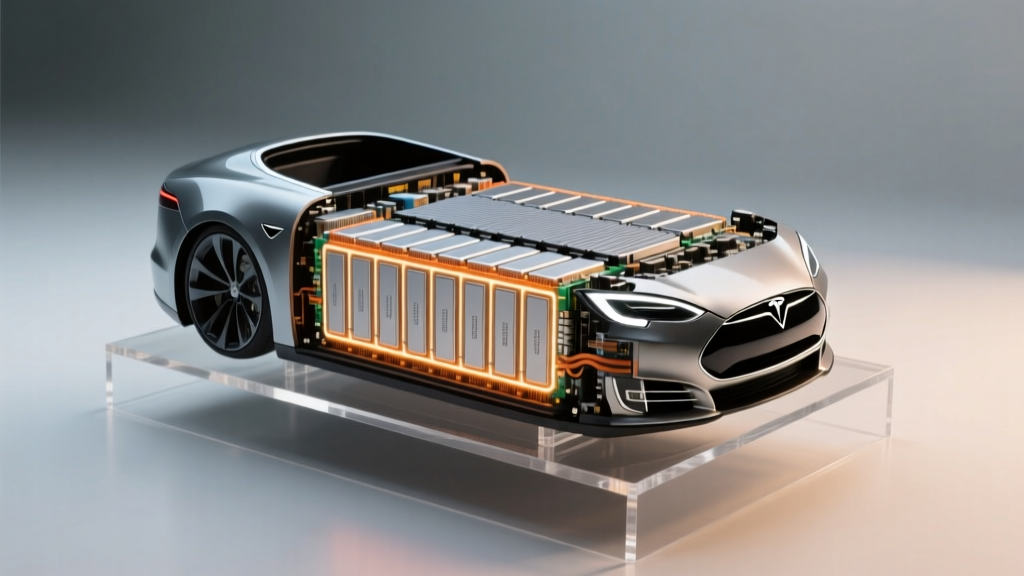
When buyers ask "how big is the Tesla battery," the answer depends on the model and trim. Tesla uses different battery pack sizes and chemistries across its lineup, and the kWh figure directly determines EPA range, charging behavior, and long-term degradation characteristics. Here is the current breakdown for the 2025–2026 model year lineup:
| Model / Trim | Usable Battery (kWh) | Chemistry | EPA Range (mi) | Real-World Highway Estimate |
|---|---|---|---|---|
| Model 3 RWD | ~57.5 kWh | LFP (CATL) | 272 | ~220–240 mi |
| Model 3 Long Range AWD | ~78.1 kWh | NMC (Panasonic/LG) | 363 | ~290–320 mi |
| Model 3 Performance | ~78.1 kWh | NMC | 315 | ~260–285 mi |
| Model Y RWD | ~57.5 kWh | LFP | 260 (est.) | ~210–230 mi |
| Model Y Long Range AWD | ~78.1 kWh | NMC | 330 | ~270–300 mi |
| Model Y Performance | ~78.1 kWh | NMC | 303 | ~250–275 mi |
| Model S Long Range | ~95 kWh | NMC/NCA | 402 | ~330–360 mi |
| Model S Plaid | ~95 kWh | NMC/NCA | 359 | ~300–330 mi |
| Model X Long Range | ~95 kWh | NMC/NCA | 335 | ~275–305 mi |
| Model X Plaid | ~95 kWh | NMC/NCA | 326 | ~270–295 mi |
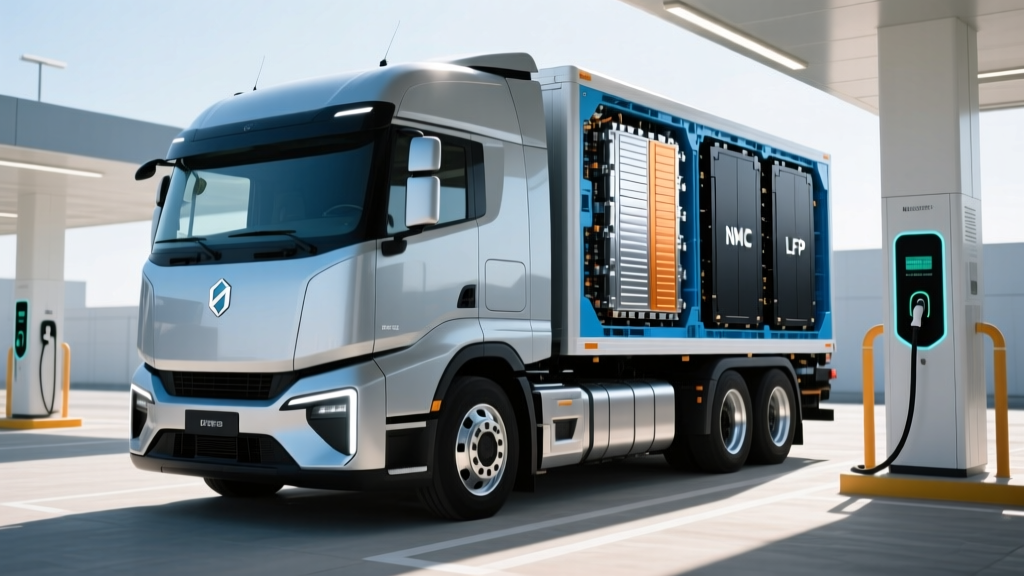
The ~57.5 kWh packs in the RWD trims use lithium iron phosphate (LFP) chemistry, while the larger ~78–95 kWh packs use nickel manganese cobalt (NMC) or nickel cobalt aluminum (NCA). This distinction matters far more than the raw kWh number alone, as we will explore below.
LFP vs NMC: Which Tesla Battery Chemistry Is Better?
Tesla is one of the few automakers that sells vehicles with two fundamentally different battery chemistries side by side. Understanding the trade-offs is essential because chemistry affects daily charging habits, longevity, cold-weather performance, and even how you should care for the pack.
| Attribute | LFP (Lithium Iron Phosphate) | NMC/NCA (Nickel-based) |
|---|---|---|
| Energy Density | Lower (~160 Wh/kg cell-level) | Higher (~250–270 Wh/kg cell-level) |
| Typical Tesla Use | Model 3/Y RWD | Model 3/Y LR & Performance, Model S/X |
| Recommended Daily Charge Limit | 100% (charge to full regularly) | 80% daily; 100% only for trips |
| Cycle Life | 3,000–5,000+ cycles | 1,500–2,500 cycles |
| Cold-Weather Performance | Weaker — more range loss below 32°F | Better low-temp discharge efficiency |
| Cost | Lower — no cobalt or nickel | Higher — commodity-sensitive |
| Degradation Profile | Slower, more linear | Slightly faster early, then plateaus |
| Weight (for equivalent kWh) | Heavier pack | Lighter pack |
The practical takeaway: If you own a Tesla RWD with LFP, Tesla explicitly recommends charging to 100% at least once per week to keep the battery management system (BMS) calibrated. The flat voltage curve of LFP makes state-of-charge estimation harder, and periodic full charges help the car accurately display remaining range. With NMC, routinely charging to 100% accelerates degradation — set your daily limit to 80% and only charge to full when you need the range for a road trip.
NMC offers more range per pound, which is why Tesla reserves it for Long Range and Performance trims. LFP sacrifices some energy density for dramatically longer cycle life and lower cost, making it ideal for the high-volume, price-sensitive RWD models. Neither chemistry is universally "better" — the right choice depends on your driving patterns and climate.
How Long Do Tesla Batteries Actually Last? Degradation Data
Tesla batteries are engineered to outlast the useful life of the vehicle. That is not marketing optimism — it is supported by large-scale fleet data. According to Tesla's 2023 Impact Report (the most recent with comprehensive fleet statistics), Model 3 and Model Y battery packs retain approximately 85% of their original capacity after 200,000 miles. Model S and Model X packs show roughly 88% retention at the same mileage.
Independent data from Recurrent Auto, which tracks over 15,000 Tesla vehicles in real-world conditions, paints a consistent picture:
- Year 1: 2–4% capacity loss (initial formation loss is normal)
- Years 2–4: Degradation slows to roughly 1–2% per year
- Year 5–8: Curve flattens further; most packs settle around 88–92% State of Health (SoH)
- 200,000+ miles: Fleet average 85–88% SoH depending on model and usage
The degradation curve is not linear. Most lithium-ion packs experience a steeper drop in the first 10,000–20,000 miles as the solid electrolyte interphase (SEI) layer forms on the anode. After that, degradation slows considerably and tends to plateau. This is why a 5-year-old Tesla with 80,000 miles often shows only marginally more degradation than a 3-year-old with 50,000 miles.
LFP packs tend to show even less degradation over time, with some fleet data suggesting 90%+ SoH at 100,000 miles. Their longer cycle life and more stable chemistry mean they are particularly well-suited to high-mileage drivers and frequent DC fast charging — though all Tesla packs handle Supercharging well thanks to active thermal management.
Tesla Battery Warranty: What Is Covered and for How Long?
Tesla's battery and drive unit warranty is among the strongest in the industry, but the specifics vary by model and trim. Here is the current coverage breakdown:
| Model | Warranty Period | Mileage Limit | Minimum Capacity Retention |
|---|---|---|---|
| Model 3 RWD (LFP) | 8 years | 100,000 miles | 70% |
| Model 3 Long Range / Performance | 8 years | 120,000 miles | 70% |
| Model Y RWD (LFP) | 8 years | 100,000 miles | 70% |
| Model Y Long Range / Performance | 8 years | 120,000 miles | 70% |
| Model S (all trims) | 8 years | 150,000 miles | 70% |
| Model X (all trims) | 8 years | 150,000 miles | 70% |
The warranty guarantees that the battery will retain at least 70% of its original usable capacity for the stated period or mileage, whichever comes first. If the pack falls below that threshold during the warranty period, Tesla will repair or replace it to bring capacity back to at least 70%. The warranty also covers defects in materials and workmanship, including the drive unit (motor and inverter).
What the warranty does not cover: cosmetic issues, damage from accidents or flooding, modifications or tampering with the battery system, or capacity loss from consistently ignoring Tesla's charging recommendations (though this is difficult for Tesla to prove and rarely a point of contention in practice).
The key context: a 70% capacity threshold is conservative. Based on real-world degradation data, the vast majority of Tesla owners will never approach that threshold within the warranty period. You would need extreme usage patterns — daily 100% charges on NMC, constant Supercharging in extreme heat, or a manufacturing defect — to trigger a warranty claim.
Tesla Battery Replacement Cost: What You Would Actually Pay
Out-of-warranty battery replacement is the single biggest fear among prospective EV buyers. Here is what it actually costs based on recent service data and owner reports:
| Model / Pack Size | Estimated Replacement Cost | Labor | Total Range |
|---|---|---|---|
| Model 3 RWD (~57.5 kWh LFP) | $7,000–$10,000 | $1,000–$2,000 | $8,000–$12,000 |
| Model 3/Y LR (~78 kWh NMC) | $12,000–$16,000 | $1,000–$2,000 | $13,000–$18,000 |
| Model S/X (~95 kWh NMC/NCA) | $15,000–$22,000 | $1,500–$3,000 | $16,500–$25,000 |
These figures represent full pack replacements at Tesla Service Centers. In practice, Tesla often replaces individual modules or repairs specific components within the pack rather than swapping the entire unit, which can significantly reduce costs for partial failures.
The critical context that fear-mongering articles omit: the vast majority of Tesla batteries never need replacement. Tesla's own fleet data shows that complete battery failures are exceedingly rare, and gradual degradation keeps most packs well above 80% capacity for 200,000+ miles. By the time a pack might need replacement due to age-related degradation, the vehicle itself is typically 12–15 years old and may be at the end of its economic life regardless.
For comparison, a conventional vehicle's transmission replacement can cost $4,000–$8,000, and engine rebuilds run $5,000–$10,000+. EV batteries simply replace those failure points with a component that, in practice, lasts longer.
What Affects Tesla Battery Life? Care Habits That Matter
While Tesla's battery management system handles most of the heavy lifting — thermal preconditioning, charge tapering, cell balancing — your habits still influence long-term health. Here is what the data actually shows matters:
- Charge limits: For NMC packs, keep daily charging at 80%. For LFP packs, charge to 100% at least weekly for BMS calibration. Set your charge limit in the Tesla app or on the touchscreen.
- Avoid prolonged storage at extremes: Do not leave the car sitting at 100% or below 10% for days. If storing for a vacation, set the charge limit to 50% and leave it plugged in so the BMS can maintain thermal management.
- DC fast charging is fine in moderation: Tesla's thermal management system is robust. Frequent Supercharging (multiple times per week) shows only marginally higher degradation in fleet data versus home Level 2 charging. The concern is overstated, but daily Supercharging in extreme heat without preconditioning can add up over years.
- Use preconditioning: When navigating to a Supercharger, the car automatically warms or cools the battery to optimize charging speed and reduce stress. This also applies in cold weather — preconditioning before driving recovers range and reduces the load on the pack.
- Cold weather awareness: Below 32°F, expect 20–30% range reduction. This is temporary and not degradation — capacity returns as temperatures rise. LFP packs lose more range in cold than NMC, so RWD owners in northern climates should plan accordingly.
- Regenerative braking: Keep regen on standard mode. It reduces brake wear and the energy recaptured slightly reduces the depth of discharge cycles, which marginally benefits longevity.
The single most impactful habit is charge-limit discipline for NMC owners. A 2022 study published in the Journal of Power Sources found that consistently charging NMC cells to 100% versus 80% can nearly double the rate of capacity loss over 1,000 cycles. For LFP, this effect is far less pronounced, which is why Tesla recommends 100% for those packs.
How to Check Your Tesla's Battery Health (State of Health)
Tesla does not expose a direct State of Health (SoH) percentage in the vehicle's UI, unlike some competitors (Hyundai/Kia show it in the infotainment system). But there are reliable methods to monitor your pack:
Method 1: The Range Calculation. Charge your Tesla to 100% (or use a known SoC percentage) and note the displayed range. Divide that by the original EPA-rated range at 100% for your specific trim. For example, if your Model 3 Long Range originally displayed 363 miles at 100% and now shows 325 miles, your approximate SoH is 325 / 363 = ~89.5%. This is an estimate — the BMS can slightly over- or under-report — but it tracks closely with actual capacity.
Method 2: Third-party apps. Tools like TeslaLogger, Tessie, or TeslaFi pull data from the Tesla API and can track estimated SoH over time. Tessie, for instance, calculates battery health by correlating energy added during charges with the change in state of charge, giving a reasonably accurate SoH figure without a full discharge test.
Method 3: Tesla Service diagnostic. If you suspect abnormal degradation (e.g., a sudden drop in displayed range), you can request a battery health check through the Tesla app. Service will run a remote diagnostic or an in-person test and report the actual measured capacity versus the original spec.
For the most accurate picture, track your 100% displayed range quarterly and look for trends rather than obsessing over single readings. The BMS recalibrates periodically, and small fluctuations of 2–5 miles are normal.
Looking Ahead: Solid-State Batteries and Silicon Anodes
The next major leap in battery technology will come from solid-state electrolytes and silicon-dominant anodes. Here is where these technologies stand as of 2026:
Solid-state batteries replace the liquid electrolyte in current lithium-ion cells with a solid material (ceramic, sulfide, or polymer). The theoretical benefits are substantial: 30–50% higher energy density, faster charging, improved safety (no flammable electrolyte), and longer cycle life. Toyota has announced solid-state production for 2027–2028, and companies like QuantumScape and Solid Power are in advanced testing phases. However, manufacturing scalability remains the core challenge, and no mass-produced vehicle currently uses solid-state cells.
Silicon anode technology is closer to production. Current lithium-ion cells use graphite anodes; replacing some or all of the graphite with silicon can boost energy density by 20–40%. Sila Nanotechnologies and Group14 are supplying silicon-anode materials to battery manufacturers, and incremental silicon blending is already appearing in some consumer electronics. Automotive-grade deployment at scale is expected in the 2027–2029 timeframe.
For current Tesla buyers, these technologies are not a reason to wait. Today's NMC and LFP packs already deliver 200,000+ mile lifespans with manageable degradation, and the next-generation chemistries will first appear in premium or limited-production vehicles before reaching mainstream pricing. The practical advice: buy the best EV that meets your needs today rather than waiting for a technology that is still 2–4 years from volume production.
Tesla Battery FAQ
How big is the Tesla battery in kWh across all models?
Tesla's current lineup uses three main battery sizes: approximately 57.5 kWh (usable) in Model 3 and Model Y RWD trims, approximately 78.1 kWh in Model 3 and Model Y Long Range and Performance trims, and approximately 95 kWh in Model S and Model X. The RWD packs use LFP chemistry; the larger packs use NMC or NCA.
How long do Tesla batteries last in years and miles?
Based on Tesla fleet data and independent tracking by Recurrent Auto, Tesla battery packs retain 85–92% of original capacity after 100,000–200,000 miles. Most packs will function well beyond 200,000 miles with 80%+ capacity remaining, translating to 15–20+ years of typical use. Complete battery failure before end of vehicle life is rare.
How much does it cost to replace a Tesla battery out of warranty?
Full pack replacement ranges from approximately $8,000–$12,000 for Model 3/Y RWD (LFP) to $13,000–$18,000 for Long Range models and $16,500–$25,000 for Model S/X. However, most Tesla batteries never require replacement, and partial repairs (module or component level) can be significantly less expensive. The 8-year/100,000–150,000 mile warranty covers defects and capacity loss below 70%.
What does the Tesla battery warranty actually cover?
Tesla's Battery and Drive Unit Limited Warranty covers the high-voltage traction battery and drive motor(s) against defects and capacity degradation below 70% for 8 years and 100,000–150,000 miles depending on the model (see warranty table above). It does not cover the 12V auxiliary battery, cosmetic damage, accident damage, or third-party modifications.
Is LFP or NMC better for a Tesla battery?
Neither is universally better. LFP offers longer cycle life (3,000–5,000+ cycles), lower cost, and the ability to charge to 100% daily — but it has lower energy density (less range per pound) and worse cold-weather performance. NMC delivers more range in a lighter, smaller package with better cold-weather behavior, but requires an 80% daily charge limit and has a shorter cycle life (1,500–2,500 cycles). Choose LFP (RWD) if you prioritize longevity and cost; choose NMC (Long Range/Performance) if you need maximum range and cold-weather capability.
Does frequent Supercharging damage the Tesla battery?
Tesla's active thermal management system mitigates most of the stress from DC fast charging. Fleet data shows only marginal additional degradation for frequent Supercharger users versus exclusive Level 2 home chargers. The bigger factors are charge-limit habits (for NMC), extreme ambient temperatures, and overall cycle count. Supercharging 2–3 times per week is not a concern for long-term health.
How do I maximize my Tesla battery's lifespan?
For NMC packs: set the daily charge limit to 80%, charge to 100% only before long trips, avoid leaving the car at 100% or below 10% for extended periods, and use preconditioning when navigating to Superchargers. For LFP packs: charge to 100% at least once per week for BMS calibration, and follow the same storage and preconditioning guidelines. These habits, combined with Tesla's built-in thermal management, will keep degradation minimal over the vehicle's life.
Sources: fueleconomy.gov for EPA range and efficiency data; Tesla Battery and Drive Unit Limited Warranty; Recurrent Auto battery degradation research.