When heavy-duty fleets evaluate electric trucks, battery chemistry is the single most consequential specification on the build sheet. The Nikola Tre BEV — one of the few production Class 8 electric trucks operating in North American drayage and regional-haul duty cycles — relies on a high-voltage traction battery that directly determines range, charging speed, longevity, and total cost of ownership. Searches for nikola tre bev battery chemistry nmc official point to a real question among fleet buyers and EV analysts: what exactly is inside the Tre BEV's battery pack, and how does that chemistry stack up against the LFP alternatives reshaping the medium- and heavy-duty EV landscape?
This guide unpacks the Nikola Tre BEV's battery architecture, places NMC chemistry in the broader context of commercial EV powertrains, and provides the degradation data, warranty terms, replacement economics, and care protocols fleet managers need to model 10-year ownership accurately.
Nikola Tre BEV Battery Pack: Official Specs and Architecture
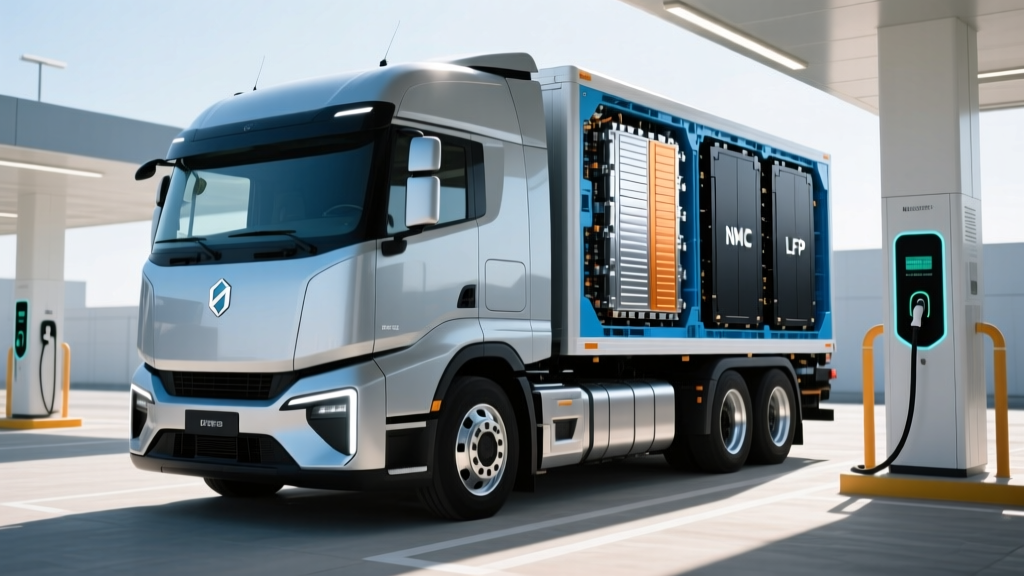
The production Nikola Tre BEV is equipped with a modular lithium-ion battery system with up to 738 kWh of total capacity (spread across up to six battery packs, depending on configuration). Earlier configurations offered 565 kWh. The cells use NMC (nickel manganese cobalt) chemistry — the dominant high-energy-density chemistry in heavy-duty commercial EVs where range-per-charge and weight are critical constraints.
| Specification | Value |
|---|---|
| Chemistry | NMC (Nickel Manganese Cobalt) lithium-ion |
| Total Battery Capacity | Up to 738 kWh (6-pack configuration) |
| EPA Estimated Range | Up to 330 miles (varies by configuration and duty cycle) |
| DC Fast Charge Peak Power | ~177 kW (CCS1 connector) |
| 10–80% Charge Time (est.) | ~120 minutes (depends on pack size and charger availability) |
| Battery Thermal Management | Active liquid cooling and heating |
| Battery Warranty | Up to 8 years / 500,000 miles (see warranty section below) |
For context, a Class 8 semi consuming 1.8–2.2 kWh per mile in mixed highway/drayage operation will see real-world range of roughly 260–290 miles from the 738 kWh pack under moderate loads and temperatures — below the 330-mile maximum, which assumes optimized routing, partial loads, and favorable ambient conditions. Cold-weather operation (below 32°F / 0°C) can reduce effective range by 15–30% due to increased cabin/battery heating demand and reduced cell efficiency.
NMC vs LFP: The Chemistry Trade-Offs That Matter for Commercial EVs
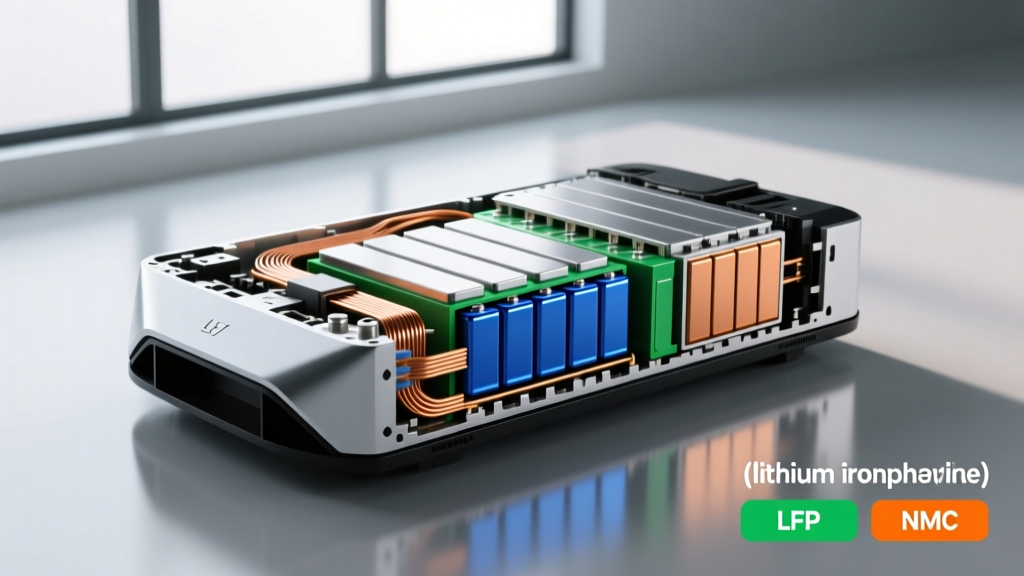
The choice between NMC and LFP (lithium iron phosphate) is the defining battery decision in 2026. Each chemistry has distinct advantages that map to different duty cycles.
| Attribute | NMC (Nikola Tre BEV) | LFP (e.g., some BYD, Tesla, medium-duty platforms) |
|---|---|---|
| Energy Density (cell-level) | ~220–260 Wh/kg | ~150–180 Wh/kg |
| Weight Impact (Class 8) | Lighter for equivalent range — critical for payload capacity | Heavier pack needed for same range; reduces payload allowance |
| Cycle Life (to 80% SoH) | ~1,500–2,500 cycles | ~3,000–5,000+ cycles |
| Cold-Weather Performance | Better low-temp discharge and charge acceptance | Reduced charge acceptance below freezing; needs more aggressive preconditioning |
| Thermal Stability / Safety | Good with active BMS; higher runaway risk if damaged | Superior thermal stability; lower runaway propensity |
| Cost per kWh (2026) | ~$120–150/kWh at pack level | ~$80–110/kWh at pack level |
| Critical Mineral Exposure | Cobalt, nickel — supply chain and ESG concerns | No cobalt, no nickel — simpler sourcing |
| Best Duty Cycle Match | Long-range regional haul, cold-climate ops, payload-sensitive routes | Short-haul drayage, depot-based return-to-base, warm climates |
For the Nikola Tre BEV, NMC is the rational choice. A Class 8 truck operating 200+ mile regional routes cannot easily absorb the weight penalty of LFP without sacrificing freight capacity. Energy density is non-negotiable when gross vehicle weight limits are fixed at 82,000 lbs (or 88,000 lbs with federal EV weight exemption). However, fleets running short, predictable drayage loops with overnight depot charging may find LFP-equipped competitors offer a compelling cost-per-mile advantage over a 10-year lifecycle.
Battery Degradation: What Real Data Shows Over Years and Miles
Battery degradation — the gradual loss of usable capacity over time — is governed by both calendar aging (time and temperature) and cycle aging (charge-discharge events). For a commercial truck accumulating 80,000–120,000 miles per year, cycle aging dominates.
Typical NMC Degradation Trajectory (Heavy-Duty Use):
- Year 1–2 (0–200,000 miles): 3–6% capacity loss. Initial formation loss stabilizes.
- Year 3–5 (200,000–500,000 miles): Gradual linear decline. Expect 85–92% State of Health (SoH) at 500,000 miles depending on charging habits and thermal management.
- Year 6–8 (500,000–800,000 miles): SoH typically between 75–85%. Some cells may approach the warranty threshold.
- Beyond 800,000 miles: Many NMC packs retain 70–80% SoH, sufficient for secondary-use applications (stationary storage, reduced-range duty).
Real-world fleet data published by the National Renewable Energy Laboratory (NREL) and independent fleet telematics studies consistently show that modern liquid-cooled NMC packs in commercial service retain 80% or more of original capacity at the 500,000-mile mark when operated within recommended charge windows and temperature parameters. The non-linear "knee" in degradation — where capacity loss accelerates — typically appears well beyond 600,000 miles for well-managed packs.
Factors that accelerate degradation in the Tre BEV (or any NMC pack):
- Frequent DC fast charging to 100% SoC: Sustained high SoC at elevated temperatures drives electrolyte decomposition.
- Operating in extreme heat without adequate thermal management: Cell temperatures above 45°C (113°F) accelerate calendar aging.
- Deep discharge cycles (below 10% SoC): Increases mechanical stress on cathode structure.
- High C-rate charging in cold conditions without preconditioning: Lithium plating risk on the anode.
Battery Warranty: What the Tre BEV Covers (and What It Doesn't)
Nikola's battery warranty for the Tre BEV is structured to align with typical first-owner fleet lifecycle expectations.
| Coverage Element | Terms |
|---|---|
| Duration | Up to 8 years or 500,000 miles (whichever comes first) |
| Capacity Retention Threshold | Minimum 70% State of Health (SoH) |
| What's Covered | Defects in materials/workmanship; capacity below threshold under normal use |
| What's Not Covered | Damage from accidents, misuse, unauthorized modifications, external thermal events |
| Remedy | Repair, module replacement, or full pack replacement at Nikola's discretion |
The 70% retention threshold at 8 years / 500,000 miles is consistent with heavy-duty EV industry norms. For comparison, passenger EV warranties (e.g., Hyundai, Tesla, Ford) typically guarantee 70% at 8 years / 100,000 miles. The Tre BEV's mileage allowance reflects commercial duty cycles. Fleet buyers should model scenarios where SoH drops to 70% — at that point, a 738 kWh pack effectively delivers ~517 kWh of usable energy, translating to roughly 230–250 real-world miles. This may still be viable for shorter routes but could necessitate mid-day charging for longer runs.
Note: warranty terms can vary by model year and purchase agreement. Always confirm current terms directly with Nikola or your authorized dealer before procurement.
Battery Replacement Cost: What Fleet Buyers Should Budget
Out-of-warranty battery replacement is the most-cited concern among prospective EV fleet operators. The reality in 2026 is more nuanced than the sticker-shock headlines suggest.
| Pack Configuration | Capacity | Estimated Replacement Cost | Typical Replacement Timeline |
|---|---|---|---|
| Nikola Tre BEV (4-pack) | ~492 kWh | $75,000–$100,000 | Rarely before 700,000 miles |
| Nikola Tre BEV (6-pack) | ~738 kWh | $110,000–$150,000 | Rarely before 700,000 miles |
| Competitor Class 8 (generic) | 400–600 kWh | $80,000–$140,000 | Varies by chemistry and use |
Key context: most first-owner fleets will never need a full battery replacement. At 100,000 miles per year, 500,000 miles is reached in 5 years — well within the warranty period. Many fleets trade or sell trucks at 400,000–600,000 miles. The modular architecture of the Tre BEV's battery system also allows for partial replacement — swapping individual degraded modules rather than the entire pack — which can reduce out-of-warranty costs by 50–70%.
Additionally, declining cell costs (NMC pack prices have fallen from ~$200/kWh in 2020 to ~$120–150/kWh in 2026) mean replacement costs will likely be lower at the point of actual need (year 7–10) than today's estimates suggest.
Maximizing Battery Life: Fleet Protocols That Work
Battery longevity is not a matter of luck — it is a function of operational discipline. Fleets that implement the following protocols consistently achieve better-than-average SoH retention.
Nikola Tre BEV Battery Care Checklist for Fleet Operators:
- Charge to 80–90% for daily operations — reserve 100% charges for maximum-range days only. Sustained 100% SoC accelerates NMC degradation.
- Precondition the battery before DC fast charging — the Tre BEV's thermal management system can warm or cool cells to optimal charging temperature. Use this feature, especially in cold weather, to avoid lithium plating and ensure the pack accepts peak kW.
- Avoid prolonged storage above 90% or below 10% SoC — if a truck will sit for more than 48 hours, target 50–60% SoC.
- Minimize unnecessary DC fast charging — overnight Level 2 (or depot-level AC/DC charging at lower C-rates) is gentler on cells. Use DCFC when operational necessity demands it.
- Monitor battery temperature in extreme climates — ensure the thermal management system is functioning (no fault codes) before heavy use in summer heat.
- Keep software/firmware updated — Nikola periodically releases BMS (Battery Management System) updates that optimize charge curves and thermal protocols.
- Track State of Health (SoH) monthly — use the Tre BEV's telematics dashboard or third-party fleet management tools to log capacity trends.
Monitoring State of Health (SoH): How to Check and Track Battery Condition
State of Health is expressed as a percentage of the battery's current maximum capacity relative to its original (beginning-of-life) capacity. A new Tre BEV pack starts at 100% SoH; at 70% SoH, the pack holds 70% of its original kWh.
Fleet operators can monitor SoH through:
- Nikola's onboard telematics and fleet portal: The Tre BEV reports SoH estimates via its connected vehicle platform. Fleet managers can view per-vehicle trends over time.
- OBD-II / diagnostic port readings: Authorized service centers can pull detailed BMS logs showing cell-level voltage variance, internal resistance, and capacity estimates.
- Third-party battery analytics platforms: Companies like Geotab, Fleetio, and TeraWatt integrate with commercial EV telematics to provide SoH dashboards and predictive degradation models.
- Manual range tracking: Comparing actual achievable range (at consistent SoC and conditions) to baseline range when new provides a rough SoH proxy.
A healthy NMC pack should show a relatively smooth, linear SoH decline. Sudden drops or high cell-to-cell voltage variance may indicate a module-level fault requiring service under warranty.
Looking Ahead: Solid-State and Silicon-Anode Batteries in Heavy-Duty EVs
Next-generation battery technologies are advancing, but realistic timelines matter for fleet procurement planning.
Solid-state batteries — which replace the liquid electrolyte with a solid conductor — promise higher energy density (~350–400 Wh/kg), faster charging, and improved safety. However, as of 2026, solid-state cells remain in limited pilot production (Toyota, Samsung SDI, QuantumScape) and are not yet available in any production heavy-duty truck. Realistic availability in Class 8 platforms: 2029–2032 at the earliest, with initial adoption likely in premium or long-haul segments.
Silicon-anode batteries — which supplement or replace graphite anodes with silicon to increase capacity — are closer to commercialization. Companies like Sila Nanotechnologies and Group14 are supplying silicon-anode materials to cell manufacturers, with early adoption in consumer electronics and light-duty EVs (e.g., Mercedes-Benz G-Class EV). Heavy-duty integration is expected in the 2027–2030 timeframe, offering incremental energy density gains (10–20%) rather than step-change improvements.
Sodium-ion batteries are emerging as a low-cost alternative for applications where energy density is less critical. CATL and other manufacturers are scaling production, but the low energy density (~120–150 Wh/kg) limits applicability in Class 8 long-haul. These may find a role in short-range yard tractors or depot equipment.
For fleet buyers making procurement decisions today, NMC remains the proven, production-ready chemistry for long-range Class 8 operations. Next-generation technologies will enhance future trucks but should not delay current electrification plans where the operational and regulatory case is clear.
Frequently Asked Questions
How long do EV batteries last in heavy-duty trucks?
Modern liquid-cooled NMC packs in Class 8 trucks like the Nikola Tre BEV typically retain 75–85% of original capacity at 500,000–600,000 miles (roughly 5–7 years of commercial use). Many packs remain functional beyond 800,000 miles at 70%+ SoH. Full pack replacement before 700,000 miles is uncommon under normal operating conditions.
How much does it cost to replace a Nikola Tre BEV battery?
A full 738 kWh (6-pack) replacement is estimated at $110,000–$150,000 out of warranty. However, the modular design allows partial module replacement at significantly lower cost. Most first-owner fleets will operate within the 8-year/500,000-mile warranty period and should not face out-of-pocket replacement costs for normal degradation.
What does the Tre BEV battery warranty cover?
Nikola warrants the battery against defects and capacity loss below 70% SoH for up to 8 years or 500,000 miles. The remedy may include repair, module replacement, or full pack replacement at the manufacturer's discretion. Damage from accidents, misuse, or unauthorized modifications is excluded.
LFP vs NMC — which chemistry is better for a Class 8 electric truck?
It depends on the duty cycle. NMC (used in the Tre BEV) offers superior energy density — critical for maintaining payload capacity on 200+ mile routes and in cold climates. LFP offers longer cycle life, lower cost, and better thermal safety, making it well-suited for short-haul drayage with depot charging. For regional-haul operations where range and weight matter most, NMC is the stronger choice in 2026.
How do I check my Tre BEV's battery health?
Use the Nikola fleet telematics portal to view State of Health (SoH) percentage and trends. Authorized service centers can perform detailed BMS diagnostics. Third-party fleet analytics platforms (Geotab, Fleetio) can also integrate SoH data into maintenance dashboards. Monthly SoH logging is recommended for proactive fleet management.
Does frequent DC fast charging damage the battery?
DC fast charging generates more heat and stress than slower charging, which accelerates degradation over time. However, the Tre BEV's active liquid thermal management system mitigates much of this impact. Best practice: use DCFC when operationally necessary, but rely on slower depot charging for routine overnight top-ups. Avoid DC fast charging to 100% unless maximum range is needed for that shift.
For current Nikola Tre BEV specifications and warranty documentation, consult Nikola's official Tre BEV page. For broader EV battery research and degradation data, the National Renewable Energy Laboratory (NREL) publishes fleet battery performance studies applicable to commercial electric trucks.