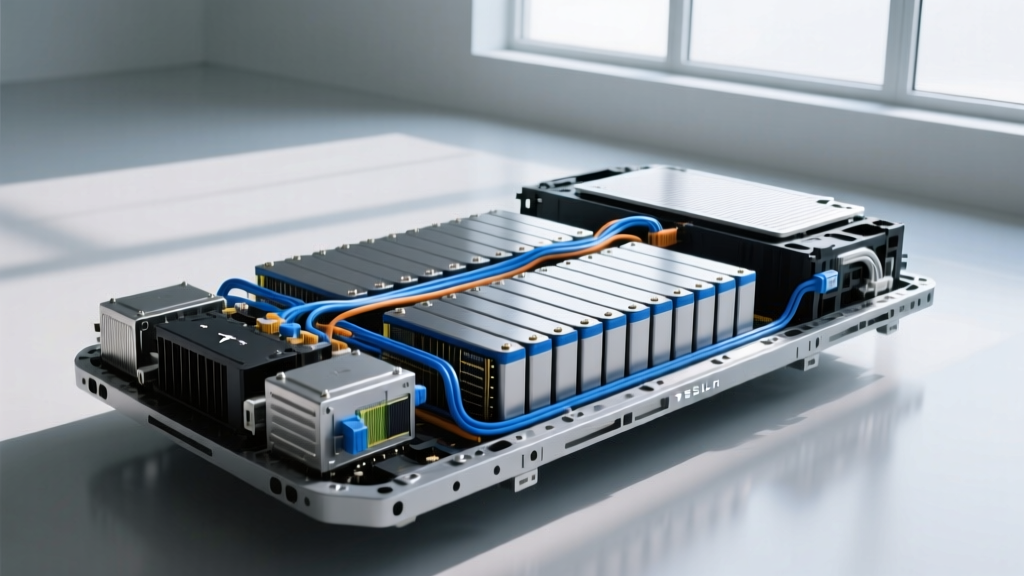
Understanding Tesla Battery Range Across Chemistries
When shoppers search for "Tesla battery range," they usually find EPA estimates — 341 miles for a Model 3 Long Range, 402 miles for a Model S. But the more consequential question for ownership is how that range holds up over five, eight, or fifteen years. The answer depends heavily on which battery chemistry Tesla installed in your specific car, how you charge it, and where you live.
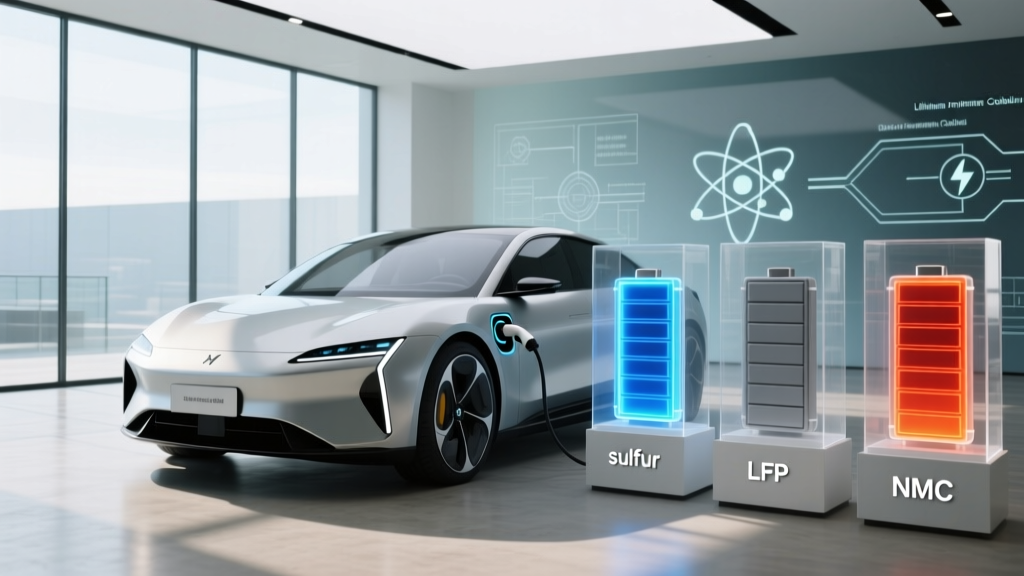
Tesla currently uses two primary cell chemistries across its lineup: lithium iron phosphate (LFP) for Standard Range / Rear-Wheel Drive models, and nickel-based chemistries (NMC and NCA) for Long Range and Performance variants. Each trades off energy density, cycle life, cold-weather performance, and cost differently — and those trade-offs directly affect the range you'll see on day one and on day 3,000.
| Attribute | LFP (LiFePO₄) | NMC / NCA (Nickel-based) |
|---|---|---|
| Found in | Model 3 RWD, Model Y RWD | Model 3 LR, Model Y LR, Model S, Model X, Cybertruck |
| Energy density | Lower (~160–180 Wh/kg cell-level) | Higher (~250–300 Wh/kg cell-level) |
| EPA range examples | Model 3 RWD: 272 mi | Model 3 LR: 341 mi; Model S: 402 mi |
| Cycle life | 3,000–5,000+ cycles to 80% SoH | 1,000–2,000 cycles to 80% SoH |
| Cold-weather range loss | More pronounced (15–30% at <32°F) | Moderate (10–20% at <32°F) |
| Recommended daily SoC | 100% (Tesla recommends periodic full charges) | 80% daily; 100% for trips only |
| Cost per kWh (pack-level) | Lower (~$100–$120) | Higher (~$130–$160) |
| Thermal runaway risk | Very low | Low, but higher than LFP |
The practical takeaway: if you prioritize maximum range per charge and live in a cold climate, NMC/NCA delivers more usable miles in winter. If you want a battery that can tolerate daily 100% charges and potentially outlast the car itself with minimal degradation, LFP's cycle-life advantage is significant — you just accept a shorter single-charge range.
Real-World Tesla Battery Degradation: What the Data Shows
Tesla's own Impact Reports have historically cited an average of roughly 12–15% range loss across the fleet at 200,000 miles for Model S/X (NCA) packs. More recent data on Model 3/Y packs — which now represent the vast majority of Tesla's fleet — suggests comparable or slightly better retention, particularly for LFP variants that degrade more slowly per cycle.
Typical Tesla Battery Degradation Curve (Fleet-Average Estimates):
- Year 1 / 15,000 mi: 2–5% loss (initial "break-in" degradation, mostly calendar + early cycle wear)
- Year 3 / 45,000 mi: 5–8% loss (degradation curve flattens significantly after year 1)
- Year 5 / 75,000 mi: 7–10% loss
- Year 8 / 120,000 mi: 10–15% loss (still above the 70% warranty threshold)
- Year 10+ / 150,000–200,000 mi: 12–20% loss depending on chemistry, climate, and charging habits
Sources: Tesla Impact Reports, fueleconomy.gov owner data, and third-party fleet analyses from Recurrent Auto.
A critical nuance: degradation is not linear. Most lithium-ion packs lose their first 3–5% relatively quickly (first 10,000–20,000 miles), then the curve flattens into a slow, nearly linear decline for the next 150,000+ miles. This means a Model 3 Long Range that showed 341 miles EPA when new might display ~325 miles at 20,000 miles, then lose only another 15–25 miles over the next 80,000 miles.
Calendar aging — degradation that happens regardless of mileage — also matters. A garage-kept Tesla driven 5,000 miles per year in Phoenix will still lose capacity from heat exposure over time. Conversely, a high-mileage driver in a temperate climate who charges to 80% and avoids DC fast charging may see less total degradation than a low-mileage owner who routinely charges to 100% in hot weather.
Tesla's Battery Warranty: What's Covered and What Isn't
Tesla's battery and drive unit warranty is one of the more straightforward in the EV industry, but the specifics matter when you're evaluating long-term ownership risk.
| Model | Warranty Period | Mileage Cap | Minimum Capacity Retention |
|---|---|---|---|
| Model 3 RWD (LFP) | 8 years | 100,000 miles | 70% |
| Model 3 Long Range / Performance | 8 years | 120,000 miles | 70% |
| Model Y (all trims) | 8 years | 120,000 miles | 70% |
| Model S / Model X | 8 years | 150,000 miles | 70% |
| Cybertruck | 8 years | 150,000 miles | 70% |
The 70% threshold means Tesla guarantees the pack will retain at least 70% of its original usable capacity during the warranty period. For a Model 3 Long Range with a ~75 kWh usable pack, that means at least ~52.5 kWh of usable capacity — translating to roughly 239 miles of range (from an original 341). If degradation drops below that threshold within 8 years or the mileage cap, Tesla will repair or replace the battery at no cost.
What's not covered: damage from accidents, flooding, or improper modifications; capacity loss from consistently ignoring Tesla's charging recommendations (though this is difficult for Tesla to enforce); and the 12V auxiliary battery, which has a separate, shorter warranty.
According to Tesla's official warranty documentation, the company reserves the right to replace a degraded pack with a remanufactured unit of equivalent capacity — not necessarily a brand-new battery. In practice, most warranty replacements use refurbished packs that meet or exceed the 70% threshold.
Tesla Battery Replacement Cost: When and How Much
Out-of-warranty battery replacement is the specter that haunts many prospective EV buyers. Here's the reality for Tesla owners in 2026:
| Model / Pack Size | Battery Pack Cost | Labor & Misc. | Estimated Total |
|---|---|---|---|
| Model 3 RWD (~57 kWh LFP) | $7,000–$10,000 | $2,000–$3,500 | $9,000–$13,500 |
| Model 3/Y LR (~75 kWh NMC) | $10,000–$14,000 | $2,000–$3,500 | $12,000–$17,500 |
| Model S/X (~100 kWh NCA) | $14,000–$20,000 | $2,500–$4,000 | $16,500–$24,000 |
| Cybertruck (~123 kWh) | $16,000–$22,000 | $3,000–$4,500 | $19,000–$26,500 |
These figures come from service-center estimates, third-party EV repair shops, and Tesla service invoices shared by owners. Costs have trended downward as cell prices fall — BloombergNEF tracks pack-level pricing below $130/kWh for NMC and under $100/kWh for LFP at the industry level — but labor, diagnostics, and Tesla's proprietary BMS integration keep total replacement costs substantial.
When is replacement typically needed? For the vast majority of owners, it isn't. Data from fleet analytics firm Recurrent suggests that fewer than 2% of Tesla battery packs have required replacement due to degradation alone. Most out-of-warranty replacements result from physical damage (collision, ground strike), manufacturing defects that surfaced late, or coolant system failures that damaged cells. A well-maintained Tesla pack routinely surpasses 200,000 miles with 80–85% of original capacity intact.
Factors That Accelerate (or Preserve) Tesla Battery Health
Battery longevity isn't random — it's the product of measurable inputs. Here's what moves the needle most:
Charging Habits
- NMC/NCA owners: Set daily charge limit to 80%. Reserve 100% for road trips. Tesla's own software recommends this in the charge settings menu.
- LFP owners: Tesla recommends charging to 100% at least once per week to allow the BMS to recalibrate cell balancing. Daily 100% is acceptable for LFP chemistry.
- Avoid prolonged storage at high SoC: Leaving any Tesla at 100% for days (especially in heat) accelerates calendar aging. If storing, set to 50%.
DC Fast Charging Frequency
- Occasional Supercharging (1–2x/week) has minimal impact on modern Tesla packs thanks to advanced thermal management.
- Daily DC fast charging — especially at 250 kW V3/V4 Superchargers — does increase degradation rate modestly. Fleet data suggests heavy fast-charge users see 2–4% more degradation at 100,000 miles vs. home-charging-only users.
- Always precondition the battery before fast charging (the car does this automatically when you navigate to a Supercharger).
Temperature Exposure
- Heat is the primary enemy: Sustained battery temperatures above 95°F (35°C) accelerate degradation. Garage parking in hot climates meaningfully helps.
- Cold reduces range temporarily but doesn't cause permanent damage. However, charging at high power in sub-freezing temps without preconditioning can cause lithium plating — Tesla's software prevents this by limiting charge rate until the pack warms.
- Use scheduled departure and preconditioning features to warm or cool the battery while plugged in, reducing stress.
How to Check Your Tesla's Battery Health (State of Health)
Tesla doesn't surface a single "State of Health" percentage in the vehicle UI the way some competitors do. But there are several reliable methods to assess your pack's condition:
Method 1: Energy App & Range Display
Switch your range display to "Rated" (not "Typical") and charge to 100%. Compare the displayed range to the original EPA figure. A Model 3 LR that originally displayed 341 miles at 100% but now shows 310 miles has roughly 91% SoH — approximately 9% degradation. Account for the fact that tire pressure, wheel upgrades, and software updates can shift this number slightly.
Method 2: Service Mode (Hidden Menu)
Tesla's Service Mode (accessible by holding your model name on the Software screen for ~3 seconds, then entering "service") displays a "Battery Health" test result. This runs a calculation based on recent charge/discharge cycles and provides a percentage estimate. It's not laboratory-precise but is directionally accurate.
Method 3: Third-Party Apps
Apps like Tessie, Stats for Tesla, and Tesla's own API can track your battery's estimated capacity over time by logging energy added during charges and correlating it with SoC changes. These tools build a SoH trend line that's often more informative than a single snapshot.
Method 4: Tesla Service Center Diagnostic
If you suspect abnormal degradation (e.g., sudden range drops, large cell-imbalance warnings), a Tesla service center can run a full pack diagnostic that reads individual module voltages, internal resistance, and precise capacity. This is the gold standard but requires a service appointment.
What's Next: Solid-State and Silicon-Anode Batteries
The battery landscape is evolving, though timelines remain longer than headlines suggest:
Solid-state batteries promise higher energy density (potentially 400+ Wh/kg at the cell level), faster charging, and improved safety by replacing the liquid electrolyte with a solid conductor. Toyota, Samsung SDI, and QuantumScape have all announced production timelines targeting 2027–2030, but these are pilot-scale commitments, not mass-production guarantees. Tesla has not announced a solid-state roadmap; its strategy focuses on incremental improvements to the 4680 cell form factor.
Silicon-anode technology is nearer to reality. Companies like Sila Nanotechnologies and Group14 are already supplying silicon-dominant anode materials for consumer electronics and are targeting automotive production in 2026–2028. Silicon anodes can increase energy density by 20–40% over graphite, which would translate directly into more Tesla battery range per kWh of pack weight. Tesla's own 4680 cells already incorporate incremental silicon content in the anode.
Sodium-ion batteries are emerging as a low-cost alternative for entry-level EVs, with CATL beginning production in China. These offer lower energy density than LFP but dramatically lower material costs. They're unlikely to appear in Tesla vehicles sold in the US before 2028, if at all, given Tesla's existing LFP supply agreements.
The realistic outlook: Tesla's current LFP and NMC/NCA packs are mature, well-understood technologies with proven longevity. Next-generation chemistries will improve range and reduce cost, but today's buyers should not delay a purchase waiting for them — the packs available now are engineered to last the life of the vehicle for most owners.
Tesla Battery Range FAQ
How long do Tesla batteries last in years and miles?
Based on fleet data, most Tesla battery packs retain 80–88% of original capacity at 200,000 miles. In terms of years, a Tesla battery should provide reliable service for 15–20 years under normal use before degradation makes the vehicle's range impractical for daily driving. LFP packs generally outlast NMC/NCA packs on a cycle-life basis, though both chemistries routinely exceed the lifespan of the vehicle's other components.
How much does it cost to replace a Tesla battery?
Out-of-warranty replacement ranges from approximately $9,000 for a Model 3 RWD (LFP) to $26,500 for a Cybertruck pack, including labor. However, full pack replacement due to degradation alone is rare — fewer than 2% of packs require it. Most replacements are covered under Tesla's 8-year warranty or result from physical damage rather than wear.
What does Tesla's battery warranty cover?
Tesla guarantees the high-voltage battery will retain at least 70% of its original capacity for 8 years or 100,000–150,000 miles (depending on model). If capacity drops below 70% within that period, Tesla repairs or replaces the pack at no charge. The warranty covers the battery and drive unit but excludes damage from accidents, misuse, or modifications.
How do I maximize my Tesla battery's lifespan?
For NMC/NCA packs: charge to 80% daily, avoid prolonged storage above 90%, minimize DC fast charging when home charging is available, and keep the car garaged in extreme heat. For LFP packs: charge to 100% regularly (Tesla recommends it), but still avoid leaving the car at 100% for extended periods in hot weather. All owners should use preconditioning before fast charging and avoid letting the battery sit at very low SoC (below 10%) for days.
LFP vs NMC — which Tesla battery chemistry is better?
Neither is universally better; they serve different priorities. LFP offers superior cycle life (3,000+ cycles), lower cost, and the ability to charge to 100% daily without significant harm — ideal for commuters who can charge at home and don't need maximum single-charge range. NMC/NCA delivers higher energy density (more range per kWh), better cold-weather performance, and faster charging speeds — better for road-trip-heavy drivers and cold-climate owners. If you choose a Model 3 RWD, you'll get LFP; choose Long Range or Performance, and you'll get NMC/NCA.
Does frequent Supercharging damage my Tesla battery?
Moderate Supercharging (a few times per week) has a small, measurable impact — fleet data suggests roughly 2–4% additional degradation at 100,000 miles compared to exclusive Level 2 home charging. Tesla's thermal management system actively cools the pack during fast charging to minimize stress. Daily Supercharging at maximum power will accelerate wear more noticeably, but it won't "destroy" the battery. For most owners, the convenience of Supercharging far outweighs the modest longevity trade-off.
Can I check my Tesla battery health without going to a service center?
Yes. Charge to 100% and compare displayed rated range to the original EPA figure for a rough SoH estimate. You can also access Tesla's hidden Service Mode for a battery health test result, or use third-party apps like Tessie or Stats for Tesla that track capacity trends over time via the vehicle's API. For a definitive diagnostic, a service center visit is required.