If you've ever wondered what a Tesla battery looks like beneath the floorboards, the short answer is: a flat, skateboard-style pack made up of thousands of cylindrical or prismatic lithium-ion cells, wired into modules, wrapped in thermal management plumbing, and sealed inside a structural aluminum or steel enclosure. But the engineering details — cell chemistry, module layout, cooling strategy, and software buffers — are what actually determine your daily range, charging speed, and how long the pack lasts.
This guide tears open the pack (figuratively) to explain Tesla's battery architecture, the chemistry trade-offs between LFP and NMC/NCA cells, real-world degradation data, warranty coverage, replacement costs, and what you can do to maximize battery health over a decade or more of ownership.
The Physical Layout: Tesla's Structural Battery Pack
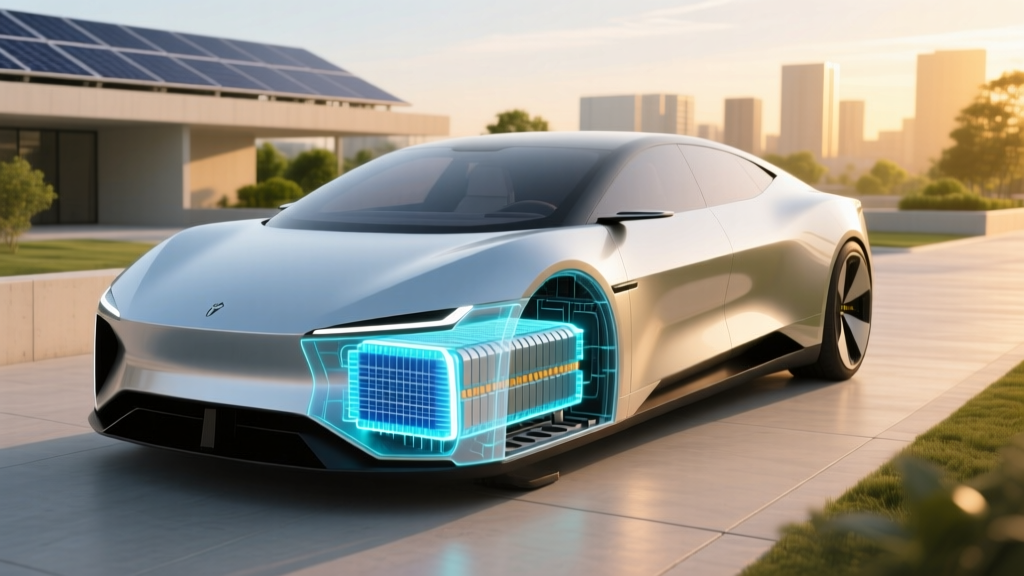
Since the introduction of the Model Y at Gigafactory Texas, Tesla has used a structural battery pack that serves double duty: it stores energy and acts as a load-bearing chassis component, replacing the traditional stamped-steel floor pan. The pack bolts directly to the front and rear castings (the "mega-castings" Tesla pioneered), reducing overall vehicle mass and part count.
Inside the enclosure, the layout depends on the cell format:
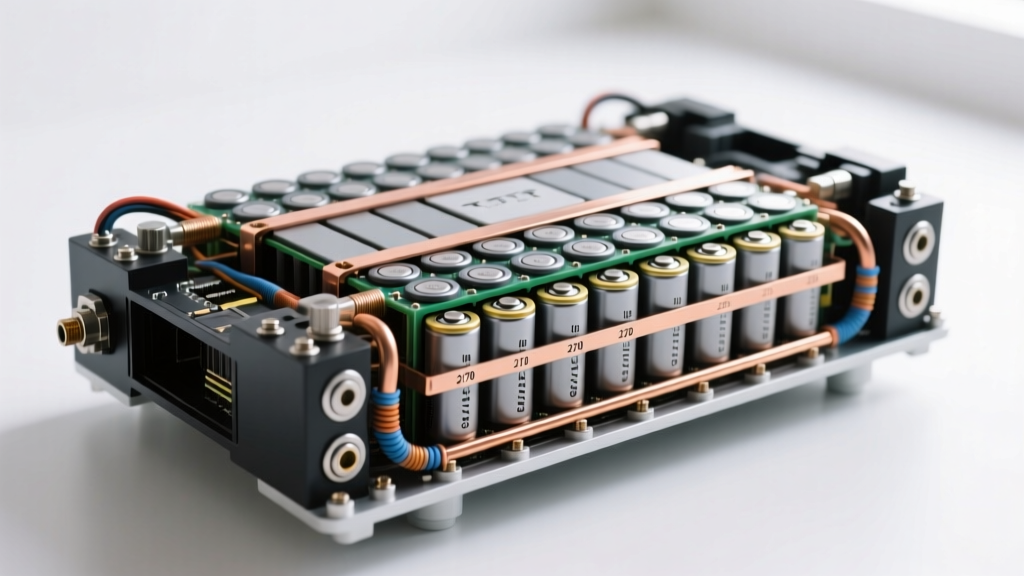
- 2170 cylindrical cells (21 mm diameter × 70 mm height) — used in Model 3 Long Range, Model Y Long Range, and earlier Model S/X packs. These are NMC (nickel-manganese-cobalt) or NCA (nickel-cobalt-aluminum) chemistry, supplied primarily by Panasonic.
- 4680 cylindrical cells (46 mm × 80 mm) — Tesla's larger, tabless cell introduced in the structural pack. Found in the Model Y AWD (Austin-built) and the Cybertruck. NMC chemistry with a dry-coated electrode manufacturing process.
- Prismatic LFP cells — rectangular, can-style cells supplied by CATL, used in the Model 3 RWD and Model Y RWD (Standard Range). Lithium iron phosphate chemistry.
The cells are grouped into modules (or, in the 4680 structural pack, foam-bonded directly into the enclosure), connected in series and parallel to achieve pack voltages around 350–400V nominal. A glycol-based liquid cooling system snakes between cell rows via aluminum cooling ribbons, managed by a thermal control unit that heats or chills the coolant depending on conditions.
| Cell Format | Chemistry | Vehicles | Approx. Usable Capacity | Supplier |
|---|---|---|---|---|
| 2170 cylindrical | NMC / NCA | Model 3 LR, Model Y LR, Model S/X | 75–100 kWh | Panasonic |
| 4680 cylindrical | NMC | Model Y AWD (Austin), Cybertruck | ~60–123 kWh | Tesla (in-house) |
| Prismatic | LFP | Model 3 RWD, Model Y RWD | ~57–60 kWh | CATL |
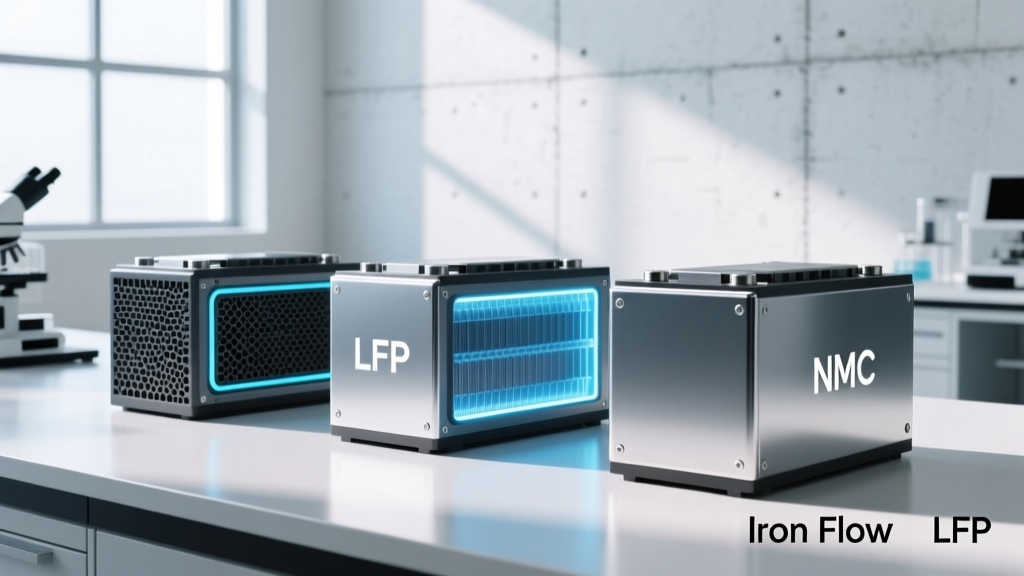
LFP vs NMC/NCA: Which Chemistry Is in Your Tesla?
Tesla is one of the few automakers offering two fundamentally different battery chemistries in the same vehicle lineup. The chemistry you get depends on the trim you buy, and each has distinct trade-offs.
| Attribute | LFP (Lithium Iron Phosphate) | NMC / NCA (Nickel-Based) |
|---|---|---|
| Energy Density | Lower (~160 Wh/kg cell-level) | Higher (~250–300 Wh/kg cell-level) |
| Cycle Life | 3,000–5,000+ cycles | 1,000–2,000 cycles |
| Recommended Daily SoC | 100% (charge to full daily) | 80–90% for daily; 100% for trips |
| Cold-Weather Performance | Weaker — more range loss below freezing | Better low-temp discharge and charge acceptance |
| Thermal Stability | Superior — higher thermal runaway threshold | Good with active cooling, but lower runaway margin |
| Cost | Lower (no nickel or cobalt) | Higher (nickel/cobalt commodity exposure) |
| SoC Estimation Accuracy | Flatter voltage curve — harder for BMS to gauge | Steeper voltage curve — more accurate BMS readings |
Which is better? It depends on your use case. If you commute daily, charge at home, and want maximum long-term cycle life, LFP is the pragmatic pick — Tesla explicitly recommends charging LFP packs to 100% regularly. If you need maximum range per charge, tow frequently, or live in a cold climate, NMC/NCA's higher energy density and better cold-weather performance make it the stronger choice. Neither is universally "better" — they solve different problems.
Real-World Degradation: What the Data Actually Shows
Battery degradation is the slow, irreversible loss of capacity over time and charge cycles. For Tesla owners, this is one of the most scrutinized ownership metrics — and the data is more reassuring than the anxiety suggests.
According to Tesla's 2023 Impact Report (the most recent comprehensive dataset published), Model 3 and Model Y packs exhibited an average degradation of approximately 15% after 200,000 miles. Earlier Model S and Model X data showed roughly 12% loss at 150,000 miles, with the curve flattening significantly after the initial 30,000–50,000 miles.
Typical Tesla Battery Degradation Curve (NMC, aggregated fleet data):
- 0–25,000 miles: ~5% loss (initial "break-in" drop)
- 25,000–50,000 miles: ~7–8% cumulative loss
- 50,000–100,000 miles: ~10–11% cumulative loss
- 100,000–150,000 miles: ~12–13% cumulative loss
- 150,000–200,000 miles: ~15% cumulative loss
Source: Tesla Impact Report fleet telemetry data; independent validation by Recurrent Auto.
LFP packs appear to degrade even more slowly in early data, consistent with their higher cycle-life ratings. However, LFP's flatter voltage curve can make the BMS "guess" of remaining range less precise, occasionally showing range fluctuations that aren't true capacity loss. Periodically charging to 100% and leaving it plugged in allows the BMS to recalibrate.
Tesla's Battery Warranty: What's Covered and for How Long
Tesla's battery and drive unit warranty is one of the longer coverage periods in the industry, but the details matter — particularly the capacity retention threshold.
| Model | Warranty Period | Mileage Limit | Minimum Capacity Retention |
|---|---|---|---|
| Model 3 RWD (LFP) | 8 years | 100,000 miles | 70% |
| Model 3 Long Range / Performance | 8 years | 120,000 miles | 70% |
| Model Y (all trims) | 8 years | 120,000 miles | 70% |
| Model S / Model X | 8 years | 150,000 miles | 70% |
| Cybertruck | 8 years | 120,000 miles | 70% |
What the warranty covers: Defects in materials or workmanship, and capacity loss below the 70% threshold within the time/mileage limits. If your 82 kWh Model Y Long Range pack drops below ~57.4 kWh of usable capacity before 8 years or 120,000 miles, Tesla will repair or replace it. The warranty does not cover damage from accidents, flooding, or unauthorized modifications.
What it does not cover: Normal degradation above the 70% threshold. A pack that retains 72% capacity at year 7 is functioning within spec, even though you've lost roughly 60 miles of your original EPA range.
Battery Replacement Cost: When and How Much
Most Tesla battery packs outlast the vehicle's useful economic life. The fleet degradation data shows packs retaining ~85% capacity at 200,000 miles — well beyond the point where most owners have sold or traded in. Full pack replacement is rare and typically only needed after physical damage, manufacturing defects, or extreme high-mileage use (think 300,000+ mile fleet vehicles).
| Model | Pack Size (Usable) | Estimated Out-of-Warranty Cost | Typical Replacement Trigger |
|---|---|---|---|
| Model 3 RWD (LFP) | ~57 kWh | $12,000–$16,000 | Collision damage, rare cell failure |
| Model 3 LR / Model Y LR | ~75–82 kWh | $16,000–$22,000 | High-mileage fleet use, defect |
| Model S / Model X | ~95–100 kWh | $20,000–$28,000 | Age-related degradation at 250k+ mi |
| Cybertruck | ~123 kWh | $25,000–$35,000 | Collision damage, 4680 cell defect |
These figures include the pack assembly and labor but can vary based on Tesla service center pricing, whether a new or remanufactured pack is installed, and diagnostic fees. Independent EV repair shops are increasingly offering module-level repairs (replacing individual failed modules rather than the entire pack) for $5,000–$10,000, though this is not Tesla-authorized and may void remaining warranty.
Factors That Accelerate (or Slow) Battery Degradation
Not all miles are equal when it comes to battery wear. The following factors have measurable effects on pack longevity:
- Charging to 100% frequently (NMC/NCA): High state of charge stresses nickel-based cathodes. Tesla recommends 80–90% daily for NMC packs; reserve 100% for road trips. (LFP packs are exempt — charge to 100% regularly.)
- DC fast charging frequency: Occasional Supercharging is fine; daily 250 kW sessions generate sustained heat that accelerates electrolyte decomposition. Tesla's preconditioning mitigates this, but frequent fast charging still correlates with slightly higher degradation in fleet data.
- Extreme heat exposure: Prolonged parking in 100°F+ ambient temperatures without thermal management active. Tesla's Sentry Mode and cabin overheat protection draw power but keep the pack cool.
- Extreme cold charging without preconditioning: Attempting to fast-charge a frozen pack causes lithium plating on the anode. Always let the car precondition (it does this automatically when you navigate to a Supercharger).
- Sitting at 0% or 100% for extended periods: Store the car at ~50% SoC if leaving it unplugged for weeks. The 12V system and vampire drain will slowly deplete the pack.
- Aggressive acceleration habits: Repeated high-current discharge (Ludicrous/Plaid mode launches) generates internal heat. Occasional use is fine; daily drag racing is not.
Monitoring Battery Health: How to Check Your SoH
Tesla does not expose a direct State of Health (SoH) percentage in the vehicle's touchscreen, unlike some competitors. But owners have several methods to assess pack condition:
- Range at 100% SoC: Charge to 100% (or calculate from a 90% charge: divide displayed range by 0.9). Compare to the original EPA rating. A Model Y Long Range that originally displayed 330 miles at 100% but now shows 290 miles has lost roughly 12% capacity.
- Tesla Service Mode: Accessible via the software menu (hold the model name for 3 seconds, enter "service" as the code). Service Mode displays a "Health Test" that runs a controlled discharge/charge cycle and reports capacity in kWh. This is the closest thing to an official SoH reading Tesla provides.
- Third-party apps: Tools like TeslaLogger, Tessie, or Teslamate (for advanced users) log charging sessions and calculate estimated capacity from energy added vs. SoC change over a full charge.
- OBD-II dongles: Devices like the Scan My Tesla setup read CAN bus data including pack voltage, current, and estimated capacity, though Tesla has restricted some data access in newer firmware versions.
Looking Ahead: Solid-State and Silicon-Anode Batteries
Several next-generation battery technologies are in development that could reshape EV pack design, though none are currently available in production Tesla vehicles:
- Solid-state batteries: Replace the liquid electrolyte with a solid ceramic or polymer, promising higher energy density (~400–500 Wh/kg cell-level), faster charging, and improved safety. Companies like QuantumScape and Toyota are targeting limited production in the 2027–2030 timeframe. Realistic mass-market availability remains 2030+.
- Silicon-anode cells: Replace graphite anodes with silicon, which can store roughly 10× more lithium ions per gram. Startups like Sila Nanotechnologies and Group14 are shipping early silicon-anode materials, but swelling and cycle-life challenges limit current adoption to niche applications. Expect incremental integration into NMC cells by 2027–2028.
- Tesla's 4680 roadmap: Tesla continues to scale 4680 cell production at Gigafactory Texas, with ongoing improvements to the dry-electrode coating process. Higher yields and refined chemistry are expected to incrementally improve energy density and reduce cost per kWh through 2026–2027.
These technologies are forward-looking and should not factor into current purchase decisions. Today's LFP and NMC packs, properly maintained, already offer 200,000+ mile lifespans with manageable degradation.
Frequently Asked Questions
How long do Tesla batteries last in years and miles?
Based on Tesla's fleet data and independent analysis by Recurrent Auto, most Tesla battery packs retain 80–85% of original capacity at 200,000 miles. In terms of calendar years, packs routinely last 12–15 years before degradation becomes noticeable for daily use. Many Model S vehicles from 2013–2015 are still running on original packs at 200,000+ miles with ~80% capacity retention.
How much does a Tesla battery cost to replace?
Out-of-warranty replacement ranges from approximately $12,000 for a Model 3 RWD LFP pack to $25,000–$35,000 for a Cybertruck pack. However, full replacements are rare — the vast majority of Tesla packs outlast the vehicle's economic life. Module-level repairs at independent shops can cost $5,000–$10,000 for specific cell failures.
What does the Tesla battery warranty cover?
Tesla covers battery defects and capacity loss below 70% for 8 years and 100,000–150,000 miles depending on the model. The warranty does not cover normal degradation above 70%, accident damage, or unauthorized modifications. See the Tesla New Vehicle Limited Warranty for full terms.
How do I check and maximize my Tesla battery health?
Check health by comparing range at 100% SoC to the original EPA figure, or use Service Mode's built-in Health Test. To maximize longevity: charge NMC packs to 80–90% daily (LFP to 100%), avoid frequent DC fast charging, precondition before Supercharging, don't let the car sit at 0% or 100% for extended periods, and park in shade or a garage in extreme heat.
LFP vs NMC — which Tesla battery chemistry is better?
LFP offers longer cycle life (3,000–5,000+ cycles), lower cost, better thermal stability, and a 100% daily charge recommendation — ideal for daily commuters. NMC/NCA provides higher energy density (more range per kWh), better cold-weather performance, and more accurate SoC estimation — better for long-range driving, towing, and cold climates. Neither is universally superior; choose based on your driving pattern.