Tesla's battery packs are engineered to outlast the vehicles they power, but degradation is a physical reality of lithium-ion chemistry. For buyers and owners, the critical questions are how much range you'll lose over time, what the warranty actually covers, and what a replacement would cost if things go wrong. This guide breaks down Tesla's battery degradation warranty, the chemistry differences across the lineup, and data-backed strategies for preserving your pack's State of Health (SoH).
Tesla's Battery Warranty: Coverage, Thresholds, and Fine Print
Tesla's Battery and Drive Unit Limited Warranty covers the high-voltage traction battery and drive unit against defects and excessive capacity loss. The warranty does not cover the 12V auxiliary battery (lithium-ion in newer models, lead-acid in older ones) — that component carries its own separate, shorter warranty.
| Model / Trim | Warranty Period | Mileage Limit | Capacity Retention Threshold |
|---|---|---|---|
| Model 3 Rear-Wheel Drive (LFP) | 8 years | 100,000 miles | 70% |
| Model 3 Long Range / Performance (NMC) | 8 years | 120,000 miles | 70% |
| Model Y Long Range / Performance (NMC) | 8 years | 120,000 miles | 70% |
| Model S (NMC) | 8 years | 150,000 miles | 70% |
| Model X (NMC) | 8 years | 150,000 miles | 70% |
The 70% retention threshold means Tesla will repair or replace the battery if its usable capacity drops below 70% of the original kWh within the warranty period. This is consistent with the broader industry standard — Tesla's official warranty documentation confirms these figures, and they align with BMW, Hyundai, and Ford's EV battery warranties.
What the warranty covers: Manufacturing defects, cell failures, module imbalances, and capacity loss below 70% under normal use.
What it doesn't cover: Damage from accidents, flooding, fire, unauthorized modifications, or using the vehicle as a stationary power source outside of approved V2H/V2G configurations. Cosmetic issues and range loss from tire pressure or HVAC usage are also excluded.
LFP vs NMC/NCA: Which Chemistry Is in Your Tesla?
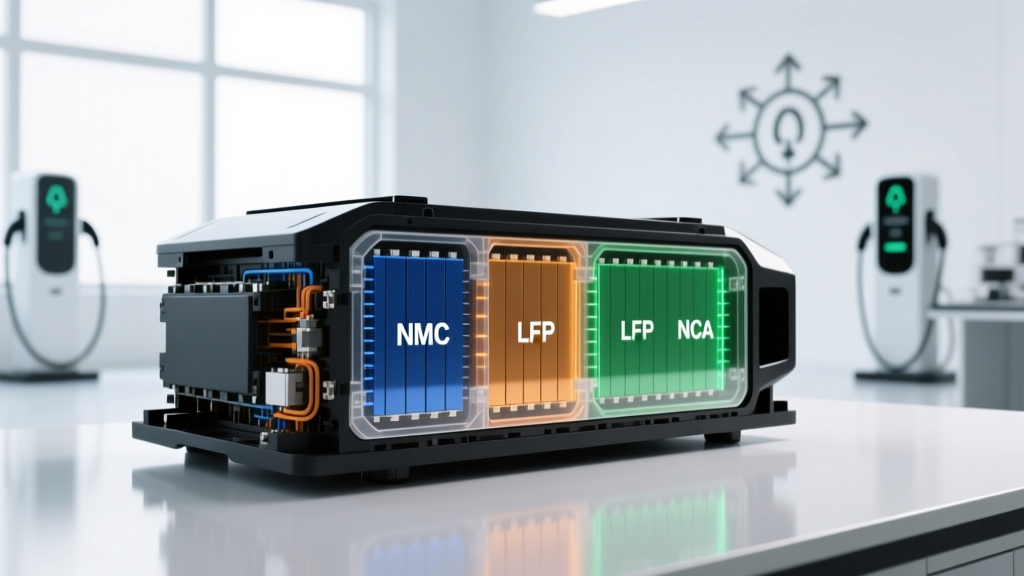
Tesla uses two distinct lithium-ion chemistries across its lineup, and the difference matters for degradation behavior, charging habits, and cold-weather performance.
| Attribute | LFP (Lithium Iron Phosphate) | NMC/NCA (Nickel Manganese Cobalt / Nickel Cobalt Aluminum) |
|---|---|---|
| Models using it | Model 3 RWD (base) | Model 3 LR/Perf, Model Y, Model S, Model X |
| Energy density | Lower (~160 Wh/kg cell-level) | Higher (~250 Wh/kg cell-level) |
| Cycle life | 3,000–5,000+ cycles | 1,000–2,000 cycles |
| Degradation rate | Slower long-term, flatter curve | Faster initial drop, then stabilizes |
| Recommended daily SoC | 100% (Tesla recommends charging to full weekly) | 80% daily, 100% for trips only |
| Cold-weather performance | Weaker — slower charge acceptance below 32°F | Better cold tolerance with preconditioning |
| Cost per kWh | Lower (no cobalt/nickel) | Higher (commodity-linked) |
| Thermal stability | Excellent — lower runaway risk | Good, but requires robust BMS |
The practical takeaway: LFP batteries degrade more slowly and tolerate daily 100% charging, making them ideal for owners who want maximum calendar life and don't need the extra range of NMC. NMC packs offer higher energy density (more range in the same physical space) but require more careful State of Charge management to minimize degradation. If you're choosing between a Model 3 RWD and a Model 3 Long Range specifically for battery longevity, the LFP-equipped RWD has the chemistry advantage — though the Long Range starts with more total kWh, so a 70% threshold still leaves more usable range.
Real-World Tesla Battery Degradation: What the Data Shows
Tesla's 2024 Impact Report (the most recent published dataset) states that Model 3 and Model Y vehicles retain approximately 85% of original range after 200,000 miles. Model S and Model X retain approximately 88% after 200,000 miles. These figures are fleet averages across millions of vehicles.
Independent data from Recurrent Auto, which tracks over 15,000 EVs including large Tesla cohorts, shows a similar pattern:
- Year 1: 2–5% capacity loss (initial formation losses as cells stabilize)
- Years 2–4: Degradation slows to roughly 1–2% per year
- Years 5–8: Gradual decline, with most packs retaining 85–92% SoH
- 200,000+ miles: Packs that reach this milestone typically sit at 80–88% capacity
Two important nuances. First, degradation is not linear — the steepest drop occurs early, then the curve flattens. Second, calendar aging matters alongside cycle aging: a garage-kept Tesla driven 5,000 miles per year will still lose capacity over time due to electrolyte decomposition, though less than a high-mileage vehicle.
For context, the average US driver covers roughly 13,500 miles per year (per FHWA data). At that rate, a Tesla would reach 100,000 miles in about 7.4 years — well within the 8-year warranty window — and would likely retain 87–92% capacity at that point, comfortably above the 70% warranty threshold.
EV Battery Replacement Cost: When and How Much
Full high-voltage battery replacement on a Tesla is rare before 200,000 miles, but it's important to understand the cost landscape for out-of-warranty scenarios or used-vehicle purchases.
| Model | Battery Size (usable) | Chemistry | Estimated Replacement Cost |
|---|---|---|---|
| Model 3 RWD | ~60 kWh | LFP | $10,000–$13,000 |
| Model 3 Long Range | ~75 kWh | NMC | $13,000–$16,000 |
| Model Y Long Range | ~75 kWh | NMC | $14,000–$18,000 |
| Model S (current gen) | ~95 kWh | NMC | $18,000–$22,000 |
| Model X (current gen) | ~95 kWh | NMC | $18,000–$24,000 |
These figures include the battery pack and labor at a Tesla Service Center. Third-party EV specialists may offer refurbished packs at 20–35% lower cost. Importantly, Tesla often replaces individual modules rather than the entire pack when a single module shows anomalous degradation — this can reduce out-of-warranty costs to $2,000–$5,000 depending on how many modules need service.
When is replacement typically needed? Most Tesla packs do not require full replacement during normal ownership. The scenarios where it becomes necessary are: catastrophic cell failure (extremely rare), physical damage from road debris or collision, or capacity loss below a usable threshold at very high mileage (typically 250,000+ miles). For the vast majority of owners, the battery will outlast the vehicle's economic life.
Factors That Accelerate (or Slow) Battery Degradation
Battery health isn't solely determined by mileage. How you charge, store, and drive your Tesla has a measurable impact on long-term SoH.
Charging Habits
- NMC daily charging to 100%: Sustained high SoC stresses NMC cathodes. Tesla's infotainment recommends 80% for daily use and 100% only when you need full range for a trip. Ignoring this consistently can add 3–5% extra degradation over 5 years.
- LFP charging to 100%: Tesla actually recommends periodic 100% charges for LFP packs to allow the BMS to recalibrate cell voltages. Daily 100% is acceptable for this chemistry.
- DC fast charging frequency: Occasional Supercharging (1–2 times per week) has minimal impact. Daily DC fast charging, especially at 250 kW peak rates, generates sustained heat that accelerates electrolyte breakdown. Owners who rely exclusively on public fast charging may see 2–4% additional degradation over 100,000 miles compared to Level 2 home charging.
- Charging to very low SoC: Letting the pack sit below 10% for extended periods (days or weeks) causes copper dissolution in the anode. Try to keep the pack above 15% when storing.
Temperature Management
- Extreme heat: Prolonged exposure to ambient temperatures above 95°F, especially at high SoC, accelerates degradation. Tesla's thermal management system actively cools the pack, but parking in shade or a garage helps.
- Extreme cold: Cold doesn't permanently damage the battery, but charging a cold pack without preconditioning forces lithium plating on the anode — a permanent capacity loss mechanism. Always use the Tesla app to precondition before charging in sub-freezing weather.
Driving Patterns
- Aggressive acceleration and frequent high-speed driving generate more heat in the cells, contributing to faster wear.
- Regenerative braking actually reduces mechanical brake wear and returns energy gently to the pack — it does not meaningfully accelerate battery degradation.
How to Check and Monitor Tesla Battery Health (SoH)
Tesla does not expose a direct State of Health percentage in the vehicle's touchscreen, but there are several reliable methods to estimate it:
- Tesla app energy graph: The app tracks rated range at 100% charge over time. Compare your current 100% rated range to the EPA-rated range when new. A Model 3 Long Range with an original EPA rating of 341 miles that now shows 310 miles at 100% SoC has approximately 91% SoH.
- Third-party telemetry tools: Services like TeslaLogger, Tessie, and Teslamate (self-hosted) pull data from Tesla's Fleet API and calculate SoH by comparing current energy capacity to original specs. These are more precise than the app alone because they account for partial charges and temperature effects.
- Service Mode (limited): Tesla's Service Mode (accessible by tapping the Software version string on the touchscreen) shows a "Battery Health" test, but it requires a full charge cycle and is not always available on all firmware versions.
- Service Center diagnostic: Tesla can run a full battery health report during a service visit. This is the most authoritative measurement and is what the company uses to evaluate warranty claims.
Best practice: Log your 100% rated range quarterly and track the trend. A slow, steady decline is normal. A sudden drop of 5%+ in a short period warrants a service appointment, as it could indicate a module imbalance.
Maximizing Battery Life: A Practical Care Checklist
- Set daily charge limit to 80% for NMC models (Model 3 LR, Model Y, Model S, Model X); charge to 100% only before long trips.
- For LFP models (Model 3 RWD), charge to 100% at least once per week to allow BMS recalibration.
- Use Level 2 home charging as your primary method; reserve DC fast charging for road trips or when time-constrained.
- Enable Scheduled Departure and preconditioning in cold weather to warm the pack before charging.
- Avoid leaving the vehicle at 100% SoC for more than 24 hours — if you charge to full, drive it within a day.
- Don't let the pack sit below 10% SoC for more than a few days. If storing the vehicle long-term, leave it at 50% SoC and plugged in.
- Park in shade or a garage during summer months to reduce thermal load on the cooling system.
- Keep tires properly inflated — underinflated tires increase rolling resistance, which increases energy draw and heat generation.
- Monitor 100% rated range quarterly and investigate any sudden drops with a service appointment.
Emerging Battery Technology: What's Next (and When)
Tesla is actively developing next-generation battery technology, but it's critical to separate announced timelines from currently available products.
4680 cells (current generation): Tesla's larger-format 4680 cylindrical cells are already in production for Model Y vehicles built at Giga Texas. These cells use a dry-coating electrode process that reduces manufacturing cost and energy consumption. They offer modest improvements in energy density and thermal management over the older 2170 cells, but the chemistry remains NMC.
Silicon-dominant anodes: Replacing graphite anodes with silicon can theoretically boost energy density by 20–40%. Tesla and suppliers like Sila Nanotechnologies are working on silicon-carbon composite anodes, but the technology faces swelling and cycle-life challenges. Realistic availability in production vehicles: 2028–2030 at the earliest.
Solid-state batteries: Solid-state cells replace the liquid electrolyte with a solid conductor, promising higher energy density, faster charging, and improved safety. Companies like QuantumScape and Toyota have demonstrated prototypes, but manufacturing scale-up remains the primary barrier. No solid-state EV battery is currently available for purchase in any production vehicle. Realistic timeline for commercial availability in consumer vehicles: 2030–2035, likely debuting in premium segments first.
For current Tesla buyers, these emerging technologies should not influence a purchase decision. Today's NMC and LFP packs already deliver 200,000+ mile lifespans with manageable degradation, and the next major chemistry shift is still years away from mass production.
Frequently Asked Questions
How long do Tesla batteries last in years and miles?
Based on Tesla's fleet data and independent tracking from Recurrent Auto, most Tesla battery packs retain 85–92% of original capacity after 200,000 miles (roughly 15 years at the US average of 13,500 miles/year). Full failure requiring replacement before 200,000 miles is statistically rare — well under 1% of packs. The battery will almost certainly outlast the vehicle's economic useful life.
How much does it cost to replace a Tesla battery out of warranty?
Full pack replacement ranges from approximately $10,000 for a Model 3 RWD (LFP, ~60 kWh) to $24,000 for a Model X (NMC, ~95 kWh). However, Tesla frequently replaces individual modules rather than the entire pack, which can reduce costs to $2,000–$5,000. Most owners will never face this expense because the pack lasts the life of the vehicle.
What exactly does the Tesla battery warranty cover?
Tesla's Battery and Drive Unit Limited Warranty covers the high-voltage traction battery and drive unit for 8 years and 100,000–150,000 miles (depending on model) against manufacturing defects and capacity loss below 70% of original capacity. It does not cover the 12V auxiliary battery, physical damage from accidents, or degradation from misuse. Full terms are available on Tesla's warranty page.
How do I check my Tesla's battery State of Health?
The most accessible method is checking your 100% rated range in the Tesla app and comparing it to the original EPA-rated range. For more precise tracking, third-party tools like Teslamate or Tessie pull data from Tesla's Fleet API to calculate SoH. A Tesla Service Center can run a formal battery health diagnostic during a service visit.
Is LFP or NMC better for battery longevity?
LFP (lithium iron phosphate) has a clear cycle-life advantage — 3,000–5,000+ cycles versus 1,000–2,000 for NMC — and tolerates daily 100% charging without accelerated degradation. If your priority is maximum battery lifespan with minimal charging-habit management, LFP is the better choice. However, NMC offers higher energy density (more range per kWh) and better cold-weather charging performance, which may outweigh the longevity difference for drivers who need 330+ miles of EPA range or live in cold climates. The "better" chemistry depends on your specific use case.
Does frequent Supercharging damage the battery?
Occasional Supercharging (1–2 sessions per week) has a negligible effect on long-term degradation. Daily DC fast charging, particularly at peak 250 kW rates, generates sustained heat that modestly accelerates cell wear. Owners who Supercharge daily may see 2–4% additional capacity loss over 100,000 miles compared to those who primarily use Level 2 home charging. For most drivers, the convenience of Supercharging on road trips far outweighs this small long-term cost.