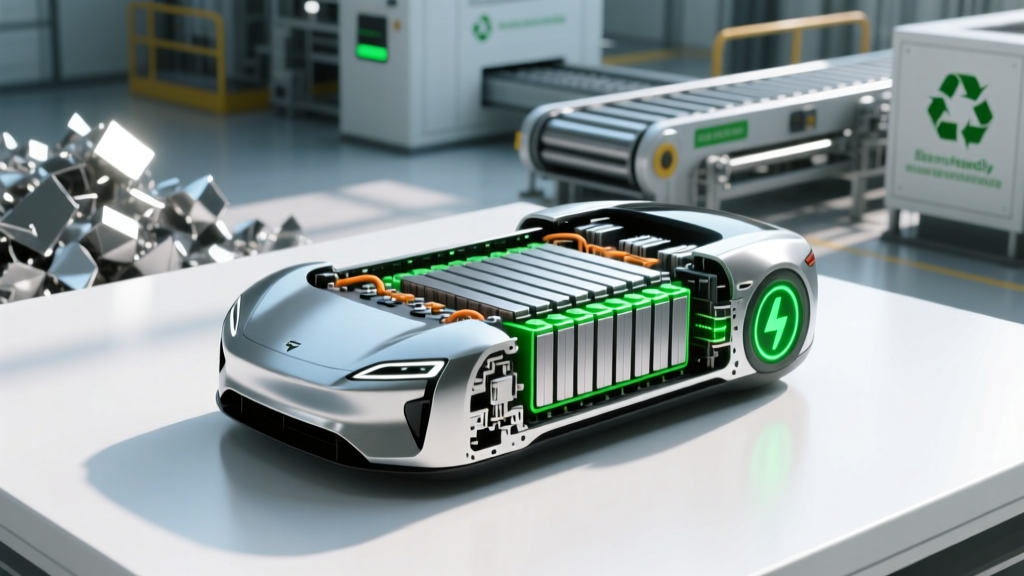
China processes more lithium-ion battery material than the rest of the world combined. In 2025, Chinese recyclers like CATL's Brunp, GEM Co., and Huayou Cobalt recovered over 600,000 metric tons of battery scrap — a figure that directly affects what you pay for an EV battery replacement in the United States, how long your pack lasts, and whether critical-mineral sourcing rules under the IRS §30D federal tax credit can be met. Understanding China's dominance in EV battery recycling is no longer an abstract supply-chain topic; it's a practical ownership question.
This guide breaks down the battery chemistries flowing through China's recycling loop, real-world degradation data, warranty protections, replacement costs in 2026, and the habits that extend pack life — all through the lens of how recycling infrastructure shapes your wallet.
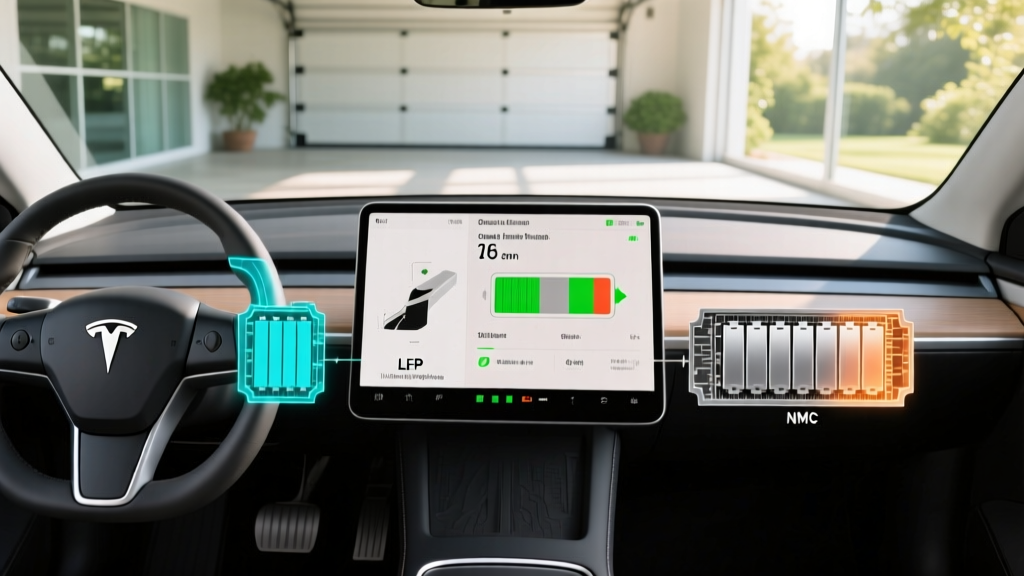
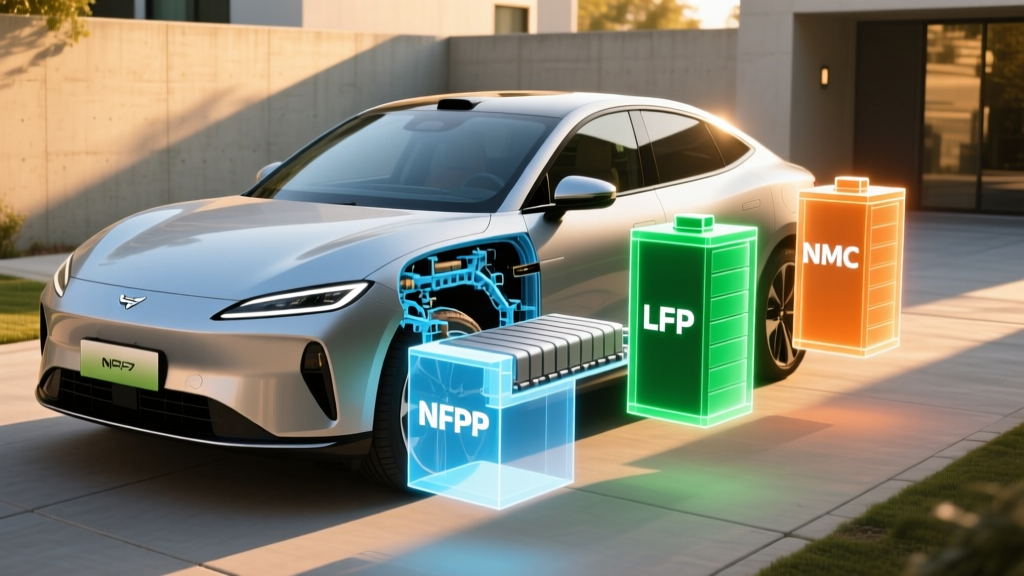
LFP vs NMC: The Two Chemistries China Recycles at Scale
China's recycling industry handles two dominant cathode chemistries: lithium iron phosphate (LFP) and nickel manganese cobalt (NMC/NCA). The economics of recovering each are vastly different, and that difference cascades into the price and longevity of the battery in your car.
NMC/NCA packs contain nickel, cobalt, and manganese — high-value metals that make recycling profitable. Chinese hydrometallurgical plants recover 95%+ of nickel and cobalt from spent NMC cells, feeding that material back into new cathode production. This closed loop helps stabilize NMC battery pricing but also ties supply to Chinese processing capacity.
LFP contains no cobalt or nickel — just iron and phosphate, which are cheap and abundant. Recycling LFP was historically uneconomical because the recovered material was worth less than the processing cost. That changed around 2023-2024 when Chinese recyclers developed direct-recycling processes that recover lithium carbonate from LFP cathodes, making the economics viable at scale. Today, LFP recycling in China is growing faster than NMC recycling by volume because LFP dominates the Chinese domestic EV market (over 60% of new EV sales in China use LFP).
| Attribute | LFP (Lithium Iron Phosphate) | NMC/NCA (Nickel Manganese Cobalt/Aluminum) |
|---|---|---|
| Energy Density | ~160-180 Wh/kg (lower range per kWh) | ~220-260 Wh/kg (more range in same weight) |
| Cycle Life | 3,000-5,000+ cycles to 80% SoH | 1,000-2,000 cycles to 80% SoH |
| Cold-Weather Performance | Greater range loss below 32°F (~30-40% loss at 0°F) | Better cold retention (~20-30% loss at 0°F) |
| Thermal Stability | Excellent — very low thermal runaway risk | Good — requires more active thermal management |
| Cost per kWh (2026) | ~$70-90/kWh at cell level | ~$100-130/kWh at cell level |
| Recycling Economics | Requires direct recycling; lower recovered value | High-value nickel/cobalt recovery; established hydrometallurgical process |
| Common in US Models (2026) | Tesla Model 3/Y RWD, Ford Mustang Mach-E Select (LFP option), BYD (if US-available) | Tesla Model 3/Y Long Range, Hyundai Ioniq 5/6, Ford F-150 Lightning Extended, Chevy Equinox EV |
Which is better? For daily commuting and high-mileage drivers who charge to 100% regularly, LFP wins on longevity — it tolerates full-charge storage far better than NMC and offers 2-3x the cycle life. For road-trippers needing maximum EPA range and buyers in cold climates, NMC's higher energy density and better cold-weather performance justify the trade-off. China's recycling infrastructure supports both, but the economics favor NMC recovery today while LFP direct recycling scales.
How Long Do EV Batteries Actually Last? Degradation Data
The fear that an EV battery will "die" at 100,000 miles is not supported by fleet data. Most modern packs outlast the vehicle they're installed in. Here's what the numbers show:
Real-World Degradation Benchmarks:
- Tesla Model 3/Y (NMC, 2020-2024): ~5-8% capacity loss at 100,000 miles, ~10-12% at 200,000 miles (source: Tesla Impact Reports, fleet data aggregated by Recurrent Auto)
- Chevrolet Bolt EV/EUV (NMC, 2017-2023): ~6-10% loss at 100,000 miles; earlier 2017-2019 models had higher variance due to less sophisticated thermal management
- Hyundai Ioniq 5 (NMC, 2022-2025): ~3-5% loss at 50,000 miles based on early fleet data; projected ~8-10% at 150,000 miles
- LFP-equipped Tesla Model 3 RWD (2022-2025): ~2-4% loss at 60,000 miles; slower degradation curve attributed to LFP chemistry tolerance for 100% SoC
- Nissan Leaf (passive air cooling, 2013-2017): 15-25% loss at 80,000-100,000 miles — a cautionary example of why active thermal management matters
The pattern is clear: liquid-cooled packs with active thermal management (standard on virtually all 2022+ EVs) degrade far more slowly than earlier passively cooled designs. According to data from Recurrent Auto's fleet analysis, the average 2023-2025 model-year EV retains 90-94% of its original capacity at 5 years / 75,000 miles.
When does replacement become necessary? Most manufacturers define end-of-life as dropping below 70% State of Health (SoH). At typical degradation rates of 1.5-2.0% per year for NMC and 0.8-1.2% per year for LFP, reaching 70% SoH would take 15-20 years or 250,000+ miles for most drivers. The vast majority of EV batteries will never need replacement during original ownership.
Battery Warranty Terms: What's Covered and for How Long
Federal law (EPA emissions warranty requirements) effectively mandates that EV battery warranties cover at least 8 years / 100,000 miles. Most manufacturers meet or exceed this. Here's how major 2026 warranties compare:
| Manufacturer | Warranty Term | Capacity Retention Threshold | Notes |
|---|---|---|---|
| Tesla (Model 3/Y RWD, LFP) | 8 yr / 120,000 mi | 70% SoH | LFP packs have longer mileage warranty |
| Tesla (Model 3/Y LR/Perf, NMC) | 8 yr / 120,000 mi | 70% SoH | Includes drive unit |
| Hyundai / Kia | 10 yr / 100,000 mi | 70% SoH | Among the longest term in the industry |
| Ford (Mach-E, F-150 Lightning) | 8 yr / 100,000 mi | 70% SoH | Covers battery and EV components |
| General Motors (Ultium platform) | 8 yr / 100,000 mi | 70% SoH | Includes propulsion system |
| Rivian | 8 yr / 175,000 mi | 70% SoH | Highest mileage threshold among major OEMs |
| BMW | 8 yr / 100,000 mi | 70% SoH | Transferable to second owner |
What's covered: Capacity loss below the threshold (typically 70% of original kWh), manufacturing defects, and thermal management system failures. What's not covered: Damage from accidents, improper charging (e.g., repeated use of damaged DC fast chargers causing physical connector damage), modifications, or cosmetic degradation that doesn't affect capacity below the threshold.
Critical nuance: Warranty replacement does not guarantee a brand-new battery. Manufacturers typically replace with a pack that meets or exceeds the retention threshold — often a refurbished unit from China's recycling/remanufacturing pipeline. This is standard industry practice and functionally adequate, but worth understanding before filing a claim.
EV Battery Replacement Costs: 2026 Pricing by Model
Out-of-warranty battery replacement is the scenario that generates headlines — and anxiety. Here's what it actually costs in 2026, informed by service-center data and parts pricing:
| Vehicle | Battery Size (usable kWh) | Chemistry | Replacement Cost (Parts + Labor) | Typical Replacement Timeline |
|---|---|---|---|---|
| Tesla Model 3 RWD | 57.5 kWh | LFP | $10,000 - $13,000 | Rarely needed; 250,000+ mi |
| Tesla Model Y Long Range | 75 kWh | NMC | $13,000 - $16,000 | Rarely needed; 200,000+ mi |
| Chevrolet Equinox EV | 85 kWh | NMC (Ultium) | $14,000 - $18,000 | Rarely needed; 200,000+ mi |
| Ford F-150 Lightning Ext. Range | 131 kWh | NMC | $22,000 - $28,000 | Rarely needed; 200,000+ mi |
| Hyundai Ioniq 5 | 77.4 kWh | NMC | $12,000 - $16,000 | Rarely needed; 200,000+ mi |
| Chevrolet Bolt EV (2020-2023) | 65 kWh | NMC | $14,000 - $16,000 (post-recall pricing) | Most covered by recall; 150,000+ mi otherwise |
| Nissan Leaf (40 kWh pack) | 40 kWh | NMC | $6,500 - $9,000 | May be needed at 100,000-150,000 mi (passive cooling) |
China's recycling role in cost reduction: Refurbished battery modules from Chinese recycling facilities (CATL Brunp, GEM) are increasingly entering the global supply chain as replacement parts. A refurbished 75 kWh NMC module from a Chinese recycler costs 30-40% less than a new OEM pack. This is already lowering out-of-warranty replacement costs and will continue to do so as recycling volumes scale. By 2028-2030, industry analysts project replacement pack costs falling below $100/kWh for standard modules — down from ~$150-200/kWh today.
When is replacement actually needed? For liquid-cooled EVs from 2020 onward, almost never during typical first- or second-owner lifespans. The vehicles most likely to need replacement are early-generation, passively cooled models (2011-2017 Nissan Leaf, early Fiat 500e, first-gen Kia Soul EV) that are now 8-15 years old.
What China's Recycling Dominance Means for US EV Owners
China controls approximately 75-80% of global lithium-ion battery recycling capacity as of 2025-2026. This dominance has three direct implications for American EV buyers and owners:
1. Critical-mineral supply and tax credit eligibility. The IRS §30D clean vehicle credit requires that a percentage of critical minerals in the battery be sourced from the US or a free-trade-agreement partner, or recycled in North America. China's recycling dominance means that cobalt, nickel, and lithium recovered in Chinese facilities does not count toward the US recycling threshold. This is why automakers like Tesla, GM, and Ford are investing heavily in North American recycling partnerships (Redwood Materials, Li-Cycle, Ascend Elements) — to build a domestic recycling loop that qualifies their vehicles for the credit. Check current IRS guidance on critical mineral and battery component requirements before assuming credit eligibility.
2. Replacement part pricing. Because Chinese recyclers process at massive scale with lower labor and regulatory costs, refurbished battery modules from China are price-competitive even after shipping. This puts downward pressure on global replacement-pack pricing — good news for out-of-warranty repairs, but it also means North American recyclers must achieve similar scale to compete.
3. End-of-life vehicle value. When your EV is eventually scrapped, its battery's residual value depends on who recycles it and what they recover. Vehicles with NMC packs (high nickel/cobalt content) have higher scrap value than LFP packs. As China sets global pricing for recycled battery minerals, the residual value of your EV at trade-in or salvage is indirectly tied to Chinese commodity markets.
Maximizing Battery Health: What Actually Works
Battery degradation is inevitable, but the rate is highly dependent on owner behavior. Here's a data-backed care framework:
Daily Charging Habits
- NMC owners: Set daily charge limit to 80% SoC. Reserve 100% for road trips. Prolonged storage above 90% SoC accelerates NMC degradation by ~2x vs. 50-80% storage.
- LFP owners: Charge to 100% at least once per week. LFP chemistry benefits from full-charge calibration and tolerates 100% SoC storage better than NMC. Tesla and BYD explicitly recommend regular 100% charges for LFP packs.
- Avoid letting SoC drop below 10% for extended periods. Deep discharge stresses both chemistries, though the BMS buffer (typically 2-5 kWh reserved at the bottom) provides some protection.
Fast-Charging Frequency
- DC fast charging (50-350 kW) generates significant heat. Occasional use (road trips, 1-2x per week) has minimal impact on modern liquid-cooled packs.
- Exclusive DCFC use (daily fast charging without Level 2) has been shown in DOE/Idaho National Lab testing to add ~1-3% additional degradation over 100,000 miles vs. Level 2-only charging. Meaningful but not catastrophic.
- Precondition your battery before DC fast charging — most EVs do this automatically when you navigate to a charger. Cold batteries charge slower and experience more stress.
Temperature Management
- Park in shade or a garage when possible in extreme heat (>95°F). Sustained high battery temps (>113°F / 45°C) accelerate calendar degradation.
- In cold weather, plug in when parked (even at 120V Level 1) so the thermal management system can maintain battery temperature using grid power instead of pack energy.
- Use your EV's scheduled departure/preconditioning feature to warm or cool the battery before driving — this reduces the load during the first miles.
Monitoring State of Health (SoH): How to Check Your Battery
State of Health (SoH) is the percentage of original capacity your battery retains. A new pack is 100% SoH; a pack that held 75 kWh when new but now holds 67.5 kWh is at 90% SoH.
How to check SoH:
- Tesla: No native SoH display in the vehicle UI. Use third-party apps like Tessie or TeslaFi that calculate SoH from energy consumed vs. distance data over multiple charge cycles. Service Mode (accessible via the software screen) shows approximate SoH on newer software versions.
- Hyundai/Kia: The EV menu in the instrument cluster or infotainment system displays battery health percentage on most 2022+ models (Ioniq 5, EV6, EV9).
- GM (Ultium): The myChevrolet/myCadillac app and OnStar can provide battery health reports. Some models display SoH in the energy menu.
- Ford: The FordPass app provides battery health status, though it may show a general "good/fair" indicator rather than a precise percentage.
- OBD-II scanners: Devices like the OBDLink MX+ paired with apps such as ABRP (A Better Route Planner) or Car Scanner can read BMS-reported SoH data on most EVs. This is the most accurate DIY method.
- Dealer diagnostic: Any authorized service center can run a full battery health report showing per-module voltage variance, total capacity, and SoH — typically free during scheduled service.
How often to check: Once per quarter is sufficient for most owners. Track the trend over time rather than fixating on a single reading — SoH estimates can fluctuate 1-2% based on recent driving patterns and temperature.
Emerging Battery Tech: Solid-State and Beyond
Next-generation battery technologies promise higher energy density and faster charging, but timelines remain long:
Solid-state batteries replace the liquid electrolyte with a solid ceramic or polymer, theoretically enabling 30-50% higher energy density and faster charging with lower fire risk. Toyota has announced a solid-state EV for 2027-2028, and Samsung SDI targets 2027 production. However, manufacturing yield and cost challenges persist. Realistically, solid-state packs will debut in limited, premium vehicles at prices above $80,000 MSRP and won't reach mainstream pricing until the early 2030s.
Silicon-anode batteries (used in limited form in the Porsche Taycan and upcoming GM models) increase energy density by 10-20% by replacing graphite anodes with silicon composites. This technology is closer to mainstream — expect broader adoption in 2026-2028 model-year vehicles.
Sodium-ion batteries are being deployed in China for low-cost, short-range EVs (BYD Seagull, various Wuling models). They use no lithium, cobalt, or nickel, reducing cost to ~$50-60/kWh. Energy density is lower (~120-140 Wh/kg), limiting them to city cars with 150-200 miles of range. US availability is unlikely before 2028 at the earliest.
Recycling implications: Solid-state and sodium-ion chemistries require entirely new recycling processes. China's current infrastructure is optimized for lithium-ion (LFP and NMC). A transition to new chemistries will require parallel recycling R&D — another area where Chinese firms are investing aggressively. For current EV buyers, this is forward-looking context, not a reason to wait.
Frequently Asked Questions
How long do EV batteries last in years and miles?
Modern liquid-cooled EV batteries (2020+) typically retain 85-92% of original capacity at 10 years / 150,000 miles. LFP chemistries degrade more slowly than NMC, with some fleet data showing 95%+ retention at 100,000 miles. Most packs will functionally outlast the vehicle's economic life. The 8-year / 100,000-mile minimum warranty (120,000 miles for some) provides a strong floor.
How much does an EV battery cost to replace in 2026?
Out-of-warranty replacement ranges from ~$6,500 for a small pack (Nissan Leaf 40 kWh) to ~$28,000 for a large pack (Ford F-150 Lightning 131 kWh). Most mainstream models (Model 3, Ioniq 5, Equinox EV) fall in the $10,000-$18,000 range including labor. Refurbished packs from recycling facilities cost 30-40% less than new OEM units. However, replacement is rarely needed for liquid-cooled EVs within typical ownership periods.
What does the EV battery warranty actually cover?
Manufacturer warranties cover capacity loss below a defined threshold (usually 70% of original capacity) and manufacturing defects for 8-10 years / 100,000-175,000 miles depending on the brand. They do not cover accident damage, improper charging damage, or normal degradation above the threshold. Warranty replacements may use refurbished packs rather than brand-new units.
How do I check my EV battery's State of Health?
Methods vary by brand: Hyundai/Kia display SoH in the vehicle UI; Tesla owners use third-party apps like Tessie or TeslaFi; GM provides reports via OnStar/apps; Ford uses FordPass. For precise readings, an OBD-II scanner (OBDLink MX+) paired with an EV-compatible app reads BMS-reported data directly. Dealer diagnostics are also available, often free during service visits.
LFP vs NMC — which battery chemistry should I choose?
Choose LFP if you commute daily, charge at home, want maximum cycle life (3,000-5,000 cycles), don't mind slightly less range, and live in a moderate climate. Choose NMC if you need maximum EPA range per charge, drive in cold climates frequently, or take regular road trips where energy density matters. Both chemistries are well-supported by China's recycling infrastructure, though NMC recycling is currently more profitable due to cobalt/nickel recovery.
Does frequent DC fast charging damage my battery?
On modern liquid-cooled EVs, the impact is modest. DOE testing shows exclusive DCFC use adds approximately 1-3% more degradation over 100,000 miles compared to Level 2-only charging. Occasional fast charging (a few times per week or on road trips) has negligible impact. Always precondition the battery before fast charging and avoid repeated back-to-back DCFC sessions in hot weather.
Will China's recycling dominance affect my EV's resale value?
Indirectly, yes. China sets global pricing for recycled battery minerals, which influences replacement-pack costs and end-of-life scrap value. NMC packs currently have higher residual material value than LFP. As North American recycling capacity grows (Redwood Materials, Li-Cycle), this dependency may decrease — but for 2026, Chinese recycling economics remain the global benchmark.