Why Thermal Management Is the Heart of EV Battery Longevity
The single most important engineering decision in any electric vehicle isn't the motor size or the screen resolution — it's how the car manages battery temperature. Tesla's battery cooling system has evolved through multiple generations, and its liquid-based thermal management architecture is a primary reason Tesla packs consistently show lower degradation than many competitors at equivalent mileage. Understanding how this system works — and how it interacts with battery chemistry, charging habits, and ambient conditions — is essential for any current or prospective Tesla owner.
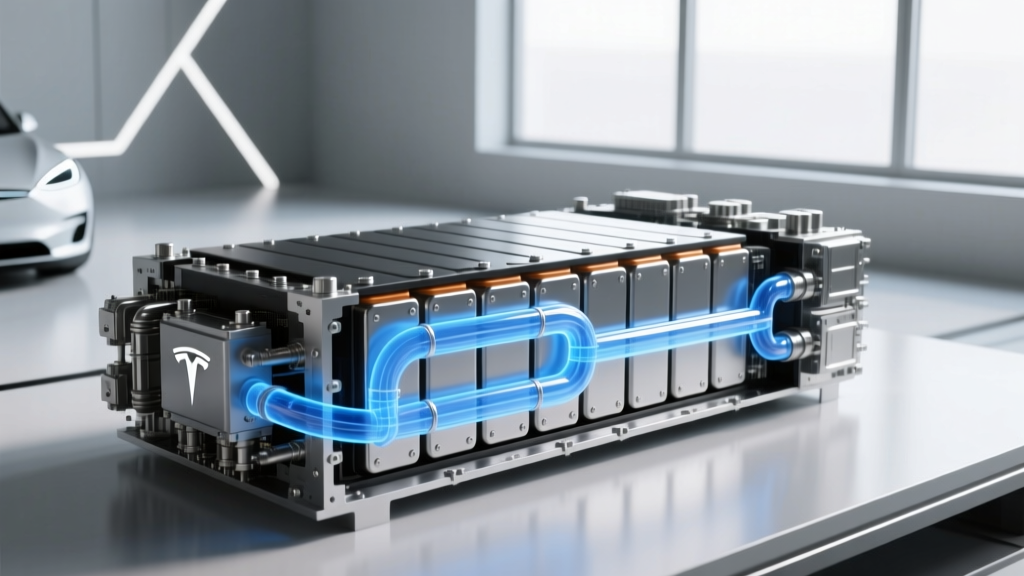
Battery cells operate optimally between roughly 68°F and 95°F (20°C–35°C). Outside that window, chemistry slows down (cold) or accelerates degradation (heat). Tesla's active liquid cooling system circulates a glycol-based coolant through channels integrated into the battery pack structure, actively heating or cooling cells to keep them in the ideal range. This isn't just about comfort — it directly determines how fast you can charge, how far you can drive, and how many years the pack will last.
Tesla's Battery Cooling System: How It Works
Tesla uses an active liquid thermal management system rather than the passive air-cooling approach found in older EVs like the early Nissan Leaf. The system consists of coolant tubes that run between cell groups within the pack, a dedicated pump, a chiller connected to the HVAC compressor, and a heater for cold-conditioning. The car's battery management system (BMS) continuously monitors cell temperatures and adjusts coolant flow accordingly.
During DC fast charging at a Tesla Supercharger — where peak rates can reach 250 kW on V3 stalls and up to 350 kW on newer V4 infrastructure — the battery generates significant heat. The cooling system ramps up to dissipate that thermal load, which is why you'll hear the car's fans and pumps running aggressively during a fast-charge session. This active cooling is also why Tesla vehicles can sustain higher charge rates for longer portions of the charging curve compared to passively cooled packs, which must taper earlier to prevent overheating.
Preconditioning is a critical feature tied directly to the cooling system. When you navigate to a Supercharger using the car's built-in navigation, the BMS begins warming or cooling the pack to the optimal temperature before you arrive. This can reduce 10–80% charge times by several minutes — a real-world advantage of 15–20 minutes on a cold day, according to Tesla's own engineering documentation and independent testing by outlets like Tesla Support.
Battery Chemistry: LFP vs. NMC/NCA in Tesla's 2026 Lineup
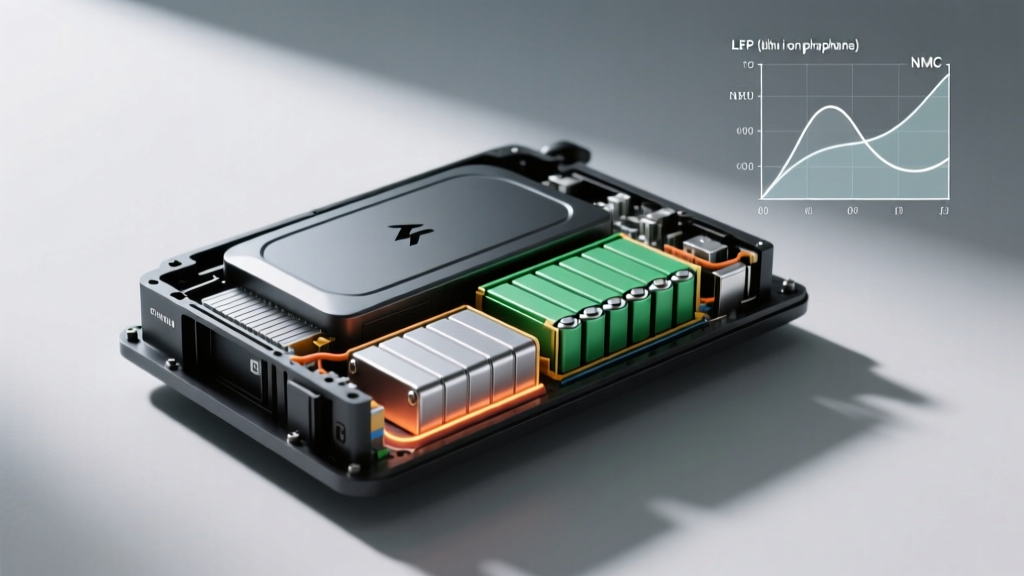
Tesla currently uses two primary battery chemistries across its lineup, and the cooling system is calibrated differently for each. Understanding the trade-offs is essential for choosing the right model and setting realistic expectations for range, longevity, and charging behavior.
| Attribute | LFP (Lithium Iron Phosphate) | NMC/NCA (Nickel Manganese Cobalt / Nickel Cobalt Aluminum) |
|---|---|---|
| Models using it | Model 3 RWD, Model Y RWD | Model 3 Long Range, Model Y Long Range, Model S, Model X, Cybertruck |
| Energy density | Lower (~160 Wh/kg cell-level) | Higher (~250–270 Wh/kg cell-level) |
| Usable pack capacity | ~57.5 kWh (Model 3 RWD) | ~75–100 kWh depending on model |
| Cycle life | 3,000+ cycles to 80% capacity | 1,000–2,000 cycles to 80% capacity |
| Cold-weather performance | More range loss in cold (~30–40% below freezing) | Better cold performance (~20–30% loss below freezing) |
| Recommended daily charge | 100% (Tesla recommends weekly full charges) | 80–90% daily, 100% for trips only |
| Cost | Lower — no cobalt or nickel | Higher — commodity-priced metals |
| Thermal stability | Excellent — less prone to thermal runaway | Good — requires more active cooling |
The LFP chemistry in Tesla's standard-range vehicles is inherently more thermally stable, which means the cooling system doesn't need to work as aggressively under normal conditions. However, LFP cells are more sensitive to cold temperatures, so the thermal management system's heating function is especially important in winter months. NMC/NCA packs, with their higher energy density, generate more heat during fast charging and benefit more directly from Tesla's liquid cooling infrastructure.
Battery Degradation: What the Real Data Shows
Thanks in part to effective thermal management, Tesla batteries degrade more slowly than many owners initially fear. According to Tesla's 2024 Impact Report (the most recent comprehensive data published), Model 3 and Model Y vehicles retain approximately 85% of their original battery capacity after 200,000 miles. This aligns with independent fleet data aggregated by sources like fueleconomy.gov's EV technology resources and long-term owner tracking communities.
Typical Tesla Battery Degradation Curve (NMC/NCA, based on fleet data):
- Year 1 / 15,000 miles: ~2–4% capacity loss (initial formation loss)
- Year 3 / 45,000 miles: ~5–8% total loss
- Year 5 / 75,000 miles: ~8–12% total loss
- Year 8 / 120,000 miles: ~12–15% total loss
- 200,000 miles: ~15% total loss (85% capacity retained)
LFP packs show a similar but slightly flatter curve, with less initial drop-off but comparable long-term retention. Degradation is non-linear: the steepest losses occur in the first year, then the curve flattens significantly.
Several factors accelerate degradation, and Tesla's cooling system mitigates most of them — but not all. Frequent DC fast charging (multiple times per week), regularly charging to 100% on NMC/NCA packs, and prolonged exposure to extreme heat without preconditioning all contribute to faster capacity loss. The thermal management system can only do so much if the car is parked in 110°F Arizona sun for weeks at 95% state of charge.
Tesla Battery Warranty: What's Covered and for How Long
Tesla's battery warranty provides a concrete floor for capacity retention expectations. If your pack degrades beyond the threshold, Tesla will replace or refurbish it at no cost.
| Model | Warranty Period | Mileage Limit | Minimum Capacity Retention |
|---|---|---|---|
| Model 3 RWD (LFP) | 8 years | 100,000 miles | 70% |
| Model 3 Long Range / Performance | 8 years | 120,000 miles | 70% |
| Model Y (all trims) | 8 years | 120,000 miles | 70% |
| Model S / Model X | 8 years | 150,000 miles | 70% |
| Cybertruck | 8 years | 120,000 miles | 70% |
The 70% retention threshold is important context: it means Tesla guarantees you'll still have at least 70% of your original battery capacity within the warranty window. In practice, very few Tesla vehicles hit this threshold under normal use. The warranty covers defects and abnormal degradation but does not cover damage from accidents, flooding, or unauthorized modifications. It's also worth noting that the warranty applies to whichever comes first — years or miles — so high-mileage drivers should track their odometer against the limit.
Battery Replacement Cost: When and How Much
Most Tesla batteries outlast the vehicle itself. The 200,000-mile data point showing 85% retention means a typical owner who drives 12,000–15,000 miles per year will see 13–17 years of service before reaching that mileage. Out-of-warranty replacement is rare but worth understanding.
| Model | Pack Size | Estimated Cost (Parts + Labor) | Typical Replacement Trigger |
|---|---|---|---|
| Model 3 RWD (LFP) | ~57.5 kWh | $8,000–$12,000 | Physical damage, rare cell failure |
| Model 3/Y Long Range | ~75–82 kWh | $12,000–$16,000 | Physical damage, rare cell failure |
| Model S / Model X | ~100 kWh | $15,000–$22,000 | High-mileage degradation or damage |
| Cybertruck | ~123 kWh (est.) | $18,000–$25,000 | Physical damage, cell/module failure |
These figures are out-of-pocket estimates based on service center quotes and independent repair shop data as of early 2026. Refurbished packs are sometimes available at a discount. Critically, most Tesla owners never need a full pack replacement — module-level repairs (replacing individual cell groups within the pack) can cost $2,000–$5,000 and address isolated failures without swapping the entire unit.
Maximizing Battery Health: A Practical Care Checklist
Tesla's thermal management system handles a lot automatically, but owner habits still matter. Here's how to get the longest life from your pack:
- Set charge limits correctly: 80% daily for NMC/NCA; 100% is fine (and recommended weekly) for LFP. Use the Tesla app to set scheduled charging and departure times.
- Use Superchargers strategically: DC fast charging is convenient for road trips but try to rely on Level 2 home charging for daily use. Multiple Supercharger sessions per week accelerate degradation.
- Precondition before fast charging: Always navigate to a Supercharger through the car's nav — this triggers active battery preconditioning, reducing thermal stress during charging.
- Avoid prolonged high SoC in heat: Don't leave an NMC/NCA Tesla parked at 90%+ charge in hot weather for extended periods. If you must park in heat, keep SoC around 50%.
- Plug in during extreme cold: When parked in freezing temperatures, keeping the car plugged in allows the thermal management system to maintain pack temperature using grid power rather than battery energy.
- Don't let the car sit at very low SoC: Extended periods below 10% state of charge stress the cells. If storing the car, leave it at ~50% and plugged in.
- Monitor tire pressure and alignment: This doesn't affect the battery directly, but higher rolling resistance forces the pack to work harder, increasing heat generation and energy consumption.
Monitoring Battery Health: How to Check Your State of Health
Tesla doesn't expose a direct State of Health (SoH) percentage in the vehicle's UI the way some competitors do. However, there are several reliable methods to estimate your pack's condition:
Method 1: Range comparison. Charge to 100% (or calculate from a known SoC) and compare the displayed range to the original EPA sticker. A Model 3 Long Range that originally showed 341 miles at 100% but now shows 305 miles has roughly 89% SoH. Account for temperature — cold weather temporarily reduces displayed range without indicating permanent degradation.
Method 2: Tesla Service Mode. Some Tesla vehicles allow access to Service Mode (activated via a specific tap sequence on the software screen), which can display battery health metrics including nominal full pack capacity versus original capacity. This is the closest thing to a built-in SoH readout.
Method 3: Third-party apps. Tools like Tessie, Stats (for Tesla), and TeslaFi log charging data over time and can calculate SoH trends by tracking how much energy the pack accepts from known SoC levels. These are particularly useful for spotting gradual degradation trends that aren't obvious day-to-day.
Method 4: Tesla Service diagnostic. If you suspect abnormal degradation, you can request a battery health test through the Tesla app or a service center. Tesla technicians can run a full diagnostic that measures individual module voltages and overall pack capacity.
Emerging Battery Technologies: What's Next After Liquid Cooling
While Tesla's current liquid cooling architecture is proven and effective, the broader EV industry is pursuing next-generation battery technologies that could change the thermal management equation entirely. These are not yet available in production vehicles as of 2026, but they represent the forward-looking context worth tracking.
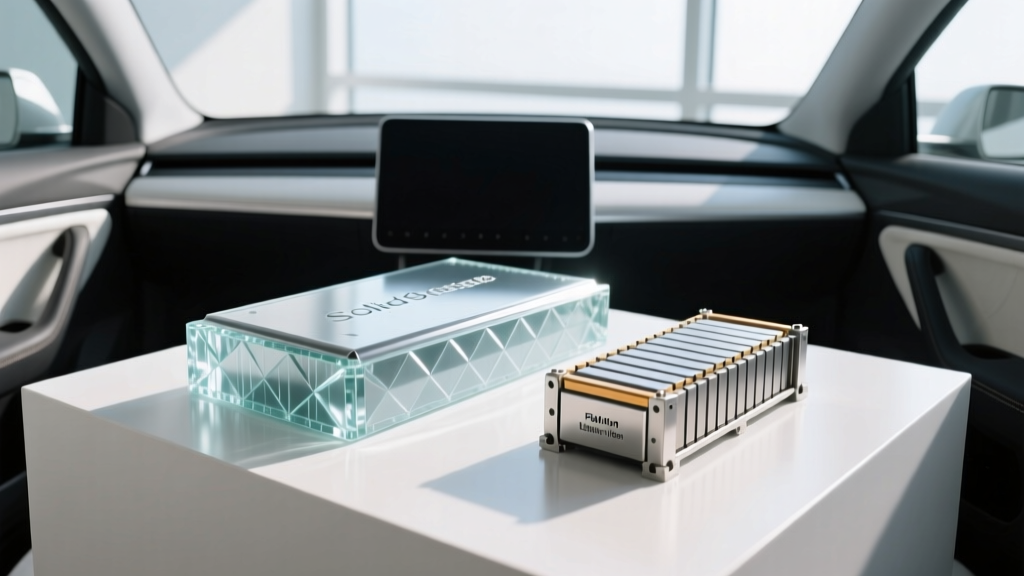
Solid-state batteries replace the liquid electrolyte with a solid material, offering higher energy density (potentially 400+ Wh/kg at the cell level), faster charging, and inherently better thermal stability. Toyota, Samsung SDI, and QuantumScape are among the companies targeting limited production by 2027–2029. If solid-state cells generate less heat during charging, the cooling system requirements could be significantly reduced, enabling lighter, simpler pack designs.
Silicon-dominant anodes (from companies like Sila Nanotechnologies and Group14) promise 20–40% more energy density than current graphite anodes. Tesla's own 4680 cell development has incorporated silicon-anode research. These cells may require recalibrated thermal management due to different expansion and heat-generation characteristics during charge cycles.
Dry electrode coating — a manufacturing technique Tesla acquired via Maxwell Technologies and has been refining for its 4680 cells — reduces production cost and energy while potentially improving cell longevity. Combined with the structural battery pack (where cells serve as part of the vehicle's chassis), this represents Tesla's near-term evolution rather than a distant future technology.
Realistic timelines: Expect incremental improvements to NMC and LFP chemistries through 2028, with solid-state batteries appearing in limited, premium applications around 2028–2030 before reaching mass-market pricing. For buyers today, the current-generation liquid-cooled packs with proven LFP and NMC chemistries represent the most cost-effective and well-understood option.
Frequently Asked Questions
How long do Tesla batteries actually last?
Based on Tesla's published fleet data, Model 3 and Model Y packs retain approximately 85% capacity after 200,000 miles. At an average of 12,000–15,000 miles per year, that translates to 13–17 years of service before reaching that level. Many packs will outlast the vehicle they're installed in. The 8-year/100,000–150,000-mile warranty (depending on model) with a 70% retention guarantee provides a conservative floor.
How much does it cost to replace a Tesla battery?
Out-of-warranty replacement costs range from approximately $8,000 for a Model 3 RWD LFP pack to $22,000+ for a Model S/X 100 kWh pack, including labor. However, most Tesla owners never need a full replacement — the packs are designed to last the life of the vehicle. Module-level repairs for isolated cell failures typically cost $2,000–$5,000.
What does the Tesla battery warranty cover?
Tesla's battery warranty covers defects in materials or workmanship and abnormal capacity degradation below 70% within the warranty period (8 years and 100,000–150,000 miles, depending on model). It does not cover damage from collisions, flooding, fire, or unauthorized modifications. The warranty is transferable to subsequent owners.
Does frequent Supercharging damage the battery?
DC fast charging generates more heat than Level 2 charging, and heat is the primary driver of battery degradation. Tesla's liquid cooling system mitigates this significantly, but fleet data still shows that vehicles that Supercharge frequently (multiple times per week) degrade slightly faster than those that primarily use Level 2 home charging. For daily use, Level 2 is preferable; Supercharging is best reserved for road trips and occasional top-ups.
LFP vs NMC — which Tesla battery is better?
It depends on your priorities. LFP (in Model 3/Y RWD) offers longer cycle life, lower cost, better thermal stability, and the convenience of 100% daily charging — but with lower energy density and worse cold-weather range. NMC/NCA (in Long Range and Performance models) provides more range per kWh, better cold performance, and faster charging — but costs more and requires 80% daily charge limits for longevity. For urban commuters who can charge at home, LFP is often the smarter long-term choice. For road-trippers and cold-climate drivers, NMC/NCA's range advantage is worth the trade-off.
How does Tesla's cooling system compare to other EVs?
Tesla's liquid cooling system is among the most sophisticated in the industry, comparable to Hyundai/Kia's E-GMP platform and Porsche's 800V architecture. It's significantly more effective than the passive air-cooling used in older EVs like the early Nissan Leaf, which showed accelerated degradation in hot climates. The key differentiator is Tesla's integration of thermal management with navigation-based preconditioning, which optimizes pack temperature before fast charging begins.